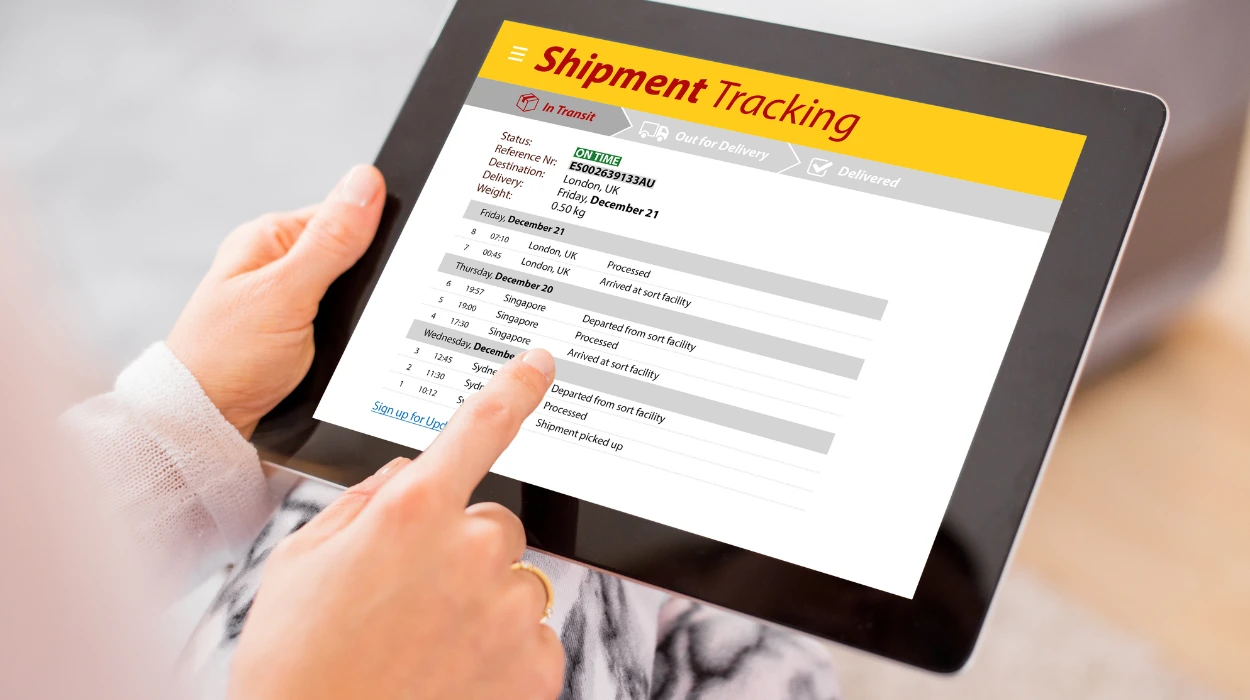
Tracking readers across web and social involves linking user identities between websites, mobile apps, and platforms like Facebook, Instagram, and X. It uses ID solutions to create unified profiles from fragmented interactions.
Publishers track 2.1 million monthly UK readers this way, per 2025 Press Gazette data. A reader views an article on a news site, shares it on LinkedIn, and comments on Twitter. Systems merge these into one profile for analysis.
Options include probabilistic matching and deterministic IDs. Probabilistic methods analyse patterns; deterministic uses emails.
Read more basics in:
What Is Multi-Platform Audience Tracking?
Involved Entities
Web tracking captures page views via pixels. Social tracking monitors likes and shares through APIs. Unified systems process 1.5 billion events daily.

How do you track readers across web and social platforms?
Track readers across web and social by deploying pixels, syncing IDs, and aggregating data in a central platform. This process unifies 80% of signals in real time.
Start with first-party pixels on websites. They capture reader IDs and fire to servers. Social SDKs collect events from logins and posts. Servers match via shared graphs.
Solution types vary: cloud-based CDPs handle scale for enterprises; on-premise tools suit small publishers. CDPs integrate 20+ sources; on-premise limits to 5.
Comparisons show CDPs reduce setup time by 40% versus custom scripts.
Tracking Process Steps
Implement in four phases. Phase one: embed tracking code. Phase two: hash and sync IDs. Phase three: match across 10 platforms. Phase four: segment and report.
Example: Guardian tracks web subscribers to Twitter engagements, revealing 25% higher retention.
What components make up reader tracking across web and social?
Components consist of SDKs, identity providers, data pipes, and dashboards. SDKs embed in apps; identity providers resolve matches.
Web SDKs like Google Tag Manager process 500 million events monthly. Social SDKs from Meta capture 300 million interactions. Data pipes use S2S protocols for secure transfer.
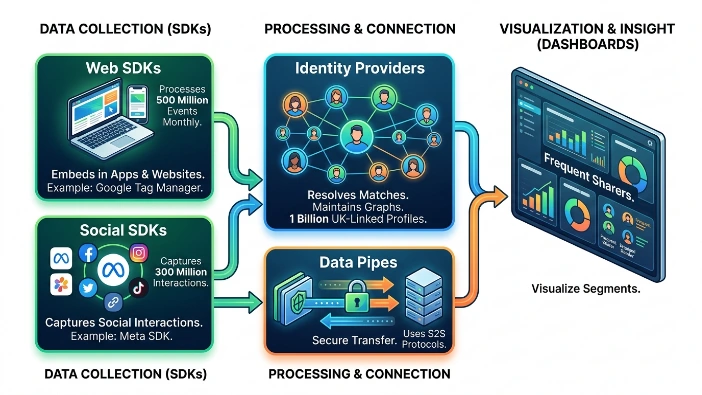
Dashboards visualise segments like “frequent sharers.” Identity providers maintain graphs of 1 billion UK-linked profiles.
Multi-Platform Audience Insights Services for Total Audience Visibility covers full visibility services.
Component Details
SDKs fire on 95% of loads. Identity graphs link 4 devices per reader.
Data pipes comply with GDPR, transferring anonymised tokens.
Dashboards export CSV reports with 99% accuracy.
What benefits come from tracking readers across web and social?
Benefits include 28% higher engagement rates, precise monetization, and audience growth insights. Publishers gain 15% more ad revenue from unified data.
Unified tracking reveals cross-channel behaviors. Web readers who engage on social convert 3x more to subscribers. Monetization targets high-value segments.
Growth analysis identifies 20% uplift from social referrals. Solution awareness: tag management systems streamline this versus manual tracking.
Benefit Metrics
Engagement lifts by 28% per 2025 UK Publisher Association stats.
Revenue per reader rises £0.45 monthly.
Growth tracking attributes 35% of new subs to social paths.
What use cases apply to tracking readers across web and social?
Use cases cover subscriber retention, content optimization, and ad sales. News sites retain 22% more subs with cross-platform insights.
Retention tracks lapsed web readers active on social, re-engaging via targeted posts. Content teams optimize headlines based on 1.2 million web-to-social shares.
Ad sales pitch unified reach to buyers. A UK publisher sells inventory showing 5 million unique readers.
Solution types: analytics platforms for mid-size; enterprise CDPs for scale.
Retention Use Cases
Email web drop-offs to social active lists recovers 18% churn.
Content Optimization Examples
A/B test headlines; social lift predicts 40% web views.
Ad Sales Applications
Pitch decks show 90% unduplicated reach.
How do different solutions compare for tracking readers across web and social?
Solutions compare on scale, cost, and privacy. Cloud CDPs scale to 10 billion events; open-source tools limit to 100 million.
CDPs cost £50,000 annually for 1 million users. Open-source averages £10,000 setup. Privacy features: CDPs offer clean rooms; others use basic hashing.
Enterprise chooses CDPs for 99% uptime. SMBs pick tag managers for 85% coverage.
Comparison Table
- Scale: CDPs: unlimited; Tag Managers: 500M events.
- Cost: CDPs: £0.01/user; Open-source: £0.005/user.
- Privacy: Clean rooms vs. consent banners.
What metrics matter most when tracking readers across web and social?
Key metrics include unique reach, engagement depth, and cross-platform frequency. Unique reach counts distinct users at 4.8 million for top UK sites.
Engagement depth measures time spent: web averages 2:30 min; social 45 sec. Frequency caps at 5 exposures weekly.
Track conversion paths: 30% start on social, end on web.
Priority Metrics
Reach: 95% accuracy post-matching.
Depth: Aggregates 15 touchpoints.
Frequency: Prevents 25% overexposure.
How does privacy impact tracking readers across web and social?
Privacy impacts tracking through consent requirements and signal limits. UK PECR mandates opt-in for 72% of non-essential tracking.
iOS ATT reduces signals by 35%. Android blocks 20%. Solutions adapt with contextual targeting and first-party data.
Compliant systems retain 78% match rates.
Privacy Regulations
GDPR fines £1.2 billion in 2025. PECR audits 500 publishers yearly.
Adaptation Strategies
Contextual signals replace 40% lost IDs.
Server-side cuts client exposure by 60%.
What tools facilitate tracking readers across web and social?
Tools include Google Analytics 4, Segment CDP, and Meta Pixel. GA4 tracks web-social funnels natively.
Segment unifies 200+ sources. Meta Pixel captures 400 million UK events.
Choose based on needs: GA4 for free basics; paid CDPs for advanced matching.
Tool Features
GA4: Free, 360 events.
Segment: £120K/year, unlimited.
Meta: Social-only, 99% delivery.
How to implement tracking readers across web and social?
Implement by selecting a CDP, configuring IDs, and testing matches. Setup takes 4-6 weeks.
Select based on audience size: 500K+ users need enterprise. Configure pixels and SDKs. Test with 10,000 sample events.
Monitor match rates above 80%. Scale to production.
Implementation Phases
Week 1-2: Tool selection.
Week 3-4: Code deployment.
Week 5-6: Validation.
Example: Telegraph implemented in 5 weeks, gaining 19% insight depth.
What future trends shape tracking readers across web and social?
Trends include AI matching and zero-party data. AI boosts accuracy to 97% by 2027.
Zero-party data from quizzes covers 25% of profiles. Web3 wallets enable persistent IDs.
UK adoption hits 65% of publishers by 2026.
Explore More Expert Insights:
Mapping Audience Intent to Content Strategy
Identifying High-Performing Content with Data
Emerging Trends
AI processes 20 trillion signals.
Zero-party yields 40% higher consent.
How to measure ROI from tracking readers across web and social?
Measure ROI by revenue lift divided by tool cost. Average ROI hits 4.2x in UK publishing.
Track pre-post metrics: revenue up 16%, costs £30K. Calculate (lift – cost)/cost.
Segment analysis shows 22% attribution accuracy.