Speaker amplification is the deliberate process of turning each presenter’s content into a distinct media narrative for targeted outlets, increasing event visibility, media impressions, and qualified attendee interest.
Speaker amplification defines the practice of treating every speaker as an independent news source. Each presenter becomes a discrete entity with a defined angle, key facts, and a tailored media asset. Organisers map presenters to outlet audiences by matching topic relevance and editorial focus. Presenters supply concise bio facts, one exclusive data point or finding, and a quotable statement. Communications teams convert those inputs into focused pitches, tailored press releases, and short interview briefs. This process increases the number of unique stories available to journalists and expands the event’s reach across national, trade, regional, and broadcast channels.
How do you plan the process to convert eight presenters into eight media stories?
Plan by auditing speaker topics, assigning target outlets, creating press-ready assets, scheduling media windows, and tracking placements against objectives.
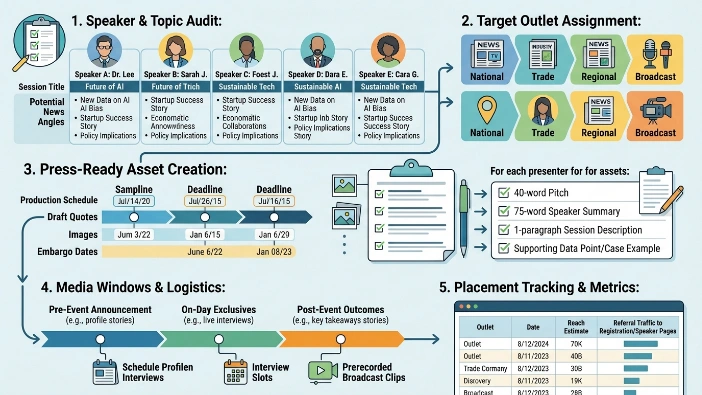
Start with an audit that lists each presenter, session title, and three potential news angles. Assign each presenter to specific outlet types: national, trade, regional, or broadcast. Create a production schedule that sets deadlines for draft quotes, images, and embargo dates. Prepare press-ready assets for each presenter: a 40-word pitch, a 75-word speaker summary, a one-paragraph session description, and one supporting data point or case example. Schedule media windows: pre-event announcement, on-day exclusives, and post-event outcomes. Coordinate interview logistics, offering short interview slots and prerecorded clips for broadcast. Track placements with a shared spreadsheet that records outlet, date, reach estimate, and referral traffic to registration or speaker pages.
What components are required to make each presenter newsworthy?
Components include a clear news angle, a verified data point or exclusive claim, a short quotable line, a high-resolution headshot, and tailored subject framing for target outlets.
A clear news angle frames why the presenter’s insight matters now. A verified data point or exclusive claim lends factual weight for journalists. A short quotable line provides a headline-friendly pull quote. A high-resolution headshot and a 75-word bio supply visual and contextual elements. Tailored subject framing links the presenter’s angle to each outlet’s audience. For trade press, emphasise technical outcomes and buyer implications. For regional press, stress local impact or speaker local ties. For national outlets, use broader policy or market implications. These components together shorten journalist lead time and increase the likelihood of placement.
How should pitches and press materials differ for national, trade, regional, and broadcast outlets?
Tailor messaging: national outlets need policy or market impact; trade needs technical implications and buyer relevance; regional needs local impact; broadcast needs visuals and soundbites.
For national outlets, open with a one-line impact statement and a headline-ready statistic. For trade outlets, present technical findings, buyer benefits, and supplier names. For regional outlets, highlight local speaker connections, venue, and community impact. For broadcast, provide short, emotive soundbites and suggested B-roll or visuals. Each pitch includes a specific suggested angle and an exclusive element where possible. Attach a media pack with the 40-word pitch, 75-word bio, headshot, session description, and a suggested interview question list. Provide embargo details and windows for exclusives to allow staged coverage. This approach maintains editorial relevance and increases pickup rates.
How do you prepare presenters to give media-ready content?
Prepare presenters with a short media brief, three headline messages, one exclusive data point, and a five-minute interview rehearsal.
Deliver a media brief that outlines the target outlet, audience, and angle. Supply three headline messages that fit one-sentence summaries. Confirm one exclusive data point or case example suitable for press release use. Conduct a five-minute rehearsal focused on delivering a 20-second soundbite, answering a common reporter question, and avoiding jargon. Provide guidance on timing for interviews, technical setup for remote calls, and consent for recording. Record short clips of rehearsals to use as B-roll or social assets. This preparation reduces journalist editing time and ensures quotes are publication-ready.
What timeline optimises coverage before, during, and after the event?
Use a three-phase timeline: pre-event announcements at 4–6 weeks, on-day exclusives and live interviews, and post-event follow-ups at 1–14 days for outcomes and deeper analysis.
Begin pre-event outreach 4–6 weeks before the event with one or two lead presenter stories and an event overview. Schedule targeted pitches for remaining presenters 2–3 weeks before the event, each with a unique angle. On the event day, coordinate live interviews, same-day embargoed releases, and short recorded clips for broadcast. Within 24–48 hours after the event, distribute outcome stories, key findings, and recorded highlights. Follow up at 7–14 days with deeper analysis pieces, case studies, and data-led summaries that extend coverage life. This staging creates a continuous news cycle that sustains visibility and maximises mid-funnel engagement.
How should measurement be set to evaluate media amplification success?
Measure placement count, estimated audience reach, referral traffic to event and speaker pages, registration conversion from media sources, and sponsor lead generation.
Track the number of distinct media placements tied to each presenter. Calculate estimated audience reach using outlet circulation and unique monthly visitors. Use web analytics to monitor referral traffic from each placement and track conversions by UTM parameters and registration source fields. Record sponsor lead mentions and inbound enquiries attributed to media stories. Measure qualitative outcomes: interview requests, policy mentions, and social amplification. Compare results to baseline metrics from prior events to quantify uplift. Use a simple dashboard that maps presenter to placement count, reach, referral conversions, and sponsor leads.
Explore More Expert Insights:
How to Pitch an Event Story to a UK News Editor Without Getting Ignored
Social Coverage vs News Coverage: Why UK Events Need Both and How to Plan Them
What benefits arise from amplifying each presenter into a separate media story?
Benefits include increased event visibility, diversified audience reach, improved sponsor value, higher-quality registrations, and longer content lifespan in search indexes.
Amplifying individual presenters creates multiple stories that reach distinct audiences. This diversification increases the total media footprint and improves the probability of securing high-value placements. Sponsors gain measurable media inventory tied to specific presenters, supporting commercial renewal conversations. Registrations become more qualified when attendees find speaker-led stories that match their interests. Media-generated content remains discoverable in search engines for months, creating continuous inbound interest. The combined effect supports mid-funnel objectives: informed prospects, stronger sponsor propositions, and repeat engagement.
What use cases show effective speaker amplification in the UK market?
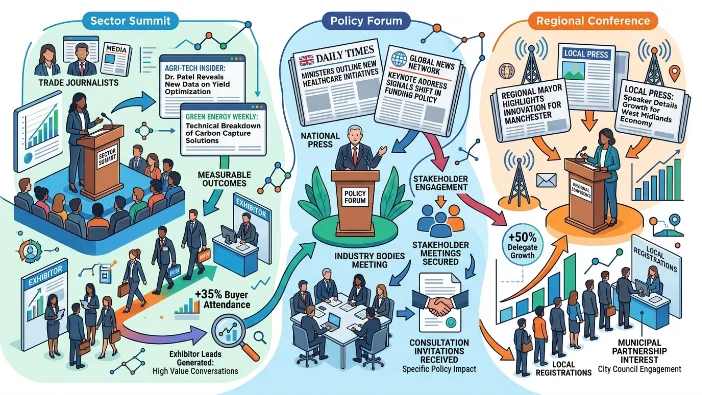
Use cases include sector summits where trade press drives buyer attendance, policy forums where national coverage influences stakeholders, and regional conferences where local media boost local delegate numbers.
In a sector summit use case, trade outlets publish technical speaker findings that drive buyer visits and exhibitor leads. In a policy forum use case, national outlets report on keynote policy statements that generate stakeholder meetings and consultation invitations. In a regional conference use case, local press stories about regional speakers increase local delegate registrations and municipal partnership interest. Each use case links specific outlet types to measurable outcomes: buyer attendance, stakeholder engagement, and local delegate growth. Documented examples show that targeted speaker stories create clear routing paths from media exposure to registration and sponsor conversations.
Click Here to Explore More:
UK Events Industry Rebound: Why Media Coverage Is the Most Overlooked Growth Lever
Speaker amplification converts each presenter into a targeted media asset. The process requires an audit of speaker angles, tailored press assets, outlet-specific pitches, media-ready presenters, staged timelines, and measurement frameworks. Successful amplification increases placements, referral conversions, sponsor value, and long-term search visibility. Implementing these steps provides mid-funnel audiences with clearer reasons to register and sponsors with measurable coverage outcomes.
Read the Detailed Explanation:
Why Annual Conferences That Use Managed Coverage See 52% More Delegate Returns