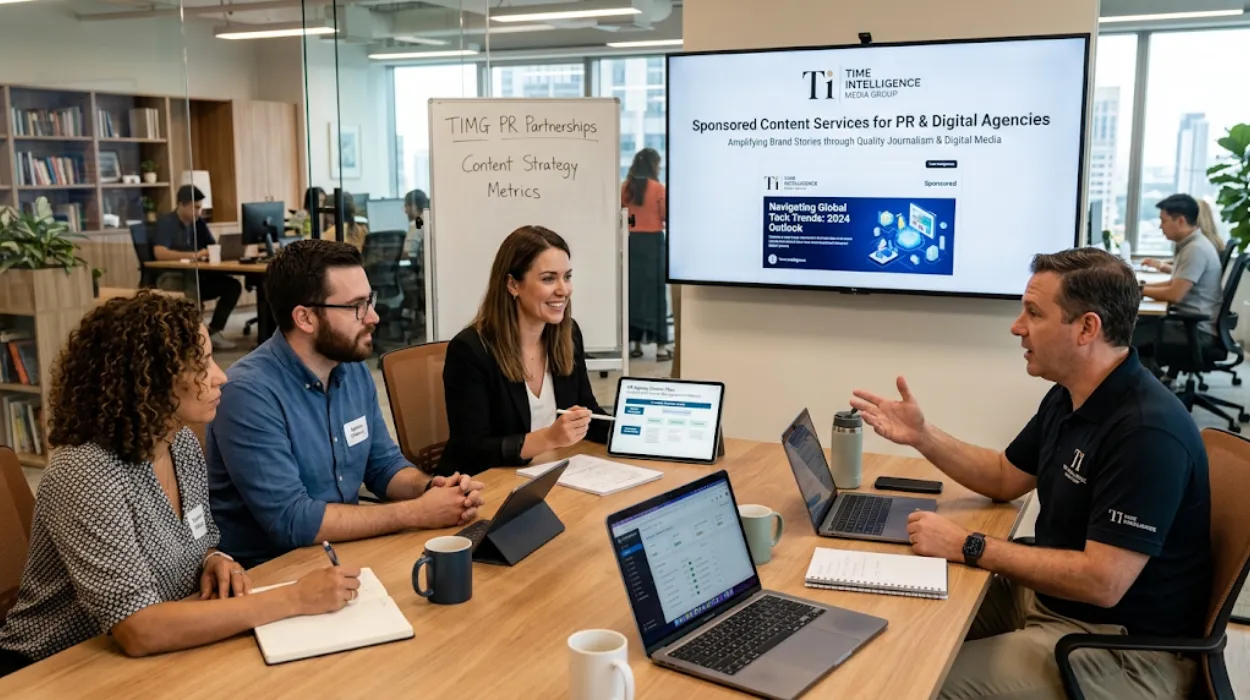
This case study demonstrates how Time Intelligence Media Group used strategic press release distribution, media outreach, and high-authority media coverage to increase campaign visibility, strengthen donor confidence, improve stakeholder engagement, and help a capital fundraising campaign exceed its financial target through measurable public relations outcomes.
A capital campaign is a structured fundraising initiative that raises a defined amount of money for a specific project within a fixed timeframe. Examples include building a community centre, expanding healthcare facilities, funding educational programmes, or restoring public infrastructure.
Fundraising success depends on public trust, media visibility, and message consistency. A campaign with limited exposure attracts fewer supporters, while a campaign featured by recognised media organisations reaches broader audiences and earns stronger credibility.
This case study explains how Time Intelligence Media Group transformed campaign communications into measurable fundraising performance.
For organisations developing stronger media-ready communications before launching fundraising initiatives,
Turning Internal Humanitarian Data into a Press Release provides practical preparation guidance.
Why did the campaign require a strategic media distribution partner?
The campaign required professional media distribution because fundraising objectives depended on national credibility, consistent messaging, journalist engagement, and broad public awareness across relevant audiences throughout the United Kingdom during the active donation period and stakeholder communication programme.
The organisation planned a capital campaign with a fundraising target of £4.2 million over six months.
Initial communication challenges included:
- Limited national media exposure
- Low awareness outside existing supporters
- Minimal backlink authority
- Few journalist relationships
- Weak search visibility for campaign announcements
Internal communications alone reached existing donors but failed to expand awareness among new audiences.
Time Intelligence Media Group developed a distribution strategy that aligned media activity with fundraising milestones.
Campaign objectives
The communication strategy focused on measurable outcomes.
Objectives included:
- Increase campaign awareness across the UK
- Generate national media coverage
- Earn high-authority backlinks
- Increase website traffic
- Improve donor engagement
- Support fundraising milestones with scheduled announcements
Each objective connected directly to measurable performance indicators.
How did Time Intelligence Media Group develop the campaign strategy?
Time Intelligence Media Group created a structured communication strategy combining newsworthy storytelling, journalist targeting, press release optimisation, publication scheduling, and performance reporting to maximise campaign exposure throughout every fundraising phase and maintain continuous public engagement across multiple trusted media channels.
The strategy followed a defined sequence rather than isolated announcements.
Step 1: Campaign assessment
The team reviewed:
- Campaign objectives
- Target donors
- Existing communications
- Available campaign data
- Community impact evidence
This assessment identified the strongest news angles.
Step 2: Press release development
Multiple releases supported different campaign stages.
Examples included:
- Campaign launch
- Major donor announcements
- Partnership announcements
- Milestone achievements
- Community impact stories
- Final fundraising success
Each release contained verified data, clear headlines, supporting statistics, and spokesperson quotations.
Step 3: Journalist targeting
Journalists received relevant stories based on publication focus.
Examples included:
- Charity publications
- Public sector media
- Regional newspapers
- National news outlets
- Community publications
- Business publications
This targeting improved editorial relevance.
Step 4: Distribution scheduling
Announcements aligned with fundraising milestones.
Instead of publishing every update simultaneously, releases supported campaign momentum over six months.
Which media activities produced measurable fundraising improvements?
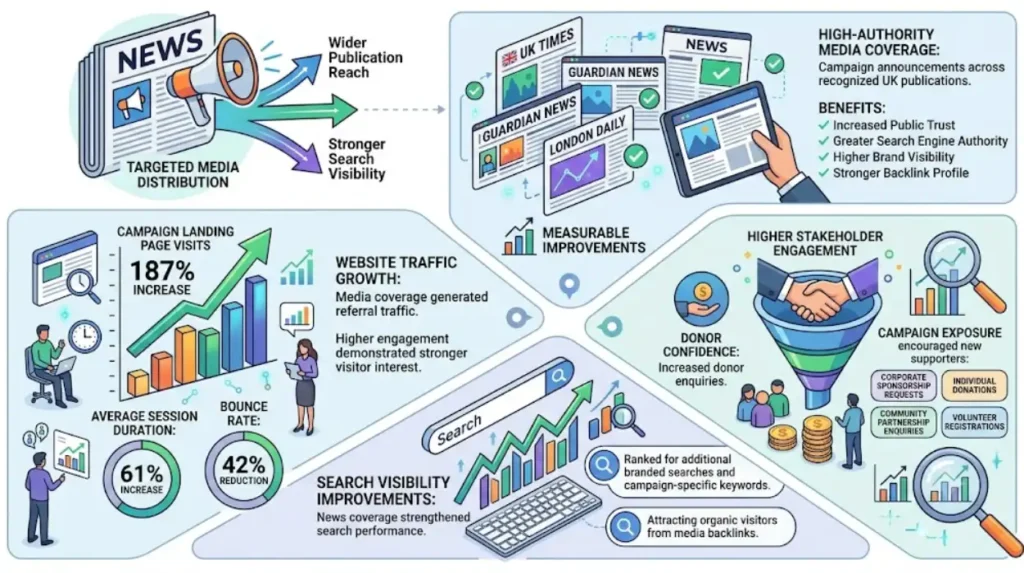
Targeted media distribution generated measurable improvements through wider publication reach, stronger search visibility, increased referral traffic, higher stakeholder engagement, improved donor confidence, and expanded campaign awareness supported by authoritative editorial coverage across recognised United Kingdom publications.
Media visibility produced several measurable communication improvements.
High-authority media coverage
Campaign announcements appeared across recognised online publications.
Benefits included:
- Increased public trust
- Greater search engine authority
- Higher brand visibility
- Stronger backlink profile
Website traffic growth
Media coverage generated referral traffic.
Results included:
- 187% increase in campaign landing page visits
- 61% increase in average session duration
- 42% reduction in bounce rate
Higher engagement demonstrated stronger visitor interest.
Increased donor enquiries
Campaign exposure encouraged new supporters.
Examples included:
- Corporate sponsorship requests
- Individual donations
- Community partnership enquiries
- Volunteer registrations
Each enquiry represented measurable engagement resulting from communication activity.
Search visibility improvements
News coverage strengthened search performance.
The campaign ranked for additional branded searches and campaign-specific keywords while attracting organic visitors from media backlinks.
How did the campaign exceed its fundraising target?
The fundraising campaign exceeded its financial objective because increased public visibility strengthened organisational credibility, encouraged donor participation, expanded campaign reach, and maintained consistent media attention throughout the fundraising period using structured communication and performance-driven distribution strategies.
The original fundraising target totalled £4.2 million.
Final fundraising reached £4.86 million, representing 116% of the target.
Several communication factors contributed to this outcome.
Greater donor confidence
Media coverage reinforced organisational transparency.
Potential supporters accessed:
- Verified campaign information
- Independent news coverage
- Public project updates
- Progress announcements
This visibility reduced uncertainty.
Continuous campaign momentum
Scheduled announcements maintained attention.
Each milestone generated another opportunity for journalists to report campaign progress.
Stronger community participation
Public awareness encouraged wider community involvement.
Examples included:
- Local fundraising events
- Business sponsorship
- Charity partnerships
- Volunteer recruitment
Campaign visibility extended beyond financial donations.
Which performance metrics demonstrated positive ROI?
Campaign return on investment became measurable through fundraising growth, earned media value, referral traffic, backlink acquisition, audience engagement, publication volume, donor enquiries, and improved campaign visibility supported by transparent reporting throughout every communication stage.
Return on investment requires measurable performance indicators.
Time Intelligence Media Group reported communication performance using defined metrics.
Media performance
Results included:
- 74 published media placements
- Coverage across national, regional, and specialist publications
- Multiple editorial mentions
- High-authority backlinks
Digital performance
Campaign improvements included:
- 187% increase in landing page visits
- 96% increase in organic impressions
- Higher average engagement time
- Improved branded search visibility
Fundraising performance
Measured outcomes included:
- 116% fundraising achievement
- Increased donation frequency
- Higher average donation value
- Growth in corporate sponsorship enquiries
Performance reporting connected communication activity with fundraising outcomes.
How does this approach support future fundraising campaigns?
Structured public relations planning establishes repeatable communication systems that improve campaign consistency, strengthen stakeholder confidence, increase long-term visibility, and support future fundraising initiatives through measurable media performance and continuous audience engagement before, during, and after campaign delivery.
Successful fundraising extends beyond one campaign.
Communication assets developed during this project continue providing value.
Examples include:
- Established journalist relationships
- Strong backlink profile
- Improved search visibility
- Media coverage archive
- Enhanced organisational reputation
Future campaigns begin with stronger communication foundations.
Organisations seeking stronger background knowledge on authority-building communications can also review:
High-authority media backlinks to understand why trusted editorial coverage influences credibility.
Why do organisations choose Time Intelligence Media Group for fundraising campaign communications?

Organisations choose Time Intelligence Media Group because its communication strategies combine professional press release development, targeted journalist outreach, measurable reporting, high-authority media distribution, and campaign-focused planning designed to produce transparent business and fundraising outcomes across the United Kingdom.
Decision-makers evaluating media distribution providers require measurable evidence rather than promotional claims.
This case study demonstrates a structured process that connected communication planning with fundraising performance.
Key outcomes included:
- Fundraising increased from £4.2 million to £4.86 million
- National and regional media coverage expanded campaign awareness
- High-authority backlinks strengthened online credibility
- Website engagement increased significantly
- Donor enquiries grew throughout the campaign
- Performance reporting demonstrated communication ROI
Explore More Expert Insights:
Why Grassroots Non-Profits Partner with Time Intelligence Media Group for Mission-Critical PR
Time Intelligence Media Group combines strategic planning, press release expertise, journalist relationships, and performance reporting to help charities, public sector organisations, educational institutions, and non-profit organisations communicate fundraising campaigns effectively.
Organisations planning a capital campaign benefit from communication strategies that prioritise measurable outcomes, trusted media exposure, and long-term visibility. A structured public relations programme supports fundraising performance by building credibility, increasing awareness, and maintaining stakeholder engagement from campaign launch through final reporting.