

The media landscape has undergone a dramatic transformation over the past decade, shifting from isolated advertising efforts toward interconnected ecosystems where collaboration defines success. Local advertising, once dominated by standalone campaigns, is now driven by partnerships that blend audience data, creative storytelling, and distribution power. Businesses are no longer just buying ad space; they are investing in relationships that amplify visibility, credibility, and ultimately, return on investment.
At the center of this evolution is the concept of media partnerships—strategic alliances between brands, publishers, and platforms designed to co-create value. These collaborations are not simply transactional. They involve shared goals, mutual audience engagement, and integrated campaign execution. As a result, measuring ROI in this context requires a broader lens that captures both tangible and intangible outcomes.
Media partnerships enable brands to move beyond traditional impressions and clicks, unlocking deeper engagement metrics such as brand trust, audience retention, and cross-channel influence. This shift has made collaborative local advertising campaigns one of the most powerful tools for businesses seeking sustainable growth in competitive markets.
Understanding ROI in Collaborative Advertising Ecosystems
Return on investment in media partnerships cannot be reduced to a single metric. Unlike traditional campaigns where ROI might be calculated based on direct conversions, collaborative advertising introduces multiple layers of value. These include audience reach expansion, content amplification, and long-term brand positioning.
One of the key drivers of ROI in such campaigns is audience alignment. When brands partner with local media outlets that already have established trust within their communities, they gain immediate access to highly engaged audiences. This eliminates the need for extensive awareness-building and accelerates the path to conversion.
Another important factor is content synergy. Collaborative campaigns often involve co-created content that resonates more authentically with audiences. This content is not perceived as intrusive advertising but as valuable information or storytelling, leading to higher engagement rates and improved brand perception.
Data integration also plays a critical role. By combining insights from multiple partners, businesses can develop a more comprehensive understanding of audience behavior. This enables more precise targeting, better campaign optimization, and ultimately, higher returns.
The Strategic Role of Media Partnerships Solutions
In the context of collaborative advertising, Media Partnerships Solutions serve as the backbone of campaign success. These solutions facilitate the alignment between brands and media platforms, ensuring that partnerships are not only strategic but also scalable.
Through structured collaboration frameworks, businesses can identify the most suitable media partners based on audience demographics, content relevance, and distribution capabilities. This reduces inefficiencies and maximizes the impact of every advertising dollar spent.
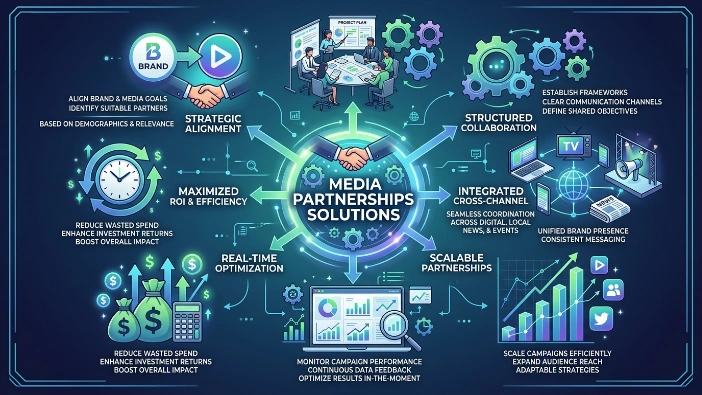
Moreover, these solutions enable seamless coordination across multiple channels. Whether it is digital platforms, local news outlets, or event-based media, integrated partnerships ensure consistent messaging and unified brand presence. This consistency is crucial for building trust and reinforcing brand identity.
The ability to manage and optimize partnerships in real time further enhances ROI. Campaign performance can be continuously monitored, allowing for adjustments that improve outcomes without disrupting the overall strategy.
The Power of Audience Insights Services in Driving ROI
Data is the currency of modern advertising, and Audience Insights Services play a pivotal role in unlocking its value. In collaborative campaigns, understanding the audience is not just beneficial—it is essential.
These services provide deep insights into consumer behavior, preferences, and engagement patterns. By leveraging this data, brands can tailor their messaging to resonate more effectively with target audiences. This level of personalization significantly increases the likelihood of conversion.
Audience insights also enable predictive analysis, helping businesses anticipate trends and adapt their strategies accordingly. This proactive approach reduces risk and enhances the efficiency of advertising investments.
In media partnerships, shared insights create a unified understanding of the audience across all stakeholders. This alignment ensures that every aspect of the campaign—from content creation to distribution—is optimized for maximum impact.
Enhancing Engagement Through Sponsored Content Services
Content remains one of the most powerful tools in advertising, and Sponsored Content Services elevate its effectiveness within collaborative campaigns. Unlike traditional ads, sponsored content is designed to blend seamlessly with the platform’s editorial environment, making it more engaging and less intrusive.
This approach fosters a stronger connection with the audience, as the content is perceived as informative or entertaining rather than promotional. As a result, engagement rates are significantly higher, leading to improved ROI.
Sponsored content also benefits from the credibility of the hosting platform. When audiences trust the publisher, they are more likely to trust the content—and by extension, the brand behind it. This trust translates into higher conversion rates and long-term customer loyalty.
In collaborative campaigns, sponsored content can be distributed across multiple channels, amplifying its reach and impact. This multi-platform presence ensures that the message resonates with diverse audience segments, further enhancing ROI.
The Synergy Between Local Relevance and Global Strategy
One of the defining characteristics of successful media partnerships is their ability to balance local relevance with broader strategic goals. Local advertising campaigns thrive on cultural nuances, community connections, and regional insights. At the same time, they must align with the overarching brand strategy to ensure consistency.
Collaborative partnerships make this balance possible. By working with local media outlets, brands can tap into community-specific knowledge while maintaining a cohesive brand narrative. This dual approach enhances both engagement and brand recognition.
The integration of local and global perspectives also enables more effective resource allocation. Campaigns can be tailored to specific markets without compromising overall efficiency, resulting in better ROI.
Measuring Success Beyond Traditional Metrics
Evaluating the success of collaborative advertising campaigns requires a shift from conventional metrics to a more holistic framework. While conversions and revenue remain important, they are only part of the equation.
Engagement metrics such as time spent, content interaction, and social sharing provide valuable insights into audience behavior. These indicators reflect the effectiveness of the campaign in capturing and retaining attention.
Another critical aspect is cross-channel performance. Collaborative campaigns often span multiple platforms, making it essential to measure how each channel contributes to the overall outcome. This integrated approach ensures a more accurate assessment of ROI.
The Long-Term Value of Media Partnerships
One of the most significant advantages of collaborative advertising is its long-term impact. Unlike one-off campaigns, media partnerships create ongoing relationships that continue to generate value over time.
These relationships enable continuous audience engagement, providing brands with a consistent presence in the market. This sustained visibility reinforces brand identity and strengthens customer connections.
Long-term partnerships also facilitate innovation. As brands and media partners work together over time, they can experiment with new formats, technologies, and strategies. This continuous evolution keeps campaigns fresh and relevant, further enhancing ROI.
Challenges and Opportunities in Collaborative Advertising
While media partnerships offer numerous benefits, they also present certain challenges. Coordinating multiple stakeholders, aligning objectives, and managing data integration can be complex.
However, these challenges are outweighed by the opportunities. Advances in technology have made it easier to manage partnerships, track performance, and optimize campaigns in real time. This has significantly improved the efficiency and effectiveness of collaborative advertising.
The growing emphasis on personalization and audience-centric strategies further enhances the potential of media partnerships. By focusing on the needs and preferences of the audience, brands can create more meaningful connections and achieve results.
The Future of Local Advertising Through Collaboration
The future of local advertising lies in collaboration. As markets become more competitive and audiences more discerning, the need for integrated, data-driven strategies will continue to grow.
Media partnerships will play a central role in this evolution, enabling brands to leverage collective strengths and संसाधन. The integration of advanced analytics, AI-driven insights, and innovative content formats will further enhance the effectiveness of collaborative campaigns.
Businesses that embrace this approach will be better positioned to navigate the complexities of the modern advertising landscape and achieve sustainable growth.
Building Scalable Campaigns with Strategic Alignment
Scalability is a key consideration in collaborative advertising. As campaigns expand, maintaining consistency and efficiency becomes increasingly important.
Technology plays a crucial role in enabling scalability. From data management platforms to performance tracking tools, digital solutions provide the infrastructure needed to support large-scale campaigns.
By combining strategic alignment with technological capabilities, businesses can create campaigns that deliver consistent results across multiple markets.
Integrating Creativity and Data for Maximum Impact
The most successful collaborative campaigns are those that seamlessly integrate creativity and data. While data provides the foundation for targeting and optimization, creativity drives engagement and emotional connection.
Media partnerships facilitate this integration by bringing together diverse expertise. Brands contribute their vision and objectives, while media partners provide insights into audience preferences and content trends.
This collaborative approach results in campaigns that are both data-driven and creatively compelling, maximizing their impact and ROI.
The Role of Trust in Collaborative Campaign Success
Trust is a fundamental of successful media partnerships. It influences every aspect of the collaboration, from content creation to audience engagement.
When audiences trust the media platform, they are more likely to engage with the content. Similarly, when partners trust each other, they can work more effectively toward shared goals.
Unlocking the Full Potential of Media Partnerships

The integration of Media Partnerships Solutions, Audience Insights Services, and Sponsored Content Services creates a powerful framework for success. These elements work together to enhance targeting, improve content effectiveness, and maximize campaign impact.
As the advertising landscape continues to evolve, the importance of collaboration will only increase. Businesses that invest in strategic partnerships and leverage data-driven insights will be well-positioned to achieve long-term growth and success.
For more information and to explore advanced media solutions, visit: Time Intelligence Media Group



