
Workforce reports reach UK business leaders through multi-channel digital distribution strategies, targeting key decision-makers across corporate HR, finance, and operations. Publishers use direct email campaigns, targeted executive networks, industry trade media partnerships, and high-authority digital PR to ensure visibility.
Digital Media Channels and Targeted Syndication
To reach executives in the United Kingdom, report publishers rely on structured media syndication networks. Corporate readers do not search for raw data manually; instead, they consume aggregated insights via industry-specific news feeds, professional networks like LinkedIn, and curated sector newsletters.
Publishers distribute summary insights through B2B media titles across key UK commercial hubs, including London, Manchester, and Birmingham. By syndicating key findings—such as regional wage inflation or retention statistics—to niche trade journals, workforce reports secure direct impressions from readers with purchasing power.
Executive Email and Professional Membership Networks
Direct email distribution remains the primary driver of workforce report downloads among UK C-suite executives. Media organizations deliver customized intelligence reports directly to verified corporate email lists categorized by job function, enterprise size, and geographic location.
- Professional bodies (such as the Chartered Institute of Personnel and Development)
- Niche executive membership networks
- Corporate newsletter subscriber bases
By matching content delivery to specific professional roles, publishers convert passive readers into active report downloads.
What Types of Workforce Intelligence Do UK Executives Demand?
UK business leaders demand data on talent retention, salary benchmarking, hybrid work trends, and sector-specific skill shortages. Executives prioritize actionable metrics that directly inform strategic workforce planning, compensation structuring, regulatory compliance, and quarterly operational budgeting within competitive markets.
Compensation Structures and Wage Inflation Metrics
UK financial directors and HR leaders analyze workforce reports to benchmark baseline compensation packages against national and regional averages. In high-density economic zones like Greater London or the M4 Corridor, salary variance dictates recruitment success.
Data requirements include detailed breakdowns of base salaries, performance bonuses, pension contributions, and private healthcare benefits. Accurate wage data prevents overspending on talent acquisition while ensuring retention rates remain high within competitive sectors.
Skill Deficit and Labour Supply Analysis
Business leaders track structural shifts in the UK labor market to anticipate hiring bottlenecks. Reports must detail sector-specific shortages, particularly across technology, engineering, healthcare, and professional services.
Executives evaluate this data to decide whether to upskill existing internal staff or contract third-party agencies. Understanding labor supply constraints enables long-term resource allocation.
How Are Workforce Data Sets Structurally Processed for Publication?
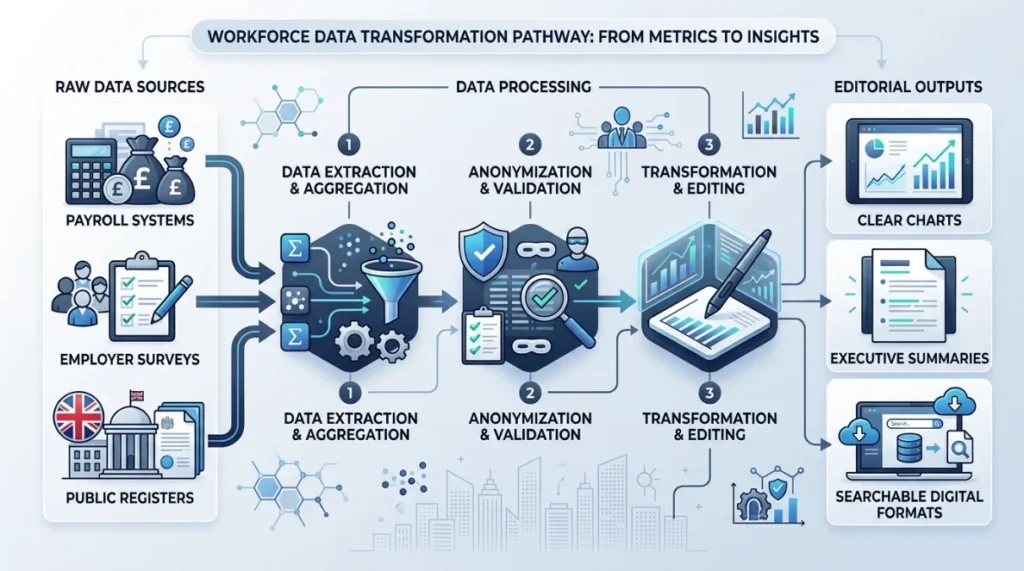
Workforce data sets undergo structured statistical aggregation, anonymization, and validation before editorial design. Data teams extract raw metrics from payroll systems, employer surveys, and public employment registers, transforming disorganized information into clear charts, executive summaries, and searchable digital formats.
Raw Data Extraction and Verification Protocols
Publishers gather primary data directly from UK employers, agency databases, and government repositories such as the Office for National Statistics (ONS). Data scientists validate response volumes to eliminate bias and isolate statistical outliers.
Sample verification steps include:
- Normalizing salary figures to remove temporary overtime spikes.
- Cross-referencing employer survey claims against verified tax records.
- Filtering entries by company size, ranging from SMEs to FTSE 100 enterprises.
This process ensures that published figures reflect genuine labor market realities rather than skewed small-sample findings.
Content Structuring and Visual Information Architecture
Raw numbers alone do not engage senior executives. Editorial teams convert statistical tables into visual intelligence formats, including bar graphs, geographic heat maps, and bulleted key takeaways.
To gain context on how raw industry data translates into broad sector insights, readers can examine [What Salary and Workforce Reports Reveal About UK Sectors]. Editorially refined data allows time-restricted directors to parse critical labor trends within minutes.
Explore More Expert Insights:
Headlines for Sponsored Articles: 9 Formulas That Drive UK News Reader Clicks
Sponsored Content Calendar Planning: A 12-Month UK Framework for B2B Brands
What Key Components Make a Workforce Report Highly Engaging?
Highly engaging workforce reports contain executive summaries, precise regional segmentation, comparative yearly benchmarks, and clear methodology notes. Reports excel when they combine high-level macro statistics with practical, micro-level takeaways that UK department heads can apply directly to corporate strategies.
Concise Executive Summaries and Data Highlights
Senior executives rarely read 50-page reports from start to finish. The executive summary must isolate 3 to 5 core market indicators on the opening page.
- National vs. regional wage growth percentages
- Average time-to-hire across specific job categories
- Voluntary turnover rates by industry sector
Placing critical findings upfront increases report retention and encourages readers to share the document internally across leadership teams.
Geographic and Sector-Specific Data Segmentation
UK business readers require localized insights. National averages often obscure stark differences between the London economy and regional markets in Scotland, Wales, or Northern England.
Effective reports segment data by specific postcode districts, regional commercial centers, and sub-sectors. Segmented analysis allows a logistics manager in the Midlands to evaluate local warehouse wage pressures without relying on skewed London financial market data.
What Media Distribution Channels Best Drive Executive Engagement?
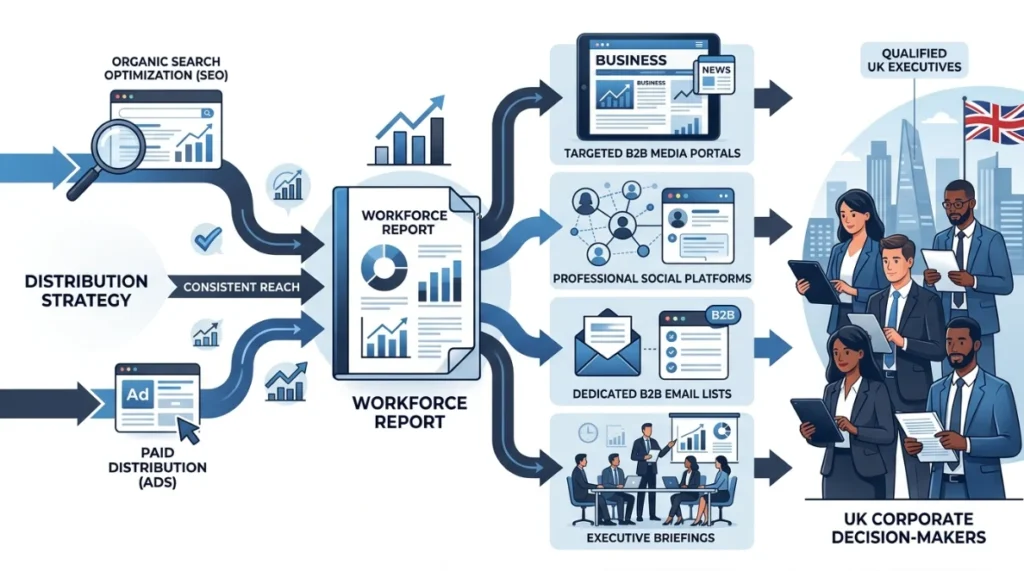
The most effective distribution channels include targeted B2B media portals, professional social platforms, dedicated B2B email lists, and executive briefings. Combining organic search optimization with paid distribution ensures that workforce reports consistently reach qualified corporate decision-makers across the UK.
Specialized B2B News Portals and Industry Publications
Corporate readers trust established trade publications for market intelligence. Publishers secure placement on targeted UK B2B news sites covering HR, corporate finance, technology, and industrial management.
Editorial placement takes two primary forms:
- Sponsored Insights: Contextual analysis articles linking directly to full report downloads.
- Organic Editorial Coverage: News stories highlighting specific data points from the report.
Co-branding or distributing reports alongside trusted industry publishers boosts credibility and increases conversion rates among business readers.
Search Engine Optimization and Digital PR Campaigns
Search engines drive continuous, long-term traffic to workforce intelligence assets. Report landing pages target specific search queries used by operational leaders seeking market data.
To understand how targeted media distribution networks package and deliver these insights to commercial audiences, explore [Workforce Reports by Time Intelligence Media Group].
Executing a focused digital PR strategy secures high-authority backlinks from major news platforms and industry blogs. These citations signal domain authority to search engines, maintaining top keyword rankings for multi-year report series.
How Do UK Business Leaders Leverage Workforce Reports for Growth?
UK business leaders use workforce reports to optimize compensation models, refine recruitment drives, reduce employee turnover, and justify strategic investments to board members. Accurate labor insights lower operational risk and maintain corporate competitiveness during economic shifts.
Strategic Budgeting and Compensation Benchmarking
Finance directors integrate external workforce reports directly into annual financial planning. Aligning internal pay scales with current market averages prevents key personnel from departing for competitor organizations.
Precise benchmark data supports salary negotiation processes, controls operational overheads, and provides objective backing for annual pay review proposals presented to board members.
Risk Mitigation and Talent Retention Frameworks
High turnover rates generate severe financial costs for UK companies through recruitment fees and lost productivity. Workforce reports highlight the root causes of employee turnover, including uncompetitive benefit packages or rigid hybrid working policies.
By applying these insights, HR leaders implement targeted retention strategies:
- Re-evaluating flexible working arrangements relative to industry standards.
- Adjusting health, wellness, and pension benefits based on demographic demand.
- Structuring clear internal promotion pathways to retain high-performing personnel.
Data-driven adjustments directly lower turnover costs and improve operational stability.
Summary of Workforce Report Distribution in the UK
Workforce reports serve as a vital source of market intelligence for corporate leaders across the United Kingdom. Delivering these reports to UK business readers requires a structured approach combining precise data processing, clear editorial formatting, and targeted multi-channel distribution.
By leveraging executive email networks, B2B media titles, digital PR, and search engine optimization, publishers ensure that complex labor market data reaches key decision-makers. In turn, UK executives rely on these verified insights to guide wage structures, talent retention strategies, and long-term business growth.