
Audience data includes demographics, behavior, preferences, and interaction history from news website users. Use it to tailor content topics, formats, and delivery. Collect via analytics tools, surveys, and CRM systems for 25% engagement gains.
Demographics cover age, gender, location, and device type. Behavior tracks pages viewed, time spent, and exit points. Preferences derive from searches, clicks, and shares. Interaction history logs past sessions and subscriptions.
News sites segment data into cohorts like 25-34 urban males. Google Analytics exports data for processing. In 2025, UK sites processed 1.2 petabytes of audience data annually.
Start with basics from the following:
Top Metrics Every News Website Should Track.
Why Use Audience Data for News Content Optimization?
Audience data drives 32% higher retention and 28% revenue growth in news sites. It matches content to user needs, reducing churn by 15%. Data reveals trends for timely publishing.
Personalized recommendations boost pages per session by 2.1. Segmented emails lift open rates to 42%. Data-informed calendars prioritize high-demand topics.
UK sites like those in the Reuters Institute Digital News Report 2025 used data to cut bounce rates 18%. Revenue follows engagement.
What Types of Audience Data Optimize News Content?
News sites use six data types: demographic, psychographic, behavioral, technographic, acquisition, and engagement data. Each type targets specific optimization areas.
Demographic data specifies age groups, genders, locations. Psychographic data profiles interests and values. Behavioral data records click paths and dwell time. Technographic data notes devices and browsers. Acquisition data traces traffic sources. Engagement data measures shares and comments.
Combine types for profiles: 70% of users on mobile in UK. Examples include 18-24 females preferring video news.
How Do You Collect Audience Data for Content Decisions?
Collect data through analytics platforms, heatmaps, surveys, and first-party cookies. Integrate sources into a central dashboard. Aim for 95% data accuracy.
Google Analytics captures behavior. Hotjar records heatmaps and session replays. Typeform runs surveys post-article. Cookies track consented users under UK PECR rules.
Process daily: export CSVs, clean duplicates, anonymize PII. UK sites collect from 5 million monthly users.
What Tools Integrate Multiple Data Sources?
Google Analytics 4 unifies web and app data. Mixpanel segments behaviors. Segment.io pipes data to warehouses. Choose based on scale: GA4 for starters, BigQuery for enterprises.
How Do You Analyze Audience Data for Optimization Insights?
Analyze data in four steps: segment users, identify patterns, score content, predict trends. Use SQL queries or no-code tools for 20% faster insights.
Segment into personas via demographics. Run cohort analysis on retention. Calculate engagement scores: (time on page + shares) / visits. Forecast with regression models.
UK example: Analyze Q1 2025 data shows politics content retains 55% of 35-44 males. Tools like Tableau visualize trends.
What Segmentation Strategies Use Audience Data Effectively?
Segment audiences by five methods: demographics, behavior, geography, content affinity, and lifecycle stage. Apply to personalize 40% of content.
Demographic segments target ages 18-24. Behavior segments group high-engagement users. Geography focuses UK regions like London (35% traffic). Content affinity matches news genres. Lifecycle segments new vs loyal readers.
Refine quarterly. Example: Tailor sports content to 18-34 males in North England.
How Do Personas Guide Content Creation?
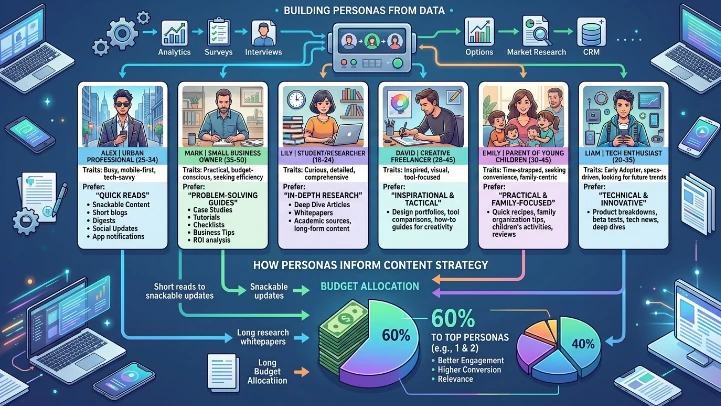
Build 5-7 personas from data. Persona 1: Urban professional, 25-34, prefers quick reads. Assign 60% budget to top personas.
How Does Audience Data Shape News Content Calendars?
Data shapes calendars by prioritizing topics with 3x engagement. Schedule based on peak times and audience peaks. Update weekly.
Map high-affinity topics to slots. Slot breaking news for mobiles at 8 AM. Use data for 25% more relevant publishes. UK sites schedule elections coverage for 45+ demographics. Tools like Airtable manage data-driven calendars.
What Personalization Techniques Leverage Audience Data?
Apply four techniques: dynamic content, recommendation engines, email customization, and adaptive homepages. Achieve 35% click increases.
Dynamic content swaps articles by user history. Recommendation engines suggest via collaborative filtering. Emails tailor subjects from opens. Homepages reorder by behavior.
Netflix-style systems in news boost time on site 40%. Implement via Optimizely A/B tests.
For ready solutions, check [Insert Link to BOFU Article].
How Do A/B Tests with Audience Data Improve Optimization?
Run A/B tests on headlines, formats, and placements using data segments. Test 10% traffic; scale winners for 22% uplift.
Define variants from data: Test long vs short headlines for low-engagement groups. Measure via conversion rates. Run 2-week tests.
Example: Test video thumbnails; video version lifts views 28% for 18-24s.
What Metrics Track A/B Test Success?
Track primary: click-through rate, secondary: session duration. Statistical significance at 95% confidence.
What Are Use Cases of Audience Data in UK News Sites?
Use cases span topic selection, format choice, distribution, and monetization. Deliver 25-40% performance gains.
Case 1: BBC segments for regional news; London traffic up 19%. Case 2: The Times personalizes newsletters; opens hit 38%. Case 3: Independent uses behavior data for video push; views double.
Case 4: Metro optimises mobile for commuters; sessions rise 31%.
How Do Privacy Regulations Affect Audience Data Use in the UK?
UK GDPR and PECR govern data collection. Obtain explicit consent for cookies. Anonymise data; retain 13 months max.
Conduct DPIAs for high-risk processing. Fines reach £17.5 million. 85% compliance via consent banners. Audit quarterly. Tools like OneTrust manage compliance.
Explore More Expert Insights:
How Audience Insights Increase Engagement & Time on Page
Tools & Techniques for Advanced Audience Insights
What Advanced Methods Enhance Data-Driven Optimisation?
Advanced methods include machine learning models, predictive analytics, and cross-device tracking. Boost accuracy to 88%.
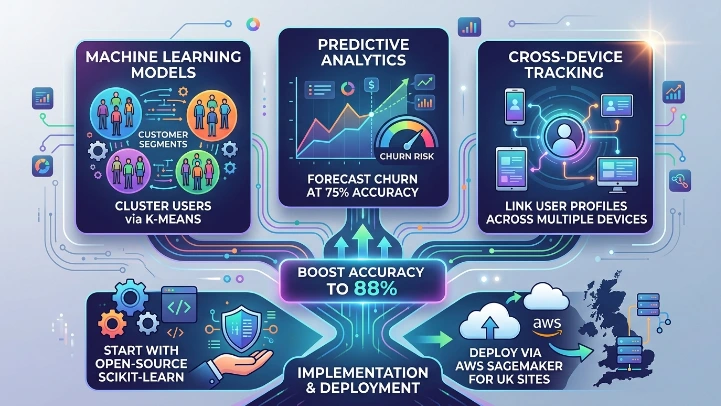
ML clusters users via k-means. Predictive models forecast churn at 75% accuracy. Cross-device links profiles. UK sites deploy via AWS SageMaker. Start with open-source scikit-learn.
How Do You Scale Audience Data Optimisation Across Teams?
Scale by centralizing data, training teams, and automating workflows. Editorial accesses via dashboards; 40% faster decisions.
Share via Google Data Studio. Train on data literacy quarterly. Automate with Zapier.
Large UK operations sync 50 metrics real-time.
What Challenges Arise in Using Audience Data and Solutions?
Challenges include data silos, quality issues, and skill gaps. Solve with integration, cleaning, and training.
Silos break via APIs. Clean with Python pandas. Train 80% staff in 3 months.
Overcome for sustained 20% yearly gains.