Event reminder ads are timed notifications or display ads that prompt users about upcoming events to increase purchase conversion within a defined time window. Ticketing platforms schedule these ads based on user intent signals and event timelines to re-engage interested audiences.
Event reminder ads run on display networks, social platforms, and in-app inventories. Ticketing platforms identify users who viewed event pages, searched for event details, or added tickets to a cart. Platforms then create audiences segmented by behaviour, date proximity, and purchase stage. Ads appear at strategic moments: when tickets go on sale, during early-bird periods, and in the final 7–14 days before the event. Delivery uses frequency caps and time-limited creatives to avoid oversaturation.
How platforms choose placements depends on cost-per-thousand impressions, viewability metrics, and historical conversion rates. Platforms measure click-through rate, view-through conversions, and direct purchase conversions to optimise schedules and creative rotation.
How do ticketing platforms define and capture buyer intent for reminder ads?
Buyer intent for reminder ads is defined by measurable user actions such as page views, event searches, cart additions, and email sign-ups; platforms capture these via tracking pixels, first-party logs, and consented email data.
Ticketing systems log user actions in event funnels. Key signals include repeat event page visits, session duration over 90 seconds, and adding seat selections. Platforms deploy tracking pixels on event pages and use hashed identifiers from email lists for matching. Platforms also ingest CRM interactions, such as newsletter opens and previous purchase history, to weight intent. Data is categorised into tiers: high intent (cart added, seat selected), medium intent (multiple page visits), low intent (single visit, search query).
Platforms set lookback windows tied to event dates. For example, they treat cart additions within 30 days of an event as high intent. Segmentation drives ad frequency and creative messaging. High-intent segments receive urgent reminders; lower-intent segments receive informational reminders about event highlights or ticket availability.
What ad formats and messages work best for event reminders?
Effective formats include short display banners, mobile-native interstitials, and dynamic social ads; messages emphasise ticket availability, price changes, and countdowns to drive purchases.
Dynamic creatives update event details automatically: dates, venue, seat types, and remaining ticket counts. Reminder ads use concise offers: “Tickets from £20,” “10 seats left in Row A,” or “Sale ends in 48 hours.” Platforms test variations: urgency-focused, benefit-focused, and scarcity-focused messages. Multimedia formats combine static images with 10–15 second video clips of performers or venue visuals to raise relevance.
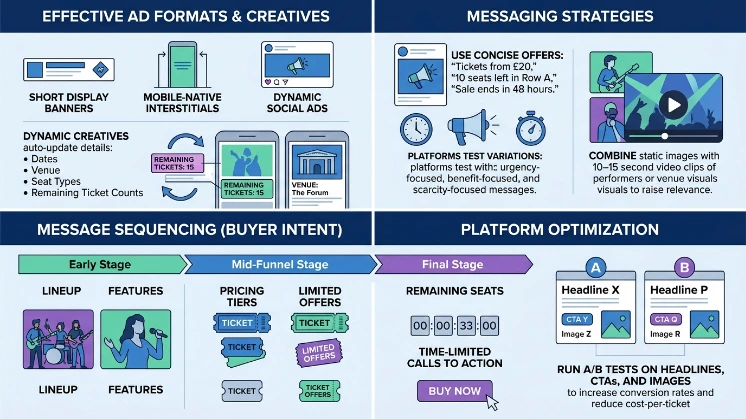
Message sequencing aligns with buyer intent. Early reminders highlight lineup and features. Mid-funnel reminders highlight pricing tiers and limited offers. Final reminders emphasise remaining seats and time-limited calls to action. Platforms run A/B tests on headlines, CTAs, and images to increase conversion rates and reduce cost-per-ticket.
How does timing influence the effectiveness of reminder ads?
Timing influences effectiveness by matching ad delivery to critical decision windows: ticket release, mid-sale, and 7–14 days before the event, with highest conversion typically in the final 72 hours.
Ticketing platforms set time buckets for reminder delivery. Primary buckets include launch day, early-bird closure, one month before, two weeks before, one week before, and last 72 hours. Each bucket uses tailored creative and a defined frequency cap, for example three impressions per user per bucket. Platforms prioritise users with high intent for late-stage reminders.
Real-time triggers adjust timing. For example, price drops, added dates, or seat availability updates trigger immediate reminders. Platforms also coordinate reminders with calendar invites and browser push notifications for users who opted in. These multi-channel touches reinforce urgency at key decision points and lift conversion rates closer to the event date.
What data and measurement methods do platforms use to optimise reminder campaigns?
Platforms use event-level tracking, conversion pixels, attribution models, and cohort analysis to measure ad impact and optimise campaigns by bid, creative, and audience.
Conversion tracking links ad impressions to ticket purchases using pixel-based tracking, server-to-server events, and first-party transaction data. Attribution models include last-click, linear, and data-driven multi-touch models to assign credit across ad interactions. Platforms run controlled experiments such as holdout groups to quantify lift attributable to reminder ads.
Key metrics include conversion rate, cost-per-conversion, return on ad spend, and view-through conversion rate. Cohort analysis compares behaviour across segments defined by intent, demographic, and acquisition channel. Platforms iterate on bidding strategies and creative rotation based on these metrics to reduce cost-per-ticket and increase incremental sales.
Which audience segments do ticketing platforms target with reminder ads?
Platforms target segments by behaviour, demographics, past purchases, and lookalike audiences derived from high-intent users to reach similar potential buyers.
Behavioral segments include cart abandoners, repeat event viewers, and wishlist or calendar subscribers. Demographic segments include age group, postcode, and device type. Purchase history segments include previous attendees of the same genre, venue, or artist. Platforms create lookalike audiences using top 1% to 15% similarity thresholds to expand reach beyond the core intent pool.
Segmentation rules ensure relevance. For example, a classical concert targets users aged 35–65 with prior purchases in the genre. A family-oriented festival targets postcode areas within a 30-mile radius and users listing family-friendly preferences. Platforms apply recency rules, excluding users who purchased tickets already and limiting frequency for low intent segments.
What privacy and consent practices govern reminder ads in the UK?
Reminder ads follow UK data protection rules, requiring lawful basis for processing, clear consent for tracking where needed, and transparent data retention policies.
Platforms obtain consent for cookies and tracking under the UK GDPR and PECR requirements. They provide granular cookie options and record consent timestamps. Platforms use first-party data processing where possible to reduce reliance on third-party cookies. Hashed email matching requires explicit consent and secure hashing methods.
Data minimisation limits stored attributes to what is necessary for ad delivery. Retention periods align with stated policies, typically 6–24 months for behavioural segments. Platforms implement opt-out mechanisms for ad personalisation and provide links to privacy notices in reminder ad creatives where regulations demand.
What benefits do event reminder ads deliver for ticketing campaigns?
Reminder ads increase conversion velocity, reduce cart abandonment, and improve return on ad spend by re-engaging interested users at defined decision windows.
Reminder ads lift conversion rates by re-contacting users already familiar with the event. Platforms report higher average order values for users who receive reminder sequences versus single-touch campaigns. Reminder ads also reduce wasted spend by prioritising high-intent segments and using dynamic creatives to match user context. Measurement through controlled experiments confirms incremental revenue generated within the campaign window.
Other measurable benefits include improved retention of ticket buyers for future events, higher email open rates when reminders complement CRM, and increased secondary sales for add-ons such as VIP packages or merchandise.
Explore More Expert Insights:
How Event Organizers Increase Ticket Consideration Using Display Ads
How Gaming Companies Build Player Interest Using Banner Campaigns
What are common use cases and examples of reminder ads in action?
Common use cases include ticket launch notifications, early-bird reminders, cart abandonment recovery, and last-minute sales pushes within 72 hours of the event.
Example 1: A theatre company sends a launch-day reminder to subscribers, then a two-week reminder focusing on premium seats, and a final 48-hour scarcity notice. Example 2: A music promoter targets users who viewed a festival page twice with dynamic ads showing remaining campsite spots and day-lineup updates. Example 3: An arena uses cart-abandonment data to send mobile push reminders with an offer of reserved seats for users who previously selected seats but did not complete checkout.
These use cases align audiences, timing, and creative to match user intent and maximise conversions.
How do platforms combine reminder ads with other channels?
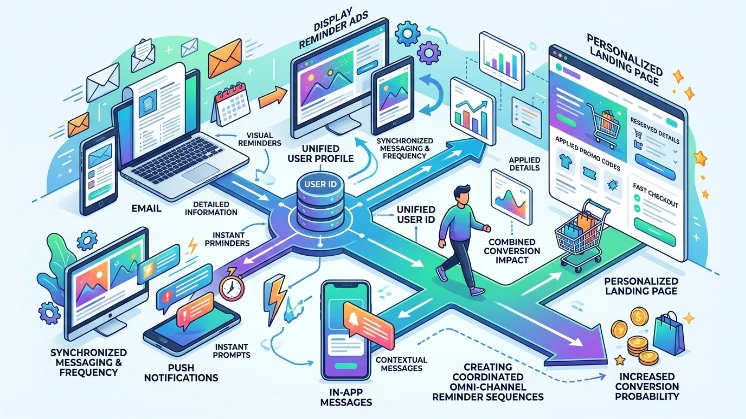
Platforms integrate reminder ads with email, push notifications, and in-app messages to create coordinated omni-channel reminder sequences that increase conversion probability.
Omni-channel sequences map user journey stages to channels: email for detailed information, display ads for visual reminders, and push notifications for instant prompts. Platforms synchronise messaging and frequency across channels to avoid duplication. They use unified user IDs to track interactions across channels and measure combined conversion impact.
Check the Complete Explanation:
How Ticketing Platforms Boost Sales Using Display Campaigns
Integration also supports personalised landing pages that reflect the ad creative and reduce friction at checkout. Platforms update landing pages with reserved seat details or applied promo codes to shorten the purchase path and capture conversions generated by reminder ads.
Explore More Useful Information:
Ticketing Retargeting Ads That Turn Event Browsers Into Buyers