
A research report topic is a specific subject boundary defining the scope of an investigation, dictating data collection parameters, shaping analytical frameworks, and addressing distinct informational demands within target geographic markets such as the United Kingdom.
Selecting a precise topic prevents scope creep during data collection. Researchers establish boundaries around demographic segments, industrial sectors, and geographic footprints before fielding surveys or querying databases. A clearly defined subject directs statistical modeling and qualitative coding efforts toward measurable outcomes.
Scope Definition Parameters
Scope definition establishes parameters for secondary data collection and primary research execution. Analysts isolate variables such as company size, geographic region, and industry classification to ensure collected metrics reflect specific market conditions. Clear boundaries eliminate irrelevant data points that distort final analytical conclusions.
Target Audience Alignment
Target audience alignment matches research scope with the informational requirements of commercial buyers, policymakers, or academic institutions. Analysts evaluate search volumes, professional queries, and industry pain points to identify subjects that deliver immediate utility. Aligning topics with active information needs guarantees readership demand upon publication.
How do you analyze UK search demand for research topics?
Analyzing UK search demand involves querying keyword databases, filtering results by geographic location, evaluating monthly search volumes, and isolating informational queries to identify subjects with active, sustained reader interest.
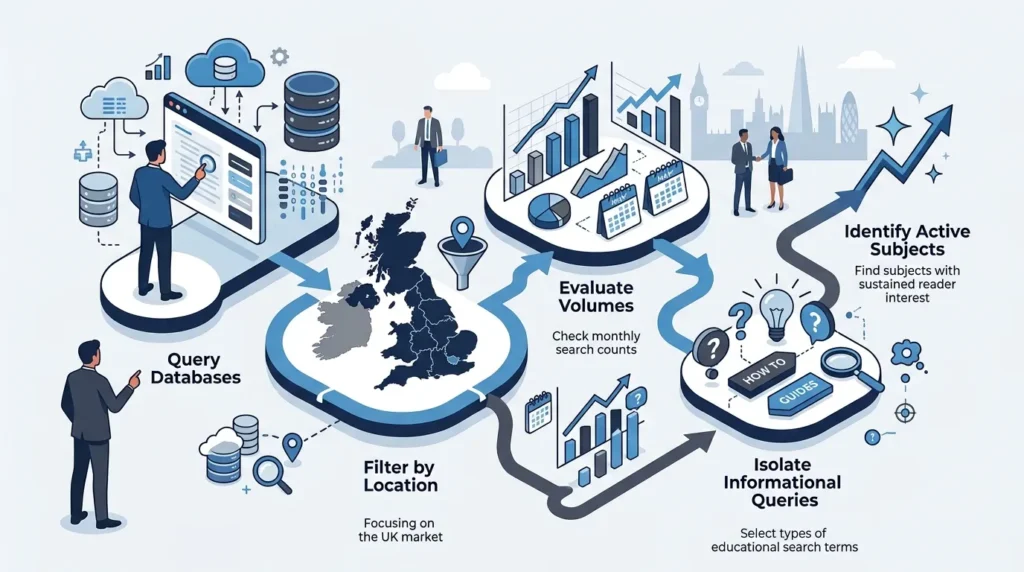
Keyword research tools reveal exact search terms used by audiences within the United Kingdom. Analysts export query data containing search volume metrics, click-through rates, and keyword difficulty scores. Filtering parameters specifically by the United Kingdom ensures local search intent supersedes global volume distortions.
Keyword Volume and Difficulty Metrics
Keyword volume measures the absolute frequency of user queries within a specific timeframe across the United Kingdom. Difficulty scores indicate the competitive threshold required to rank within search engine results pages. Researchers target topics exhibiting high monthly search volume alongside manageable competition levels to maximize organic visibility.
Informational vs. Commercial Intent
Informational intent manifests when users search for definitions, statistics, market overviews, or guides. Commercial intent appears when queries include transactional modifiers such as buy, hire, or agency. Research report topics require high informational search intent to capture audiences seeking deep-source data and analytical insights.
Explore More Expert Insights:
How Online Retailers Recover Abandoned Carts Using Banner Advertising
How E-commerce Stores Boost Sales Using Retargeting Banner Ads
What are the core components of a data-driven topic selection framework?
A data-driven topic selection framework comprises keyword research data, competitor content gap analysis, temporal search trend evaluation, and industry expert validation to verify commercial viability.
Implementing a structured framework eliminates guesswork from the topic selection process. Each component acts as a filter, removing low-interest subjects and highlighting high-performing themes. Data integration ensures final publication topics match proven market demand.
Competitor Content Gap Analysis
Competitor content gap analysis evaluates published reports from industry peers to locate unaddressed subtopics, outdated statistics, or missing geographic breakdowns. Researchers catalog existing publication titles and identify information voids. Filling these identified gaps captures traffic previously lost to competing publishers.
Temporal Search Trend Evaluation
Temporal search trend evaluation identifies seasonal spikes and long-term trajectory shifts in user interest across the United Kingdom. Analysts review historical data spanning multiple years to detect recurring spikes linked to fiscal year-ends, regulatory deadlines, or annual conferences. Timing publication releases to match these peaks captures maximum search visibility.
Why does audience alignment matter for research visibility?
Audience alignment matters because search engines prioritize content that satisfies specific user intent, meaning topics tailored directly to UK professional demographics achieve higher organic rankings and sustained citation rates.
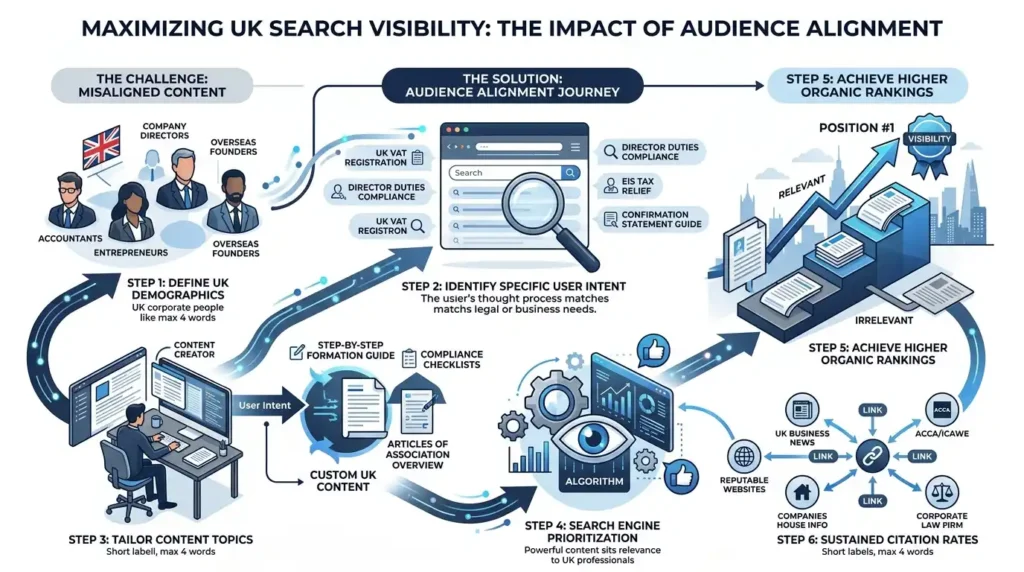
When a research topic directly addresses the operational questions of UK professionals, engagement metrics improve. Lower bounce rates and longer dwell times signal content quality to search algorithms. Higher algorithmic trust translates into top-tier search visibility and increased inbound citations from industry blogs.
Professional Demographics in the UK
Professional demographics in the United Kingdom encompass specific job titles, industry sectors, and organizational tiers such as fintech directors, NHS procurement officers, or manufacturing executives. Research topics must address the operational challenges unique to these specific cohorts. Generalized topics fail to capture the attention of specialized decision-makers.
Search Engine Citation Mechanics
Search engine algorithms evaluate textual clarity, structured headings, and direct answers to determine citation eligibility. Research topics structured around explicit user questions facilitate direct extraction into featured snippets and AI-generated overview panels. Clear entity usage ensures algorithms correctly categorize the report for relevant UK queries.
How do you validate a research topic before publishing?
Validating a research topic requires cross-referencing search volume data against industry regulatory updates, surveying target readership segments, and testing proposed titles against existing ranking difficulty metrics.
Validation acts as a final quality control gate before resource allocation begins for primary data collection and report drafting. Skipping validation risks publishing exhaustive documents that fail to attract organic search traffic or media citations.
Regulatory and Economic Indicators
Regulatory and economic indicators include upcoming legislation, compliance deadlines, and macroeconomic shifts specific to the United Kingdom. Topics aligned with incoming regulatory changes—such as environmental reporting mandates or financial compliance updates—experience immediate spikes in professional search demand.
Primary Audience Feedback Loops
Primary audience feedback loops involve testing proposed report titles and outlines directly with industry panels, advisory boards, or professional subscriber segments. Measuring response rates and qualitative feedback confirms whether the proposed scope addresses genuine operational pain points.