
Consumer insight reports reach UK retail readers through a multi-channel distribution network that combines B2B trade publishing, direct digital delivery, industry event syndication, and targeted professional networks to ensure research datasets reach commercial decision-makers across national retail organizations.
Digital Publishing and Direct Subscriber Delivery
Digital platforms form the primary delivery pipeline for contemporary consumer insight data. Research organisations distribute downloadable PDF documents, interactive web dashboards, and executive summaries directly to verified email subscribers. B2B retail publications use gated content models to collect user information before providing access to full datasets.
- Email Newsletters: Scheduled updates deliver executive summaries directly to retail directors, buyers, and merchandisers.
- Gated Portals: Secure web portals store comprehensive reports for enterprise subscribers accessing long-term trend data.
- RSS and News Feeds: Automated content feeds deliver instant alerts to retail professionals using industry news aggregators.
Understanding the baseline definitions of market data provides essential context for evaluating distribution effectiveness. Readers can review What Consumer Insight Reports Mean for UK Retail Brands to understand how market data shapes strategic planning across commercial sectors.
Physical Media and Print Distribution Pipelines
Print distribution remains an influential delivery channel for reaching senior executives within established UK retail businesses. Industry trade magazines embed research summaries into monthly physical issues distributed across head offices in commercial centers like London, Manchester, and Leeds.
- Executive physical briefings distributed directly to C-suite offices.
- Trade magazine supplements bound into monthly retail news publications.
- Conference materials handed out at major trade exhibitions such as Retail Week Live in London.
Why Is Target Audience Segmentation Essential for UK Retail Distribution?
Target audience segmentation ensures consumer insight reports reach specific decision-makers by categorising retail professionals based on job role, organizational size, sub-sector focus, and purchasing authority, eliminating irrelevant content delivery and increasing executive engagement rates.
Segmenting by Job Function and Operational Roles
Retail organisations contain distinct departments with specialized data requirements. Effective distribution strategy matches specific data points to the operational responsibilities of each job role.
| Retail Job Function | Primary Data Needs | Delivery Format Preference |
| Category Managers | Product demand, pricing elasticity, brand market share | Detailed data tables, quarterly analytical reports |
| Marketing Directors | Demographic shifts, consumer sentiment, campaign engagement | Visual presentations, trend summaries, infographics |
| Supply Chain Officers | Regional inventory demand, seasonal purchasing habits | Quantitative data feeds, operational forecasting models |
| E-commerce Leads | Online conversion rates, channel preferences, device usage | Digital dashboards, real-time analytics reports |
Segmenting by Retail Sub-Sectors
The UK retail market divides into distinct categories with unique consumer behaviors. Research distribution strategies customize content delivery based on specific sub-sector realities:
- Fast-Moving Consumer Goods (FMCG): Grocery chains require high-frequency weekly data regarding household spending patterns at supermarkets like Tesco, Sainsbury’s, and Asda.
- Apparel and Fashion: Fashion retailers require seasonal trend predictions and sustainability sentiment data across fashion hubs.
- Consumer Electronics: Specialist technology retailers need technical specification demand metrics and lifecycle replacement data.
What Key Channels Transport Consumer Insight Data to UK Retail Executives?
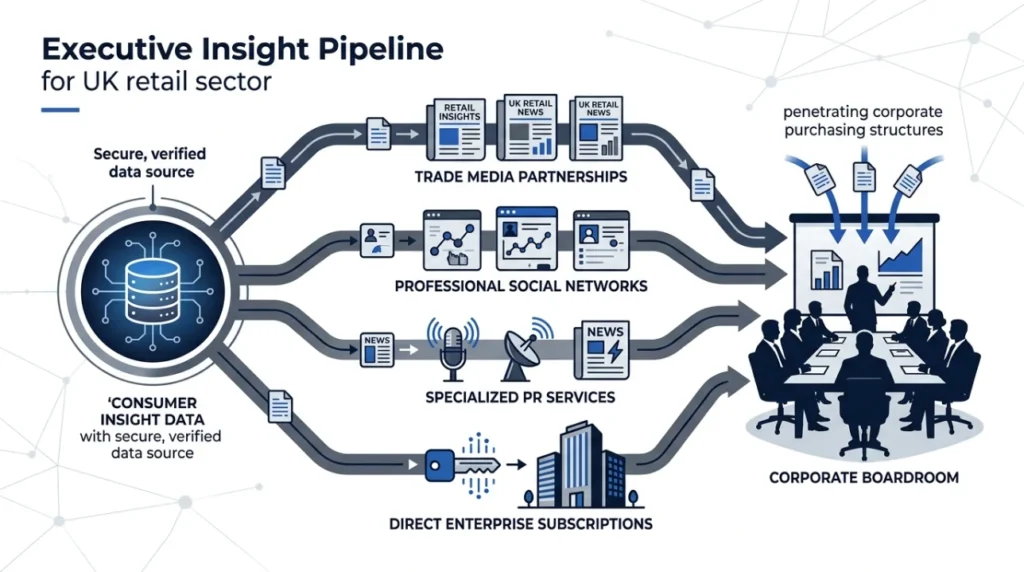
Consumer insight data moves to UK retail executives through trade media partnerships, professional social networks, specialized PR distribution services, and direct-to-enterprise research subscriptions designed to penetrate corporate purchasing structures.
Trade Publications and B2B Media Networks
Established trade media brands act as trusted intermediaries between research creators and retail professionals. These media outlets maintain verified subscriber lists containing thousands of verified industry professionals across the UK.
B2B publishers integrate research findings into daily news coverage, sponsored feature articles, and dedicated research portals. By leveraging the existing credibility of established B2B publications, research providers gain immediate access to decision-makers who read industry news daily.
Professional Networks and Digital PR Syndication
Professional networking platforms provide targeted delivery mechanisms for B2B research content. Digital PR campaigns distribute press releases containing key research findings to major national news outlets and specialized trade journalists.
- LinkedIn Sponsored Content: Precise demographic targeting reaches UK professionals by exact job title, company size, and industry sector.
- Digital PR Campaigns: Targeted wire services deliver research press releases directly to journalists at publications like Retail Week and The Grocer.
- Industry Podcasts: Audio summaries and expert interviews stream research findings directly to commuting executives.
Evaluating specific corporate publishing solutions allows organisations to select the ideal distribution partner. Decision-makers can explore Consumer Insight Reports by Time Intelligence Media Group to evaluate specialized corporate distribution networks designed for maximum reader reach.
Explore More Expert Insights:
Headlines for Sponsored Articles: 9 Formulas That Drive UK News Reader Clicks
Sponsored Content Calendar Planning: A 12-Month UK Framework for B2B Brands
How Do Data Formats Impact Reader Engagement in the UK Retail Sector?
Data formats directly dictate reader engagement by determining how quickly UK retail professionals can interpret, extract, and apply research findings to business decisions, with visual dashboards and executive summaries outperforming dense technical documents.
Visual Presentation and Executive Summaries
Time constraints prevent senior retail managers from reading lengthy narrative reports during daily operations. Short visual formats present quantitative findings clearly, driving higher engagement and retention rates.
- Executive Summaries: Two-page documents highlighting top three strategic implications.
- Data Dashboards: Interactive visual layouts allowing users to filter metrics by region or demographic.
- Infographics: High-impact visual assets suitable for internal corporate presentations and board meetings.
Technical Datasets and Raw File Delivery
Data analysts and commercial strategists require access to raw data matrices to perform internal modeling. Providing underlying data files alongside summary reports ensures full utility across all corporate tiers.
- CSV and Excel Spreadsheets: Full statistical matrices formatted for integration into corporate business intelligence software.
- API Data Feeds: Direct programmatic connections delivering live research metrics straight into enterprise management systems.
- Slide Decks: Pre-formatted presentation slides containing charts and source references for internal strategy meetings.
What Are the Commercial Benefits of Targeted Insight Distribution for Retail Brands?
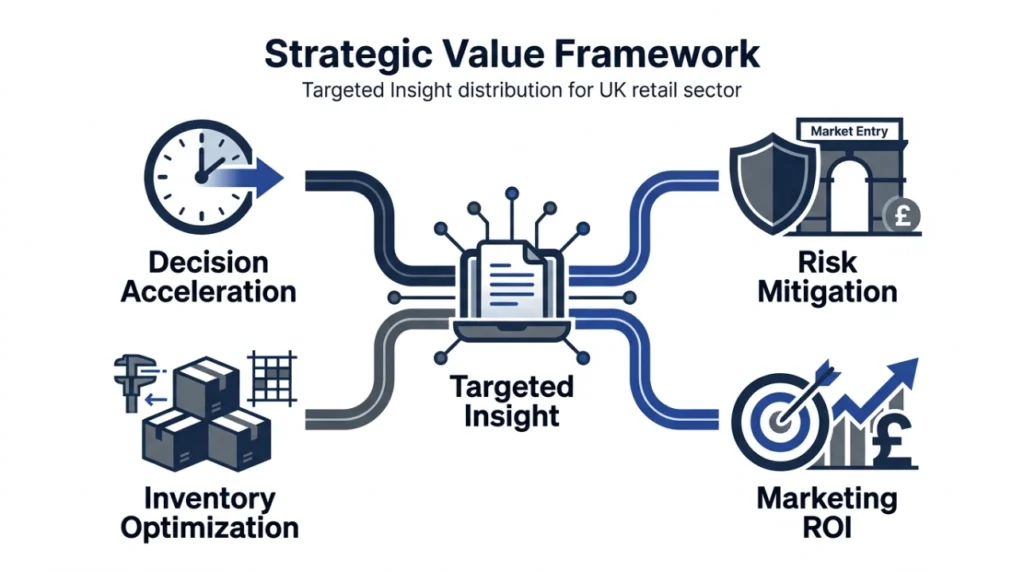
Targeted insight distribution provides commercial benefits by accelerating strategic decision-making, reducing market entry risks, optimizing inventory planning, and improving marketing campaign return on investment for UK retail businesses.
Accelerating Strategic Decision-Making and Risk Reduction
Delivering precise consumer data directly to relevant managers reduces reliance on assumptions during product development and inventory planning. Timely intelligence prevents costly strategic missteps in competitive markets.
- Inventory Alignment: Aligning stock orders with verified consumer demand patterns reduces end-of-season markdown losses at physical stores.
- Pricing Optimization: Applying price-elasticity insights protects profit margins during inflationary economic periods in the UK market.
- Promotions Planning: Tailoring promotional schedules to match verified household spending habits increases overall promotional ROI.
Enhancing Competitive Position and Market Share
Retailers using distributed consumer research adapt faster to shifting market dynamics than competitors relying solely on internal historical data. Continuous access to external consumer sentiment data allows commercial teams to identify emerging product categories early.
- Trend Identification: Early adoption of emerging consumer trends, such as plant-based foods or sustainable packaging materials.
- Competitor Benchmarking: Assessing brand performance against sector averages across key retail metrics.
- Customer Retention: Adjusting service offerings based on measured shifts in consumer expectations regarding delivery speed and store experience.
How Will AI and Automation Transform Report Distribution to UK Retailers?
AI and automation transform report distribution by enabling hyper-personalized content feeds, automated research summaries, predictive delivery timing, and natural language search interfaces that allow retail readers to query complex datasets instantly.
Automated Personalization and Predictive Delivery
Artificial intelligence engines track individual reader behavior to customize content delivery automatically. Algorithmic delivery platforms analyze historical reading habits to push relevant insight modules to specific executives at optimal engagement times.
- Behavioral Content Curation: Automated systems send customized research snippets based on articles previously read by the executive.
- Predictive Timing: Algorithms deliver email briefings at the precise time an executive typically checks industry communications.
- Dynamic Data Filtering: Web portals automatically highlight statistics relevant to the user’s specific region or product category.
Conversational Interfaces and Natural Language Queries
Future distribution models replace static PDF documents with interactive AI query systems. Retail decision-makers query large research databases using plain text questions, receiving immediate synthesized answers sourced directly from underlying research sets.
- Instant Fact Extraction: Users receive specific metric answers without searching manually through multi-page documents.
- Cross-Report Synthesis: AI systems synthesize insights from multiple research reports published across different calendar quarters.
- Automated Slide Generation: Natural language tools transform raw research data into structured presentation slides automatically on demand.