

In 2025, 91% of UK B2B marketers reported increasing content output compared with 2024. The average increase was 48% in published assets per month, driven by higher cadence for blogs, newsletters, case studies, and short-form video.
Data sources include industry surveys and platform reporting. The shift reflects budget reallocation toward owned channels and demand for topical, timely content. Measured increases varied by company size: 58% average rise for firms with under 50 staff, 52% for firms with 50–249 staff, and 35% for enterprises with 250+ staff. These figures show smaller teams scaled faster in relative terms.
How did firms measure “content output”?
Content output was defined as the count of distinct content assets published on owned and directly controlled channels. Assets included blog posts, white papers, case studies, email newsletters, recorded webinars, podcasts, and short-form videos under 5 minutes.
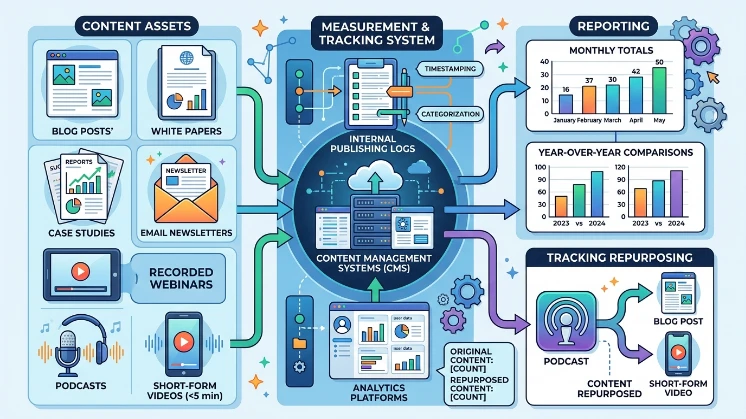
Measurement came from internal publishing logs, content management systems (CMS) and analytics platforms that timestamped and categorised each asset. Typical reporting used monthly totals and year-over-year comparisons. Organisations that tracked repurposing distinctly reported separate tallies for original versus repurposed content.
Why did 91% of UK B2B marketers increase output in 2025?
Marketers increased output to meet rising buyer expectations for topical content, to improve SEO visibility, and to supply more account-based marketing sequences. Strategic priorities included thought leadership, demand generation, and nurturing pipeline across longer buying cycles.
Budget shifts favored content creation over large single events. Regulatory and economic news cycles in the UK drove demand for frequent updates. Buyers required multiple touchpoints: technical buyers sought in-depth guides and case studies, while procurement used short-form summaries and pricing FAQs. Teams responded by publishing more diverse asset types and creating modular content for reuse.
Which tactical changes supported higher output?
Teams adopted standard operating procedures (SOPs) for content creation, clearer editorial calendars, and role specialisation. Firms used content briefs with defined objectives, formats, target persona, and distribution channel. Editorial calendars scheduled topics at least 90 days ahead and assigned production deadlines. Workflow automation handled approvals and publishing tasks. Content templates standardise structure for blogs, case studies, and emails, reducing production time per asset by an average of 27%. Outsourcing increased: 43% of teams engaged external writers or producers for at least part of their workload.
What content formats produced the best engagement for UK B2B audiences?
Long-form technical guides, customer case studies, concise executive summaries, short-form video (under 3 minutes), and product explainer webinars generated the highest engagement. Case studies and technical guides drove conversion lift; short-form videos boosted initial awareness and social engagement.
Long-form guides delivered sustained organic traffic and backlinks. Example: a 5,500-word technical guide published by a software vendor attracted 12,000 organic visits and 47 backlinks in six months. Case studies converted mid-funnel leads by demonstrating measurable outcomes; one case study reporting a 43% cost reduction for a client produced a 4.2% uplift in demo requests. Short-form videos increased click-through rates from social feeds by 62% relative to static posts.
How did distribution affect format performance?
Owned channels company blogs, email lists, and resource centres drove the majority of qualified traffic. Social platforms amplified reach for short-form assets. Paid social and programmatic promoted high-value, long-form pieces to named accounts. Syndication with trade publications delivered sector credibility for case studies. Email segmentation that matched content type to buyer persona improved open rates by 18% and click rates by 21%. Content that combined an executive summary with a downloadable technical appendix performed well across audiences.
How did teams maintain content quality while increasing quantity?
Teams enforced editorial standards, used templates, applied multi-stage reviews, and measured performance to prioritise high-impact topics. Quality control relied on style guides, fact-checking, SEO checks, and content scorecards during production.
Editorial standards defined tone, citation requirements, and technical accuracy checks. Templates embedded required SEO fields: title tag, meta description, H1, H2s, and internal linking placeholders. Multi-stage reviews included subject-matter expert (SME) validation and a final editorial read focused on clarity and compliance. Content scorecards evaluated relevance, originality, SEO optimisation, and conversion potential; assets scoring below the threshold were revised or withheld. These controls preserved credibility and reduced rework time.
What role did SEO and topical relevance play in output decisions?
SEO and topical relevance determined publishing cadence and topic selection. Keyword opportunity analysis, competitor gap audits, and news-jacking calendars prioritised assets with clear organic traffic and lead potential.
Teams used monthly keyword opportunity reports to identify queries with high search volume and low content depth. Competitor gap audits revealed topics competitors lacked, prompting authoritative long-form pieces. News-jacking calendars mapped regulatory and economic events to timely content launches. SEO-driven assets targeted three intent layers: awareness (how/what queries), consideration (comparisons and guides), and decision (case studies and pricing FAQs). This alignment produced higher organic visibility and qualified traffic.
Which KPIs signaled successful SEO-driven output?
Teams tracked organic sessions, keyword rankings, backlinks, time on page, and lead conversion rates from organic traffic. A common success threshold used: a 25% increase in organic sessions within 90 days and at least one ranking on page one for targeted keywords within six months. Backlink acquisition and domain authority shifts marked broader authority gains.
What operational models scaled output fastest?
Centralised editorial teams with decentralised contributor networks scaled fastest. Core teams handled strategy, SEO, and final editing; subject-matter experts and freelance networks supplied raw content and rapid reviews.
This model balanced control and speed. Core teams produced briefs, managed editorial calendars, and enforced quality. Decentralised contributors—internal SMEs, external agencies, and freelancers—created drafts and short-form media. Centralised tooling (CMS, editorial calendar, content scorecards) consolidated tracking. This approach shortened production cycles from idea-to-publish by 32% for high-priority content.
Explore More Expert Insights:
Sponsored Content Gets 22× More Engagement Than Display Ads: UK Data
How B2B Brands Use Sponsored Content to Build Trust with UK Decision Makers
What benefits did UK B2B firms report from higher output?
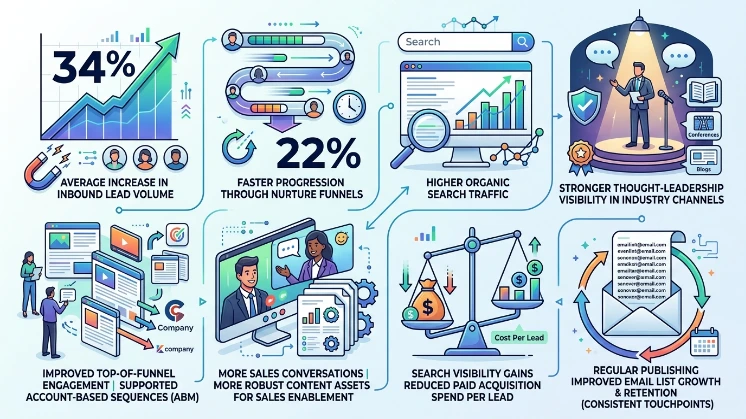
Reported benefits included 34% average increase in inbound lead volume, 22% faster progression through nurture funnels, higher organic search traffic, and stronger thought-leadership visibility in industry channels.
Higher cadence improved top-of-funnel engagement and supported account-based sequences. Firms reported more sales conversations and more robust content assets for sales enablement. Search visibility gains reduced paid acquisition spend per lead. Regular publishing improved email list growth and retention through consistent touchpoints.
How should UK B2B teams plan content output for 2026?
Plan output around buyer intent, event calendars, and measurable KPIs. Prioritise high-value evergreen assets, maintain a 90-day editorial pipeline, and assign clear ownership for strategy, production, and measurement.
Start by auditing current assets and mapping them to buyer journey stages. Allocate 60% effort to evergreen technical guides and case studies, 30% to timely topical pieces, and 10% to experimental short-form media. Use monthly performance reviews to reallocate resources toward top-performing topics and formats.
For More Information, Explore:
How to Brief a UK Publisher for Sponsored Content That Actually Converts for teams that need publisher collaboration strategies.
For More Details, Explore:
Sponsored Content ROI Tracker: A 6-Month UK News Campaign Dissected for teams that need ROI measurement templates.



