A UK press release in 2026 should be between 300 and 800 words, with a 400–600-word sweet spot for standard newsroom distribution and SEO visibility. This length balances clarity, journalist needs, and search engine indexing.
Newsrooms and online publications prefer concise, factual releases. A 300–800-word range gives reporters essential facts and context without excessive detail. Shorter releases (300–400 words) serve quick announcements and reactive news. Mid-length releases (400–600 words) work for product launches, research summaries, and policy statements. Longer releases (600–800 words) suit complex topics that require background and data. Exceeding 800 words requires clear sectioning and a strong reason, such as technical appendices or regulatory disclosures.
Why does length matter for press release effectiveness?
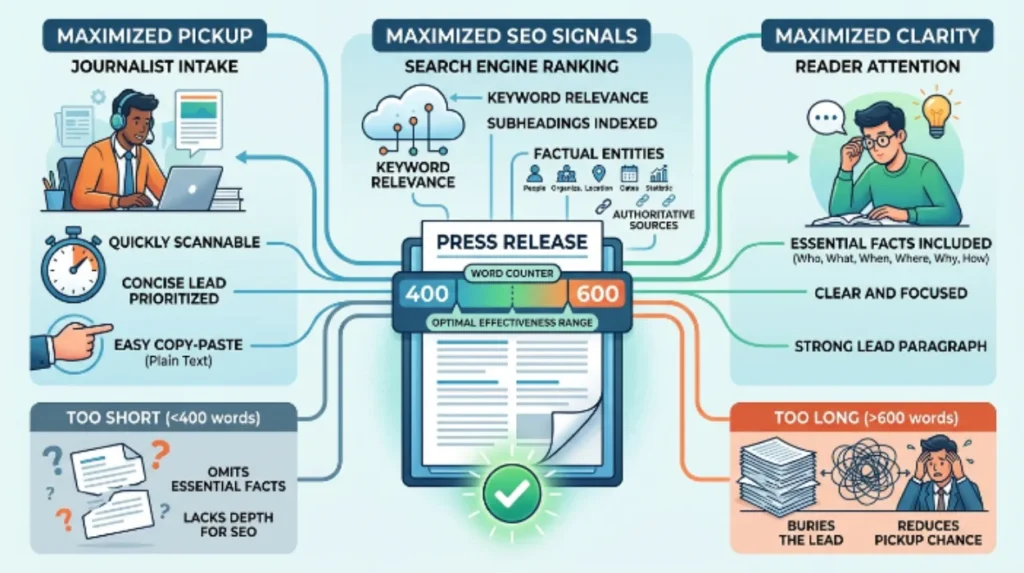
Length affects journalist uptake, reader attention, and search engine ranking; 400–600 words maximises pickup, clarity, and SEO signals. Journalists scan releases quickly and prioritise concise leads, factual body, and clear quotes. Search engines index structured content better when it includes relevant keywords, subheadings, and factual entities.
Press releases that are too short omit essential facts who, what, when, where, why, and how. Press releases that are too long bury the lead and reduce the chance of media pickup. SEO performance improves when releases provide enough context and entities for semantic understanding: named people, organisations, locations, dates, statistical figures, and linked authoritative sources. Use one clear headline, a strong lead paragraph, factual quotes limited to one or two, and a brief boilerplate. For digital distribution, include plain-text and HTML versions; journalists prefer plain text for copying.
How should a press release be structured at the recommended length?
Structure a 400–600-word release with headline, 30–40-word lead, fact-rich body, one quote, context paragraph, and 20–40-word boilerplate. Use inverted pyramid style: most important facts first, supporting details next, and background last.
Start with a clear headline that includes the main entity and action. Follow with a lead paragraph that states the main news and includes the key facts: entity, event, date, location, and impact. The body should present supporting facts, data points, and specifics. Include one factual quote that adds perspective without hyperbole. End with a context paragraph offering background and a short boilerplate that defines the issuing organisation in one sentence. For complex topics, include a short paragraph listing sources or data references; appendices or links can hold full datasets.
What elements must be included regardless of length?
Every UK press release must include a clear headline, dateline, lead paragraph with the six basic facts, attribution, contact details, and a brief organisation description. These elements ensure media use and legal clarity.
The headline must state the main news and include the primary keyword where relevant. The dateline should show city and date. The lead must answer who, what, when, where, why, and how in the first 30–40 words. Attribution identifies spokespeople by name and role. Contact details must list a media contact name, email, and phone number. The organisation description defines the issuer in one short sentence and may mention sector, size, or location. If embargoes apply, state the embargo time and date clearly at the top.
How should factual content and data be presented?
Present data with exact figures, dates, percentages, and source names; place critical numbers in the lead and expand with context later. Use specific numbers for scale and impact: absolute figures, percentage changes, sample sizes, and publication dates.
When citing statistics, name the source and report title or dataset and include publication dates. Use exact currency symbols and dates in UK format when relevant. Avoid vague adjectives. For surveys, state sample size and sampling method. For research, state the journal, DOI, or publisher. For regulatory or legal matters, cite statutory references and effective dates. Journalists favour traceable facts that they can verify quickly.
How does SEO influence press release length and wording?
SEO requires inclusion of the primary keyword, relevant named entities, and 400–600 words to allow search engines to index context and related phrases. Use the primary keyword in the headline and lead. Include semantic variations and entities such as organisation names, locations, dates, and product names.
Search engines parse releases for structured signals: headline, lead, subheadings if present, and entity-rich sentences. A 400–600-word release contains enough context for entity recognition and related keyword variations. Use one canonical link to an authoritative source. Avoid keyword stuffing; place the keyword naturally in the first 100 words and again in supporting sentences. Provide structured metadata in HTML versions: meta title, meta description, and schema.org markup for NewsArticle or PressRelease where possible.
When should a release be shorter than 300 words?
Keep releases under 300 words for urgent updates, brief statements, or when only one core fact requires distribution. Short releases suit immediate corrections, short event cancellations, personnel appointments, or short results.
For urgent updates, place the essential fact in the first sentence and provide contact details. Limit quotes and background to one brief sentence each. Short releases work for social media amplification and mobile reading. If additional context exists, prepare a linked longer backgrounder or fact sheet for journalists.
When is a release longer than 800 words appropriate?
Use releases over 800 words only for highly technical reports, regulatory filings, white paper summaries, or multi-stakeholder announcements that require detailed context. Long releases must include clear subheadings and a summary lead to aid scanning.
Long-form releases suit government policy statements, detailed research summaries with multiple findings, or regulatory disclosure that requires legal precision. Break content into short paragraphs and use numbered lists in the longer background material if distribution format supports it. Provide an executive summary at the top for quick journalist assessment. Attach or link to full reports, datasets, and appendices rather than embedding all material in the main release.
What role does mobile and newsroom workflow play in length choice?
Mobile readership and newsroom workflows favour concise releases; 400–600 words fit journalist scanning habits and mobile reading formats. Journalists use mobile devices for initial assessment; short leads and clear facts enable decisions on coverage.
Newsrooms ingest high volumes of releases; they prioritise items that present a clear news peg in the first paragraph. Releases optimized for newsroom workflows include plain-text format, short paragraphs, and clear contact details. For digital-first newsrooms, include a short bullet-style summary in the body for quick scanning in email or on mobile.
Explore More Expert Insights:
What FCA and ASA Rules Mean for Regulated UK Press Releases
How UK Trade Press Differs From National Media for Product Launches
How should UK-specific considerations affect length and content?
UK press releases must use British English spelling, local date formats, and reference UK institutions, laws, and statistics with precise citations. Use day-month-year date format, metric units where applicable, and spellings such as “organisation” and “labour” for institutional names.
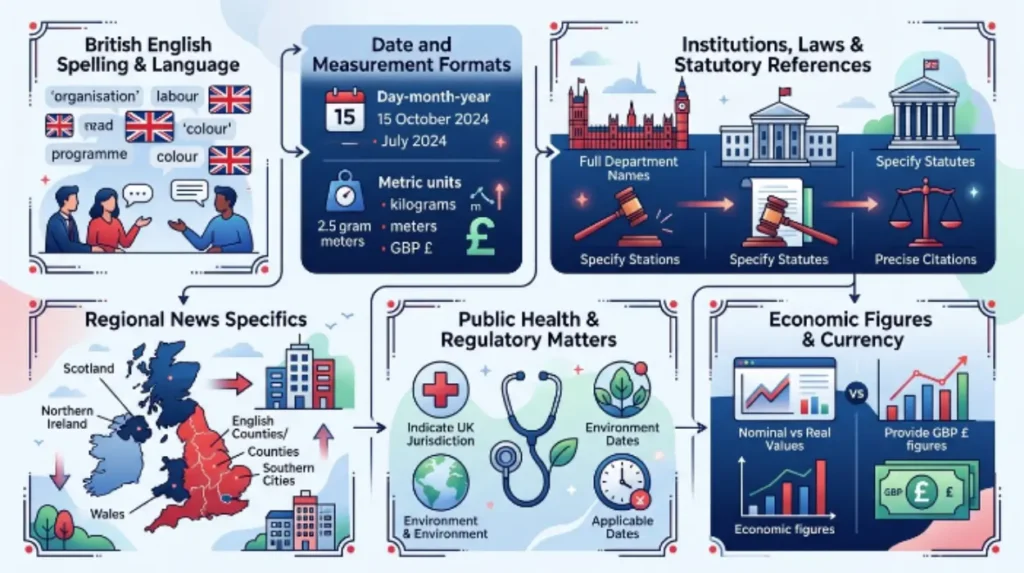
When referencing UK government departments, agencies, or regulations, include full department names and relevant statutory references. For regional news, specify city, county, or devolved nation. For public health or regulatory matters, indicate the applicable UK jurisdiction and effective dates. For economic figures, state whether values are nominal or real and provide currency in GBP.
What practical checklist ensures a press release is the right length and quality?
Validate headline clarity, 30–40-word lead with six basic facts, 400–600 words of body with exact figures, a single factual quote, dateline, contact details, and a one-sentence boilerplate. Run a final Check: remove fluff, confirm numbers and sources, convert to plain text, and include a link to supporting documents.
Ensure the release contains named entities for organisations and people, explicit dates and locations, and one authoritative source per major claim. Confirm compliance with any legal or regulatory disclosure requirements. For online distribution, provide both plain-text and HTML versions and include schema.org markup when possible.
Read the Detailed Explanation:
Guaranteed Placements vs Earned Coverage: What UK Buyers Should Expect
A well-crafted UK press release in 2026 typically runs 300–800 words, with 400–600 words as the optimal target. This range supports journalist needs, mobile consumption, and SEO indexing while allowing clear presentation of facts, data, and context. For urgent short statements use under 300 words; for technical or regulatory materials use over 800 words with clear summation and attachments.
Click Here to Explore More:
How Time Intelligence Media Group Handles Same-Day PR Distribution in the UK