
A PR distribution report documents when and where a press release went, which outlets received it, and measurable outcomes such as pickup, impressions, and backlinks. It records timestamps, distribution lists, and any embargo details for audit and analysis.
A clear definition sets expectations. A distribution report ties distribution metadata to coverage metrics. Metadata includes send time, distribution channels, geographic targeting, and embargo status. Coverage metrics include number of pickups, time-to-publication, outlet names, and placement type. Engagement metrics include estimated impressions, social shares, and backlinks. Reports for the UK should separate national, regional, broadcast, and trade outlets because each follows different editorial rhythms.
What core components must a UK PR distribution report contain?
Essential components include distribution metadata, outlet list with reach figures, pickup instances with timestamps, placement type, content versions sent, and analytics for impressions, referral traffic, and backlinks.
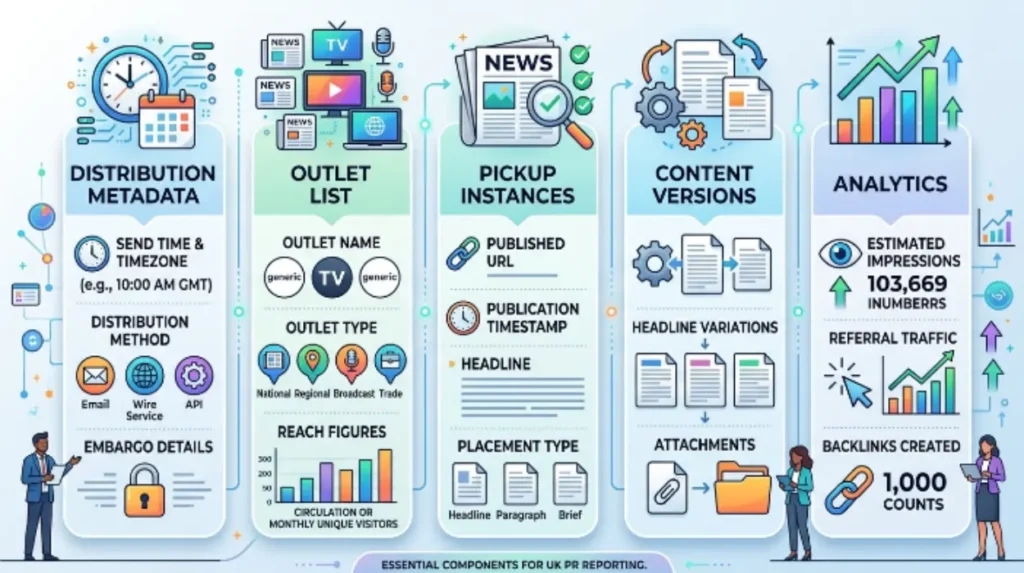
Distribution metadata documents the exact send time and timezone, distribution method (email, wire, API), and embargo details. Outlet lists show outlet name, outlet type (national, regional, broadcast, trade), and claimed circulation or monthly unique visitors. Pickup instances list published URL, publication timestamp, headline, and placement (headline, paragraph, brief). Content versions track headline variations and attachments. Analytics show estimated impressions, referral traffic to the source, and any backlinks created by outlets.
Which metrics reliably indicate real media impact?
Reliable metrics measure unique outlet pickup, time-to-publication, direct referral traffic, and authoritative backlinks. These metrics link coverage to audience and confirm editorial use rather than distribution volume.
Unique outlet pickup counts how many distinct media organisations published the story. Time-to-publication measures hours between send and publication, showing timeliness. Referral traffic shows readers who reach the source via the published coverage and uses analytics with UTM tags. Authoritative backlinks from newsroom domains provide SEO value and demonstrate editorial citation. Credible reach figures come from publisher-audited metrics such as ABC circulation or industry-standard digital audience estimates.
Which common metrics mislead PR teams?
Misleading metrics include total impressions from distribution lists, aggregated circulation claims, press release views on distribution platforms, and raw email open rates. These inflate perceived reach without proving editorial publication or audience engagement.
Distribution platforms report potential impressions based on subscriber counts; these represent theoretical maximums, not measured reads. Aggregated circulation claims double-count syndicated audiences and do not reflect unique readers. Press release page views on the distributor site measure interest in the release page, not editorial coverage. Email open rates do not confirm a reporter read or acted on the release. Relying on these metrics leads to overestimation of impact.
How should UK PR teams validate reported coverage?
Validate coverage by checking live published pages, capturing screenshots, recording publication timestamps, verifying domain authority, and tracking referral traffic and backlinks via analytics platforms and link crawlers.
Manual verification confirms that reported pickups correspond to actual published articles. Capture live URLs and archive screenshots with timestamped records. Check domain authority and publisher credibility. Use analytics with UTM parameters to measure referral visits from published coverage. Use backlink crawlers to confirm editorial links. Log any discrepancies between distribution platform reports and actual published results for post-campaign evaluation.
How do embargoes and exclusives appear in distribution reports?
Reports must show embargo timestamps, exclusive offers, recipient lists for exclusives, and any embargo breaches. This documents which outlets had early access and whether embargo rules were respected.
Embargoed releases include a clear embargo lift time and recipients. Reports should record distribution timestamps and any pre-embargo shares. Exclusive deals list the outlet given exclusivity and any agreed publication window. Track if an outlet published before embargo lift to identify breaches. Accurate embargo records protect relationships with journalists and support later analysis of pick-up patterns linked to embargo strategy.
Which metrics matter for sector-specific UK campaigns?
Sector metrics vary: for financial PR, market reaction and analyst mentions matter; for health PR, regulatory commentary and patient-group coverage matter; for local government, regional pickup and civic engagement metrics matter.
Define success metrics by sector before distribution. Financial campaigns track coverage coinciding with market opens and citations in business index reporting. Health campaigns track mentions in NHS-facing publications and coverage that quotes health authorities. Local government campaigns track regional newspapers, council bulletin pickups, and local referral traffic. Trade media campaigns track specialist outlets and trade association endorsements. Separate sector metrics in reports for accurate attribution.
How should PR teams interpret reach and impressions data?
Treat reach and impressions as indicative estimates, not proof of readership. Cross-check with unique outlet pickup, referral traffic, and engagement metrics to assess actual audience impact.
Reach numbers represent theoretical maximum audience based on publisher claims. Use them for high-level comparisons across campaigns but not as sole proof of impact. Combine reach with unique pickup counts and analytics for referral behaviour. Prioritise metrics showing real user action: clicks, page time, and conversions when relevant. Adjust future targeting based on outlets that deliver measurable referral traffic.
Explore More Expert Insights:
Time Intelligence Media Group, or In-House: The Right UK Distribution Model for Your Stage
Press Release Distribution Mistakes: What 300 UK Campaign Audits Revealed
How often should teams audit and compare distribution reports?
Audit distribution reports after every major campaign and run quarterly comparisons. Use consistent metrics and day-part segmentation to identify distribution windows and outlet performance trends.
Post-campaign audits verify claims and collect evidence for reporting. Quarterly comparisons reveal publisher consistency and seasonal patterns. Use standardized metrics across reports to ensure comparability. Segment results by send hour and day of week to identify optimal windows. Track top-performing outlets and reallocate targeted outreach based on historical performance.
What actionable steps improve report quality and interpretation?
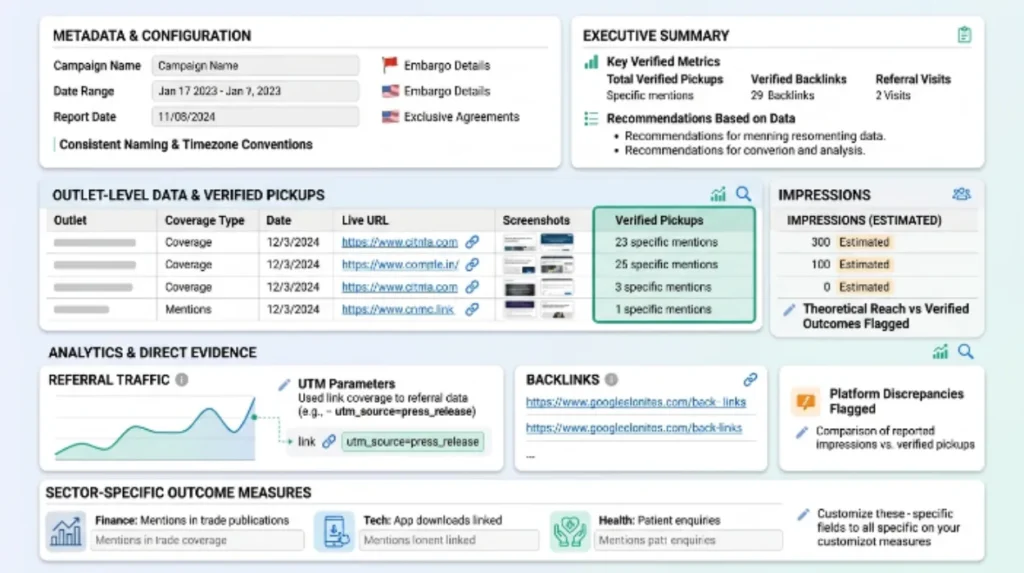
Standardise report fields, include live URLs and screenshots, attach analytics evidence, separate theoretical reach from verified pickups, and add sector-specific outcome measures. Use consistent naming and timezone conventions.
Create a report template covering metadata, outlet-level data, verified pickups, impressions (marked as estimated), referral traffic, backlinks, and screenshots. Use UTM parameters to link coverage to referral data. Mark embargo details and exclusive agreements. Flag discrepancies between platform claims and verified outcomes. Include a short executive summary with key verified metrics and recommendations based on data.
Find Out More:
What Time of Day Gets UK Press Releases the Most Coverage
A robust UK PR distribution report separates verified editorial pickup from distribution-stage estimates. Focus on unique outlet publication, time-to-publication, referral traffic, and backlinks. Treat distribution platform impressions as indicative only. Standardise reporting fields, verify live URLs with timestamps, and align sector-specific metrics to campaign goals. Use quarterly audits to refine distribution timing and outlet targeting.
Read the Full Blog Here:
How Time Intelligence Media Group Guarantees UK National Media Reach