
It means 73% of press releases distributed in the UK receive no earned media pickup in newspapers, websites, broadcast segments, or influential blogs. ‘Pickup’ refers to editorial publication, syndication, or journalist-driven coverage beyond the original release distribution list.
Press release pickup measures editorial engagement. Pickup excludes paid placements and social reposts by the issuing organisation. The 73% figure reflects industry analyses comparing total distributed releases to the subset that results in third-party editorial coverage. Pickup rates vary by sector, timing, and distribution quality.
Why do so many UK press releases fail to reach journalists?
Many press releases fail because they lack clear news value, target the wrong recipients, arrive at poor times, use generic formats, or duplicate widely circulated material. Journalists filter high volume by relevance, novelty, and source credibility.

News value defines editorial interest. Journalists prioritise unique data, exclusive access, or local relevance. Generic announcements about routine hires, product restatements, or vague corporate milestones do not meet editorial thresholds. Distribution volume is high: large PR outputs create noise that reduces individual visibility. Poorly targeted lists and mass blasts dilute relevance. Timing matters: releases sent outside newsroom hours or during major news events are ignored. Formatting issues, long lead paragraphs, missing facts, or lack of quotes slow journalist assessment and reduce pickup likelihood.
How is “pickup” measured in PR analytics?
Pickup is measured by counting third-party editorial placements, links from independent news sites, broadcast mentions, syndicated articles, and citations within a defined time window after distribution. Metrics include count of placements, audience reach, and quality of outlet.
Measurement systems use media monitoring, web crawlers, and broadcast transcripts to identify editorial echoes of the release. Typical windows are 24–72 hours for immediate stories and up to 30 days for follow-ups. Metrics capture raw placement numbers, estimated audience size, backlinks for SEO value, and sentiment classification. Quality scoring weights national outlets higher than local or niche channels and considers prominence (headline vs. body mention).
What distribution practices reduce pickup rates?
Practices that reduce pickup include mass untargeted emailing, sending releases without journalist research, overuse of embargoes, copying boilerplate without localising facts, and failing to provide verifiable data or media assets.
Sending the same release to large lists without segmentation creates irrelevant outreach. Journalists receive personalised pitches that include specific angles; generic blasts look like spam. Embargo abuse—multiple embargoed versions with changing details erodes trust. Boilerplate repetition across industries removes unique hooks. Lack of verifiable facts, press contacts, or ready-to-use images and data tables increases friction for journalists, lowering the chance of pickup.
Which components of a press release most affect pickup?
Headline clarity, lede paragraph with the core news, credibility of data sources, relevance to outlet audiences, availability of media assets, and a concise contact line determine pickup probability.
A concise headline communicates the news in a single clause. The lede answers who, what, when, where, and why within the first two sentences. Credible data includes named sources, dates, and methodology. Relevance requires tailoring to the outlet’s beat and audience. High-resolution images, charts, or full datasets reduce editorial work. Clear media contact details and availability windows enable follow-up verification.
How does timing influence press release success in the UK?
Timing influences success through newsroom cycles, competing national events, publication deadlines, and data release calendars. Releases sent during slow news days or aligned with related calendar events increase pickup probability.
UK journalists follow daily and weekly cycles: morning news meetings, midday deadlines, and evening roundups. Releases sent just before editorial planning times get higher attention. Avoid peak news events such as major political announcements, breaking international incidents, or major sporting finals. Aligning with scheduled industry reporting times—e.g., economic data release days or trade show dates—creates topical relevance.
What role does journalistic relationship-building play?
Relationship-building plays a critical role: journalists prioritise trusted sources. Regular, relevant, and accurate engagement increases the likelihood a release is read and used.
Relationships include personalised pitches, offering exclusives to a single outlet, and supplying quick access to spokespeople for comment. Trust builds when sources provide accurate facts and respond promptly to verification requests. Repeated irrelevant contact damages reputation and reduces future pickup.
Which sectors see higher pickup rates and why?
Sectors with clear public interest, measurable data, or regulatory impact see higher pickup: public health, finance, crime and public safety, and major tech developments. These sectors supply verifiable data and strong news hooks.
Public health releases with case numbers and expert comment attract coverage. Financial disclosures with new figures or forecasts provide storyable data. Crime and safety items connect to community interest and local news cycles. Tech breakthroughs with demonstrable outcomes create coverage across specialist and mainstream outlets.
How does content format affect editorial adoption?
Short, structured releases with a clear lede, bullet-ready factsheets (for editing), and attachable assets increase editorial adoption. Long narrative formats decrease pickup because they increase editing time.
Journalists prefer concise content that can be repurposed. One-page releases that include a short lede, a paragraph of context, a quote, and a data snapshot allow quick publication. Supplementary documents fact boxes, timelines, or infographics—further reduce editorial work. Long background pieces require more editorial time and lower immediate pickup chances.
What steps can improve pickup rates for UK press releases?
Improve pickup by researching target outlets, creating specific angles, adding verifiable data, supplying ready-to-use assets, timing distribution to editorial cycles, and maintaining accurate contact availability.
Research identifies which beats cover the topic and which journalists previously wrote similar stories. Tailor the angle to each recipient and offer exclusives to key outlets where appropriate. Include data tables, links to sources, and high-resolution images. Schedule sending around newsroom planning times and confirm spokespeople’s availability for same-day interviews.
Explore More Expert Insights:
How to Turn Your Industry Reports into High-Authority Media Coverage
The State of UK News Media: Current Trends in Audience Research
What are realistic expectations for pickup rates?
Realistic pickup rates range from single digits to low double digits for standard releases. Well-targeted, data-driven, and exclusive releases can achieve 20–40% pickup in relevant outlets.
The average release distributed broadly without targeting often achieves pickup below 10%. Industry analyses show that exclusives or those containing unique datasets can push pickup above 20% among relevant trade and regional outlets. National 30%+ pickup occurs when stories contain immediate public interest and verified, novel information.
How does pickup affect overall communications outcomes?
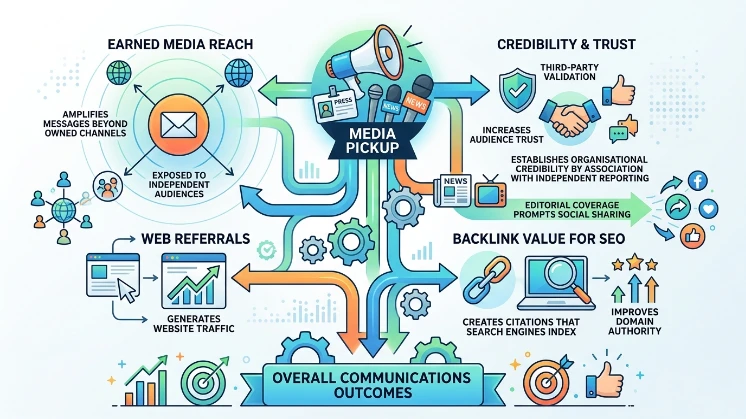
Pickup drives earned media reach, credibility, web referrals, and potential backlink value for SEO. Pickup amplifies messages beyond owned channels and increases audience trust through third-party validation.
Earned coverage exposes the message to independent audiences and creates citations that search engines index. Backlinks from respected outlets improve domain authority. Editorial coverage often prompts social sharing by readers, further amplifying reach. Pickup also establishes organisational credibility by association with independent reporting.
Get the Full Insights Here:
PR Distribution Services UK: ROI Comparison Across 6 Providers
This article explained why 73% of UK press releases never get picked up, defined pickup, and described concrete factors that reduce pickup: weak news value, poor targeting, bad timing, and inadequate assets. It listed measurable components that drive editorial adoption headline clarity, lede, credible data, and media-ready assets and gave realistic pickup expectations by release type.
For readers interested in distribution strategies and comparative outcomes, see the following:
How UK Brands Achieve 3× More Pickups With Targeted Distribution