
Display remarketing ads are targeted digital advertisements shown to users who previously interacted with a telemedicine website, healthcare landing page, appointment portal, or medical content, helping reinforce familiarity, healthcare credibility, consultation reliability, and patient confidence through repeated online exposure.
Telemedicine platforms use display remarketing to reconnect with users after their first interaction. These users already visited a healthcare webpage, explored consultation information, searched virtual healthcare services, or viewed appointment-related content.
Remarketing differs from standard display advertising. Standard banner advertising focuses on broad awareness. Remarketing focuses on users with prior engagement history. This creates a more informed healthcare audience.
In the United Kingdom, telemedicine users often research healthcare options before scheduling appointments. Patients compare consultation availability, prescription access, response times, and healthcare communication systems. Display remarketing supports continued visibility during this evaluation phase.
Most remarketing campaigns operate through browser cookies, audience lists, and platform tracking systems. When users leave a healthcare website without taking action, remarketing advertisements continue appearing across news websites, healthcare portals, video platforms, and mobile applications.
Healthcare-focused remarketing campaigns typically include trust-oriented messaging. Examples include references to licensed clinicians, secure consultation systems, encrypted communication, regulated healthcare practices, and patient accessibility standards.
How do telemedicine platforms use remarketing ads to build trust?
Telemedicine platforms build trust by repeatedly presenting healthcare-focused messages, consultation transparency, patient support information, medical accessibility details, and secure communication features to users who previously interacted with online healthcare content or appointment systems.
Trust-building begins after an initial user interaction. A visitor reads a telemedicine article, checks consultation availability, or visits a healthcare landing page. The platform then reconnects with that visitor through display advertisements shown across other digital properties.
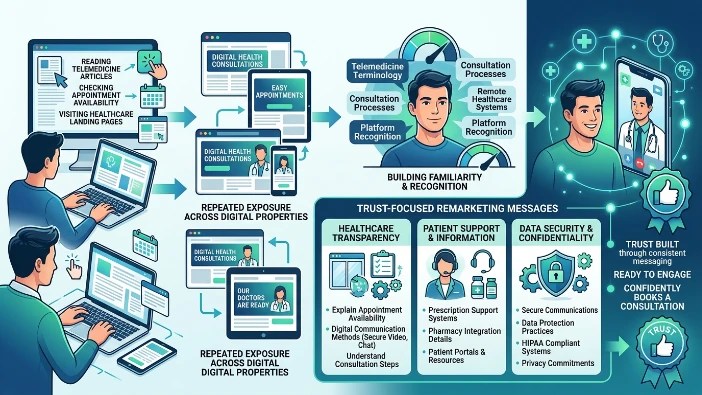
Repeated exposure increases familiarity with digital healthcare services. Familiarity improves recognition of telemedicine terminology, consultation processes, and remote healthcare systems. Trust-focused remarketing campaigns often emphasise healthcare transparency.
Advertisements explain appointment availability, digital communication methods, prescription support systems, and patient confidentiality practices.
Readers interested in foundational awareness-stage healthcare advertising can read:
How Telemedicine Platforms Acquire Users Using Banner Ads
Readers exploring conversion-focused telemedicine campaigns can explore:
How Telemedicine Platforms Convert Trust Signals Into Active Patient Signups Using Banner Ads
How do display remarketing campaigns work for telemedicine platforms?
Telemedicine display remarketing campaigns work by tracking prior website interactions, creating segmented healthcare audiences, and delivering repeated trust-focused advertisements across digital platforms to users already familiar with virtual healthcare services or online consultation systems.
The process begins when users visit a telemedicine website or healthcare landing page. Tracking technology records specific user interactions such as consultation page visits, healthcare content engagement, appointment searches, or registration form activity.
Audience segmentation then organises users into behavioural categories. One group contains users who viewed online GP consultation pages. Another group includes users who explored mental health consultation information. Another audience contains visitors who examined prescription delivery systems.
Advertising platforms use these audience groups to deliver targeted display advertisements across websites and applications. The advertisements appear during future browsing sessions on unrelated platforms.
Telemedicine remarketing campaigns often use sequential messaging. Initial advertisements focus on healthcare education. Later advertisements reinforce security systems, consultation flexibility, or clinician accessibility.
Campaign timing also influences engagement quality. Many telemedicine advertisers limit remarketing frequency to avoid advertisement fatigue. Exposure remains consistent without overwhelming healthcare users.
Cross-device advertising supports continuity. Users researching telemedicine services on desktop devices often later encounter related healthcare advertisements on smartphones or tablets. This maintains recognition across browsing environments.
Healthcare remarketing systems also prioritise data privacy compliance. UK healthcare advertising campaigns operate under strict digital privacy regulations and transparent consent requirements.
What trust signals appear in telemedicine display remarketing ads?
Telemedicine display remarketing advertisements use trust signals such as clinician credentials, secure consultation messaging, encrypted communication references, patient accessibility information, healthcare compliance indicators, appointment transparency, and regulated digital healthcare terminology to strengthen user confidence in remote healthcare systems.
Trust signals reduce uncertainty during healthcare evaluation. Patients need evidence that digital consultations follow professional healthcare standards.
Many telemedicine advertisements reference licensed medical professionals. Messaging often highlights registered clinicians, certified healthcare practitioners, or regulated consultation systems operating within UK healthcare frameworks.
Security communication appears frequently in remarketing campaigns. Advertisements reference encrypted video consultations, protected patient information systems, and secure healthcare communication platforms.
Appointment transparency also functions as a trust signal. Telemedicine advertisements often explain consultation availability, digital booking systems, response timelines, and prescription handling procedures.
Healthcare accessibility messaging improves user confidence. Examples include references to same-day consultations, remote access for rural patients, and digital healthcare support outside standard clinic hours.
Patient experience indicators also appear in remarketing creatives. Advertisements sometimes reference consultation convenience, communication clarity, or healthcare continuity systems without making exaggerated claims.
Visual design contributes to trust formation as well. Healthcare-focused colour schemes, clinical imagery, readable typography, and structured layouts create professional presentation standards associated with healthcare reliability.
How do telemedicine platforms segment remarketing audiences?
Telemedicine platforms segment remarketing audiences according to healthcare interests, website behaviour, consultation intent, appointment activity, healthcare content engagement, device usage, and previous interaction depth to deliver more relevant trust-focused advertising experiences.
Audience segmentation improves message relevance. Different healthcare users require different communication themes based on their browsing behaviour.
Users visiting mental health consultation pages receive different advertisements than users researching prescription renewal systems. Segmentation increases contextual accuracy.
Consultation-stage segmentation also supports healthcare communication precision. New visitors receive educational healthcare messaging. Returning users receive reassurance-focused advertisements explaining consultation systems and patient support processes.
Behavioural segmentation tracks specific interaction patterns. Examples include users who watched healthcare explainer videos, opened consultation FAQs, started appointment forms, or viewed clinician information pages.
Device-based segmentation also affects campaign delivery. Smartphone users often receive simplified mobile-first healthcare creatives. Desktop users encounter larger educational display formats with more detailed messaging.
Geographic segmentation supports regional healthcare relevance within the United Kingdom. Urban healthcare campaigns differ from campaigns targeting rural regions with lower physical healthcare accessibility.
Engagement-duration segmentation also helps telemedicine marketers identify high-interest audiences. Users spending longer periods reviewing healthcare information often receive more detailed remarketing sequences.
Remarketing segmentation supports efficiency because healthcare advertisements become more aligned with patient research behaviour and healthcare information needs.
How do display remarketing ads improve telemedicine credibility?
Display remarketing advertisements improve telemedicine credibility by increasing repeated exposure to healthcare messaging, reinforcing consultation transparency, presenting professional digital healthcare environments, and maintaining visible communication consistency across multiple online platforms and browsing sessions.
Repeated visibility strengthens familiarity. Familiarity improves recognition of healthcare terminology, appointment systems, and virtual consultation processes.
Healthcare credibility also increases when users repeatedly encounter structured and consistent messaging. Consistency signals operational stability and professional healthcare communication standards.
Telemedicine remarketing campaigns often reinforce healthcare transparency. Advertisements clearly explain consultation processes, appointment scheduling methods, and patient communication procedures.
Professional design standards further support credibility perception. Structured layouts, readable healthcare messaging, and secure platform references improve presentation quality.
Educational healthcare content also strengthens credibility. Many remarketing advertisements guide users toward informational resources about digital consultations, prescription management, or remote healthcare usage.
Healthcare credibility depends heavily on communication clarity. Confusing medical advertising reduces trust. Telemedicine remarketing campaigns therefore prioritise concise language and direct healthcare explanations.
Frequency management also affects credibility. Balanced exposure maintains visibility while preventing advertisement overuse. Excessive repetition reduces user confidence and creates negative engagement patterns.
Explore More Expert Insights:
How Dental Clinics Nurture Leads Using Treatment Awareness Ads
How Healthcare Providers Increase Consultation Interest Using Banner Campaigns
What challenges affect telemedicine remarketing campaigns?
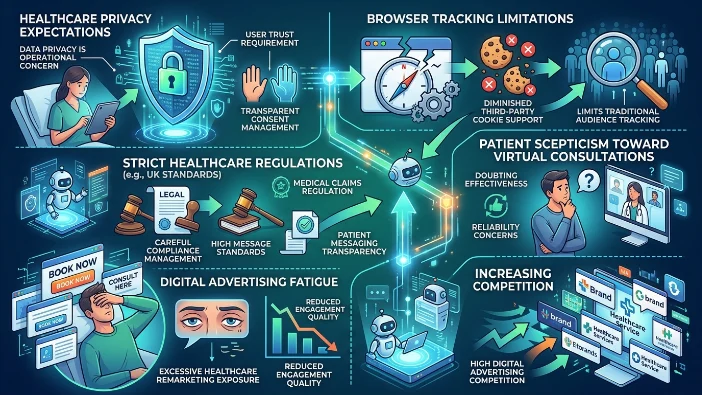
Telemedicine remarketing campaigns face challenges related to healthcare privacy expectations, digital advertising fatigue, strict UK healthcare regulations, browser tracking limitations, patient scepticism toward virtual consultations, and increasing competition across digital healthcare advertising environments.
Healthcare privacy remains a major operational concern. Users expect sensitive medical information to remain protected during digital healthcare interactions. Remarketing systems therefore require transparent consent management and privacy-focused advertising practices.
Browser technology changes also affect campaign tracking systems. Reduced third-party cookie support limits traditional audience tracking capabilities across some advertising environments.
Healthcare advertising regulations in the United Kingdom impose strict standards on medical claims, consultation communication, and patient messaging transparency. Campaigns require careful compliance management.
Advertising fatigue creates another challenge. Users frequently encounter digital advertisements across websites and applications. Excessive healthcare remarketing exposure reduces engagement quality.
Telemedicine scepticism still affects some audiences. Certain users continue preferring traditional face-to-face healthcare consultations. Remarketing campaigns therefore focus on education, accessibility, and communication transparency.
Competition within digital healthcare advertising continues increasing. Telemedicine platforms compete with pharmacies, clinics, wellness providers, and healthcare publishers for online visibility.
Mobile advertising limitations also affect healthcare communication. Smaller screens restrict message length and reduce detailed explanation capacity within display formats.
How are telemedicine remarketing strategies evolving in the United Kingdom?
Telemedicine remarketing strategies in the United Kingdom are evolving through privacy-focused targeting systems, AI-supported audience analysis, mobile-first healthcare advertising, personalised healthcare communication, and integrated educational messaging designed to improve patient trust in digital consultations.
Privacy-focused advertising technology now shapes healthcare remarketing strategies. Consent-driven tracking systems and first-party data collection practices are becoming more important across UK healthcare campaigns.
Artificial intelligence supports improved audience analysis. Advertising systems identify healthcare research patterns, consultation interests, and engagement behaviours with greater precision.
Mobile-first campaign design now dominates telemedicine advertising. Most healthcare browsing activity occurs on smartphones. Remarketing creatives therefore prioritise fast-loading mobile formats and concise healthcare messaging.
Personalised communication also continues expanding. Different healthcare users receive different remarketing sequences based on behavioural data and healthcare interests.
Educational healthcare content integration is increasing across display advertising systems. Remarketing campaigns frequently connect users with digital consultation guides, healthcare accessibility information, and virtual appointment explanations.
Video-based display advertising also continues growing. Short educational healthcare visuals improve engagement rates and increase understanding of remote consultation systems.
Future telemedicine remarketing strategies continue focusing on trust development, healthcare transparency, secure communication messaging, and patient familiarity with digital healthcare services.