

Online stores use targeted banner campaigns to increase product awareness across digital platforms in the United Kingdom. These campaigns display relevant products to specific audience segments based on browsing behaviour, interests, demographics, and shopping intent. Targeted visibility improves product recognition, category discovery, and repeat customer engagement.
Explore the educational foundation behind seasonal banner visibility strategies here:
How E-commerce Companies Increase Seasonal Sales Using Banner Ads
What are targeted banner campaigns in e-commerce?
Targeted banner campaigns are digital advertising campaigns that display product-focused visual advertisements to selected audience groups based on online behaviour, demographics, interests, and shopping activity. These campaigns improve product awareness by delivering relevant product messaging across websites, applications, and digital advertising networks.
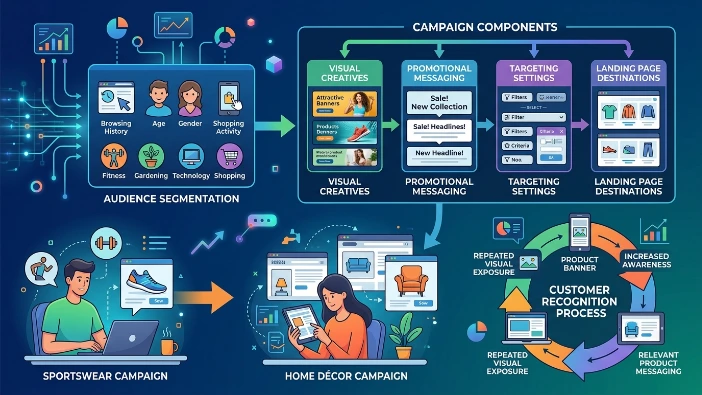
A banner campaign contains visual creatives, promotional messaging, audience targeting settings, and landing page destinations. The campaign objective focuses on showing relevant products to users who demonstrate matching interests or shopping behaviour.
Targeted advertising differs from general display advertising because audience selection controls ad delivery. A sportswear campaign targets users interested in fitness products. A home décor campaign targets users browsing furniture or interior categories.
Product awareness refers to customer recognition of a product, category, or collection. Banner campaigns increase this recognition through repeated visual exposure across digital channels.
In the United Kingdom, targeted banner advertising supports product discovery during competitive retail periods. Online stores use these campaigns to introduce new collections, seasonal inventory, and category-specific offers to broader audiences.
How do targeted banner campaigns improve product awareness?
Targeted banner campaigns improve product awareness by increasing repeated product exposure among relevant audiences. Repetition strengthens recognition, improves product familiarity, and increases customer recall during future shopping decisions across search engines, retail websites, mobile applications, and content platforms.
Awareness campaigns focus on visibility rather than immediate conversion. Customers often interact with products multiple times before making a purchase decision. Banner campaigns support this process by maintaining consistent product exposure.
A customer researching running shoes frequently sees related product banners while browsing news websites, sports platforms, or video streaming applications. Repeated exposure increases familiarity with the product category.
Targeted campaigns also improve relevance. Users receive advertisements connected to their interests or browsing activity. Relevant advertising attracts more attention than untargeted display campaigns.
How does repeated exposure support awareness?
Repeated exposure improves memory retention. Customers remember products more effectively after multiple interactions. Banner campaigns distribute these interactions across several digital environments.
Frequency also increases recognition speed. A customer exposed to the same product banner five times identifies the product faster during later searches or category browsing sessions.
Consistent visual design supports this recognition process. Matching colours, layouts, and product imagery strengthen product familiarity across campaign placements.
How does audience segmentation improve targeting?
Audience segmentation divides users into specific groups using behavioural and demographic data. Common segments include returning visitors, mobile shoppers, fashion buyers, and seasonal customers.
A beauty product campaign targets users interested in skincare categories. A gaming accessory campaign targets users visiting technology and entertainment websites.
Segmentation improves efficiency because advertisements appear before audiences with existing category interest.
Readers looking for advanced conversion-focused advertising strategies can continue here: [Insert Link to BOFU Article]
What audience data supports targeted banner advertising?
Targeted banner advertising uses behavioural data, demographic information, device activity, location signals, purchase history, and browsing patterns to improve product relevance. These data sources help online stores display products to users with higher engagement probability and category interest.
Behavioural targeting tracks user actions across digital platforms. Browsing product pages, adding items to wish lists, and viewing related categories indicate shopping interest.
Demographic targeting focuses on age groups, household status, income ranges, and gender-based purchasing behaviour. Campaign messaging adjusts according to these audience characteristics.
Location targeting supports regional relevance. UK-based campaigns often promote location-specific delivery offers, weather-related products, or regional shopping events.
What role does browsing behaviour play?
Browsing behaviour identifies user interests based on viewed products and visited content categories. A customer reading fitness articles frequently receives sports equipment advertisements.
Product page visits also influence targeting accuracy. Users viewing winter coats receive outerwear campaigns instead of unrelated product categories.
Search behaviour strengthens targeting performance further. Queries related to home storage, kitchen appliances, or office furniture indicate active shopping interest.
How does purchase history improve campaign relevance?
Purchase history helps advertisers identify repeat buying patterns. Customers purchasing baby products often receive related child care advertisements. Electronics buyers frequently receive accessory promotions.
Historical purchase data also supports complementary product recommendations. A customer purchasing a laptop later receives banners promoting wireless accessories or computer desks.
This approach increases product awareness across connected product categories.
What types of banner campaigns improve product visibility?
Product visibility improves through retargeting banners, category awareness campaigns, dynamic display advertising, seasonal promotions, and contextual banner placements. Each campaign type supports product discovery by matching advertisements with customer interests, browsing intent, and digital consumption behaviour.
Retargeting banners reconnect with users who previously visited a product page without completing a purchase. These campaigns increase product recall through repeated exposure.
Category awareness campaigns focus on broader product groups instead of single products. Examples include “Summer Footwear Collection” or “Home Office Essentials.”
Dynamic display advertising automatically updates banner content based on user activity. Customers see products related to their recent searches or viewed categories.
Contextual banner advertising places ads alongside related content. Kitchen appliance banners appear near cooking articles. Fitness product campaigns appear beside sports-related content.
How do dynamic banners improve awareness?
Dynamic banners personalize product exposure using real-time customer data. The displayed products change according to browsing history and product interest.
A user viewing backpacks receives banners displaying similar travel products. A customer researching office chairs later sees workspace furniture advertisements.
Dynamic personalization increases engagement because the content reflects recent customer activity.
How do contextual placements support discovery?
Contextual placements connect product advertising with relevant digital environments. Product visibility increases when advertisements appear beside related informational content.
Travel accessory banners perform strongly near holiday booking content. Gardening product advertisements attract attention beside landscaping articles.
This alignment improves relevance and increases user engagement with banner campaigns.
Explore broader educational insights into banner-driven seasonal visibility here: [Insert Link to TOFU Article]
What design elements improve banner campaign performance?
Banner campaign performance improves through clear messaging, product-focused visuals, responsive mobile design, consistent branding, and direct audience relevance. Effective design increases visibility, improves recognition speed, and strengthens engagement across desktop, tablet, and mobile advertising placements.
Visual simplicity improves readability. Product images remain the primary focus in awareness campaigns. Excessive text reduces engagement because users process banner content quickly.
Strong contrast improves visibility. Clear typography helps users identify the advertised product category immediately.
Responsive design ensures compatibility across screen sizes. Mobile optimization remains essential because UK online shopping traffic heavily depends on smartphones and tablets.
Why does visual consistency matter?
Visual consistency strengthens product recognition across multiple campaign placements. Matching colours, product styles, and design structures create a unified campaign identity.
A customer repeatedly viewing the same product presentation remembers the advertisement more effectively during future searches.
Consistency also improves trust and professionalism across advertising networks.
Why do landing pages affect awareness campaigns?
Landing pages continue the awareness journey after a banner click. A relevant landing page reinforces the advertised product category and maintains user attention.
A banner promoting winter footwear must connect directly to winter product collections instead of unrelated homepage content.
Relevant landing pages improve engagement duration and product exploration rates.
How do targeted banner campaigns support different e-commerce industries?
Fashion, electronics, beauty, furniture, sports equipment, and grocery sectors use targeted banner campaigns to increase category recognition and introduce products to relevant customer groups. Industry-specific targeting improves campaign relevance and supports broader product discovery across digital channels.
Fashion retailers promote seasonal collections through demographic and behavioural targeting. Electronics campaigns focus on users researching technology products and accessories.
Beauty campaigns often target skincare, cosmetics, or wellness audiences using browsing interests and age-based segmentation.
Furniture campaigns use contextual placements around home improvement and interior design content. Grocery delivery services promote convenience-focused messaging to local audiences.
Sports equipment campaigns target fitness enthusiasts, outdoor activity readers, and seasonal training audiences.
Each industry adjusts campaign timing, visuals, and targeting methods according to customer shopping behaviour.
Why do online stores combine awareness campaigns with retargeting strategies?
Online stores combine awareness campaigns with retargeting strategies to maintain customer visibility throughout the buying journey. Awareness campaigns introduce products, while retargeting campaigns reconnect with interested users and reinforce product familiarity before conversion-focused interactions begin.
Awareness campaigns generate initial product exposure. Retargeting campaigns continue communication after the first interaction.
A customer viewing a furniture advertisement during an awareness campaign later receives retargeting banners featuring specific products previously viewed.
This sequential advertising structure improves continuity across the customer journey.
Awareness campaigns also support future retargeting performance. Users exposed to products earlier respond more positively to later reminder advertisements because product familiarity already exists.
Explore More Expert Insights:
How E-commerce Platforms Influence Buying Decisions Using Remarketing Ads
How Retailers Increase Product Consideration Using Banner Advertising Funnels
How does the customer journey connect to banner targeting?
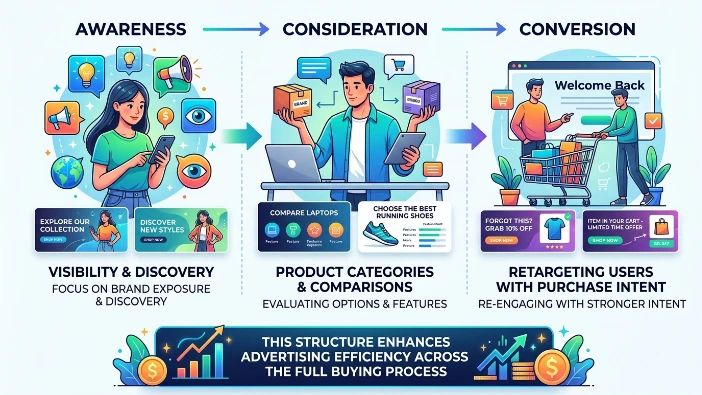
The customer journey includes awareness, consideration, and conversion stages. Banner campaigns support each phase differently.
Awareness-focused campaigns prioritize visibility and product discovery. Consideration campaigns highlight product categories and comparisons. Retargeting campaigns focus on returning users with stronger purchase intent.
This structure improves advertising efficiency across the full buying process.
Continue reading conversion-stage retargeting strategies here: [Insert Link to BOFU Article]
Why are targeted banner campaigns important for long-term product growth?
Targeted banner campaigns support long-term product growth by improving visibility, increasing customer familiarity, strengthening category recognition, and supporting repeat engagement across digital shopping environments. Consistent exposure helps online stores maintain customer attention in competitive e-commerce markets throughout the year.
Long-term growth depends on sustained product recognition. Banner campaigns reinforce visibility across multiple customer interactions.
Awareness-focused advertising also introduces new products to relevant audiences before competitors capture attention. Early visibility supports future engagement and repeat traffic.
Campaign data improves future optimization. Online stores analyze engagement rates, audience behaviour, and placement performance to refine future targeting strategies.
Targeted banner campaigns also support expansion into new product categories. Consistent visibility helps online stores introduce additional inventory to existing customer audiences without relying entirely on search traffic.
For advanced checkout-focused retargeting methods connected to conversion performance, continue with:
How Online Stores Maximize Checkout Completion Using Conversion-Focused Banner Retargeting Ads



