

Product-focused banner campaigns are structured digital display advertising systems that promote specific product sets to website visitors based on browsing behavior, category interest, and engagement signals. They use visual banners across websites and apps to maintain product visibility and support repeated consideration.
Product-focused banner campaigns operate within display advertising networks that distribute visual creatives across publisher websites and mobile applications. These banners highlight specific products rather than general brand messaging. Each banner contains product images, pricing, and structured product information.
These campaigns rely on behavioral data collected from e-commerce platforms. When a user views a product page or interacts with a category, that activity becomes part of a tracking profile. This profile is then used to match relevant product banners during later browsing sessions.
In the United Kingdom e-commerce environment, these campaigns support large-scale online retail systems where users interact with multiple devices and platforms before making a purchase decision. Product-focused banners ensure continuity of product exposure across fragmented browsing journeys.
The core purpose is structured repetition of product visibility. This repetition keeps selected products active in the user’s consideration set and increases familiarity with product attributes such as price range, features, and availability.
How do product-focused banner campaigns nurture shoppers across the journey?
Product-focused banner campaigns nurture shoppers by delivering structured product reminders across awareness, consideration, and decision stages, ensuring consistent exposure to relevant items as users move through multiple browsing sessions before purchase.
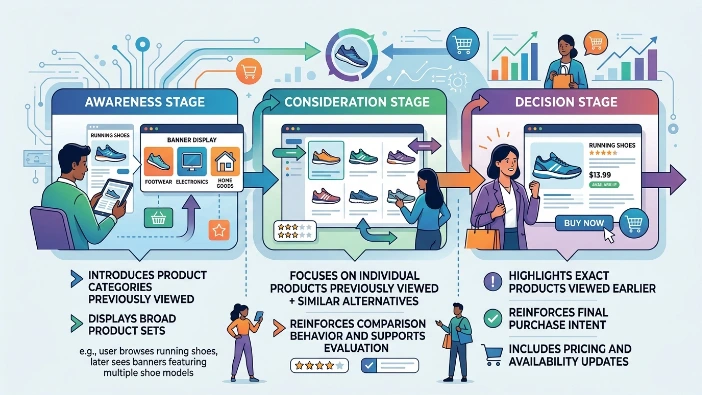
Shoppers rarely convert during a single visit. They explore options, compare alternatives, and revisit decisions over time. Product-focused banner campaigns maintain continuity across this fragmented journey.
At the awareness stage, users are introduced to product categories they previously viewed. Banners display broad product sets such as footwear, electronics, or home goods. Example: a user browsing running shoes later sees banners featuring multiple shoe models.
At the consideration stage, campaigns become more specific. Users see individual products they previously viewed along with similar alternatives. This reinforces comparison behavior and supports evaluation.
At the decision stage, banners highlight exact products viewed earlier, reinforcing final purchase intent. These ads often include pricing and availability updates to support completion of the purchase cycle.
Explore:
How E-commerce Stores Boost Sales Using Retargeting Banner Ads
This structured progression ensures that product messaging remains aligned with user intent rather than random exposure, supporting consistent engagement across multiple sessions.
What data is used in product-focused banner campaigns?
Product-focused banner campaigns use behavioral, transactional, and contextual data including product views, search queries, cart actions, session duration, and device identifiers to match users with relevant product advertisements across digital platforms.
Behavioral data forms the foundation. It includes user interactions such as product page visits, category browsing, scroll depth, and repeat engagement with specific items. Each interaction signals interest strength.
Search data is also used. When users enter product-related queries on an e-commerce site, these keywords indicate intent direction. Campaign systems map these queries to relevant product groups.
Cart interaction data is a high-intent signal. Products added to carts but not purchased are prioritized in banner campaigns. This ensures visibility of items with confirmed purchase consideration.
Contextual data includes device type, time of browsing, and platform environment. This ensures banners are displayed in relevant digital contexts such as news websites, lifestyle platforms, or mobile apps.
Device identifiers or cookies enable continuity across browsing environments. This allows systems to recognize returning users and maintain consistent product messaging across multiple websites.
What components make product-focused banner campaigns effective?
Effective product-focused banner campaigns rely on five core components: accurate audience segmentation, dynamic product feeds, creative template systems, frequency control mechanisms, and performance tracking structures that ensure relevant product delivery at scale across digital advertising networks.
Audience segmentation divides users into structured groups. These include first-time product viewers, repeat visitors, and cart abandoners. Each segment receives different product messaging based on engagement depth.
Dynamic product feeds connect live inventory data to banner systems. Product availability, pricing, and descriptions are automatically updated in real time to ensure accuracy.
Creative template systems standardize banner layouts. These templates define placement of product images, titles, and pricing fields while allowing automated population of product-specific data.
Frequency control manages exposure limits. Users are shown banners at controlled intervals to prevent repetitive overexposure of the same product set.
Performance tracking systems measure engagement outcomes. Metrics include impressions, click-through rates, return visits, and product interaction after ad exposure.
Together, these components create a structured advertising environment that ensures product relevance and consistency across multiple digital touchpoints.
How do product-focused banner campaigns improve shopper engagement and readiness?
Product-focused banner campaigns improve engagement by repeatedly exposing shoppers to relevant products, reinforcing recognition patterns, and maintaining product visibility across multiple browsing sessions, which increases readiness for deeper consideration and purchase evaluation stages.
Repeated exposure strengthens product memory. When users see the same product across different websites, recognition increases, which reduces the time needed to re-evaluate product relevance.
Engagement improves through visual consistency. Product images, pricing, and structured layouts create familiarity that supports faster cognitive processing during decision-making.
Shoppers often delay purchase decisions due to comparison behavior. Product-focused banners maintain visibility of selected items, ensuring they remain part of the user’s active consideration set.
These campaigns also reduce drop-off between sessions. When users leave a website without purchasing, banners reintroduce the same product during unrelated browsing activity, maintaining continuity.
How Online Stores Turn Product Viewers Into Checkout Customers Using Dynamic Banner Ads
This structured reinforcement increases interaction probability across multiple stages of the shopping journey without requiring users to return directly to the original e-commerce platform.
Explore More Expert Insights:
How E-commerce Brands Build Purchase Intent Using Banner Retargeting Ads
How Animated Ads Increase Engagement on UK News Platforms
Where are product-focused banner campaigns used in the customer journey?
Product-focused banner campaigns are used across all stages of the customer journey, including discovery pages, third-party websites, mobile applications, and content platforms, ensuring continuous product visibility from initial browsing to final purchase consideration.
In the discovery stage, users encounter broad product categories while exploring general content. Banner campaigns introduce product groups aligned with prior browsing activity.
During consideration, users compare multiple product options. Banners highlight specific products previously viewed, along with related alternatives within the same category.
In the evaluation stage, campaigns focus on precise product reminders. Users see exact items they interacted with earlier, reinforcing purchase memory and reducing decision delay.
Outside the e-commerce platform, banners appear across third-party websites and mobile apps. This ensures that product visibility continues even when users are not actively shopping.
The distributed nature of these campaigns ensures that product exposure is not limited to a single website session but extends across the broader digital environment.
How is performance measured in product-focused banner campaigns?
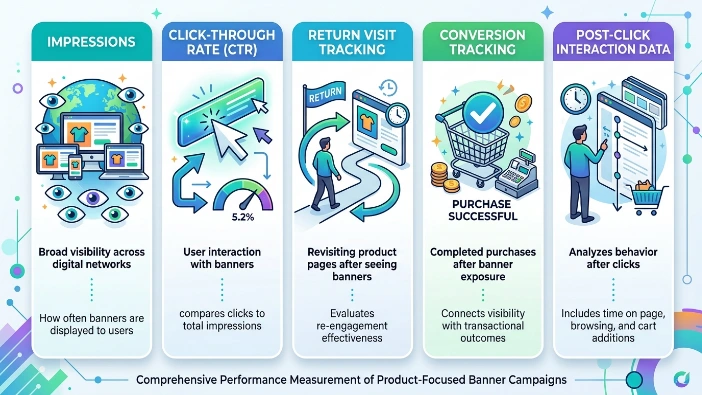
Performance in product-focused banner campaigns is measured using engagement metrics such as impressions, click-through rates, product return visits, conversion tracking, and post-click interaction data that evaluates how users respond to repeated product exposure.
Impressions measure how often banners are displayed to users across digital platforms. High impression counts indicate broad visibility across networks.
Click-through rate measures user interaction with banners. It shows how many users engage with displayed product ads compared to total impressions.
Return visit tracking evaluates whether users revisit product pages after seeing banners. This metric indicates effectiveness in driving re-engagement.
Conversion tracking measures completed purchases after banner exposure. It connects ad visibility with final transactional outcomes.
Post-click interaction data analyzes behavior after users click on banners. This includes time spent on product pages, additional browsing activity, and cart additions.
Together, these metrics provide a structured performance view that evaluates both engagement depth and purchase readiness across the full customer journey.



