
In today’s digital media environment, the way news is delivered has transformed from a one-size-fits-all model into a highly personalized experience shaped by user behavior, preferences, and real-time engagement patterns. Content personalization trends are no longer just an innovation; they have become a necessity for media organizations aiming to improve reader retention, boost engagement, and increase long-term audience loyalty.
As competition among digital publishers intensifies, targeted news delivery systems are now central to how readers consume information. Algorithms, behavioral tracking, and predictive analytics work together to determine what content a reader sees, when they see it, and how it is presented. This shift has fundamentally changed journalism distribution models and created new opportunities for media companies to connect more deeply with their audiences.
In this evolving landscape, organizations such as Time Intelligence Media Group are focusing on integrated media solutions that combine data-driven insights with strategic content distribution. Their approach aligns with modern personalization trends that prioritize relevance, timing, and user intent over mass distribution.
Evolution of Content Personalization in Digital Journalism
Content personalization in news delivery did not emerge overnight. It evolved gradually as media platforms began collecting more user data and leveraging machine learning systems to interpret reading behavior. Initially, news websites relied on basic recommendation engines that suggested “popular articles” or “trending topics.” Over time, these systems became more advanced, incorporating variables such as reading time, click patterns, scroll depth, and engagement frequency.
Today, personalization is deeply embedded in news ecosystems. Readers are no longer passive consumers; they are active participants in shaping their own content journey. Every click, share, and interaction feeds into a larger data ecosystem that continuously refines what they see next.
This evolution has made audience intelligence a critical component of modern media strategy. Through Audience Insights Services, publishers are able to understand not only what readers are consuming but why they prefer certain types of content. This allows editorial teams to craft stories that align more closely with audience expectations while still maintaining journalistic integrity.
How Targeted News Delivery Shapes Reader Behavior
Targeted news delivery systems rely heavily on behavioral data to predict what content will keep users engaged. These systems are designed to maximize relevance, ensuring that readers are consistently presented with stories that match their interests, demographics, and browsing habits.
One of the most significant effects of personalization is increased reader retention. When users feel that a platform “understands” their preferences, they are more likely to return regularly. This creates a feedback loop where engagement generates more data, and more data improves personalization accuracy.
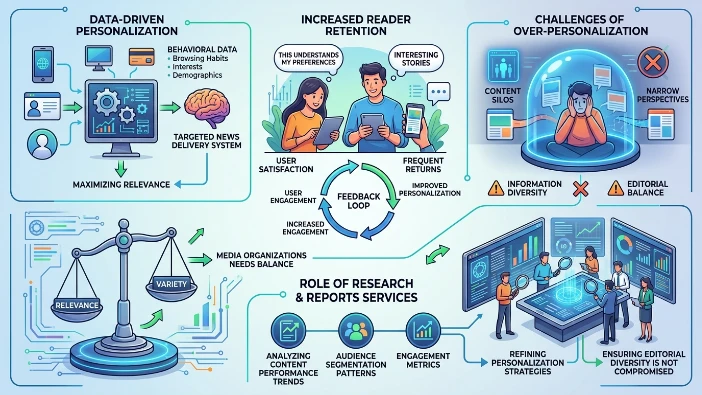
However, this also introduces challenges. Over-personalization can lead to content silos, where readers are only exposed to a narrow range of perspectives. This raises concerns about information diversity and editorial balance. Media organizations must therefore strike a careful balance between relevance and variety.
To support this balance, Research & Reports Services play a crucial role in analyzing content performance trends, audience segmentation patterns, and engagement metrics. These insights help publishers refine their personalization strategies while ensuring editorial diversity is not compromised.
The Role of Data in Modern Content Personalisation
Data is the backbone of all personalization systems in digital media. Every interaction a reader has with a platform contributes to a larger dataset that helps refine future recommendations. This includes not only direct actions like clicks and likes but also passive behavior such as time spent on an article or scroll depth.
Advanced analytics systems categorize users into micro-segments based on their behavior. These segments are then used to deliver highly specific content streams. For example, a user interested in economic news may receive a completely different homepage experience compared to someone focused on entertainment or sports.
This level of precision is made possible through integrated data frameworks supported by media intelligence platforms like Time Intelligence Media Group, which specialize in combining editorial strategy with audience analytics to optimize engagement outcomes.
The use of Audience Insights Services ensures that data is not only collected but meaningfully interpreted. Without proper analysis, raw data alone cannot drive effective personalization strategies.
Impact of Personalization on Reader Retention
Reader retention is one of the most important performance indicators in digital publishing. Personalized content delivery has proven to significantly improve retention rates across most media platforms. When readers consistently find relevant content, they are more likely to develop habitual consumption patterns.
However, retention is not solely dependent on relevance. Timing, format, and emotional resonance also play key roles. Personalized push notifications, email newsletters, and homepage customization all contribute to maintaining user interest over time.
Another important factor is trust. If personalization feels too intrusive or overly algorithm-driven, users may disengage. Therefore, transparency in how content is curated is becoming increasingly important in maintaining audience trust.
To enhance trust while improving engagement, Sponsored Content Services are increasingly being integrated into personalization strategies. When executed ethically, sponsored content can align with user interests without disrupting the overall editorial experience.
Advertising and Monetization in Personalised News Systems
Personalization has also revolutionized digital advertising. Instead of generic banner ads, users now see highly targeted advertisements based on their browsing history, interests, and demographic profile. This improves click-through rates and increases advertising revenue for publishers.
Banner Advertising Services have evolved significantly in this context. Modern banner systems are no longer static; they are dynamic, data-driven, and context-aware. They adapt in real time to match user behavior, making them far more effective than traditional advertising models.
At the same time, publishers must ensure that advertising does not negatively impact user experience. Excessive or irrelevant ads can reduce engagement and increase bounce rates. Therefore, balancing monetization with content quality is essential for sustainable growth.
Strategic Role of Sponsored Content in Personalization Trends
Sponsored content has become a major component of modern media ecosystems. When integrated effectively, it blends seamlessly with editorial content while providing value to both readers and advertisers.
In personalized news delivery systems, sponsored content is often tailored to match user interests, making it more relevant and engaging. This increases the likelihood of interaction while maintaining a natural reading experience.
However, ethical considerations are critical. Readers must be able to distinguish between editorial and sponsored content to maintain transparency and trust. Media organizations that prioritize clarity in labeling and relevance in placement tend to perform better in long-term audience retention.
Media Partnerships and Collaborative Personalisation Models
Another emerging trend in content personalization is collaboration between media organizations. Through strategic partnerships, publishers can share audience insights, distribution networks, and content resources to enhance personalisation capabilities.
These collaborations allow smaller publishers to access advanced analytics and distribution systems that would otherwise be unavailable to them. It also helps larger organizations diversify their content offerings and reach new audience segments.
Platforms like Time Intelligence Media Group support such ecosystem-driven approaches by integrating media partnerships into broader content distribution strategies. This ensures that personalization is not limited to a single platform but extends across multiple media environments.
Future Trends in Content Personalisation and News Delivery
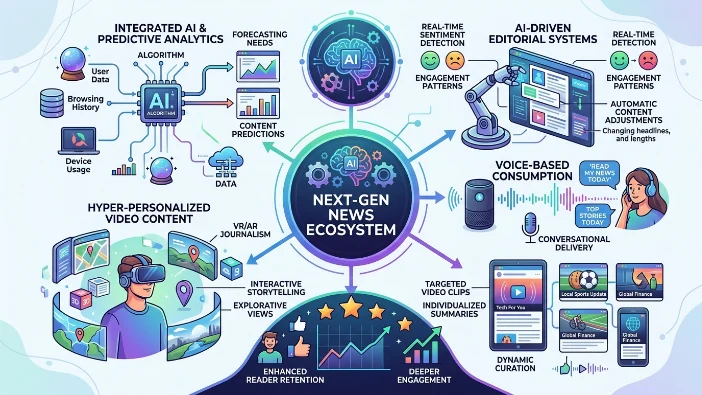
The future of content personalization is expected to become even more sophisticated with the integration of artificial intelligence, predictive analytics, and real-time behavioral tracking. News platforms will increasingly rely on AI-driven editorial systems that can automatically adjust content based on user sentiment and engagement patterns.
Voice-based news consumption, immersive media formats, and hyper-personalized video content are also expected to play a major role in the next phase of digital journalism. These innovations will further enhance reader retention by creating more interactive and engaging experiences.
However, successful personalization requires more than just algorithms. It demands a balanced integration of data analytics, editorial judgment, ethical advertising, and strategic media partnerships. Services such as Audience Insights Services, Research & Reports Services, and Sponsored Content Services play a crucial role in building this balance.
As the digital media landscape continues to evolve, organizations like Time Intelligence Media Group will remain central to shaping the future of personalized journalism, ensuring that content delivery systems remain both effective and responsible.