
Local journalism has long served as the backbone of informed communities, shaping public opinion, strengthening democracy, and ensuring accountability at grassroots levels. However, the financial sustainability of independent media groups has become one of the most pressing challenges in the modern media landscape. With declining print revenues, shifting audience behaviors, and increasing competition from digital platforms, local news organizations are forced to rethink how they generate income while maintaining editorial integrity.
The evolution of digital media has disrupted traditional revenue streams, pushing independent publishers to explore innovative models that balance profitability with public service. In this transformation, media groups like Intelligence Media Group are redefining sustainability by integrating strategic services into their business frameworks. Among these, Audience Insights Services, Media Partnerships Solutions, and Sponsored Content Services have emerged as powerful tools that align directly with the financial and operational demands of local journalism.
The Economic Crisis Facing Local Media
The decline of traditional advertising has significantly impacted local journalism. Newspapers that once relied heavily on classified ads and print subscriptions now face shrinking revenues due to the dominance of digital giants. Platforms such as Google and Facebook have captured a large share of advertising budgets, leaving local publishers struggling to compete.

This shift has forced independent media groups to confront a harsh reality: survival depends on diversification. Relying on a single revenue stream is no longer viable. Instead, sustainability requires a multi-layered approach that combines data-driven strategies, partnerships, and innovative content monetization.
Local journalism is not just a business—it is a public good. Yet, without sustainable funding, even the most impactful reporting cannot continue. This tension between mission and money lies at the heart of the industry’s transformation.
Understanding Audience Behavior in the Digital Age
One of the most critical components of sustainability is understanding the audience. Modern readers consume news differently than previous generations. They prefer mobile access, personalized content, and real-time updates. This shift demands a deeper understanding of user behavior, preferences, and engagement patterns.
This is where Audience Insights Services play a crucial role. By leveraging data analytics, local media organizations can identify what content resonates most with their audience, when readers are most active, and which platforms drive the highest engagement. This information enables publishers to optimize content strategies, improve user experience, and increase retention.
Audience insights also help in segmenting readers into distinct groups, allowing for targeted content delivery. For example, a local publication can tailor its reporting for different demographics, such as young professionals, families, or retirees. This level of personalization not only enhances reader satisfaction but also increases the likelihood of monetization through subscriptions and advertising.
In the context of sustainability, data is no longer optional—it is essential. Independent media groups that fail to invest in audience intelligence risk losing relevance in an increasingly competitive market.
Diversifying Revenue Through Strategic Partnerships
Collaboration has become a key strategy for survival in local journalism. Independent media groups are increasingly forming alliances with other organizations to expand their reach, share resources, and create new revenue opportunities.
Media Partnerships Solutions offer a structured approach to building these collaborations. By partnering with other media outlets, businesses, and community organizations, local publishers can access new audiences and generate additional income streams. These partnerships can take many forms, including content sharing, co-branded campaigns, and joint events.
For example, a local news outlet might collaborate with a regional business association to produce a series of sponsored articles highlighting local entrepreneurs. This not only provides valuable content for readers but also creates a revenue opportunity through sponsorship.
Partnerships also enable cost-sharing, which is particularly important for smaller media organizations with limited resources. By pooling expertise and infrastructure, independent publishers can reduce operational costs while maintaining high-quality journalism.
In a fragmented media landscape, collaboration is no longer a luxury—it is a necessity. Media groups that embrace partnerships are better positioned to adapt to changing market conditions and achieve long-term sustainability.
The Rise of Sponsored Content as a Revenue Driver
As traditional advertising declines, sponsored content has emerged as a viable alternative for local journalism. Unlike display ads, sponsored content integrates seamlessly into editorial formats, providing value to both readers and advertisers.
Sponsored Content Services allow media organizations to create high-quality, branded content that aligns with their editorial standards. This approach ensures that sponsored articles are informative, engaging, and relevant to the audience, rather than intrusive or disruptive.
For local businesses, sponsored content offers a powerful way to connect with their target audience. By telling authentic stories and providing useful information, brands can build trust and credibility within the community. For publishers, this translates into a sustainable revenue stream that supports their journalistic efforts.
However, transparency is critical. Readers must be able to distinguish between editorial and sponsored content to maintain trust. Clear labeling and ethical guidelines are essential to ensure that sponsored content does not compromise journalistic integrity.
When executed correctly, sponsored content can be a win-win solution that benefits publishers, advertisers, and audiences alike.
The Role of Digital Transformation in Sustainability
Digital transformation is not just about adopting new technologies—it is about rethinking the entire business model of local journalism. From content creation to distribution and monetization, every aspect of the media ecosystem is being reshaped by digital innovation.
Local media organizations must invest in modern content management systems, mobile-friendly platforms, and data analytics tools to remain competitive. These technologies enable publishers to streamline operations, improve efficiency, and deliver a better user experience.
Digital transformation also opens up new revenue opportunities, such as subscription models, paywalls, and membership programs. While these approaches require careful implementation, they offer a way to generate recurring income and reduce dependence on advertising.
In this context, integrating services like Audience Insights Services becomes even more important. Data-driven decision-making allows publishers to test different monetization strategies, measure their effectiveness, and refine their approach over time.
The future of local journalism depends on the ability to adapt to digital realities while staying true to its core mission.
Building Trust and Community Engagement
Trust is the foundation of journalism. Without it, even the most innovative revenue models will fail. Local media organizations must prioritize transparency, accuracy, and accountability to maintain their credibility.
Community engagement is a key factor in building trust. By actively involving readers in the news process, publishers can create a sense of ownership and loyalty. This can be achieved through interactive content, social media engagement, and community events.
Engaged audiences are more likely to support local journalism financially, whether through subscriptions, donations, or participation in sponsored initiatives. This makes community engagement not just a moral imperative, but a strategic necessity.
Services like Media Partnerships Solutions can also play a role in strengthening community ties. By collaborating with local organisations, media groups can create content that reflects the needs and interests of their audience.
In an era of misinformation and declining trust in media, local journalism has a unique opportunity to rebuild credibility by focusing on community-driven reporting.
The Future of Revenue Models in Local Journalism
The sustainability of local journalism will depend on the ability to innovate and adapt. There is no one-size-fits-all solution; each media organization must develop a strategy that aligns with its audience, resources, and goals.
Hybrid revenue models are likely to dominate the future. These models combine multiple income streams, including advertising, subscriptions, partnerships, and sponsored content. By diversifying their revenue sources, local media groups can reduce risk and increase resilience.
The integration of services such as Audience Insights Services, Media Partnerships Solutions, and Sponsored Content Services provides a strong foundation for these hybrid models. Together, they enable publishers to understand their audience, expand their reach, and monetize their content effectively.
Innovation will continue to shape the industry, with emerging technologies such as artificial intelligence and blockchain offering new possibilities for content creation and distribution. However, the core principles of journalism—accuracy, fairness, and accountability—must remain unchanged.
A Path Forward for Independent Media
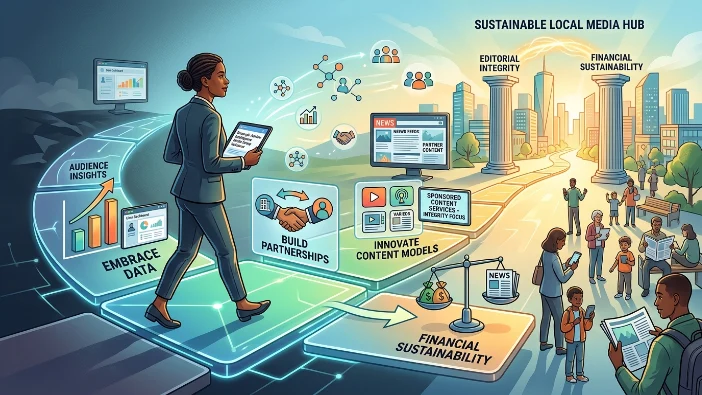
By embracing data-driven strategies, forming strategic partnerships, and leveraging innovative content models, local journalism can build a sustainable future. Services like Audience Insights Services, Media Partnerships Solutions, and Sponsored Content Services are not just add-ons—they are essential components of a modern media strategy.
For organizations looking to implement these solutions and strengthen their revenue models, exploring the offerings of Intelligence Media Group can provide valuable direction. Their approach reflects the evolving needs of the industry and highlights the importance of integrating strategic services into the core business model.
Ultimately, the future of local journalism depends on the ability to balance financial sustainability with editorial integrity. By staying true to their mission while embracing innovation, independent media groups can continue to serve their communities and thrive in a rapidly changing world.
For more information, visit the homepage of Time Intelligence Media Group and explore how modern media services can transform the sustainability of your journalism initiatives.