
Responsible journalism shapes how consumers perceive your brand by controlling which facts, context, and narratives reach the public. When news outlets report with accuracy, balance, and transparency, audiences see your organization as part of a credible conversation. When coverage is rushed, biased, or incomplete, consumer trust in your brand can erode even if the facts are on your side.
What is responsible journalism?
Responsible journalism means reporting news with accuracy, fairness, and accountability. It requires verifying sources, checking facts, and avoiding misleading headlines or partial quotes. Responsible outlets correct errors quickly and credit sources when they use data or statements.
This standard applies across all formats: print, digital, broadcast, and social media. Responsible journalism also includes clear labeling of opinion, analysis, and sponsored content so audiences can distinguish between news and marketing. Brands that engage with responsible outlets gain exposure that feels more credible than promotional placements.
How does accurate reporting shape brand perception?
Accurate reporting shapes brand perception by aligning public understanding with your actual actions and policies. When journalists correctly describe your product features, pricing, or safety record, consumers form expectations that match real‑world experience. This reduces disappointment and supports long‑term trust.
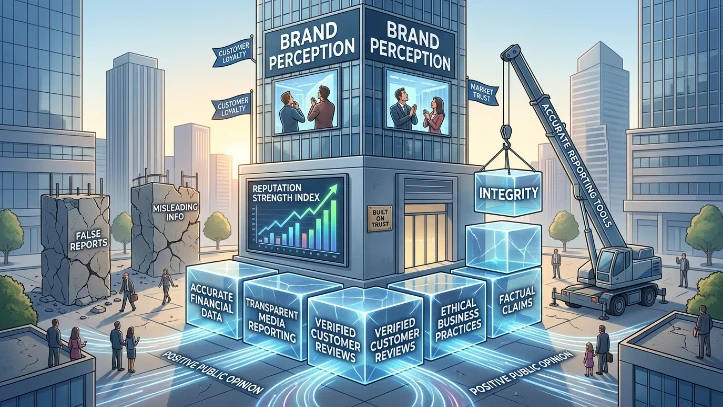
Accurate coverage also magnifies positive signals. A precise explanation of a sustainability initiative or a clarification of a privacy policy can turn a neutral story into a trust builder. Consumers who see their own understanding confirmed in news coverage are more likely to view the brand as honest and transparent.
How does balanced reporting affect consumer trust?
Balanced reporting affects consumer trust by presenting multiple perspectives on a brand‑related issue. When a story includes comments from customers, experts, regulators, and the company, audiences see that the brand is not being shielded or attacked unfairly. This balance signals that the coverage is fair rather than driven by agenda.
Balanced coverage also helps brands manage controversy. A product recall or service disruption reported with context, timelines, and corrective‑action details reduces the risk of crisis‑level backlash. Consumers who read measured, fact‑based stories are more likely to reserve judgment and watch for updates instead of reacting emotionally.
How does transparency in journalism influence brand credibility?
Transparency in journalism influences brand credibility by showing how information is sourced, verified, and edited. When outlets name their sources, disclose methodologies, and explain editorial decisions, audiences see the reporting as trustworthy. Brands that appear in such transparent coverage benefit by association.
This transparency applies to corrections and updates. When a news outlet publishes a clear correction if a quote is misattributed or a statistic is wrong, it reinforces its reputation for integrity. Consumers who see that a brand is quoted or referenced in outlets that practice transparent corrections are more likely to view the brand as accurately represented.
How does investigative reporting change consumer perception?
Investigative reporting changes consumer perception by exposing patterns that are not visible in marketing or PR. When reporters dig into customer complaints, safety records, or internal practices, they can reveal systemic issues that affect how consumers evaluate a brand. These stories shift public perception faster than routine news coverage.
Investigative pieces can also reinforce positive behaviors. A deep‑dive that uncovers strong ethical practices, rigorous testing, or robust customer‑support processes can elevate a brand in the public mind. Consumers who read well‑researched, evidence‑based investigations often adjust their perception more permanently than when they see surface‑level coverage.
How does responsible coverage of crises affect brand reputation?
Responsible coverage of crises affects brand reputation by focusing on facts, timelines, and actions rather than speculation or emotion. When journalists report verified information about what happened, when it happened, and what the company is doing, consumers can form a clearer picture of the situation. This clarity reduces fear‑driven reactions and misinformation.
Responsible crisis reporting often includes context such as industry benchmarks, regulatory standards, and historical precedents. This helps consumers see if the brand is an outlier or part of a broader pattern. Brands that cooperate with responsible journalists during a crisis can demonstrate accountability and reduce long‑term reputational damage.
How does media framing influence how consumers see your values?
Media framing influences how consumers see your values by choosing which details to highlight, which quotes to feature, and which visuals to use. A story that emphasizes sustainability, community impact, or employee treatment frames the brand as mission‑driven. A story that focuses on layoffs, pricing hikes, or data‑privacy issues frames the brand as risk‑prone.
Responsible journalism tries to frame stories with context rather than emotion. When a brand is framed within a larger trend—such as industry‑wide cost pressures or regulatory changes—consumers are less likely to blame the company alone. This contextual framing can soften negative perceptions and highlight the brand’s role within a complex system.
How does consistent coverage in responsible outlets build trust over time?
Consistent coverage in responsible outlets builds trust over time because audiences learn that the brand is part of a stable, fact‑based narrative. Repeated appearances in outlets known for accuracy, ethics, and transparency reinforce the idea that the brand is credible and accountable. Consumers come to expect that stories about the brand will be verifiable.
Over months or years, this pattern shifts perception from “that brand I saw in an ad” to “that brand I’ve read about in reputable news.” A brand that appears in multiple stories about innovation, customer outcomes, or policy changes without major corrections or retractions signals reliability. This accumulated trust affects how consumers respond to marketing and pricing decisions.
How does localization in responsible journalism affect local consumers?
Localization in responsible journalism affects local consumers by connecting the brand to community‑specific events, regulations, and sentiments. Local outlets that report on store openings, hiring plans, or community sponsorships frame the brand as part of everyday life rather than a distant corporate entity. This relatability strengthens perception at the regional level.
Local coverage that highlights local employees, local customers, or local impact also builds emotional connection. When a consumer reads about a branch manager being recognized in a city‑wide award or a local store’s response to a community event, the brand feels more human. This localized, responsible reporting can increase loyalty and word‑of‑mouth advocacy.
How does responsible journalism support long‑term brand authority?
Responsible journalism supports long‑term brand authority by aligning media narratives with the brand’s stated mission and track record. When outlets consistently report on verified achievements, ethical practices, and positive outcomes, search engines and social platforms begin to associate the brand with those themes. This strengthens entity‑based rankings and reputation signals.
Over time, audiences start to recognize the brand not just from advertising but from editorial coverage. A brand that appears in multiple responsible outlets discussing product innovation, customer‑success stories, or industry‑specific insights builds durable authority. This authority reduces the cost of future communication and makes consumers more likely to believe positive claims.
How should brands engage with responsible journalism outlets?
Brands should engage with responsible journalism outlets by providing clear, verifiable information and responding promptly to requests. Timely, accurate responses to press inquiries increase the likelihood of fair coverage and reduce the chance of misinformation spreading. Brands that treat journalists as partners in truth‑telling build stronger, long‑term relationships.
Engagement also includes offering access to data, product demonstrations, and customer references when appropriate. Time Intelligence Media Group, for example, works with brands that prioritize transparency and factual accuracy, helping to shape coverage that aligns with both editorial standards and audience expectations. This kind of partnership supports responsible journalism while reinforcing brand credibility.
How can you measure the impact of responsible journalism on brand perception?
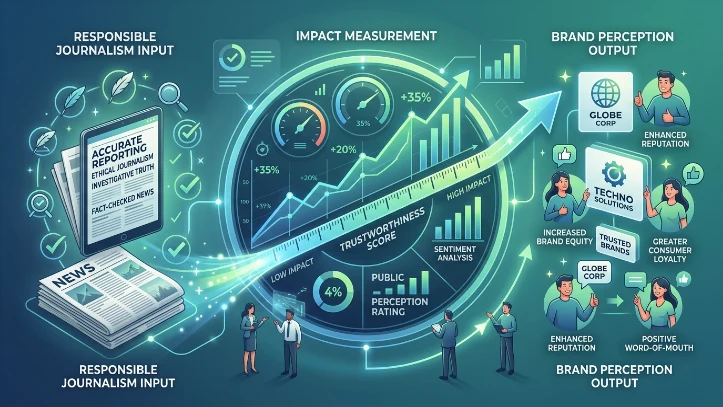
Brands can measure the impact of responsible journalism on perception by tracking sentiment, recall, and behavior changes after major coverage. Sentiment analysis of social‑media reactions and news‑comment sections shows whether positive, neutral, or negative language increases after a story. Brand‑search volume and direct‑traffic spikes tied to coverage indicate recognition changes.
Surveys and brand‑tracking studies can compare before‑and‑after metrics such as trust, favorability, and purchase intent. When segments that consume responsible journalism outlets show stronger trust and higher intent, the link between coverage and perception becomes clearer. Over time, this data helps brands refine their media‑relations strategy around responsible journalism partners.