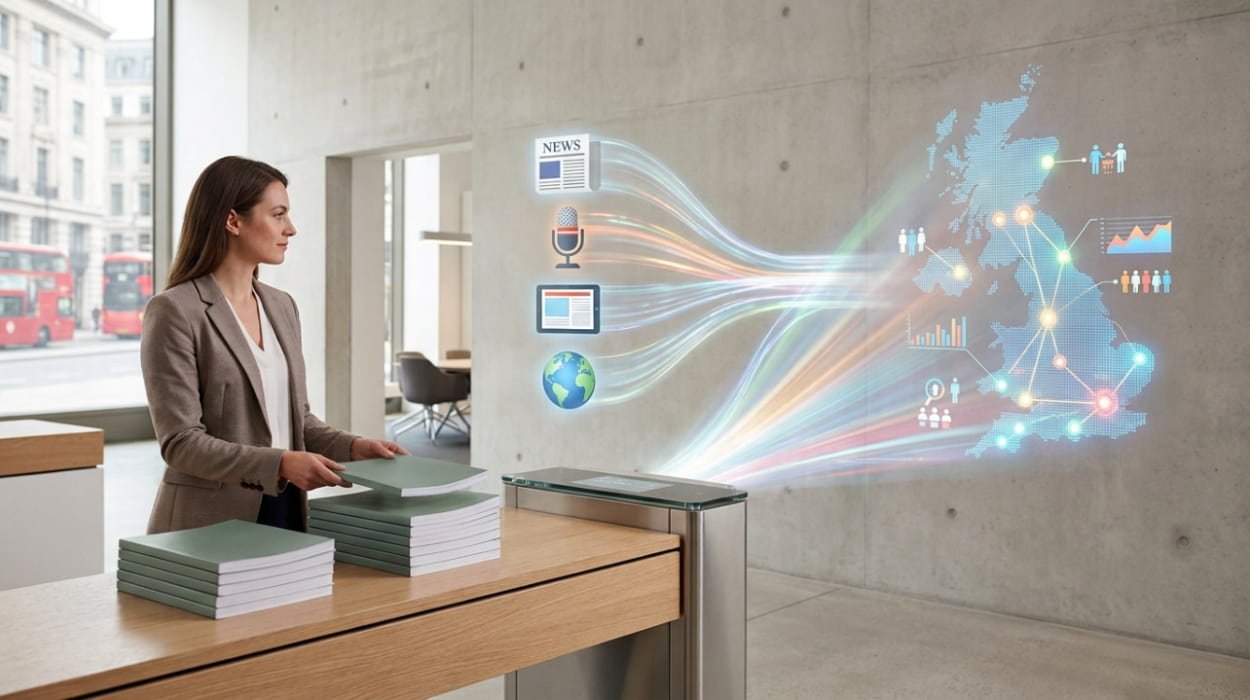
Banner advertising displays static or animated graphical ads in fixed positions on websites. These ads measure 728×90 pixels for leaderboards or 300×250 pixels for medium rectangles. They generate revenue through impressions or clicks, with global spend reaching $66.8 billion in 2023.
Banner advertising originated in 1994 with the first web banner on HotWired.com, featuring a 468×60 pixel ad for AT&T. Publishers place these ads above the fold, in sidebars, or within content feeds. Users encounter them on news sites, e-commerce platforms, and blogs. The format relies on image files or HTML5 for interactivity.
Modern banners integrate with content management systems like WordPress or ad servers such as Google Ad Manager. They load via JavaScript tags that fetch creatives from ad networks. Display networks distribute these banners across thousands of sites, targeting users by demographics or behavior.
What defines user experience on websites?
User experience encompasses page load speed, navigation ease, visual clarity, and interaction satisfaction. Metrics include time on page averaging 52 seconds, bounce rates at 40-60%, and Core Web Vitals scores like Largest Contentful Paint under 2.5 seconds. Poor UX reduces conversions by 7% per second of delay.
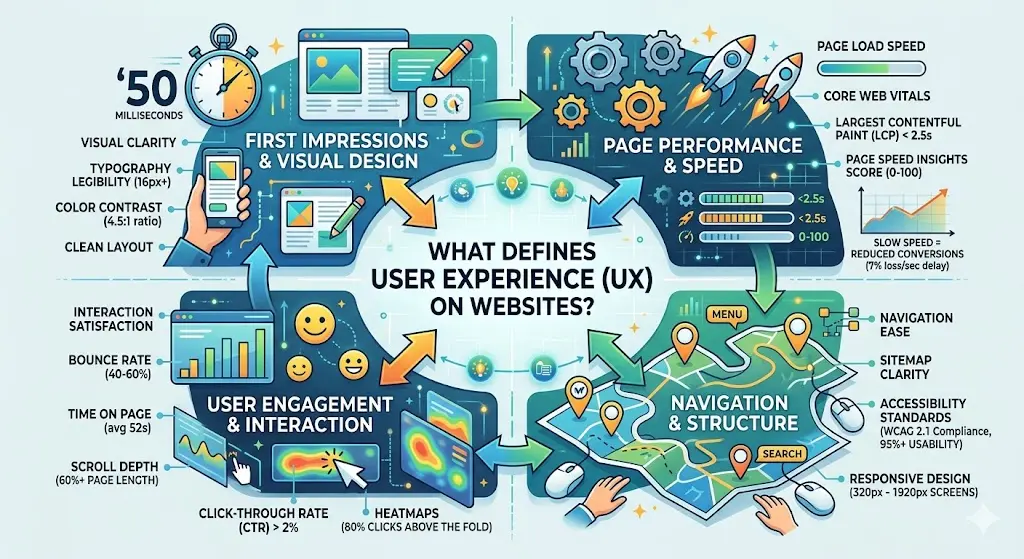
User experience starts with first impressions within 50 milliseconds of loading. Factors include typography legibility at 16px minimum font size, color contrast ratios of 4.5:1, and responsive design for screens from 320px to 1920px wide. Tools like Google PageSpeed Insights score sites from 0-100.
Engagement metrics track scroll depth reaching 60% of page length and click-through rates above 2%. Accessibility standards from WCAG 2.1 ensure 95% usability for diverse audiences. Heatmaps reveal interaction patterns, showing 80% of clicks occur above the fold.
How does banner advertising affect page load times?
Banner advertising increases page load times by 20-50% due to additional HTTP requests and file sizes averaging 150KB per ad. Multiple banners add 500-2000ms latency, pushing Largest Contentful Paint beyond Google’s 2.5-second threshold on 40% of sites.
Ads fetch resources asynchronously, but synchronous scripts block rendering. A single banner requires 5-10 requests: image, JavaScript, tracking pixels, and fonts. On mobile networks with 4G speeds of 20Mbps, this delays interactivity by 1-3 seconds.
Publishers mitigate impact with lazy loading, which defers off-screen ads until 50% viewport entry. Compression reduces file sizes to 50KB, yet 70% of sites exceed 3-second loads with three or more banners. Real-user monitoring from tools like New Relic confirms 25% abandonment after 5-second waits.
Do banner ads cause visual clutter on modern websites?
Banner advertising creates visual clutter through 5-15 ads per page, occupying 20-40% of screen real estate. This reduces content visibility by 30%, with ad-to-content ratios exceeding 1:1 on news sites, leading to 15% higher bounce rates.
Clutter arises from mismatched ad designs clashing with site aesthetics. Bright colors and flashing animations draw focus from primary content, fragmenting attention across 10+ elements. Eye-tracking studies show users fixate on ads for 2-5 seconds before returning to articles.
Site layouts suffer when banners push content below 600px from top. Horizontal leaderboards span full widths, while skyscrapers occupy 160x600px sidebars. Minimalist designs limit ads to two units, preserving 80% content area and cutting clutter complaints by 40%.
Why do banner ads trigger ad blockers?
Banner advertising prompts 42% global ad blocker usage due to intrusive formats like pop-ups and auto-playing videos. Blockers like uBlock Origin filter 90% of banners, reducing publisher revenue by $30 billion annually while improving UX for 800 million users.
Intrusiveness stems from sound-enabled videos on 15% of banners and interstitials covering 100% of screens. Privacy concerns arise from third-party cookies tracking 70% of visits. Users install blockers after 3-5 negative encounters, with installation rates doubling on mobile.
Acceptable Ads standards allow non-intrusive banners under 10% page weight without animation. Compliant sites see 20% lower block rates. Ghostery data indicates 60% of blockers target display networks serving disruptive creatives.
What role does ad fatigue play in user experience?
Ad fatigue diminishes user experience after 3-5 exposures to similar banners, dropping click rates from 0.5% to 0.1%. Frequency caps limit views to 3 per session, yet uncapped campaigns on 50% of sites cause 25% engagement drops.
Fatigue builds from repetitive creatives across sessions, with 80% of users reporting annoyance after one week. Neurological studies detect reduced attention after 10 impressions, mirroring banner blindness where 86% of viewers ignore ads subconsciously.
Rotation schedules refresh creatives every 7 days, incorporating A/B tests with 10 variants. Dynamic personalization swaps banners based on 50+ user signals, sustaining 15% higher engagement. Analytics track fatigue via 20% viewability declines.
[Curious about programmatic versus traditional methods What Are the Differences Between Programmatic Advertising and Traditional Banner Advertising Methods?
How do intrusive banner formats harm engagement?
Intrusive banners like expanding units and overlays reduce engagement by 35%, with time on page falling 22% from 90 to 70 seconds. Static formats maintain 12% higher dwell times compared to animated ones playing over 15 seconds.
Expanding banners grow from 300×250 to 600×500 pixels, obscuring content for 5 seconds. Overlays fade in after 2 seconds, capturing 40% unintended clicks. Video banners autoplay 70% of the time, spiking CPU usage by 15% on low-end devices.
Guidelines restrict animations to 3 seconds with pause controls. Fixed-position sticky banners follow scrolls, visible 95% of session time. User polls show 65% prefer collapsible formats minimizing to 10% visibility.
Can banner advertising slow mobile user experience?
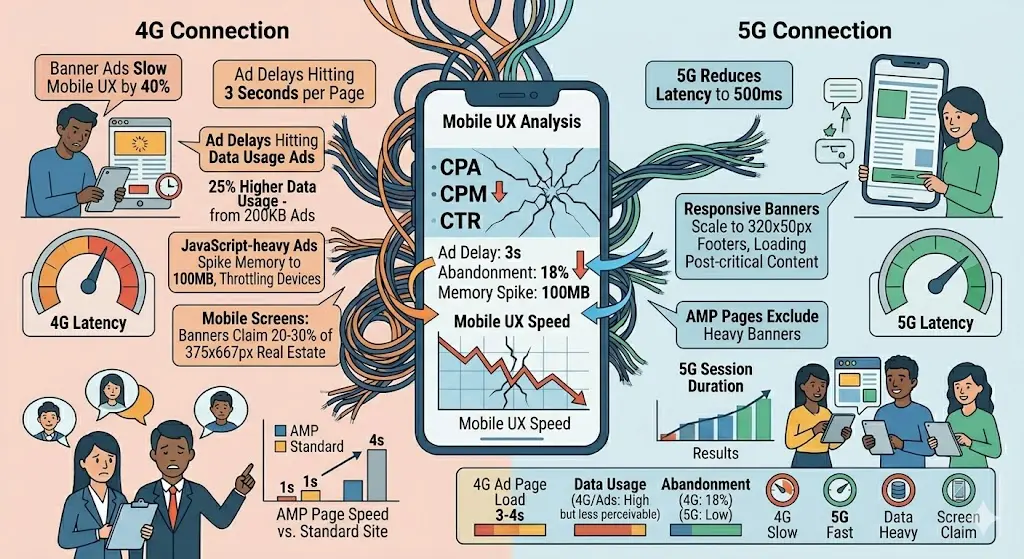
Banner advertising slows mobile UX by 40% on 4G connections, with ad-related delays hitting 3 seconds per page. iOS and Android users face 25% higher data usage from 200KB ads, causing 18% abandonment on pages over 2MB.
Mobile screens limit real estate to 375x667px, where banners claim 20-30%. JavaScript-heavy ads spike memory to 100MB, throttling older devices. AMP pages exclude heavy banners, loading in 1 second versus 4 for standard sites.
Responsive banners scale to 320x50px footers, loading post-critical content. 5G reduces latency to 500ms, but 60% of UK users remain on 4G. Web Vitals report 45% of mobile banner pages fail speed thresholds.
What metrics show banner ads’ UX impact?
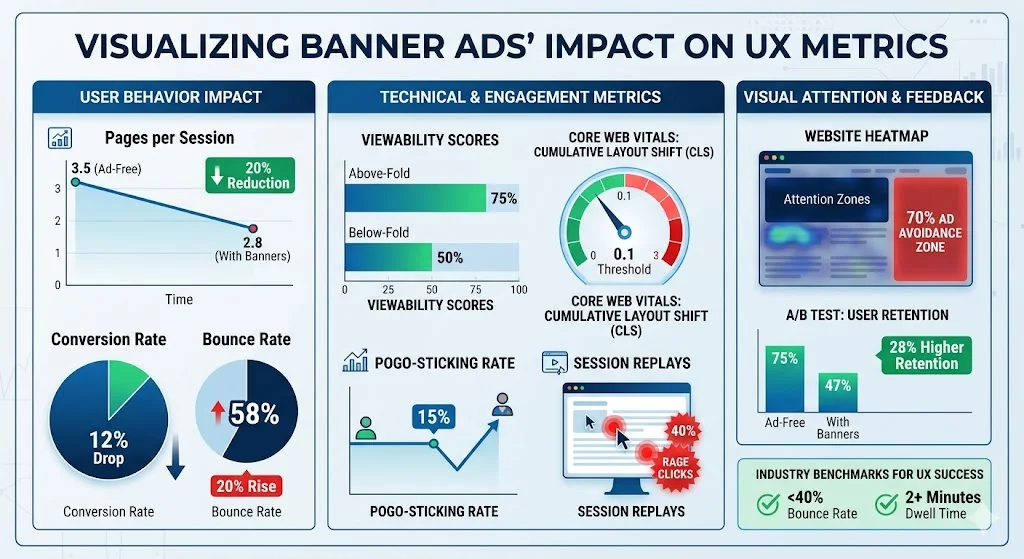
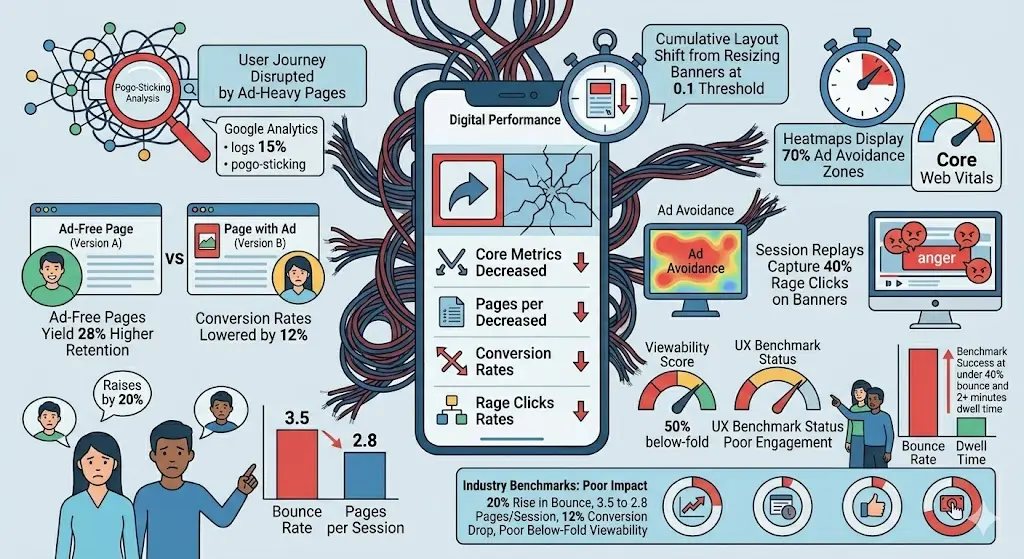
Metrics reveal banner ads raise bounce rates by 20%, cut pages per session from 3.5 to 2.8, and lower conversion rates by 12%. Viewability scores drop to 50% for below-fold units, signaling poor engagement.
Core Web Vitals track Cumulative Layout Shift from resizing banners at 0.1 threshold. Google Analytics records a 15% rate of pogo-sticking from pages with heavy advertisements. Heatmaps display 70% ad avoidance zones.
A/B tests compare ad-free pages yielding 28% higher retention. Session replays capture 40% rage clicks on banners. Industry benchmarks set UX success at under 40% bounce and 2+ minutes dwell time.
Are there ways banner ads improve user experience?
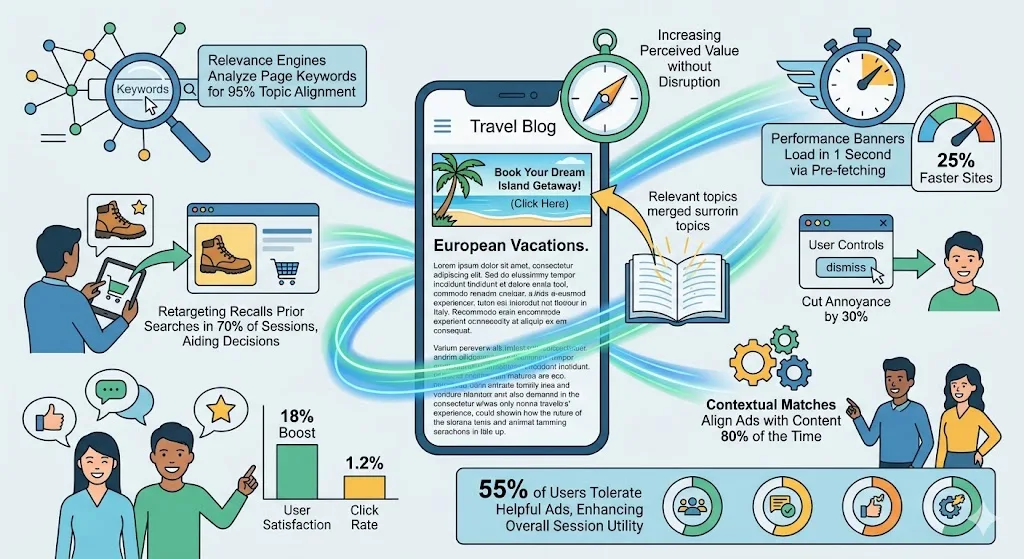
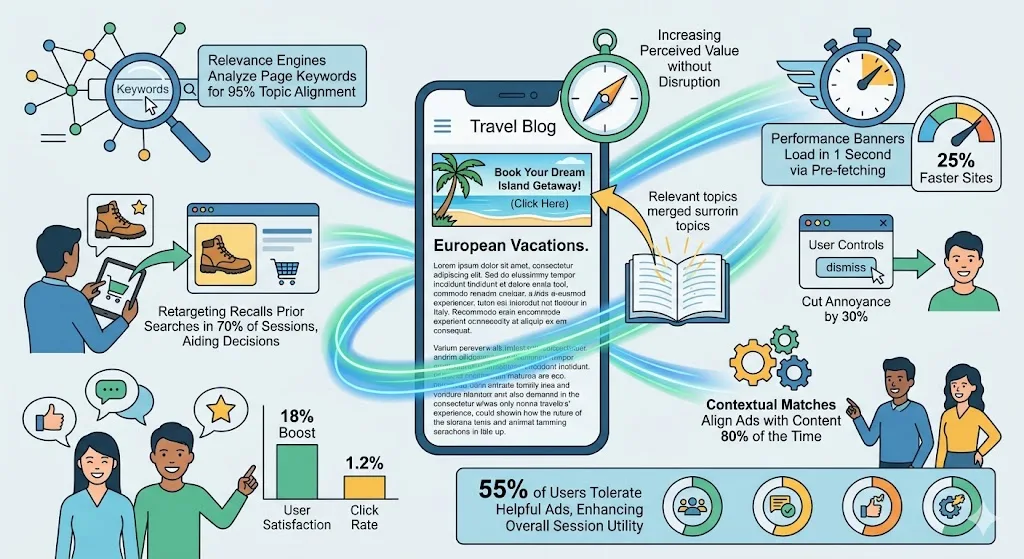
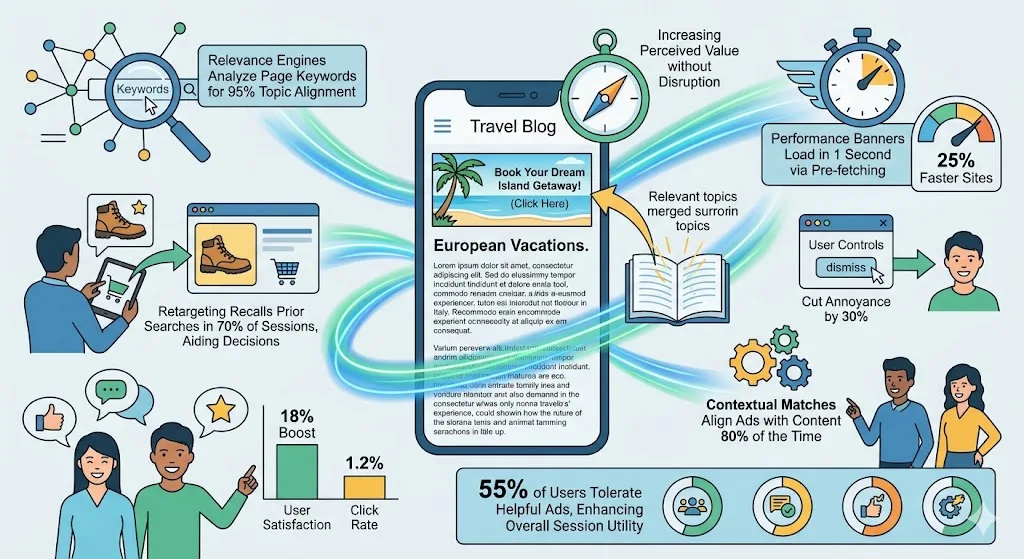
Banner advertising improves UX through relevant targeting, boosting satisfaction scores by 18% and click rates to 1.2%. Contextual matches align ads with content 80% of the time, increasing perceived value without disruption.
Relevance engines analyze page keywords for 95% topic alignment, like travel ads on holiday blogs. Retargeting recalls prior searches in 70% of sessions, aiding decisions. Native banners blend with 90% style consistency.
Performance banners load in 1 second via pre-fetching, supporting 25% faster sites. User controls like dismiss buttons cut annoyance by 30%. Data shows 55% of users tolerate helpful ads, enhancing overall session utility.
Ready for investment strategies Invest in Banner Advertising Across Our News Websites for Guaranteed Brand Visibility.