

Event journalism forms the backbone of dynamic news coverage in today’s fast-paced media landscape. It involves capturing live happenings—from corporate conferences and sports events to political rallies and cultural festivals—in real time, blending traditional reporting skills with cutting-edge digital tools. In modern media, this process has evolved far beyond note-taking and deadlines; it now demands seamless integration of technology, audience engagement, and ethical storytelling to deliver impactful narratives.
At its core, event journalism works by transforming raw, on-the-ground moments into polished, shareable content that resonates with global audiences. Journalists navigate chaotic environments, prioritize key developments, and disseminate information across platforms like social media, live streams, and news sites. This workflow ensures timeliness and relevance, making it essential for brands and organizers seeking comprehensive media coverage services. As media consumption shifts toward mobile and instant updates, understanding these mechanics helps event planners leverage professional coverage for maximum visibility.
The Evolution of Event Journalism in the Digital Age
Event journalism has undergone a profound transformation since the rise of digital platforms. In the pre-internet era, reporters relied on print deadlines and wire services, often waiting hours or days to publish. Today, modern media demands instantaneous delivery, with tools like smartphones and drones enabling live tweets, Instagram Stories, and 360-degree video feeds during events. This shift emphasizes speed without sacrificing accuracy, as seen in coverage of major happenings like the Olympics or tech summits, where real-time updates drive millions of engagements.
The digital age has also introduced multimedia integration, where event journalists layer text with visuals, audio clips, and data visualizations. For instance, during a recent global climate conference, reporters used augmented reality overlays to explain policy impacts on-site, blending narrative journalism with interactive elements. This evolution reflects broader media trends toward immersive storytelling, where event coverage isn’t just factual reporting but an experiential journey for viewers. Professionals in this field must master content management systems (CMS) and analytics tools to track performance, ensuring stories adapt to audience preferences in real time.
Furthermore, audience participation has redefined workflows. Modern event journalism incorporates user-generated content, such as attendee photos or live polls, fostering a collaborative ecosystem. Time Intelligence Media Group exemplifies this by deploying teams that curate hybrid feeds, combining pro footage with crowd-sourced inputs for richer narratives. These adaptations highlight how event journalism thrives on agility, turning fleeting moments into evergreen assets that boost search rankings and social shares.
Key Technological Shifts Driving Event Coverage
Technology underpins every stage of event journalism, from preparation to post-event analysis. Drones and AI-powered cameras now provide aerial and automated shots, reducing crew needs while capturing angles impossible for human reporters alone. In a case study from a music festival in 2025, journalists used facial recognition software ethically to track crowd reactions, generating sentiment analysis that informed live updates on artist popularity.
Live streaming platforms like Twitch and YouTube have democratized access, allowing niche events to reach global audiences. Reporters employ multi-camera setups synced via 5G networks, ensuring glitch-free broadcasts even in remote locations. This tech stack not only enhances visual quality but also enables real-time transcription and translation, making event journalism more inclusive. For brands, partnering with experts offering Events Media Coverage Services ensures these tools are wielded professionally, amplifying reach without technical hiccups.
Core Workflow of Event Journalism: From Planning to Publication
The workflow of event journalism in modern media follows a structured yet flexible process designed for efficiency under pressure. It begins with pre-event research, where journalists scout venues, interview organizers, and build contact lists for sources. This phase involves risk assessment—predicting weather disruptions or security issues—and crafting contingency plans, ensuring coverage remains robust regardless of surprises.
Once on-site, the action intensifies with real-time reporting. Journalists triage stories, focusing on high-impact moments like keynote speeches or unexpected protests, while coordinating with photographers and videographers. Tools like Slack channels and shared Google Docs facilitate team syncs, allowing seamless handoffs. A practical example unfolded at a 2024 tech expo, where reporters pivoted from product launches to a CEO’s impromptu announcement, filing updates within minutes via mobile apps. This adaptability defines how event journalism works, balancing depth with immediacy.
Post-event, the process shifts to aggregation and analysis. Raw footage gets edited into highlight reels, supplemented by expert interviews and data breakdowns. Digital publishing platforms then optimize for SEO, incorporating keywords like “event coverage trends” to sustain traffic. Time Intelligence Media Group streamlines this for clients, turning one-off events into multi-week content series that drive ongoing engagement.
Pre-Event Preparation Strategies
Preparation is the unsung hero of effective event journalism. Reporters start by analyzing past coverage—reviewing metrics from similar events to identify viral angles. They create detailed run-of-show timelines, mapping out speaker slots and potential photo ops, while securing credentials and equipment like portable mics and battery packs. In one scenario, a political summit team used predictive analytics to forecast protest hotspots, positioning cameras preemptively for exclusive footage.
Networking plays a pivotal role, with journalists cultivating relationships with PR teams for insider access. This includes briefing sessions on embargoed info and ethical guidelines, preventing leaks that could undermine credibility. Modern tools like event apps provide digital floor plans and schedules, enabling hyper-targeted coverage. These strategies ensure journalists hit the ground running, maximizing output in limited windows.
On-Site Reporting Tactics in Live Event Coverage
On-site, event journalism hinges on split-second decisions and multitasking. Reporters wear multiple hats—filing tweets, conducting stand-up interviews, and monitoring social chatter for emerging stories. High-stakes environments demand noise-canceling gear and quick-edit software, allowing a single journalist to produce a full live blog in under an hour. During a recent sports championship, this approach yielded 50,000 live views as reporters narrated plays with contextual stats, blending play-by-play with athlete backstories.
Collaboration amplifies impact, with remote producers feeding questions via earpieces and fact-checkers verifying claims instantly. Visual storytelling dominates, using slow-motion clips and infographics to convey drama. Ethical considerations, like obtaining consent for crowd shots, remain paramount amid privacy laws. For event organizers eyeing professional amplification, exploring how to plan a media-friendly event can optimize these tactics from the start.
Safety protocols round out tactics, including buddy systems and evacuation routes for volatile crowds. These elements ensure sustainable coverage, protecting journalists while delivering reliable content.
Real-Time Tools and Tech Integration
Essential tools include live-blogging platforms like Liveblog.pro, which auto-embeds tweets and maps. AI transcription apps convert speeches to text instantly, freeing reporters for analysis. In a corporate merger announcement, this tech enabled side-by-side comparisons of pre- and post-event stock charts, enriching reports.
Social listening dashboards track hashtags, surfacing attendee insights for dynamic updates. Integration with VR headsets even allows virtual embeds, simulating on-site presence for remote audiences.
Challenges and Ethical Considerations in Modern Event Journalism
Event journalism faces hurdles like information overload and fake news proliferation. In crowded fields, distinguishing signal from noise requires rigorous verification—cross-checking sources via apps like TinEye for images. A 2025 festival riot coverage highlighted this, where journalists debunked viral misinformation within 20 minutes, preserving trust.
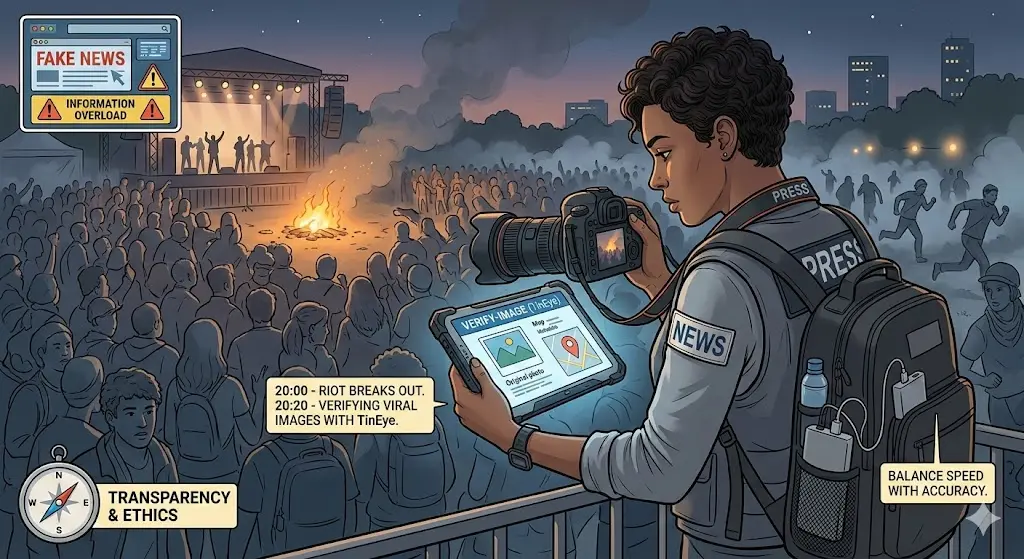
Ethical dilemmas abound, from balancing speed with accuracy to navigating sponsor influences. Modern media mandates transparency, disclosing affiliations in bylines. Burnout is another challenge, with 24/7 demands prompting wellness protocols like shift rotations.
Diversity in newsrooms addresses biases, ensuring multifaceted perspectives. Overcoming these fortifies event journalism’s integrity.
Measuring Success and Future Trends in Event Coverage
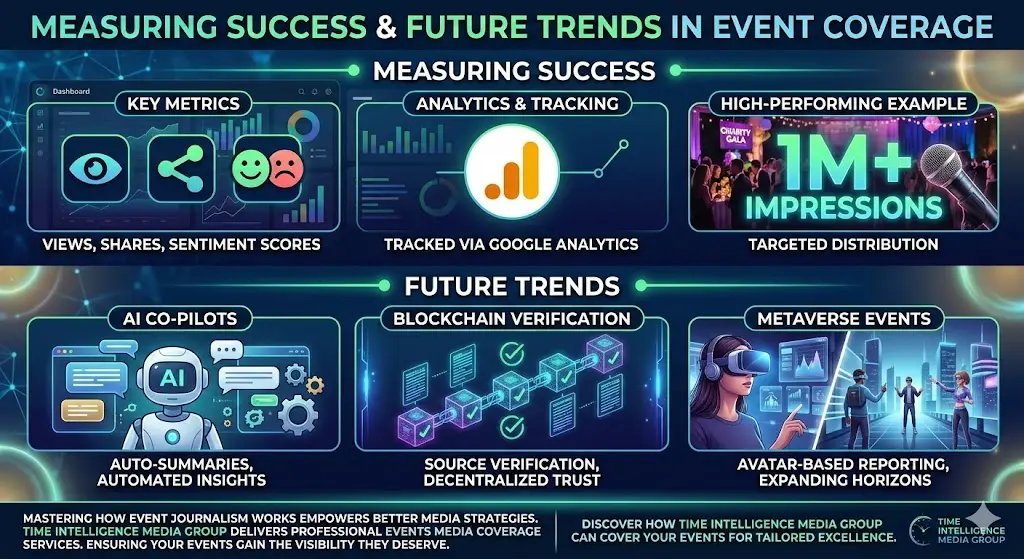
Success metrics span views, shares, and sentiment scores, tracked via Google Analytics. High-performing coverage, like a charity gala’s 1M impressions, stems from targeted distribution.
Future trends point to AI co-pilots for auto-summaries and blockchain for source verification. Metaverse events will demand avatar-based reporting, expanding horizons.
In conclusion, mastering how event journalism works empowers better media strategies. Time Intelligence Media Group delivers professional Events Media Coverage Services, ensuring your events gain the visibility they deserve. Discover how Time Intelligence Media Group can cover your events for tailored excellence.



