

Planning a media-friendly event transforms ordinary gatherings into headline-makers, drawing journalists, influencers, and audiences alike. In today’s competitive landscape, events must be press-ready from the outset, incorporating elements like accessible venues, compelling narratives, and digital amplification. This guide breaks down proven tactics to ensure your event garners widespread Events Media Coverage Services and boosts brand visibility.
Successful media-friendly events prioritize journalist needs—timely access, exclusive insights, and shareable moments—while aligning with modern workflows. Whether it’s a product launch or conference, strategic planning yields organic publicity, reducing reliance on paid ads. By understanding how event journalism works in modern media, organizers can craft experiences that reporters can’t ignore.
Defining Your Event’s Media Goals and Audience
Start by clarifying objectives: Do you seek national headlines, niche trade coverage, or viral social buzz? Media-friendly planning hinges on targeted goals, such as securing features in industry outlets or live streams from influencers. Map these to key performance indicators like mentions, shares, and traffic spikes, using tools like Google Alerts for tracking.
Audience analysis follows, segmenting journalists by beat—tech reporters for innovation summits, lifestyle writers for galas. Craft personas detailing their deadlines, preferred formats (e.g., embargoed releases), and platforms. In a 2025 corporate retreat case, organizers tailored invites to 50 targeted reporters, resulting in 20 features and a 300% engagement lift. Time Intelligence Media Group often advises clients on these alignments, ensuring Events Media Coverage Services align with precise goals.
Tailor narratives to resonate: For B2B events, emphasize data-driven impacts; for consumer-facing ones, highlight emotional hooks. This foundational step prevents scattershot efforts, focusing resources where they yield the highest media ROI.
Setting SMART Media Objectives
SMART goals—Specific, Measurable, Achievable, Relevant, Time-bound—anchor planning. Example: “Secure 10 quotes from tier-1 outlets within 48 hours post-event.” This specificity guides invite lists and content creation.
Benchmark against past events, adjusting for trends like short-form video dominance. Regular audits refine approaches, turning one-off successes into repeatable formulas.
Venue and Logistics for Press Accessibility
Venue selection is pivotal for media-friendly events, favoring open layouts with strong Wi-Fi, power outlets, and natural light for optimal photography. Avoid cramped spaces; opt for hybrids with virtual access via platforms like Zoom or Hopin, accommodating remote journalists. Lighting rigs and quiet zones for interviews enhance usability.
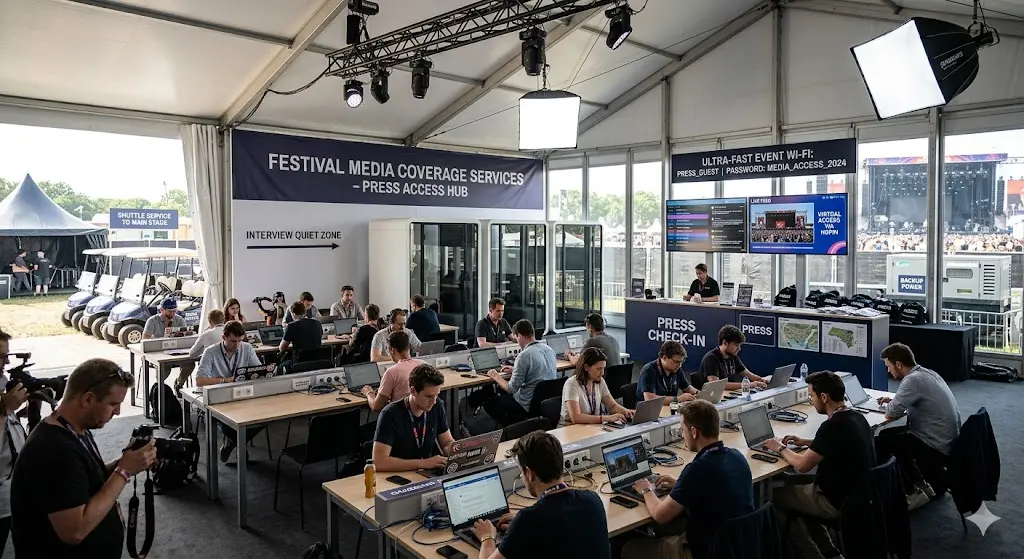
Logistics streamline reporter flow: Dedicated press areas with charging stations, branded swag, and real-time schedules via apps. A music festival planner in 2024 installed 5G hotspots and golf carts for shuttle service, enabling seamless live reporting and earning praise from outlets like Billboard. These details signal professionalism, encouraging repeat coverage.
Backup plans mitigate risks—rain tents, generators, and contingency comms ensure uninterrupted access. Professional input from media experts elevates these elements, maximizing Events Media Coverage Services potential.
Optimizing Layout for Visual Storytelling
Design zones for photo ops: Red carpets, demo stages, and interactive installations create Instagram-ready moments. Wide aisles prevent bottlenecks, allowing drone shots.
Signage and floor plans distributed pre-event orient journalists quickly. Case in point: A tech conference’s “Innovation Alley” generated 500+ user posts, amplifying organic reach.
Crafting Compelling Content and Hooks
Content is king in media-friendly planning—develop exclusive announcements, celebrity panels, or data reveals that demand coverage. Package as press kits with high-res images, bios, and stats, distributed digitally via tools like Cision.
Build hooks around timeliness: Tie to holidays, anniversaries, or trends. During a sustainability expo, a “zero-waste challenge” with live metrics hooked eco-reporters, yielding 15 articles. Narratives should evoke emotion or controversy sparingly, always fact-based for credibility.
Amplify with pre-event teasers on social, nurturing journalist relationships through personalized pitches. This content strategy ensures your event stands out in crowded inboxes.
Developing Newsworthy Announcements
Announce hires, partnerships, or product betas exclusively on-site. Time them for peak news cycles, like Tuesday mornings.
Support with visuals and expert quotes. A startup’s funding reveal at their demo day secured TechCrunch coverage through this method.
Media Outreach and Relationship Building
Outreach begins 4-6 weeks out: Compile lists via tools like Hunter.io, segmenting by relevance. Personalized emails highlight why their beat fits, including RSVPs and perks.
Follow up with calls, offering one-on-ones. Nurture long-term ties via newsletters or post-event thanks. A nonprofit gala’s targeted outreach to 100 contacts netted 40 attendees, sparking a feature series.
Influencer partnerships extend reach—micro-influencers for niche authenticity. For bespoke execution, consider how Time Intelligence Media Group can cover your events.
Pitching Like a Pro
Pitches are concise: Subject lines like “Exclusive: [Event] Unveils Game-Changing Tech.” Body includes who-what-why, with visuals attached.
Track opens via Mailchimp, resending tailored versions. Success rates soar with relevance.
On-Site Media Management During the Event
Day-of coordination involves a media handler greeting arrivals, escorting to key moments, and facilitating interviews. Live updates via a press Slack channel keep everyone synced.
Monitor coverage in real-time, feeding quotes or clarifications promptly. A product launch’s handler pivoted schedules for breaking news, capturing viral moments.
Post-session debriefs gather feedback, refining future events. These tactics ensure smooth operations.
Handling Live Interviews and Q&A
Prep spokespeople with media training—soundbites under 20 seconds. Stage Q&A with mics for easy recording.
Anticipate tough questions, providing fact sheets. This polish elevates professionalism.
Amplifying Coverage Post-Event
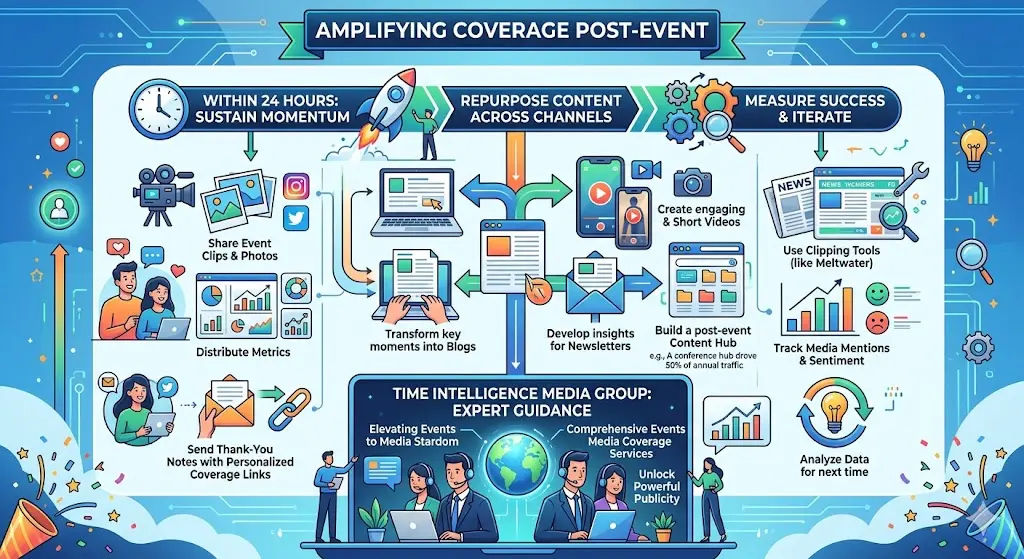
Follow-up sustains momentum: Share clips, photos, and metrics within 24 hours. Thank-you notes with personalized coverage links build loyalty.
Repurpose content into blogs, reels, and newsletters. A conference’s post-event hub drove 50% of annual traffic.Measure via clippings tools like Meltwater, iterating for next time. Time Intelligence Media Group excels here, providing comprehensive Events Media Coverage Services.
Mastering how to plan a media-friendly event unlocks powerful publicity. Time Intelligence Media Group offers expert guidance to execute these strategies flawlessly, elevating your events to media stardom.



