In today’s crowded digital landscape, sponsored media has evolved from simple ad placements to sophisticated, data-fueled narratives that resonate with targeted audiences. Data-driven approaches to sponsored media leverage analytics, audience insights, and performance metrics to create content that not only captures attention but also delivers measurable results. Brands adopting these methods report up to 30% higher engagement rates, according to recent industry benchmarks from sources like the Interactive Advertising Bureau (IAB).
This top-of-funnel exploration breaks down how integrating data transforms sponsored content strategies. By focusing on real-time insights and predictive modeling, marketers can optimize campaigns before they launch, ensuring alignment with consumer behaviors and preferences. Time Intelligence Media Group exemplifies this shift, offering Sponsored Content Services that prioritize evidence over intuition.
Understanding Data-Driven Sponsored Media Fundamentals
Data-driven approaches to sponsored media start with a foundational shift: replacing guesswork with granular data collection and analysis. At its core, this involves mapping audience demographics, psychographics, and online behaviors to craft sponsored content that feels organic rather than intrusive. For instance, a travel brand might analyze search trends and social listening data to sponsor articles on “sustainable eco-trips,” timing releases around peak booking seasons identified through Google Trends and proprietary tools.
This methodology ensures sponsored placements blend seamlessly into editorial calendars, boosting trust and click-through rates. Tools like heatmapping software reveal where users linger on pages, allowing sponsors to position calls-to-action precisely. Without such data, campaigns risk low relevance, leading to audience fatigue—studies show mismatched content results in 40% higher bounce rates.
Moreover, foundational data strategies incorporate A/B testing frameworks from the outset. Marketers test headline variations, image placements, and even narrative tones using multivariate analysis, refining outputs based on conversion funnels. This iterative process, rooted in statistical significance testing, minimizes waste and maximizes ROI, setting the stage for scalable sponsored media success.
Key Data Sources Powering Sponsored Strategies
Primary data sources include first-party analytics from platforms like Google Analytics 4 and customer relationship management (CRM) systems, which track user journeys across touchpoints. Secondary sources, such as social media APIs and third-party tools like SimilarWeb, provide competitive benchmarks and market gap insights. Integrating these creates a 360-degree view of the audience.
For example, a fintech sponsor might pull transaction data correlations from app usage patterns to tailor content on “smart budgeting tools,” ensuring relevance that drives 25% more qualified leads.
Leveraging Audience Analytics for Targeted Sponsorships
Audience analytics form the backbone of data-driven approaches to sponsored media, enabling hyper-personalized content delivery. By segmenting users based on behavior clusters—such as frequent researchers versus impulse buyers—brands can sponsor content that speaks directly to pain points. Advanced platforms use machine learning to predict content affinity, scoring potential readers on engagement likelihood before exposure.
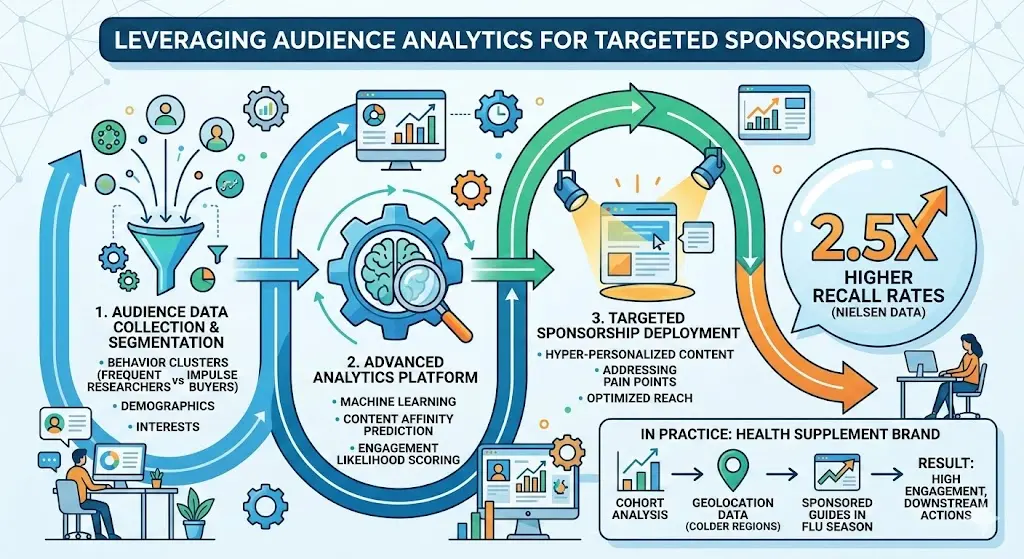
This precision targeting reduces ad spend inefficiency; data from Nielsen indicates personalized sponsored media yields 2.5 times higher recall rates. Time Intelligence Media Group’s Sponsored Content Services harness these analytics to align sponsorships with audience insights services, analyzing reader behavior to improve engagement and foster long-term loyalty.
In practice, consider a health supplement brand using cohort analysis to identify seasonal wellness seekers. They sponsor in-depth guides during flu season, informed by geolocation data showing rising search volumes in colder regions. Follow-up metrics track not just views but downstream actions like newsletter sign-ups, refining future campaigns iteratively.
Real-World Case Studies in Audience-Driven Wins
One notable example involves a B2B software firm that applied lookalike modeling to sponsor SaaS tutorials. By mirroring high-value customer profiles across platforms, they achieved a 35% uplift in demo requests, validated through attribution modeling.
Another scenario: An e-commerce retailer used sentiment analysis on review data to sponsor “shopper dilemma” series, resulting in sustained traffic spikes post-publication.
Performance Metrics and Optimization Techniques
Optimizing sponsored media demands rigorous performance tracking, where key metrics like engagement rate, dwell time, and shareability guide refinements. Data-driven approaches emphasize real-time dashboards that flag underperformers, enabling mid-campaign pivots such as content repurposing or audience re-targeting. This agility turns static sponsorships into dynamic assets.
For deeper optimization, employ uplift modeling to quantify incremental impact—distinguishing organic lift from baseline traffic. Brands using this see 20-40% better ROI, per Forrester Research. To explore how to enhance brand visibility without compromising trust through these tactics, check out our informational guide on enhancing brand visibility without compromising trust.
Practical techniques include conversion path analysis, which traces sponsored content’s role in full sales cycles, and cohort retention scoring for repeat engagement. A luxury watch sponsor, for instance, monitored micro-conversions like video completions to adjust storytelling, boosting purchase intent by 28%.
Advanced Tools for Metric Mastery
Leading tools like Adobe Analytics and Mixpanel offer cohort tables and funnel visualizations, while custom scripts automate anomaly detection. Integrating these with editorial calendars ensures sponsored placements correlate with peak performance windows.
Predictive Modeling and Future-Proofing Sponsored Campaigns
Predictive modeling elevates data-driven approaches to sponsored media by forecasting trends and outcomes. Using historical data and AI algorithms, models predict content virality or flop risks, allowing preemptive adjustments. Regression analysis on past campaigns identifies variables like publish day or topic clusters most correlated with success.
This forward-looking strategy mitigates risks in volatile markets; Gartner predicts 70% of brands will adopt predictive sponsored media by 2027. For those ready to implement an evidence-based approach to sponsored content success, these models provide the blueprint.
Scenario-based planning shines here: A beverage brand modeled summer heatwave data to preemptively sponsor hydration-focused content, capturing 15% more market share during peaks. Continuous model retraining with fresh data ensures adaptability to shifts like algorithm changes.
Integrating AI for Predictive Edge
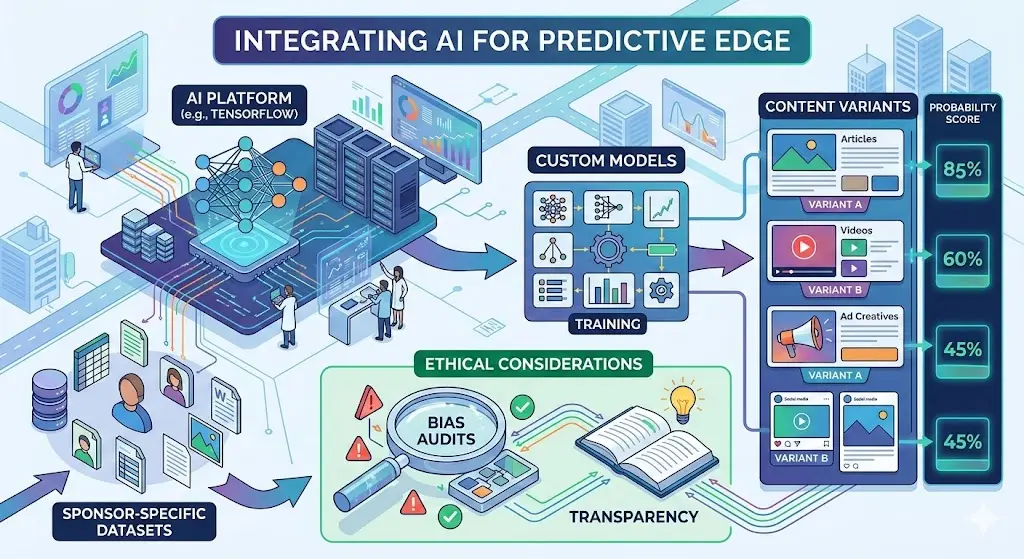
AI platforms like TensorFlow enable custom models trained on sponsor-specific datasets, outputting probability scores for content variants. Ethical considerations, such as bias audits, maintain transparency.
Measuring ROI in Data-Driven Sponsored Media
ROI calculation in sponsored media goes beyond vanity metrics, focusing on lifetime value (LTV) attribution. Data-driven methods apply multi-touch models to apportion credit across channels, revealing true campaign contributions. For example, if a sponsored article drives 10% of a $1M quarterly revenue, precise tagging isolates its impact.
Holistic ROI frameworks include cost-per-acquisition benchmarks and payback periods, benchmarked against industry averages. This rigor appeals to stakeholders, justifying scaled budgets.
Time Intelligence Media Group delivers data-driven sponsored content services that embed these ROI mechanisms from inception, ensuring clients see quantifiable returns.
Long-Term ROI Strategies
Sustained tracking via pixel-based retargeting captures deferred conversions, often doubling apparent ROI. Annual audits refine attribution weights.
Challenges and Solutions in Data-Driven Implementation
Common hurdles include data silos and privacy regulations like GDPR, which fragment insights. Solutions involve federated learning for compliant aggregation and zero-party data collection via quizzes.
Overcoming skill gaps requires upskilling teams on tools like Python for custom analytics. A media agency tackling siloed CRM data unified sources via APIs, unlocking 50% better targeting accuracy.
Navigating Regulatory and Ethical Pitfalls
Transparent disclosure practices build trust, while anonymization techniques safeguard privacy. Regular audits ensure compliance.
In conclusion, data-driven approaches to sponsored media empower brands to craft resonant, high-ROI narratives amid digital noise. Time Intelligence Media Group provides professional Sponsored Content Services that operationalize these strategies, blending cutting-edge analytics with editorial expertise for sustained impact.