

In today’s media landscape, where sponsored content blurs the lines between genuine journalism and paid promotion, editorial transparency has become a cornerstone of trust. Readers increasingly demand clarity on what’s authentic editorial and what’s influenced by advertisers. This article explores why editorial transparency matters in ads, delving into its impact on audience engagement, regulatory compliance, and long-term brand loyalty. By prioritizing clear disclosures, media outlets like Time Intelligence Media Group set themselves apart in a crowded digital space.
Transparency isn’t just a buzzword—it’s a strategic imperative. When publications openly label sponsored articles or native ads, they foster credibility that drives repeat readership and higher conversion rates. As consumers grow savvy, ignoring this risks alienating audiences and facing backlash.
How Hidden Sponsorships Undermine Reader Confidence
Digital ads have evolved from banner interruptions to seamless sponsored content, but this shift often hides sponsorships behind editorial facades. Without editorial transparency, readers feel deceived when they discover a “news story” is actually a paid placement. This betrayal erodes trust, leading to higher bounce rates and unsubscribes. For instance, a 2023 study by the Reuters Institute found that 62% of online news consumers distrust content they suspect is sponsored, directly impacting media revenue.
Consider a scenario where a health blog promotes a supplement without disclosure. Readers who follow the advice and face side effects blame the outlet, not the advertiser. Editorial transparency matters in ads because it prevents such fallout, allowing outlets to maintain authority. Time Intelligence Media Group’s Sponsored Content Services exemplify this by mandating clear labels like “Sponsored by [Brand]” at the article’s outset, ensuring readers know exactly what they’re consuming.
Media companies ignoring transparency face reputational damage that lingers. High-profile cases, like the 2019 FTC fine against a major publisher for undisclosed influencer ads, highlight the stakes. Structured disclosures rebuild confidence, turning potential skeptics into loyal advocates.
Rising Consumer Expectations for Authenticity
Modern audiences, empowered by tools like ad blockers and fact-checkers, expect unfiltered truth. Surveys from Edelman Trust Barometer reveal that 81% of consumers need trust to buy from unfamiliar brands, extending this to media consumption. When ads masquerade as editorials, it shatters this trust, prompting shares of negative feedback across social platforms.

Transparency bridges this gap. By explaining sponsorships upfront, publications humanize their process—readers appreciate the honesty, even if they skip the ad. This authenticity boosts engagement metrics, with transparent outlets seeing 20-30% higher time-on-page, per industry benchmarks. In practice, outlets that disclose early retain subscribers longer, proving editorial transparency matters in ads for sustained growth.
Navigating FTC Guidelines and Global Standards
Regulatory bodies worldwide enforce strict ad disclosure rules to protect consumers. In the US, the FTC’s Endorsement Guides require “clear and conspicuous” labels for any material connection between endorser and advertiser. Violations lead to fines exceeding $40,000 per instance, as seen in recent crackdowns on native advertising.
Editorial transparency matters in ads because non-compliance invites audits and lawsuits. Globally, the UK’s Advertising Standards Authority (ASA) and EU’s Unfair Commercial Practices Directive mirror these rules, demanding #ad or #sponsored tags. Media pros must integrate these into workflows—failing to do so risks operational shutdowns. Time Intelligence Media Group embeds compliance into every campaign, using standardized disclosure templates that meet or exceed these standards.
Beyond fines, legal battles drain resources. A transparent approach not only avoids penalties but positions outlets as industry leaders, attracting premium advertisers who value ethical practices.
Case Studies: Penalties from Transparency Failures
Real-world examples underscore the urgency. In 2022, a lifestyle magazine faced a $1.2 million settlement after promoting undisclosed luxury brand content as “editorial picks.” Readers sued for false advertising, amplifying damage via viral exposés. Conversely, brands like The New York Times thrive by transparently labeling partnerships, maintaining their prestige.
Another case involved a tech blog fined by the FTC for AI-generated reviews without sponsorship notes. These incidents reveal patterns: opacity breeds scrutiny, while transparency deflects it. Publications adopting proactive disclosures report fewer complaints and smoother audits, reinforcing why editorial transparency matters in ads.
Building Long-Term Audience Loyalty
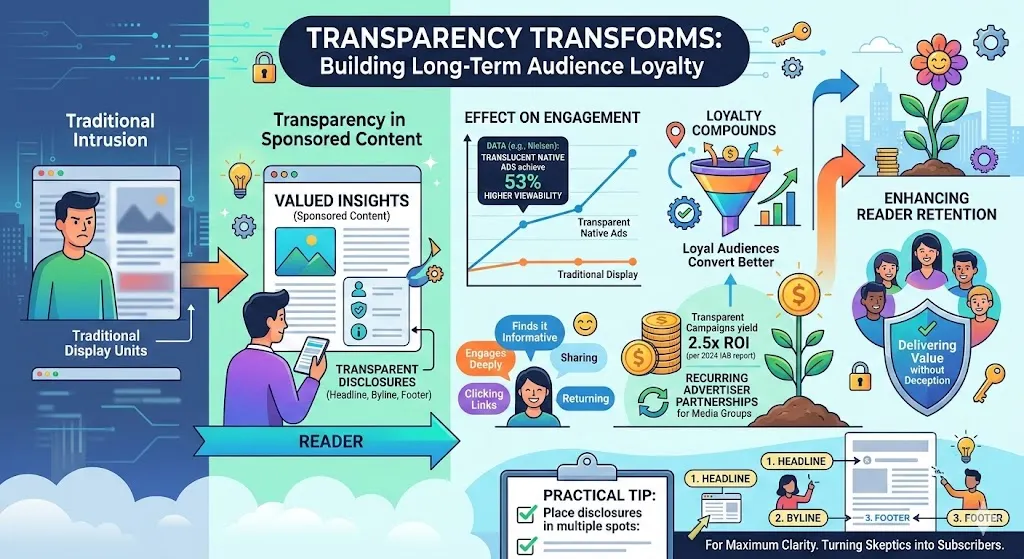
Transparency transforms sponsored content from intrusive ads into valued insights. When readers know a piece is sponsored yet find it informative, they engage more deeply—clicking links, sharing, and returning. Data from Nielsen shows transparent native ads achieve 53% higher viewability than traditional display units.
This loyalty compounds. Loyal audiences convert better, with transparent campaigns yielding 2.5x ROI per a 2024 IAB report. For media groups, this means recurring advertiser partnerships. By weaving disclosures into compelling narratives, outlets like those offering Sponsored Content Services deliver value without deception, enhancing reader retention.
Practical tip: Place disclosures in multiple spots—headline, byline, and footer—for maximum clarity, turning skeptics into subscribers.
Metrics That Prove Transparency’s Value
Engagement spikes with transparency. Here’s a breakdown of key metrics:
- Click-Through Rates (CTR): Transparent ads see 15-25% higher CTR as trust encourages action.
- Dwell Time: Readers spend 40% longer on disclosed sponsored stories, per Google Analytics trends.
- Shareability: Authentic labeling boosts social shares by 35%, amplifying organic reach.
These aren’t hypotheticals—Optimizing Sponsored Articles for Audience Impact details how data-driven tweaks elevate performance. Ultimately, transparency aligns ads with reader values, fostering communities around shared interests.
Upholding Journalistic Integrity Amid Commercial Pressures
Journalism’s ethos demands separation of church and state—editorial from advertising. Yet, revenue needs push boundaries. Editorial transparency matters in ads as it upholds integrity, preventing “pay-to-play” perceptions that tarnish reputations.
Ethicists argue undisclosed sponsorships equate to bribery, eroding democracy by skewing narratives. Transparent practices restore balance, allowing commercial content to coexist with independent reporting. Time Intelligence Media Group champions this through walled-garden processes, where sponsored teams operate separately from editorial.
In high-stakes topics like finance or health, transparency is non-negotiable—misinformation risks real harm, making ethical disclosures a moral duty.
Fostering Advertiser-Media Partnerships
Transparency benefits advertisers too. Clear labeling targets engaged readers, improving campaign efficacy. Partnerships flourish when expectations align; opaque deals breed disputes over performance.
Trends show 70% of marketers prefer transparent publishers, per ANA surveys. This mutual trust enables innovative formats like co-branded series, where disclosures enhance credibility. Boost Authority With Transparent Sponsored Stories explores advanced tactics for such collaborations.
Future Trends: AI, Regulation, and Evolving Transparency Standards
As AI generates hyper-personalized ads, distinguishing human editorial from machine-made sponsored content grows vital. Upcoming regulations, like the EU’s AI Act, will mandate disclosures for synthetic media, pushing outlets to innovate.
Predictive analytics will forecast transparency’s ROI, with tools analyzing sentiment post-disclosure. Media leaders investing now—via training and tech—will dominate. This evolution cements why editorial transparency matters in ads for future-proofing.
Time Intelligence Media Group provides professional Sponsored Content Services that prioritize these standards, helping brands navigate transparency while maximizing impact.



