

What are sponsored content services for explainer and how-to articles?
Sponsored content services create structured explainer and how-to articles that answer defined reader questions while presenting a clearly identified brand, product, or service within useful editorial content for a UK audience.
Sponsored content is paid editorial-style content created for a defined commercial purpose. Explainer articles clarify a topic, process, product category, or industry issue. How-to articles explain a sequence of actions required to complete a specific task.
Times Intelligence Media Group provides sponsored content services for organisations that need this format for brand communication, audience education, search visibility, and media distribution.
The content starts with reader intent. The commercial message follows the informational purpose. This structure separates sponsored explainer content from a conventional promotional announcement.
Businesses can use sponsored content to address questions such as:
- What does a new service do?
- How does a specific process work?
- What steps are required to solve a defined problem?
- What factors affect a purchasing decision?
- How does a business service apply to a particular industry?
The format provides a defined editorial structure while retaining commercial disclosure.
For broader context, the sponsored explainer article content model explains how this format differs from a standard brand announcement.
How does Times Intelligence Media Group structure sponsored explainer and how-to content?
Times Intelligence Media Group structures sponsored articles around search intent, reader questions, factual explanation, practical steps, commercial relevance, editorial clarity, and disclosure requirements to create content that serves both audience information needs and defined business objectives.
The process begins with the subject and target audience. The content team identifies the central question that the article needs to answer.
A sponsored explainer typically follows this sequence:
- Define the reader question.
- Establish the subject and scope.
- Organise the factual information.
- Explain relevant processes or concepts.
- Introduce the commercial entity at an appropriate point.
- Add supporting evidence and examples.
- Apply editorial and sponsored-content requirements.
- Review the article for search and readability requirements.
A how-to article follows a more procedural structure. It identifies the task, defines the required components, presents the steps, and explains the outcome.
The commercial reference remains connected to the subject rather than interrupting the informational flow.
How is the reader question identified?
Search intent provides the starting point. A question such as how to improve customer acquisition requires different content from a question asking what customer acquisition means.
The distinction affects the article structure, depth, terminology, examples, and commercial placement.
How is commercial information introduced?
Commercial information enters after the reader receives relevant context. The article establishes the subject before presenting the organisation, service, product, or solution.
This approach keeps the content focused on the stated topic.
For example, an article explaining how UK businesses prepare a digital PR campaign can first define campaign planning, audience research, media targeting, content preparation, distribution, and measurement before introducing a relevant sponsored service.
What components are included in a sponsored explainer article?
A sponsored explainer article contains a defined topic, direct introduction, factual explanation, structured sections, relevant examples, commercial information, supporting evidence, clear disclosure, and a conclusion connected to the reader question and business objective.
Each component serves a specific content function.
Topic definition
The opening establishes the subject and its relevance. It identifies the question or problem addressed by the article.
Factual explanation
The main sections define important entities, processes, terminology, and relationships. Technical subjects receive clear explanations before commercial references appear.
Supporting examples
Examples demonstrate how the described concept operates in a real business context.
For example, an explainer about sponsored content can discuss disclosure, audience targeting, article structure, editorial review, publication, and distribution.
Commercial integration
The brand or service appears where its relevance becomes clear. The article does not replace the educational content with promotional claims.
Editorial disclosure
Sponsored content requires transparent identification of its commercial nature. Disclosure helps distinguish paid content from independent editorial reporting.
Search optimisation
Search optimisation includes the primary keyword, related terminology, question-led headings, contextual entities, internal links, metadata, and content structure.
The optimisation remains subordinate to the article’s informational purpose.
What components are included in a sponsored how-to guide?
A sponsored how-to guide defines the task, identifies requirements, presents sequential instructions, explains important decisions, addresses common implementation points, connects the process to a relevant commercial solution, and maintains transparent sponsored-content identification.
How-to content requires procedural clarity.
The reader needs to understand what the task involves and what sequence produces the stated outcome.
A typical structure contains:
- Task definition
- Required inputs
- Preparation steps
- Sequential actions
- Decision points
- Implementation details
- Measurement or verification
- Relevant commercial solution
- Next action
For example, a guide about preparing a national awareness campaign can explain audience definition, message development, media targeting, content preparation, distribution planning, publication monitoring, and performance measurement.
The commercial service can then be introduced as a practical option for completing defined parts of the process.
The sponsored how-to guide format provides a deeper explanation of how reader questions can be answered before brand information becomes central.
How does Times Intelligence Media Group manage the content production process?
The production process connects audience intent, article structure, factual research, commercial requirements, search optimisation, editorial review, publication preparation, and distribution into a defined workflow for sponsored explainer and how-to content.
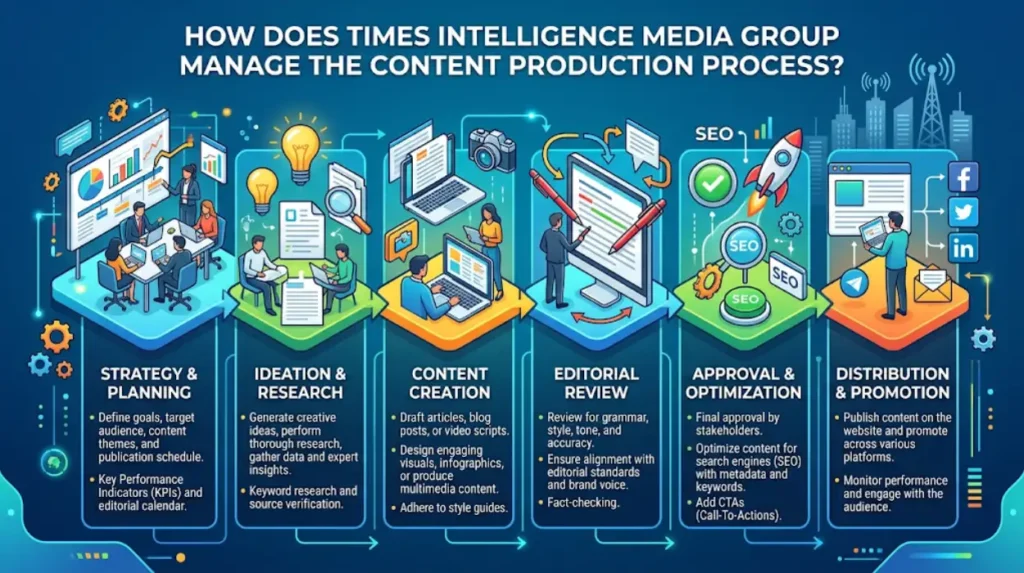
The first stage establishes the brief.
The brief identifies the subject, audience, geographical market, business objective, preferred format, target keywords, commercial entity, and publication requirements.
The second stage establishes the information architecture. Headings follow the reader’s questions and the logical sequence of the subject.
The third stage develops the factual content. Definitions, processes, examples, statistics, and relevant entities receive appropriate placement.
The fourth stage integrates the commercial message. Service descriptions remain connected to the topic.
The fifth stage applies editorial checks.
These checks cover:
- Accuracy
- Search intent
- Keyword placement
- Heading structure
- Readability
- Commercial clarity
- Sponsored disclosure
- Internal linking
- Brand consistency
The final stage prepares the content for publication and distribution.
What benefits do sponsored explainer and how-to articles provide businesses?
Sponsored explainer and how-to articles provide businesses with structured opportunities to explain services, address audience questions, support search visibility, communicate expertise, and connect commercial propositions with specific information needs.
The benefits depend on the article objective and distribution strategy.
Audience education
Explainer content provides definitions and context around unfamiliar subjects.
A technology company can explain a cybersecurity process before presenting its related service. A financial business can explain a business finance process before introducing its offering.
Search visibility
Question-led content targets informational queries and related semantic terms.
Structured headings also create clear topical relationships between the primary subject and supporting concepts.
Brand communication
Sponsored content gives organisations space to explain what they offer within a relevant subject.
This differs from a short announcement because the article contains contextual information around the commercial message.
Service understanding
Complex services require explanation before a reader can understand their practical application.
How-to content provides a defined route from problem identification to process completion.
Media distribution
Sponsored content can be prepared for publication through relevant media channels. Distribution requirements depend on the selected publication and campaign brief.
When are sponsored explainer articles useful for UK businesses?
Sponsored explainer articles are useful when a UK business needs to explain a complex subject, introduce a service through relevant information, answer recurring audience questions, or communicate a commercial proposition within a structured editorial format.
The format fits several business situations.
A professional services firm can explain regulatory processes. A technology company can explain software implementation. A healthcare organisation can explain service processes. A recruitment company can explain workforce procedures.
The content remains focused on the defined subject.
For UK audiences, terminology, examples, regulatory references, market context, and spelling need to match the intended readership.
A UK-focused article also needs clear geographical relevance when the subject involves British organisations, industries, regulations, or consumer behaviour.
When are sponsored how-to articles useful for business campaigns?
Sponsored how-to articles are useful when an audience needs practical instructions for completing a defined task and the sponsoring organisation provides a relevant product, service, resource, or professional capability connected to that task.
The format works particularly well for process-led subjects.
Examples include:
- How to prepare a media campaign
- How to develop a corporate research report
- How to distribute a business announcement
- How to structure an awareness campaign
- How to prepare content for a defined audience
- How to improve media outreach
- How to organise research findings for publication
The article provides the process first. The commercial service then connects to a defined requirement within that process.
This creates a clear relationship between reader intent and business relevance.
Explore More Expert Insights:
Times Intelligence Media Group Research and Reports Services Sized to Your Brief
Time Intelligence Media Group Audience Insights Services for Question-Led Topical Authority Planning
How can businesses choose the right sponsored content format?
Businesses can choose between explainer and how-to formats by identifying whether their primary audience need involves understanding a subject or completing a defined process, then matching article structure, evidence, commercial integration, and distribution accordingly.
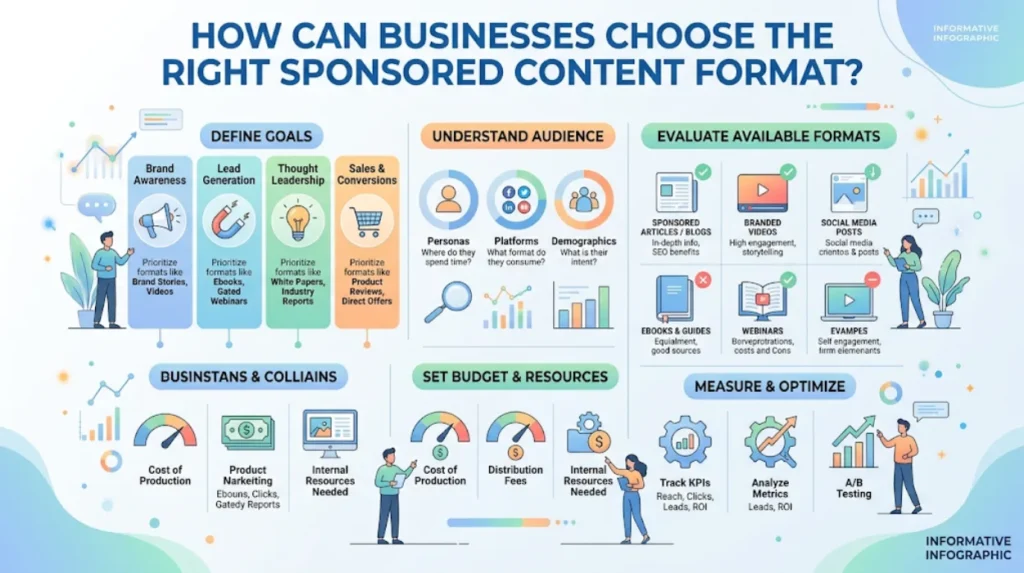
An explainer suits a knowledge gap.
A how-to suits an execution gap.
For example, a business asking how audiences respond to sponsored content needs explanatory material about content structure and reader intent. A business asking how to create and distribute a sponsored article needs procedural guidance.
The decision also depends on the commercial objective.
An explainer can support awareness of a complex service. A how-to guide can connect a service with a practical business requirement.
Times Intelligence Media Group can structure the brief around the selected objective, audience, subject, and publication requirements.
How can businesses use Times Intelligence Media Group sponsored content services?
Businesses can use Times Intelligence Media Group sponsored content services to develop explainer and how-to articles around defined audience questions, integrate relevant commercial information, optimise content for search, and prepare publication-ready editorial material.
The service is relevant when a campaign requires more than a conventional announcement.
The content brief can define:
- Primary topic
- Target audience
- UK market focus
- Article format
- Reader question
- Search keywords
- Business objective
- Brand information
- Service information
- Publication requirements
- Distribution requirements
The resulting article provides a structured editorial asset for the campaign.
For businesses already planning sponsored content, the next step is to define the reader question, commercial objective, target audience, and required publication format.
Times Intelligence Media Group Sponsored Content Services for Explainer and How-To Articles provide a defined route from content brief to publication-ready sponsored editorial material, with the article structure built around audience intent and the commercial purpose.
FAQs
Q1: What are sponsored content services for explainer and how-to articles?
Ans: Sponsored content services help businesses create informative explainer and how-to articles that address a reader’s question before introducing a brand or service. The content typically combines research, practical guidance, editorial structure and clear sponsored-content disclosure.
Q2: How do sponsored how-to articles support brand visibility?
Ans: Sponsored how-to articles can place a brand within useful content that matches a specific search or information need. Times Intelligence Media Group can structure content around relevant questions, topics and practical solutions while maintaining an informative editorial format.
Q3: What is included in sponsored explainer article services?
Ans: Sponsored explainer article services can include topic research, content planning, fact-checking, article writing, editorial structuring and brand integration. The approach focuses on explaining a subject clearly rather than presenting the article as a direct product advertisement.
Q4: Why use how-to content for sponsored brand communication?
Ans: How-to content answers practical questions and provides step-by-step information around a defined topic. This format allows sponsored messaging to appear within useful editorial content while keeping the reader’s information need central.
Q5: How should a sponsored explainer article be structured?
Ans: A sponsored explainer article should begin with the reader’s question, provide a clear explanation, develop the relevant facts or process, and introduce the sponsoring brand where contextually appropriate. Clear disclosure and natural keyword usage help maintain transparency and search relevance.



