
Media distribution for UK research reports is the systematic dissemination of data-driven documents to targeted journalism outlets, digital platforms, and industry stakeholders across England, Scotland, Wales, and Northern Ireland.
Publishing a research report in the United Kingdom requires active dissemination to achieve visibility among intended audiences. Organizations invest significant resources in primary data collection, statistical analysis, and professional design. Without a structured distribution strategy, these documents remain isolated on corporate websites or academic repositories. Media distribution bridges the gap between data creation and public consumption.
The Role of Syndication Networks
Syndication networks automate the delivery of press releases and executive summaries to thousands of newsrooms simultaneously. These networks utilize geographic targeting to ensure regional publications in Manchester, Edinburgh, or Belfast receive relevant local findings. Automated feeds reduce manual outreach friction.
Targeted Journalist Pitching
Targeted journalist pitching involves manual outreach to specific correspondents covering finance, technology, healthcare, or public policy. PR professionals match report insights with reporter beats. This method generates editorial coverage rather than paid advertisements.
How does the media distribution process work?
The media distribution process involves embargo scheduling, press release drafting, asset optimization, multi-channel syndication, and real-time media monitoring across UK national and regional news outlets.

Executing a distribution campaign requires a strict timeline. Organizations prepare media assets weeks before the official publication date. Precision timing maximizes news cycle alignment and prevents data leaks that diminish journalistic exclusivity.
Embargo Management and Timing
Embargo management grants journalists early access to data under strict confidentiality agreements. Media outlets use this window to draft comprehensive analyses. Researchers typically release embargoed data to BBC News, The Financial Times, or The Guardian 48 hours prior to public launch.
Asset Preparation and Formatting
Asset preparation includes converting dense datasets into accessible formats for media professionals. Organizations create infographics, executive summary PDFs, and interactive data dashboards. Newsrooms require immediate access to high-resolution visual assets to accompany digital articles.
Explore More Expert Insights:
How Online Retailers Recover Abandoned Carts Using Banner Advertising
How E-commerce Stores Boost Sales Using Retargeting Banner Ads
What are the core components of a distribution strategy?
The core components of a distribution strategy include wire services, email pitch databases, social media amplification channels, and direct publisher syndication agreements tailored to the British media landscape.
A successful campaign integrates multiple communication channels. Relying on a single distribution method limits audience reach. Combining wire distribution with personalized outreach captures both broad awareness and deep niche engagement.
Wire Services and Press Release Wires
Wire services transmit standardized news announcements to verified media endpoints. Platforms like PR Newswire or Business Wire distribute corporate research to financial terminals used by London stockbrokers. These networks guarantee baseline visibility across verified news aggregation feeds.
Database Segmentation and Media Lists
Database segmentation divides journalists into granular categories based on beat, region, and publication type. A fintech report targets writers at AltFi and Finextra. A healthcare report targets correspondents at The BMJ and Health Service Journal.
What measurable benefits does distribution add to research?
Media distribution adds measurable benefits to research by multiplying media impressions, securing high-authority backlinks, driving inbound web traffic, and establishing institutional authority within UK markets.
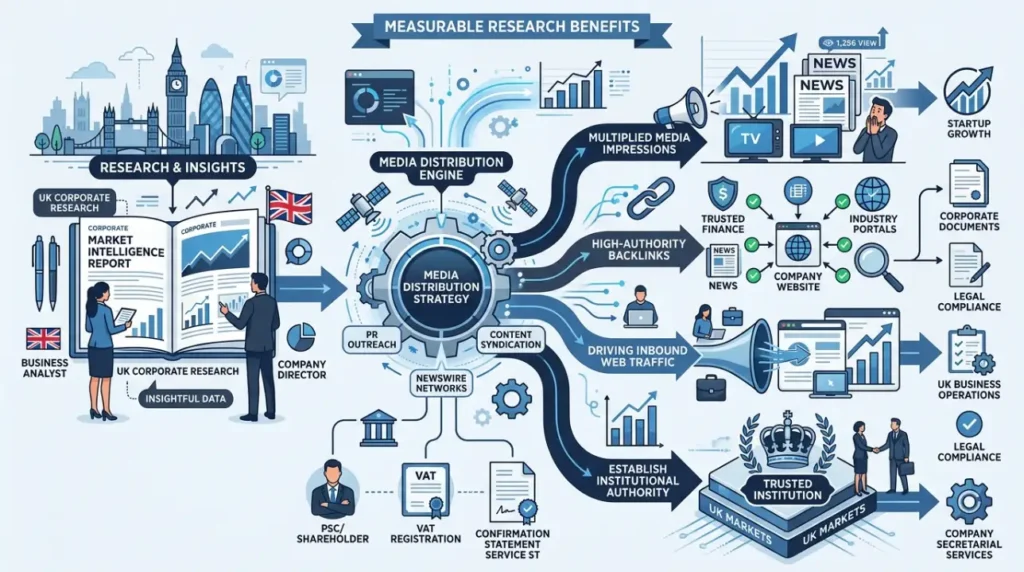
Quantifying the return on investment for primary research depends on distribution performance metrics. Trackable outputs demonstrate the tangible value of data assets to stakeholders and executive boards.
Backlink Acquisition and Search Visibility
Backlink acquisition occurs when online news publications reference the research and hyperlink to the source website. Outlets like BBC News and Reuters pass significant domain authority through editorial links. These inbound links improve search engine rankings for target industry keywords.
Share of Voice and Brand Authority
Share of voice measures how often an organization appears in media coverage compared to competitors. High distribution volume increases citation frequency in academic papers, government whitepapers, and industry journals. This citation density solidifies market leadership status.
What are the primary use cases for distributed research reports?
Primary use cases for distributed research reports include public policy advocacy, financial earnings announcements, brand thought leadership positioning, and B2B lead generation campaigns.
Different organizations leverage research distribution to achieve distinct strategic objectives. Public sector bodies, private corporations, and non-profit associations adapt the distribution framework to match their operational mandates.
Public Policy and Think Tank Advocacy
Think tanks distribute policy papers to influence parliamentary debates in Westminster and devolved legislatures. Research detailing economic trends in Northern Ireland reaches members of the Northern Ireland Assembly. Policymakers use empirical data to draft legislation and regulatory frameworks.
Corporate Thought Leadership
Commercial enterprises publish industry benchmarks to capture market share and attract enterprise clients. A cybersecurity firm releasing threat intelligence data positions its executive team as subject matter experts. Media coverage translates directly into inbound inquiries from prospective enterprise buyers.