
Media distribution for UK research reports is the systematic dissemination of proprietary data, white papers, and industry insights across authoritative publishing channels, digital wire services, and targeted media outlets to maximize visibility, brand authority, and audience engagement.
Media distribution transforms static PDF documents into dynamic digital assets. Organizations invest substantial resources into primary market research, but raw reports fail to generate ROI without proactive promotion. Publishing a document on a corporate website captures only existing visitors. Distribution channels push insights outward to external platforms, industry journalists, and professional networks.
This process relies on structured syndication networks. Publishers push press releases, executive summaries, and data visualizations to thousands of newsrooms simultaneously. Examples of primary distribution channels include PR Newswire, London Stock Exchange regulatory news services, Bloomberg terminals, and specialized vertical media outlets like The Grocer for retail data or Finextra for financial technology reports.
Strategic distribution bridges the gap between data creation and audience consumption. When a London-based financial institution releases a study on European banking regulations, direct distribution places those findings directly into the workflow of financial analysts, compliance officers, and journalists.
Core Mechanics of Research Syndication
Research syndication operates on a push-and-pull model. The publishing organization pushes structured data packets to aggregators and media databases. Journalists and researchers pull these verified data points into breaking news stories and academic papers.
The structural integrity of the report dictates syndication success. High-performing distribution workflows convert long-form PDFs into modular assets:
- Executive infographics for social media distribution.
- Data tables formatted for automated financial scrapers.
- Press releases containing quotable executive commentary.
- Bespoke summary briefs designed for newsletter curators.
How does the distribution process work for British markets?
The distribution process for British markets follows a strict sequence of embargo scheduling, regulatory compliance checks, targeted wire transmission, and post-release performance tracking tailored to the media consumption habits of UK professionals.
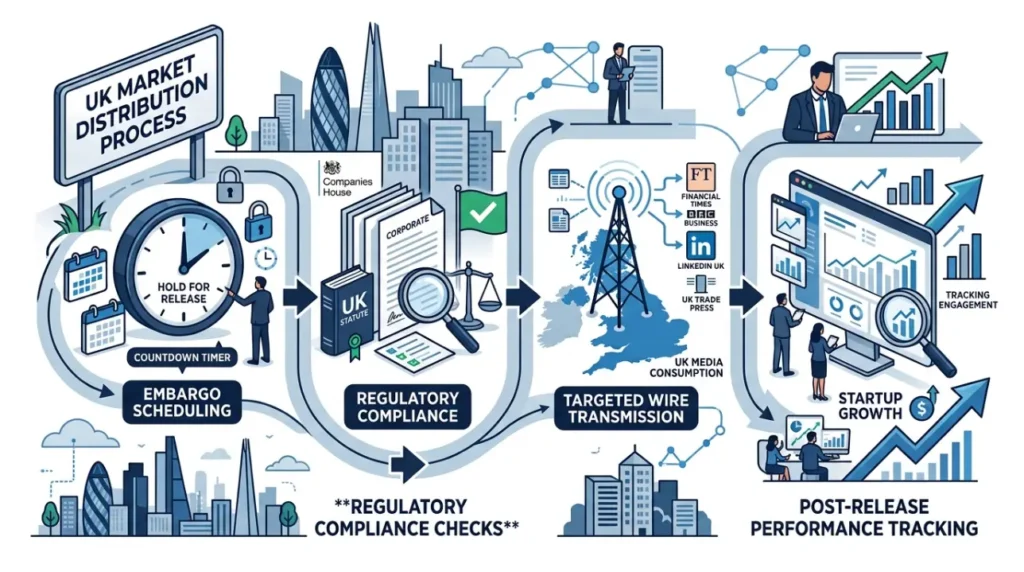
Executing a successful launch requires adherence to regional publishing standards. The UK media landscape combines traditional national newspapers with highly specialized trade publications. Understanding these operational layers prevents distribution failures.
1. Preparation and Compliance
Before any asset touches a distribution wire, teams verify data accuracy and regulatory alignment. Financial reports require Financial Conduct Authority (FCA) alignment if they impact publicly traded entities. ESG reports must comply with UK sustainability disclosure standards.
2. Wire Transmission and Embargoes
Distributors upload the report to wire services with strict embargo timestamps. Embargoes allow journalists at outlets like the Financial Times, BBC News, or Reuters to read, analyze, and draft stories before the official public release hour.
3. Direct Journalist Pitching
Automated wire distribution receives supplement from personalized outreach. Media relations specialists pitch specific data points to relevant sector reporters. For example, a report on UK supply chain logistics goes directly to industrial trade editors and transport correspondents.
Explore More Expert Insights:
Headlines for Sponsored Articles: 9 Formulas That Drive UK News Reader Clicks
Sponsored Content Calendar Planning: A 12-Month UK Framework for B2B Brands
What are the key components of a multi-channel distribution strategy?
A multi-channel distribution strategy integrates owned media properties, earned media outreach, paid syndication networks, and partner ecosystems to ensure comprehensive coverage across digital touchpoints.
Relying on a single channel limits audience reach. Comprehensive campaigns leverage four distinct pillars to capture diverse segments of the target market.
Owned Media Channels
Owned channels serve as the permanent repository for the research report. Organizations optimize their primary website landing pages for search engines, ensuring high visibility for terms related to [What Media Distribution Adds to a UK Research Report].
Earned Media Networks
Earned media represents independent journalistic coverage. When reputable trade publications cite the research report, the publishing organization gains third-party validation. This form of promotion carries higher trust metrics among corporate decision-makers than paid advertisements.
Paid Syndication and Wire Services
Paid networks guarantee placement across premium digital properties. Services like GlobeNewswire or PRWeb push content directly into professional dashboards used by researchers, investors, and enterprise executives across the United Kingdom.
Partner Ecosystems and Associations
Collaborating with industry bodies—such as the Confederation of British Industry (CBI) or the Institute of Directors (IoD)—expands distribution into established professional networks. Sharing white papers through member newsletters creates immediate, high-intent readership.
How does media distribution multiply audience reach and impact?
Media distribution multiplies audience reach by breaking through corporate silos, syndicating content across high-authority third-party domains, and converting a single static document into hundreds of derivative touchpoints.
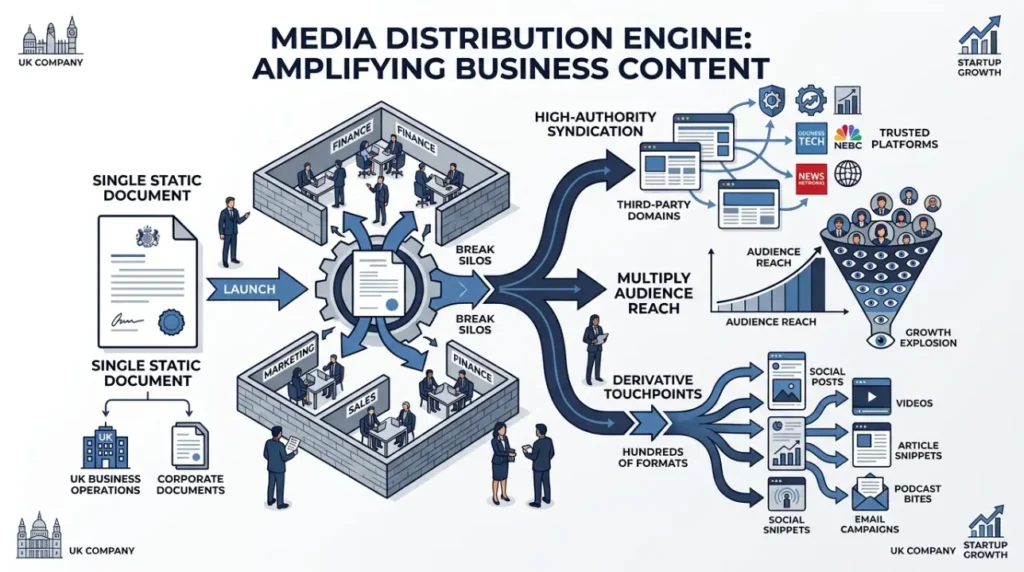
Reach multiplication is a mathematical function of surface area and frequency. A report published exclusively on an internal database reaches zero external readers. Distributing that same report across ten tier-one media sites and fifty industry blogs exposes the findings to millions of potential stakeholders.
Algorithmic Amplification
Search engines and social media algorithms favor content published across high-authority domains. When authoritative news sites reference a research report, they pass link equity and authority signals back to the original source. This citation network elevates search engine rankings for primary industry keywords.
Cross-Demographic Penetration
Different professional segments consume information through distinct channels. C-suite executives read Bloomberg and the Financial Times. Operations managers read specialized trade journals. Mid-level analysts track LinkedIn pulse feeds and industry newsletters. Media distribution formats the core data to fit all these consumption formats simultaneously, ensuring complete market penetration.
Readers interested in the foundational value of promotional expansion can review [What Media Distribution Adds to a UK Research Report] for broader context.
When should organizations deploy multi-channel research distribution?
Organizations should deploy multi-channel research distribution immediately upon the completion of high-value industry studies, benchmark surveys, and economic impact assessments designed to influence public discourse or commercial pipelines.
Not every internal document warrants extensive external distribution. Strategic distribution is reserved for assets that establish market authority, generate commercial leads, or shift regulatory perspectives.
Primary Use Cases
- Annual Industry Benchmarks: Publishing comprehensive sector analyses that position the issuing firm as a definitive market leader.
- Regulatory Impact Studies: Releasing data that informs policymakers, compliance officers, and legal teams operating within the UK jurisdiction.
- Commercial Product Launches: Distributing proprietary consumer research to support new service introductions or technology rollouts.
Organizations seeking commercial support for complex data launches can evaluate structured service offerings like [Research Report Pricing From Time Intelligence Media Group] to align budget with distribution scope.
Summary
Media distribution is the operational engine that transforms isolated data into influential market intelligence. By utilizing structured wire services, earned media outreach, and multi-channel syndication, organizations operating in the United Kingdom maximize the visibility, authority, and commercial return of their proprietary research reports.