
Birmingham research reaches regional and national media outlets by converting original data into structured press releases, pitching targeted journalists, and distributing findings through trusted news wires. This strategy aligns local empirical insights with national news agendas to maximize editorial coverage.
Regional research projects generate raw data points that require transformation before journalists consider them publication-ready. Media outlets evaluate incoming pitches based on topical relevance, methodology rigor, and audience interest. Organizations in the West Midlands achieve consistent media pickup by establishing clear distribution workflows.
Transforming Raw Research into Media Assets
Raw data rarely secures headlines without structured formatting. Media outlets demand concise summaries, verified statistics, and clear contextual relevance.
- Data Extraction: Extracting key statistical findings that highlight economic, social, or industry shifts.
- Asset Creation: Developing high-resolution infographics, executive summaries, and expert commentary quotes.
- Media Packaging: Assembling digital press kits containing embargoed releases, methodology notes, and spokesperson biographies.
Targeting Regional vs. National Outlets
Regional publications focus on localized impacts, employment trends, and community growth. National news organizations prioritize broad economic indicators, macro-level industry shifts, and policy implications. Birmingham organizations tailor their pitch angles to match these distinct editorial priorities, ensuring higher pickup rates across both media tiers.
Organizations evaluating their overall data publication strategy can review [Why Birmingham Firms Invest in Published Industry Data] to understand how initial research investments drive long-term authority.
What Types of Research Drive the Highest Editorial Coverage in the UK?
Data-driven industry reports, economic impact studies, and regional consumer sentiment surveys drive the highest editorial coverage in the UK. Journalists prioritize research featuring exclusive sample sizes, clear methodology standards, and actionable insights that address current national news narratives.
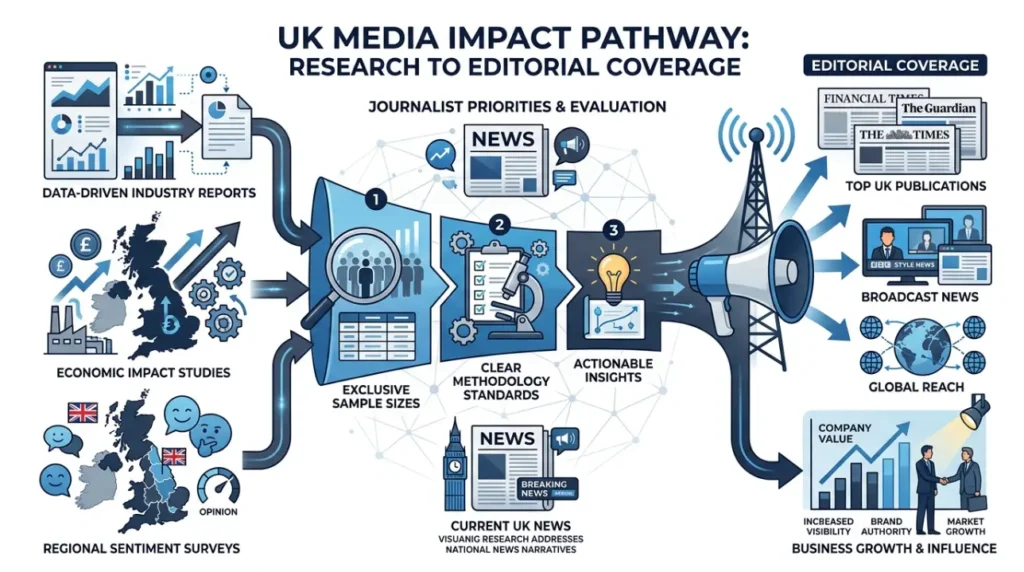
National and regional newsrooms operate under tight publication deadlines. Journalists favor research assets that deliver verified facts with minimal editorial friction.
High-Impact Data Categories
Specific research formats consistently outperform generic press releases in media adoption rates.
- Economic Impact Analyses: Reports calculating regional contribution to national GDP, job creation, or investment influxes.
- Proprietary Industry Benchmarks: Sector-specific data measuring performance metrics across manufacturing, technology, or professional services.
- Consumer Behavior Surveys: Statistically significant polling data capturing public opinion on economic changes or technology adoption.
Methodology Standards Required by UK Media
UK media outlets apply strict verification standards before publishing third-party research. Surveys must feature minimum sample sizes of 1,000 to 2,000 UK adults to achieve national credibility. B2B industry studies require clear respondent qualification criteria, precise field dates, and transparent data collection methods.
How Do Organizations Distribute Research to Ensure Maximum Press Coverage?
Organizations distribute research to ensure maximum press coverage by combining targeted pitch emails to specific beats, embargoed wire distribution, and direct outreach to regional press networks. Executing multi-channel distribution sequences ensures synchronized coverage across print, digital, and broadcast media platforms.
Distribution timing determines the ultimate reach of a research report. Newsrooms schedule editorial calendars weeks in advance for feature content while maintaining rapid daily news cycles.
The Role of Embargoes in Pitching
Offering research under embargo gives journalists adequate time to analyze complex data sets, conduct interview follow-ups, and draft balanced articles. A standard embargo period lasts between 3 to 5 business days prior to public release.
Coordinating Regional and National Outlets
Simultaneous distribution strategies prevent national publications from ignoring stories already published by regional outlets. National correspondents receive early access to the macro findings, while West Midlands reporters receive localized breakdowns specific to Birmingham, Coventry, and Wolverhampton.
Explore More Expert Insights:
How Investment Firms Build Awareness Using Market Insight Ads
How Finance Brands Improve Conversion Intent Using Retargeting Ads
What Key Components Make a Birmingham Research Report Newsworthy?
A Birmingham research report becomes newsworthy by combining localized data points, national economic relevance, expert spokesperson commentary, and clear visual data assets. Inclusion of these four components provides journalists with a complete story framework ready for immediate publication.
Newsworthiness relies on specific structural elements within the research asset. Excluding core components reduces the likelihood of editorial pickup.
| Component | Function | Impact on Media Coverage |
| Exclusive Regional Data | Provides unique statistical findings specific to the West Midlands. | Secures local front-page and regional broadcast coverage. |
| National Context Link | Connects local findings to UK-wide economic or social trends. | Attracts national business correspondents and national print syndication. |
| Verified Expert Commentary | Offers immediate perspective from qualified industry experts. | Saves journalist time on interview booking and sourcing. |
| Data Visualizations | Delivers print-ready charts, graphs, and infographics. | Increases online article engagement and social sharing rates. |
Establishing Regional Relevance
National journalists frequently seek localized examples to illustrate broader stories. A research report detailing tech sector growth in Birmingham offers national news desks a tangible case study for UK-wide technology expansion stories.
Formatting Data for Fast Journalist Processing
Busy newsrooms process hundreds of pitches daily. Presenting core stats in bulleted executive summaries within the email body—rather than hiding them inside lengthy PDF attachments—increases open rates and journalist response times.
How Does Regional Media Coverage Differ From National Media Coverage?
Regional media coverage differs from national media coverage in target audience scope, story angles, and operational timelines. Regional outlets focus on local economic impact and community developments, whereas national outlets prioritize macro trends, policy implications, and broad market statistics.
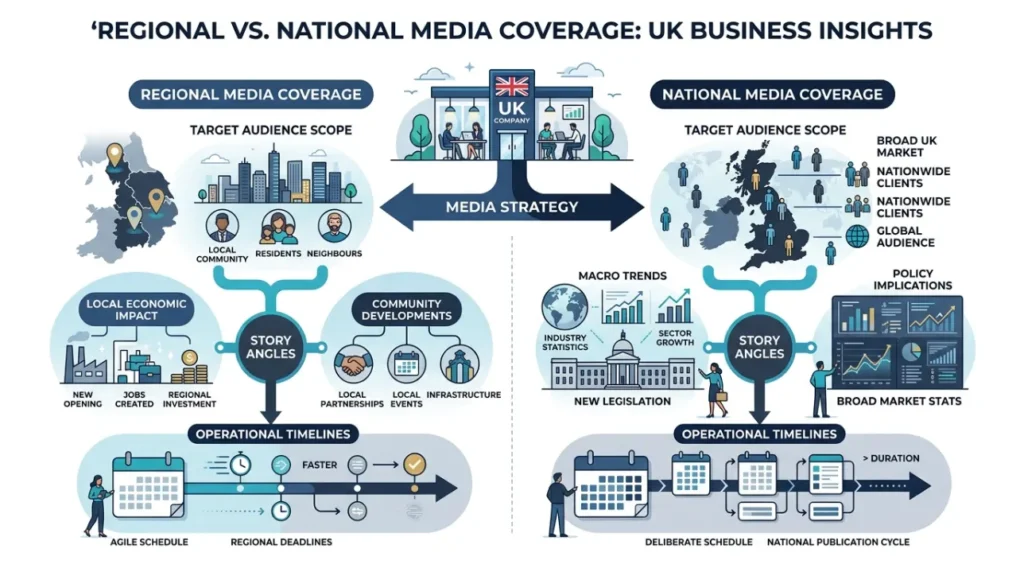
Understanding these structural differences enables research teams to adjust their narrative focus depending on the target outlet tier.
Story Angle Adjustments
A report on commercial real estate vacancy rates requires two distinct angles:
- Regional Angle: Focuses on specific Birmingham office park developments, local planning policies, and regional employment figures.
- National Angle: Focuses on overall UK commercial property market recovery rates, regional displacement trends out of London, and national interest rate impacts.
Outlet Expectations and Requirements
Regional journalists often seek local business leaders for live radio or television appearances on BBC Midlands Today or ITV News Central. National correspondents at outlets like The Daily Telegraph or The Guardian prioritize written statistical rigor and national comparative indices.
Organizations seeking structured support for report creation and media distribution frameworks can utilize [Birmingham Research Reports by Time Intelligence Media Group] to streamline the execution process.
How Do Firms Measure the Success of Media Coverage Generated by Research?
Firms measure the success of media coverage generated by research by tracking total press clip volume, outlet domain authority, audience reach, social amplification, and referral website traffic. Analyzing these metrics quantifies brand visibility and verifies the return on research investment.
Evaluating media coverage requires both quantitative and qualitative measurement metrics to assess overall commercial and reputational impact.
Quantitative Media Metrics
Quantitative tracking establishes clear numerical indicators of distribution reach and editorial uptake.
- Coverage Volume: Total number of earned editorial articles published across digital, print, and broadcast channels.
- Potential Reach: Combined circulation figures for print publications and monthly unique visitor counts for digital news sites.
- Referral Traffic: Volume of website visitors landing on the research portal via direct back-links placed in news articles.
- Domain Authority of Host Outlets: Quality score of publishing news sites, directly influencing organic search rankings.
Qualitative Media Metrics
Qualitative evaluation ensures the coverage aligns with strategic messaging goals.
- Message Inclusion: Percentage of published articles that incorporate the core research statistics and key brand talking points correctly.
- Spokesperson Attribution: Frequency of direct quotes attributed to the organization’s designated industry experts.
- Brand Sentiment: Overall tone (positive, neutral, or informative) of the editorial coverage generated.
Maximizing press coverage for Birmingham research requires structured data collection, precise formatting, and targeted multi-tiered distribution sequences. By presenting verified findings clearly to regional and national journalists, organizations establish enduring authority across their primary sector.