
White papers and reports by Time Intelligence Media Group are authoritative B2B publications designed to deliver data-backed market analysis, regulatory insights, and strategic frameworks for executive decision-makers across the United Kingdom media and technology sectors.
Time Intelligence Media Group produces two distinct classes of commercial research documentation: strategic white papers and empirical market reports. White papers present a specific methodology or technical solution to a complex industry challenge, such as programmatic advertising compliance under UK GDPR regulations. Reports compile quantitative market data, survey results, and industry benchmarks to map current sector performance.
Core Objectives of Commercial Publishing
Time Intelligence Media Group publishes these assets to resolve key informational gaps for UK enterprises. Each document serves a defined commercial function within the enterprise buying cycle.
- Strategic White Papers: These publications establish technical authority, define operational methodologies, and guide long-term technology investments.
- Empirical Market Reports: These publications provide statistical data, track year-over-year revenue trends, and evaluate sector performance across UK regions.
How do enterprise organizations in the United Kingdom use these assets?
United Kingdom enterprises use white papers and reports by Time Intelligence Media Group to validate capital expenditures, evaluate vendor capabilities, align with statutory compliance requirements, and execute data-driven market expansion strategies across regional commercial centers.
Enterprise decision-makers in cities like London, Manchester, and Edinburgh require verifiable data before committing capital to long-term digital media initiatives. The publications provide the factual foundation needed to justify budget allocations to board members and stakeholders.
Investment Justification and Strategic Planning
UK media companies use quantitative metrics from Time Intelligence Media Group reports to baseline their performance against direct competitors. For example, a broadcaster evaluating programmatic advertising supply chains utilizes benchmark statistics from these assets to set minimum return-on-ad-spend (ROAS) targets.
Corporate leadership teams integrate these findings directly into annual operational reviews. The structured data reduces uncertainty when adopting new media infrastructure or restructuring commercial distribution networks.
Regulatory and Compliance Alignment
The UK media landscape operates under strict regulatory oversight from bodies such as Ofcom and the Information Commissioner’s Office (ICO). Publications by Time Intelligence Media Group break down complex statutory adjustments into actionable operational changes.
Organization leaders rely on these documents to ensure data collection methodologies match current legal standards. They use the risk assessment models outlined in white papers to audit internal privacy frameworks and third-party data processing agreements.
What structural components define these research assets?
White papers and reports by Time Intelligence Media Group feature executive summaries, formal research methodologies, proprietary data visualizations, peer-reviewed case studies, and actionable implementation roadmaps built specifically for UK media professionals.
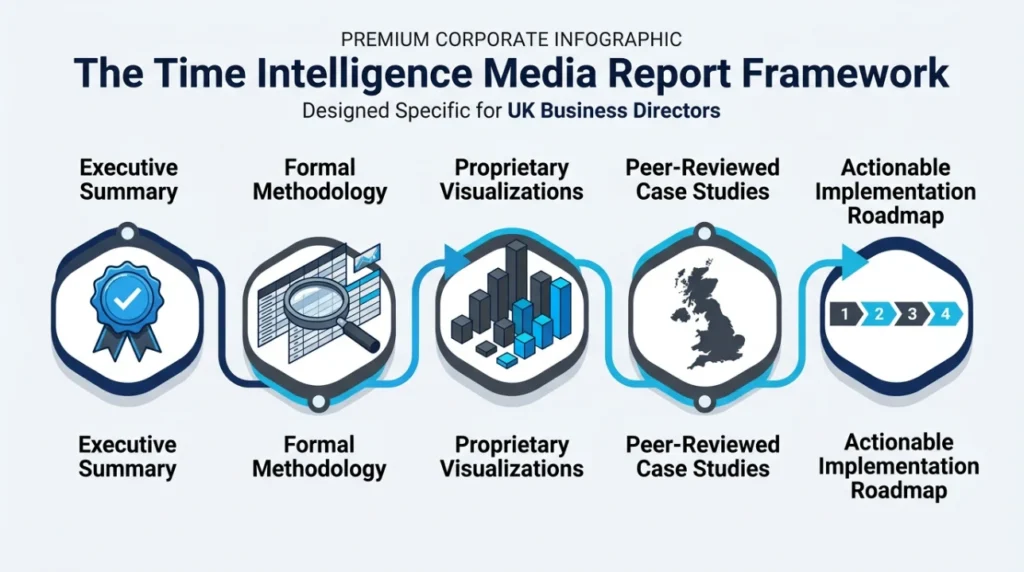
Every document adheres to a rigid publishing standard to ensure clarity, readability, and immediate practical utility for corporate leaders.
Executive Summaries and Research Methodologies
The opening section of each document provides an executive summary containing key findings, core statistics, and strategic takeaways. Busy directors read this section to assess relevance before distributing the document across internal departments.
The methodology section outlines exact data collection protocols. Time Intelligence Media Group details sample sizes, statistical margins of error, participant demographics, and primary interview criteria to guarantee total data transparency.
Primary Data Visualizations and Implementation Roadmaps
Data representation relies on structured tables, comparative charts, and regional breakdowns. Instead of long descriptive blocks, complex statistical relationships are organized into clear visual metrics.
Each asset concludes with an actionable implementation roadmap. This section outlines sequential steps, required resource allocations, and target timelines for operational deployment.
How does Time Intelligence Media Group generate primary industry research?
Time Intelligence Media Group generates primary industry research through structured surveys of verified UK media executives, qualitative interviews with subject matter experts, continuous market data collection, and independent verification of published performance metrics.
The research process eliminates bias and vague generalizations by enforcing strict empirical standards across every stage of data collection and synthesis.
Data Collection Framework
The primary research pipeline relies on four distinct data gathering mechanisms to capture accurate market dynamics:
- Quantitative Executive Surveys: Quantitative surveys target verified C-suite executives, media planners, and technology directors across the United Kingdom.
- Qualitative Expert Interviews: In-depth interviews with legal analysts, media economists, and software engineers provide contextual depth to quantitative trends.
- Real-Time Performance Analytics: Continuous monitoring of digital ad exchanges, media consumption platforms, and publishing networks yields live operational data.
- Third-Party Data Verification: Analysts cross-reference all internal survey results against public datasets from official bodies like Ofcom and the Office for National Statistics (ONS).
To understand how research specifications vary by media platform, evaluate How White Papers Differ From Industry Research Reports in 2026 for format selection guidelines.
Explore More Expert Insights:
The 39% Quality Problem: Why Most UK Sponsored Content Fails to Convert in 2026
How Native Content on News Sites Earns 3× Longer Dwell Time Than Social Posts
What specific technical topics are covered in these publications?
Publications cover digital ad tech infrastructure, audience data privacy laws, AI integration in content publishing, UK broadcast economics, and multi-channel attribution models designed for complex B2B and B2C commercial environments.
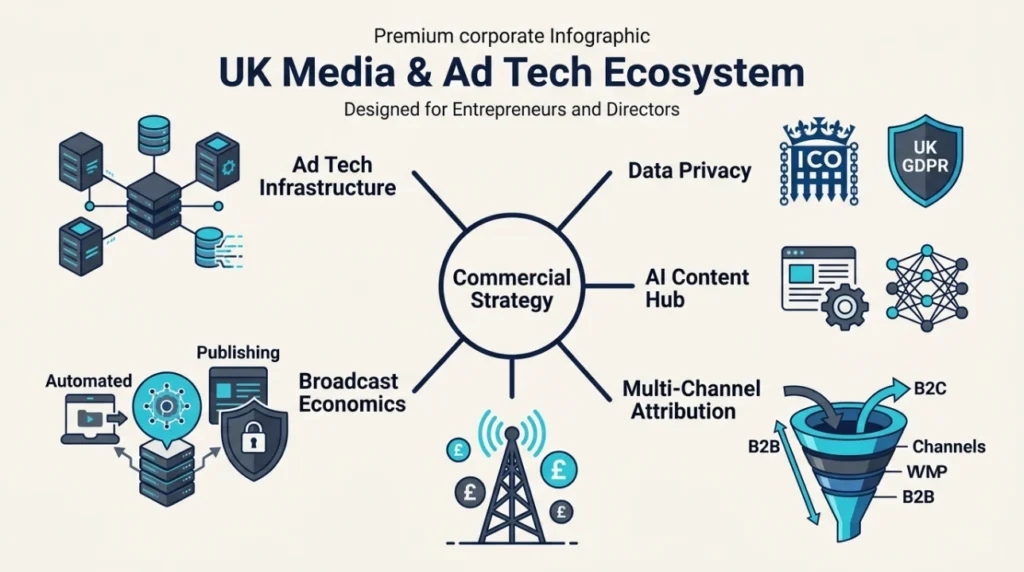
Time Intelligence Media Group addresses the most pressing operational challenges facing contemporary UK media organizations.
Digital Infrastructure and Programmatic Advertising
White papers analyze technical architectures required for supply-side platforms (SSPs), demand-side platforms (DSPs), and header bidding configurations. The content breaks down latency reduction techniques, ad fraud prevention protocols, and bid-stream optimization strategies.
Reports deliver detailed breakdowns of average cost-per-mille (CPM) rates, fill rates, and viewability metrics across different media formats in the UK market.
AI Integration and Audience Data Privacy
The publication library features extensive coverage of artificial intelligence applications in content generation, automated media buying, and predictive audience modeling. Strategic frameworks explain how to integrate machine learning tools while retaining editorial integrity.
Privacy-focused research documents provide step-by-step instructions for operating in zero-party and first-party data environments. The assets provide exact technical specifications for implementing consent management platforms (CMPs) that comply with UK law.
How do white papers and reports drive commercial ROI for media firms?
White papers and reports drive commercial ROI by reducing technical selection errors, shortening procurement cycles for enterprise software, optimizing ad yield management, and increasing client conversion rates through validated market positioning.
Investing time in rigorous market research prevents costly operational missteps during major digital transformation projects.
Shortening Procurement and Vendor Selection
Media companies waste significant capital when selecting software platforms that fail to scale or integrate with existing tech stacks. By using technical evaluation white papers from Time Intelligence Media Group, procurement teams compare vendor features against objective benchmark standards.
This clear evaluation framework eliminates guesswork, reduces vendor selection cycles by 30 to 50 percent, and prevents integration failures.
Ad Yield Optimization and Revenue Enhancement
Publishers apply the pricing models and floor-rate strategies published in empirical reports to maximize yield from programmatic advertising inventory.
- Pricing Calibration: Publishers adjust direct-sold rates using benchmark floor prices tailored to specific audience niches.
- Inventory Restructuring: Media owners reallocate low-performing inventory to emerging channels like Connected TV (CTV) based on verified consumption data.
What sets Time Intelligence Media Group assets apart from generic reports?
Time Intelligence Media Group assets excel through strict UK market localization, transparent empirical data collection, zero third-party bias, and actionable technical solutions tailored directly to media execution rather than abstract theory.
Many research firms issue high-level international summaries that lack local utility. Time Intelligence Media Group focuses specifically on the economic and legal conditions of the United Kingdom.
Localized Regional Focus
Media consumption habits in London differ significantly from those in Wales, Scotland, or the North West of England. Reports segment data regionally to help media companies optimize local ad targeting and regional content syndication.
Non-Hedging, Direct Analytical Style
The research team uses direct declarative language. Publications present precise numbers, concrete methodologies, and exact operational steps without vague estimations.
To examine how educational content builds the foundation for these technical assets, review White Paper vs Report: Which Format Reaches UK Media in 2026 for fundamental category distinctions.
How can enterprise teams access and implement these assets today?
Enterprise teams access and implement these assets by selecting specific research publications from the Time Intelligence Media Group portal, downloading PDF reports, and engaging strategic advisors for custom research execution.
Accessing high-grade commercial research provides immediate operational advantages for UK media organizations preparing for upcoming fiscal planning cycles.
Access Steps for Media Leadership
- Browse the Publication Index: Review the available white paper and report repository to locate specific sector research.
- Select Required Formats: Choose between technical white papers for solution design or empirical reports for market benchmarking.
- Download and Distribute: Access high-resolution PDF documents for direct internal distribution across corporate strategy, engineering, and sales divisions.
- Commission Custom Research: Engage Time Intelligence Media Group directly to deploy tailored research projects focused on custom dataset collection.
Strategic Execution
Download white papers and reports by Time Intelligence Media Group today to secure verified market data, optimize digital operations, and strengthen your competitive position across the United Kingdom media industry.