
SaaS companies produce media-worthy reports by extracting unique proprietary platform data, identifying timely industry trends, enforcing strict statistical methodologies, and packaging findings into clear news hooks. This structured approach delivers verifiable insights that UK journalists require for credible editorial coverage.
UK media outlets maintain rigorous standards for editorial independence and data verification. National publications such as The Financial Times, The Telegraph, and The Guardian, alongside major B2B trade publications, reject overt marketing collateral. To secure coverage, SaaS firms transform raw telemetry and platform activity into structured research assets.
Entity Definition and Data Extraction
Data-driven reports rely on proprietary primary data. SaaS platforms process millions of daily user interactions, transactional events, and operational metrics. When aggregated and anonymised, this data reveals macro-economic trends, operational shifts, and consumer behaviour patterns.
Developing the Editorial Angle
Journalists cover news, not product updates. SaaS research teams align internal data with external economic contexts, such as UK inflation rates, labor market shifts, or regulatory changes.
For example, a workforce management SaaS company might analyze platform data showing a 22% shift toward flexible working hours across UK logistics companies. By pairing this internal dataset with official Office for National Statistics (ONS) labor data, the report becomes a contextualized news story rather than a product promotion.
What Types of Proprietary Data Make SaaS Reports Citable in the UK?
UK media cite proprietary SaaS report data when it includes anonymised transactional volumes, platform user activity metrics, pricing fluctuations, and workflow completion speeds. Journalists prioritize dataset size, longitudinal consistency, clear sample parameters, and verified economic relevance over subjective customer survey responses.
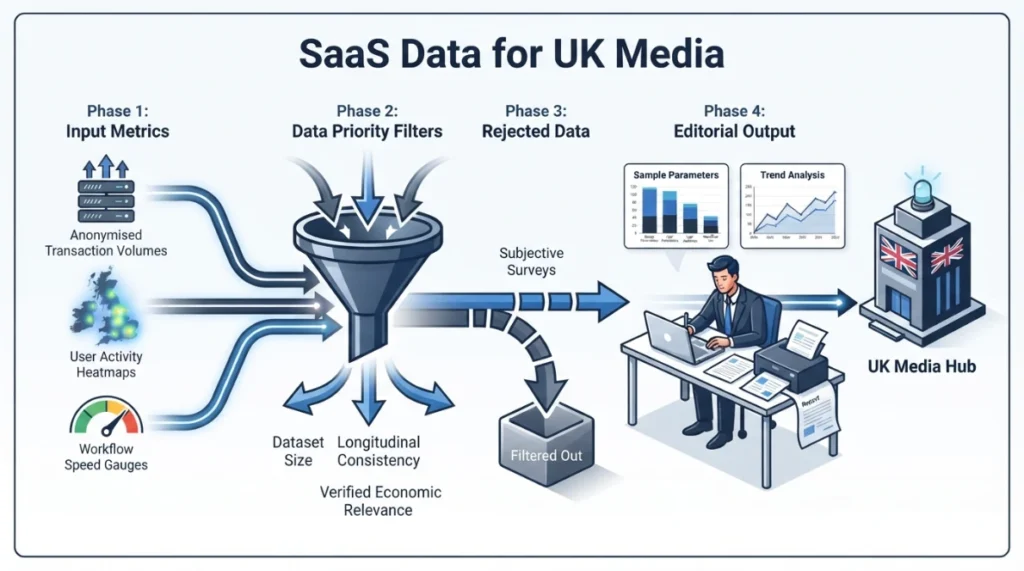
To gain editorial trust, SaaS research must rely on objective telemetry rather than self-reported opinions. Proprietary datasets provide exclusive market visibility that traditional market research firms cannot replicate quickly.
Transactional and Economic Datasets
Fintech, e-commerce, and procurement SaaS platforms possess real-time spending data. Tracking actual financial transactions across thousands of UK businesses provides a clear economic indicator.
- Payment Gateways: Anonymised transaction volumes highlight shifts in consumer spending.
- Procurement Software: Business-to-business order values reflect supply chain cost pressures.
- Invoicing Platforms: Average payment completion times indicate UK corporate cash flow trends.
Usage and Productivity Datasets
Productivity, HR, and workflow SaaS platforms monitor operational trends. Tracking how employees use software highlights structural changes in business practices.
- HR Tech Platforms: Time-tracking and leave-request data measure remote work adoption.
- Cybersecurity SaaS: Anonymised threat logs quantify rising enterprise security risks.
- Customer Support Platforms: Support ticket volumes track changing consumer friction points.
Understanding [Why SaaS Companies Need Data-Driven Industry Reports] allows firms to select the exact data streams that deliver maximum editorial value.
How Do SaaS Research Teams Ensure Data Rigour and Editorial Compliance?
SaaS research teams ensure data rigour by establishing strict sample size thresholds, applying statistical normalization techniques, removing outliers, and anonymising user details. They enforce editorial compliance by adhering to standard UK journalistic guidelines and General Data Protection Regulation requirements.
Statistical flaws ruin media credibility. UK journalists verify data methodology before publishing news coverage. If a methodology lacks scale or balance, tier-one newsrooms discard the release.
Methodological Standards
A robust research methodology follows strict parameters:
- Sample Size: Minimum thresholds ensure statistical significance. A study on UK small-and-medium enterprises (SMEs) requires data from at least 1,000 active business accounts.
- Longitudinal Tracking: Comparing data across specific timeframes (such as Year-over-Year or Quarter-over-Quarter) isolates true trends from temporary seasonal spikes.
- Data Anonymisation: Raw data must undergo strict aggregation to eliminate any Personally Identifiable Information (PII) or company-specific secrets, ensuring full compliance with UK GDPR laws.
- Normalization: Normalizing data controls for platform user growth. A 50% increase in total platform events means nothing if the underlying user base also grew by 50% during the same period.
Fact-Checking and Verification
Before external distribution, internal data scientists and external statisticians audit the report datasets. Establishing an independent methodology review process eliminates internal bias and strengthens media credibility.
What Steps Transform Raw SaaS Data Into a Media-Ready Industry Report?
Transforming raw SaaS data into a media-ready report involves four sequential steps: data aggregation and cleaning, statistical analysis to uncover distinct trends, clear narrative structure development, and executive presentation formatting designed specifically for rapid journalistic review and attribution.
Raw Data Extraction ➔ Statistical Cleaning & Normalization ➔ Trend Analysis ➔ Media Packaging
Step 1: Data Extraction and Aggregation
Engineers run SQL queries to extract relevant platform events across defined timeframes (e.g., Q1 2025 to Q1 2026). Data teams isolate specific UK geographic filters to ensure regional accuracy.
Step 2: Statistical Cleaning and Analysis
Data analysts remove test accounts, extreme statistical outliers, and inactive user profiles. They apply statistical tests to verify correlation and causation across key metrics.
Step 3: Narrative Structuring and Executive Summaries
Journalists work under tight daily deadlines and rarely read full 40-page research documents. Reports must feature an executive summary with bulleted headline statistics upfront.
Step 4: Visual and Format Packaging
Visual elements must be easily reproducible. SaaS firms provide high-resolution data charts, downloadable CSV tables, and clean press releases with verified quotes from industry experts.
How Do SaaS Firms Pitch Reports to UK National and Trade Journalists?
SaaS firms pitch reports to UK journalists by tailoring dataset hooks to specific beats, offering exclusive initial access, crafting concise pitch emails built on headline data points, and providing immediate access to data analysts for expert commentary.
Media outreach requires precise targeting. Pitching broad marketing fluff yields zero coverage. Journalists seek exclusive, verified data points that match their specific reporting beats.
Pitching UK National Media vs. Trade Media
National newspapers focus on macro-economic impact, employment statistics, and consumer costs. Trade publications focus on specific operational benchmarks, niche technology trends, and regulatory impacts.
- National Outlets (The Times, BBC News): Focus on broad implications, such as “UK Small Businesses Face 18% Increase in Supply Chain Delays.”
- Trade Outlets (Computer Weekly, Retail Week): Focus on technical metrics, such as “Average E-Commerce Checkout Load Times Dropped 12% in 2025.”
Offering Exclusives and Embargoes
Offering an exclusive pitch to a tier-one publication gives that outlet the first rights to publish the data. If the primary outlet declines, the pitch transitions to a general media embargo, granting multiple journalists simultaneous access to the report ahead of the official public launch date.
Partnering with specialized media partners, such as working through [SaaS Industry Reports by Time Intelligence Media Group], allows SaaS firms to streamline research production and secure targeted distribution channels.
How Do SaaS Companies Measure the ROI of Media-Cited Reports?
SaaS companies measure report ROI by tracking authoritative editorial backlinks, earned media coverage value, brand search volume increases, secondary citation counts in academic or analyst research, and qualified organic lead conversions.
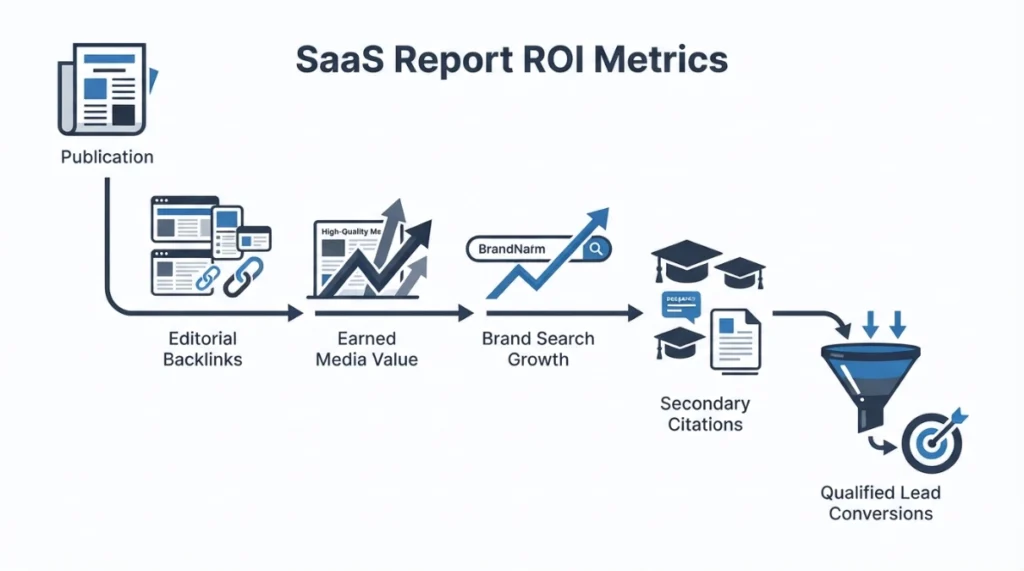
Publishing media-cited reports is a strategic corporate asset that yields compounded SEO, brand authority, and pipeline benefits over time.
Explore More Expert Insights:
How Entertainment Platforms Build Subscription Interest Using Banner Ads
How Restaurants Build Trust Using Review-Based Banner Campaigns
SEO and Link Equity Metrics
UK media outlets carry high domain authority. Backlinks from domains such as ft.com or techradar.com pass strong referral equity, elevating the SaaS firm’s core product pages across competitive search engine results pages (SERPs).
Brand Search and Referral Traffic
Media citations trigger direct search behavior. Analytics teams measure spikes in branded search queries, direct traffic, and referral traffic landing directly on the report repository during pitching cycles.
Lead Generation and Sales Enablement
While the un-gated report sits on an open web page to secure links and AI citations, an optional gated PDF download captures high-intent business leads. Sales teams repurpose report findings into sales decks, demonstrating category expertise during prospect calls.