

Sponsored content is paid media created to provide useful information while clearly identifying the commercial relationship behind it. In the UK, sponsored content reaches niche audiences through relevant publications, audience segmentation, search visibility, social distribution, newsletters, and specialist media environments.
What is sponsored content?
Sponsored content is paid editorial-style material produced for a defined audience and published through a media platform. It combines useful information with brand messaging while maintaining clear sponsorship disclosure and relevance to the publication’s audience.
Sponsored content includes articles, guides, interviews, case studies, videos, explainers, and other media formats. The content is funded by an advertiser or organisation and distributed through a publisher or media platform.
The key characteristic is audience relevance. A sponsored article about commercial property belongs on a property-focused publication rather than a general entertainment website. A technology guide fits a technology audience.
UK sponsored content also operates within advertising and editorial transparency requirements. Readers need to understand when content has a commercial relationship.
How does sponsored content differ from ordinary advertising?
Traditional display advertising often uses banners, paid placements, video advertisements, or sponsored search results. Sponsored content uses a longer information format.
An article can explain a business issue, provide industry information, examine consumer behaviour, or present practical guidance. The commercial message sits within a broader information context.
What makes an audience niche?
A niche audience is a narrowly defined group with shared interests, professional characteristics, behaviours, or information needs.
Examples include:
- UK fintech professionals
- Independent restaurant owners
- Property investors
- Sustainability managers
- Healthcare procurement professionals
- Luxury travel consumers
- Construction project managers
- Small business finance decision-makers
Niche targeting focuses distribution on audience relevance rather than maximum general reach.
How does sponsored content reach niche UK audiences?
Sponsored content reaches niche UK audiences by placing relevant material within specialist publications, targeted media channels, search results, newsletters, social platforms, and professional communities where defined groups already consume industry information.
The distribution process begins with audience identification. Content planners define the intended reader by sector, role, location, interest, business size, or consumer behaviour.
The next stage involves publication selection. Media platforms are assessed according to audience composition, editorial focus, geographic relevance, content format, and distribution channels.
Content is then created around a specific information need. A specialist article uses terminology that matches the audience and publication context.
Distribution follows publication. Additional exposure comes through search engines, newsletters, social media, publisher channels, and other digital discovery systems.
Why does publication relevance matter?
Publication relevance determines whether the surrounding media environment matches the subject of the sponsored content.
For example, an article about commercial property finance has stronger contextual relevance on a property or finance publication than on an unrelated lifestyle website.
Context also helps readers understand why the content appears in their information environment.
How does geographic targeting work in the UK?
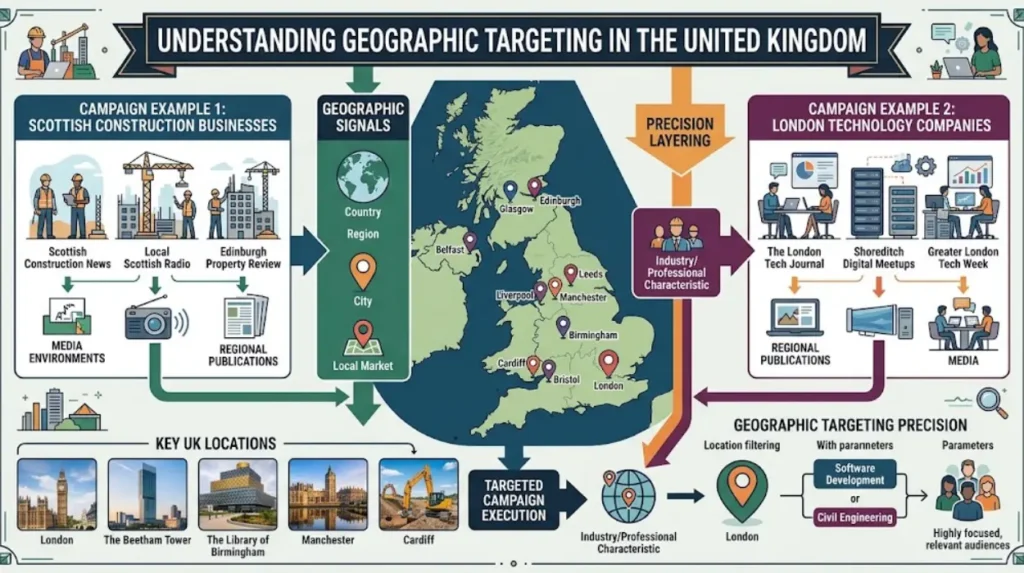
UK niche targeting uses geographic signals such as country, region, city, and local market.
A campaign targeting Scottish construction businesses uses different media environments from one targeting London technology companies. Regional publications provide access to audiences with defined geographic interests.
Relevant UK locations include London, Manchester, Birmingham, Leeds, Glasgow, Edinburgh, Bristol, Liverpool, Cardiff, and Belfast.
Geographic targeting becomes more precise when location combines with an industry or professional characteristic.
Which channels distribute sponsored content to niche audiences?
Sponsored content reaches specialised UK audiences through digital publications, trade media, newsletters, search engines, social platforms, professional communities, and publisher networks. Each channel provides a different route to audiences with defined interests.
Different channels serve different discovery behaviours. Specialist publications provide contextual exposure. Search engines support active information discovery. Newsletters reach subscribers directly. Social platforms support interest-based content discovery.
Specialist and trade publications
Trade publications focus on specific industries or professional groups.
Examples include publications covering finance, construction, healthcare, technology, hospitality, retail, property, manufacturing, and professional services.
Their established subject focus gives sponsored content an environment closely connected to the reader’s interests.
Newsletters
Publisher newsletters provide direct distribution to subscribers.
A niche newsletter focused on UK retail, fintech, property, or food business reaches an audience that has actively selected that subject area.
Newsletter distribution also places content within a recurring information routine.
Search engines
Search engines connect users with content based on search queries and relevance signals.
Sponsored content containing clearly defined topics, entities, questions, and industry terminology can become part of broader online information discovery.
Search visibility depends on factors including content quality, relevance, technical accessibility, indexing, authority, and competition for the search query.
Social media platforms
Social platforms distribute content through professional, interest-based, geographic, and behavioural signals.
LinkedIn is particularly relevant to professional audiences. Other platforms serve consumer, community, entertainment, visual, or specialist interests.
Distribution depends on the platform, audience, content format, and publishing strategy.
How does audience segmentation improve sponsored content reach?
Audience segmentation divides a broad market into smaller groups based on shared characteristics such as industry, profession, location, interests, business size, demographics, or behaviour, allowing sponsored content to reach readers with specific information needs.
Segmentation provides a framework for selecting both content topics and distribution environments.
A financial services campaign can target compliance professionals rather than all financial services workers. A food campaign can focus on independent restaurant operators rather than the entire hospitality market.
What audience characteristics matter?
Important segmentation variables include:
- Industry
- Job role
- Professional seniority
- Geographic location
- Business size
- Consumer interest
- Purchase behaviour
- Search intent
- Content preferences
Each characteristic creates a different audience definition.
For example, “UK business owners” represents a broad group. “UK independent restaurant owners seeking payment technology information” represents a narrower audience with a specific information need.
How does search intent affect niche audience reach?
Search intent identifies the purpose behind a user’s search and helps align sponsored content with informational, commercial, navigational, or transactional needs. Relevant content attracts audiences actively researching a defined topic.
Informational searches involve learning. Commercial searches involve evaluating options. Navigational searches seek a specific website or resource. Transactional searches indicate an intention to complete an action.
Sponsored content focused on niche audiences benefits from precise topic alignment.
For example, a search about “UK commercial property trends” indicates an information need around the property market. Content addressing that subject has stronger topical relevance than a general business article.
Why are long-tail searches important?
Long-tail searches contain several specific terms and usually describe a narrower information requirement.
Examples include:
- “UK fintech compliance trends 2026”
- “sustainable construction materials UK”
- “independent restaurant payment systems UK”
- “commercial property investment Manchester”
These queries define a narrower audience than broad terms such as “finance”, “construction”, “restaurants”, or “property”.
What role does content relevance play in reaching specialist readers?
Content relevance connects the subject, language, format, and information depth of sponsored material with the expectations of a defined audience. Relevant content earns attention because it addresses the reader’s specific industry, professional, geographic, or consumer context.
Relevance begins with the subject. The content must address a recognisable issue for the intended audience.
Language also matters. Professional audiences use sector-specific terminology. A construction audience understands terms such as procurement, project delivery, planning permission, and building regulations.
Content depth must also match the audience. Technical professionals require detailed information. General consumers require accessible explanations.
How does editorial context influence relevance?
Editorial context describes the relationship between sponsored content and the surrounding publication environment.
An article about UK food supply chains has clear contextual relevance within a food industry publication. An article about digital banking regulation fits a financial services environment.
Context helps establish topical consistency between the publication, article, and audience.
What are the benefits of reaching niche UK audiences through sponsored content?
Niche sponsored content provides focused audience exposure, stronger contextual relevance, precise topic alignment, specialist publication access, and measurable digital distribution. It connects information with readers who share defined professional, geographic, or consumer interests.
The primary benefit is audience precision.
Broad advertising maximises potential exposure across large populations. Niche sponsored content prioritises relevance by focusing distribution on defined groups.
Other benefits include stronger topical alignment, access to specialist media environments, search discovery, reusable content assets, and measurable engagement.
How does niche reach support information quality?
Niche audiences have specific information requirements. Sponsored content can address those requirements directly.
For example, a guide for UK procurement professionals can focus on supplier evaluation, contract terms, tender procedures, and procurement risks.
This level of specificity creates content designed around a defined information need.
How can performance be measured?
Digital sponsored content provides measurable indicators.
Common metrics include:
- Impressions
- Page views
- Unique visitors
- Engagement time
- Click-through rate
- Referral traffic
- Search visibility
- Social interactions
- Newsletter opens
- Content conversions
The relevant metric depends on the campaign objective and distribution channel.
Where is sponsored content used to reach niche UK audiences?
Sponsored content is used across specialist industries where audiences have defined information needs, including finance, technology, property, healthcare, food, travel, construction, professional services, retail, and sustainability.
Industry-specific applications demonstrate how audience targeting works in practice.
Finance and fintech
Financial publications provide access to audiences interested in banking, investment, payments, insurance, fintech, and financial regulation.
Content can focus on market developments, technology, compliance, consumer finance, or business finance.
Property and construction
Property and construction audiences include developers, investors, architects, contractors, consultants, and procurement professionals.
Sponsored content can address development trends, construction technology, sustainability, investment, planning, and project management.
Food and hospitality
Food audiences include consumers, chefs, restaurant operators, retailers, manufacturers, suppliers, and hospitality professionals.
Content topics include food trends, restaurant operations, supply chains, sustainability, technology, and consumer preferences.
Technology
Technology audiences include IT professionals, software buyers, developers, business leaders, and technology consumers.
Sponsored content can address software, cybersecurity, artificial intelligence, cloud computing, digital transformation, and enterprise technology.
Healthcare
Healthcare audiences include professionals, organisations, suppliers, patients, and sector decision-makers.
Content requires accurate terminology and careful treatment of regulated or sensitive subjects.
What should readers consider when evaluating niche sponsored content?
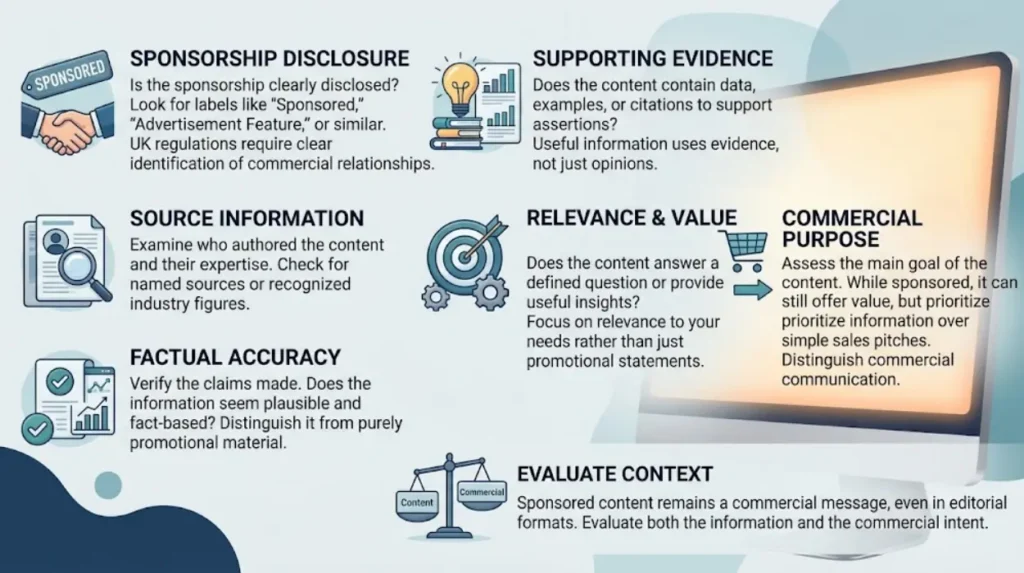
Readers can evaluate niche sponsored content by checking its sponsorship disclosure, publication context, source information, factual accuracy, relevance, evidence, and commercial purpose. These factors distinguish useful sponsored material from content created primarily for promotional exposure.
Sponsored content remains commercial communication even when it uses an editorial format.
Readers can therefore assess both the information and the commercial context.
Is the sponsorship clearly disclosed?
UK audiences need clear identification of commercial content. Labels such as “Sponsored”, “Advertisement Feature”, or similar disclosures indicate the commercial relationship.
Is the information relevant and supported?
Readers can examine whether claims contain supporting evidence, named sources, reliable data, or clear explanations.
Relevant content answers a defined question rather than relying entirely on promotional statements.
Explore More Expert Insights:
Why Food and Drink Brands Use Sponsored Content
What Beauty Brands Gain From UK Sponsored Articles
How is the future of niche sponsored content developing in the UK?
Niche sponsored content is becoming increasingly focused on audience relevance, specialist media environments, search discovery, measurable distribution, and detailed segmentation as digital audiences consume information across publications, search engines, newsletters, social platforms, and professional channels.
Audience fragmentation is creating more specialised information environments.
Readers increasingly consume content according to professional interests, geographic needs, industry subjects, and specific search questions. Sponsored content therefore operates across multiple connected channels rather than a single publication format.
The educational understanding of audience targeting provides a foundation for exploring:
Sponsored content targets niche UK audiences at the consideration stage.
The central principle remains straightforward: effective niche sponsored content connects a clearly defined audience with relevant information through a distribution environment that already serves that audience.



