

Food and drink brands need media coverage that reaches relevant UK audiences while communicating products, launches, campaigns and business developments clearly. Sponsored content provides a controlled publishing format that combines brand messaging with the structure, context and credibility of established media environments.
For businesses evaluating sponsored content providers, the important factors include publication quality, audience relevance, editorial standards, content development, distribution, reporting and campaign objectives. Time Intelligence Media Group provides food and drink sponsored content designed around these decision factors for brands targeting UK readers.
Businesses exploring how sponsored content reaches audiences can also review:
Food and drink sponsored content to understand the distribution journey before selecting a campaign approach.
What is food and drink sponsored content?
Food and drink sponsored content is paid editorial-style material created to promote a food or beverage brand, product, service, campaign or announcement through a media publication while clearly identifying its commercial relationship and intended promotional purpose.
Sponsored content differs from a standard advertisement because it uses an article-based format. The content provides information around a specific subject while incorporating the sponsoring brand into the editorial structure.
Food and drink businesses use this format for product launches, restaurant openings, new menus, business announcements, consumer campaigns, expert commentary, seasonal promotions and brand stories.
For example, a UK food producer launching a new range can use sponsored content to explain the product category, production approach, availability and brand proposition within a structured article.
The content remains commercially sponsored. Clear disclosure protects transparency between the publisher, advertiser and audience.
How does Time Intelligence Media Group deliver food and drink sponsored content?
Time Intelligence Media Group delivers sponsored content through a structured process covering campaign objectives, topic development, content preparation, publication targeting, media distribution and reporting for food and drink brands seeking measurable UK visibility.
1. Campaign objective definition
The process starts with a defined business objective. The objective determines the article angle, audience, publication selection and reporting requirements.
Common objectives include:
- Increasing awareness of a new food product
- Supporting a beverage launch
- Promoting a hospitality business
- Communicating a brand campaign
- Building visibility around a seasonal offer
- Reaching UK consumer audiences
- Supporting broader digital marketing activity
A clear objective prevents the article from becoming a general brand description.
2. Topic and angle development
The subject needs relevance beyond the company itself. A strong sponsored article connects the commercial message with a defined reader interest.
For example, a plant-based food company can focus on product innovation, ingredients, consumer preferences or manufacturing developments rather than publishing a simple promotional description.
3. Content preparation
Content is developed around the agreed topic, brand information and campaign requirements. Key factual details include product names, locations, launch dates, services, campaign information and relevant company information.
The article structure uses headings, concise paragraphs and relevant terminology. This improves readability for UK audiences and creates clearer information signals for search engines.
What does a food and drink sponsored content campaign include?
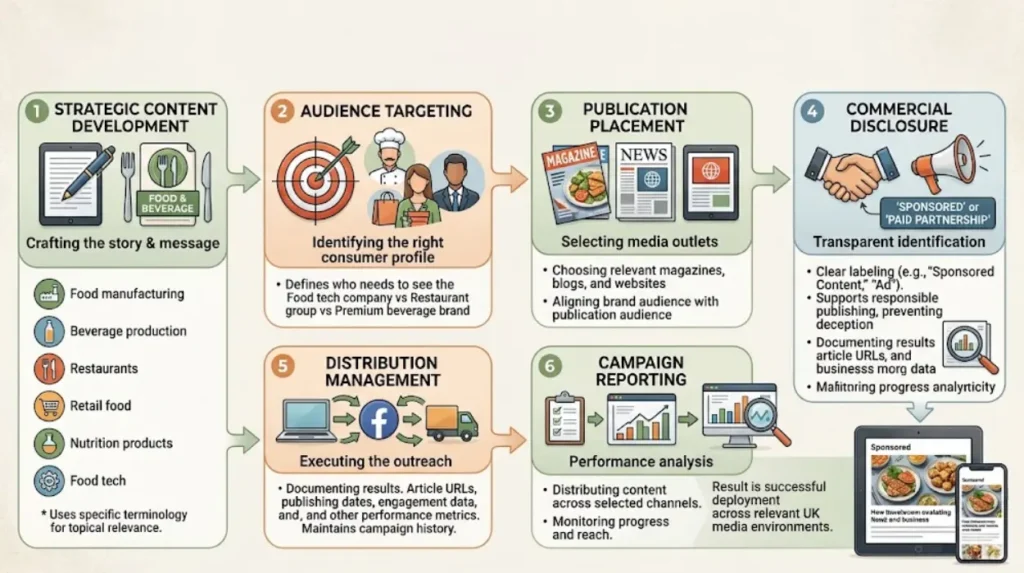
A food and drink sponsored content campaign includes strategic content development, audience targeting, publication placement, commercial disclosure, distribution management and campaign reporting, creating a defined route from brand message creation to exposure across relevant UK media environments.
Content development
The article contains the information required to communicate the campaign accurately. Food and beverage terminology remains specific to the product and market.
Examples include:
- Food manufacturing
- Beverage production
- Hospitality
- Restaurants
- Retail food
- Consumer packaged goods
- Nutrition products
- Food technology
- Sustainable packaging
Specific terminology improves topical relevance and helps search systems identify the subject of the content.
Publication targeting
Publication selection determines where the sponsored article appears. Relevance matters because different media audiences follow different subjects.
A food technology company requires a different publication environment from a restaurant group. A premium beverage brand also requires different audience alignment from a supermarket food product.
Commercial disclosure
Sponsored material requires transparent identification. Disclosure tells readers that the content has a commercial relationship with the brand.
This distinction supports responsible media publishing and prevents sponsored content from being presented as independent editorial coverage.
Reporting
Campaign reporting provides information about published placements and campaign delivery. Reports can document publication details, article URLs, dates and other available performance information.
These records help marketing teams maintain a clear campaign history.
How can sponsored content help UK food and drink brands?
Sponsored content helps UK food and drink brands establish controlled media visibility, communicate detailed product information, reach defined audiences and maintain consistent messaging across campaigns that require more context than conventional advertising formats provide.
Controlled brand messaging
Sponsored content gives brands greater control over the information presented. The article can communicate product features, business developments, positioning and campaign details within an agreed content structure.
This is useful when the subject requires more explanation than a short display advertisement provides.
Product education
Food and drink products often require context. Ingredients, production methods, sourcing, packaging, preparation and availability all require additional information.
A sponsored article provides space for these details.
For example, a specialist coffee brand can explain sourcing regions, roasting methods, product formats and distribution channels within one article.
UK audience relevance
UK-focused campaigns benefit from content that reflects British terminology, consumer contexts and publication environments.
Local relevance also supports campaigns targeting specific markets such as London, Manchester, Birmingham, Leeds, Edinburgh or Glasgow.
Campaign consistency
Brands running multiple marketing activities need consistent messaging. Sponsored content provides another controlled media asset that can support product launches, seasonal campaigns and wider digital activity.
The same core facts can remain consistent across related marketing materials while the article uses a publication-specific format.
Which food and drink businesses can use sponsored content?
Food and drink sponsored content serves manufacturers, restaurants, beverage companies, hospitality groups, retailers, food technology businesses and specialist producers that require structured media exposure for products, services, announcements or campaigns across UK audiences.
Food manufacturers
Manufacturers can use sponsored articles to communicate new product ranges, production developments, ingredients, packaging changes and company announcements.
For example, a packaged food producer launching a new product line can create an article explaining the range and its market positioning.
Beverage brands
Beverage companies can use sponsored content for new drinks, flavour launches, brand campaigns, production developments and distribution announcements.
This applies to soft drinks, coffee, tea, functional beverages and other commercial beverage categories.
Restaurants and hospitality businesses
Restaurants can use sponsored content to communicate openings, menu launches, dining concepts, chef appointments, business milestones and seasonal campaigns.
The article format provides additional space for location and service information.
Food technology companies
Technology providers serving the food sector can publish content around automation, production systems, packaging technology, supply-chain solutions and digital processes.
This format is particularly relevant for B2B food businesses targeting industry audiences rather than general consumers.
How does sponsored content support SEO and digital visibility?
Sponsored content supports digital visibility by creating published web pages containing relevant brand information, structured headings, contextual terminology and publication references that search engines can discover, while campaign value depends on content quality and publication characteristics.
Search visibility requires more than publishing an article. Search engines evaluate relevance, usefulness, content quality and other signals when determining how pages appear for queries.
Sponsored content contributes a controlled digital asset. The article can contain relevant entities such as the brand, product category, location, industry and service.
For example, an article about a UK beverage manufacturer can establish relationships between the company, beverage category, product range, manufacturing activity and target market.
Contextual relevance
Relevant terminology helps establish the subject of a page. A restaurant article can include terms connected with dining, menus, location, cuisine and hospitality.
A food technology article uses a different semantic field involving manufacturing, automation, processing, software or production.
Digital asset longevity
A published article remains an accessible web asset after the initial campaign period. Its continuing value depends on publication availability, indexing, content relevance and audience behaviour.
This makes sponsored content different from temporary paid placements that disappear immediately after an advertising period ends.
What should brands evaluate before choosing a sponsored content provider?
Brands evaluating sponsored content providers need to assess publication relevance, UK audience alignment, content quality, campaign transparency, distribution processes, reporting standards and service scope before committing budget to a food or drink media campaign.
Publication relevance
Check whether the provider can place content in publications relevant to the intended audience.
A broad publication list does not automatically provide useful targeting. Relevance between the publication and campaign objective remains important.
Content standards
Review how articles are created, edited and prepared for publication. Clear writing, accurate information and logical structure improve the usefulness of the final asset.
Distribution capability
Ask how content moves from preparation to publication. A defined distribution process creates clearer expectations around campaign delivery.
Reporting
Campaign reports need to provide useful evidence of delivery. Publication names, URLs, dates and relevant campaign information help marketing teams document results.
Transparency
Sponsored content requires clear commercial identification. A provider must operate within the requirements and standards applicable to sponsored publishing.
Why choose Time Intelligence Media Group for food and drink sponsored content?
Time Intelligence Media Group provides food and drink sponsored content for brands seeking structured UK media exposure, combining campaign planning, content development, publication targeting and reporting within a defined sponsored media workflow.
The service is designed for brands that require more than a basic advertising placement. The campaign begins with the commercial objective and connects that objective with content, audience and publication decisions.
UK-focused media strategy
UK campaigns require attention to local audience behaviour, publication relevance and British market terminology. Time Intelligence Media Group focuses the service on media exposure aligned with UK-facing campaigns.
Structured content
The article format allows food and drink brands to communicate detailed information. Product features, business developments, campaign details and market context can appear within one structured publication.
Publication visibility
The objective is to place campaign content within relevant media environments. Publication selection forms an important part of the campaign strategy because audience relevance affects the usefulness of exposure.
Measurable delivery
Campaign reporting gives brands documentation of published activity. This supports internal marketing records and campaign evaluation.
What types of campaigns suit food and drink sponsored content?
Food and drink sponsored content suits product launches, seasonal campaigns, restaurant openings, business announcements, new product ranges, brand awareness programmes and industry-focused campaigns requiring detailed communication across relevant UK media publications.
Product launches
A new food or beverage product requires information about its proposition, availability and distinguishing features. Sponsored content provides a structured environment for this information.
Seasonal campaigns
Food and beverage demand often follows seasonal marketing cycles. Campaigns can focus on Christmas products, summer drinks, festive menus, seasonal ranges or specific retail periods.
Business announcements
Brands can communicate partnerships, expansion, investment, manufacturing developments and other business milestones through sponsored articles.
Hospitality launches
Restaurants, cafés, hotels and hospitality groups can use sponsored content for openings, menu changes, new concepts and significant business developments.
B2B food campaigns
Suppliers serving manufacturers, retailers and hospitality companies can use sponsored content to explain specialist products and services to professional audiences.
How can a food and drink brand start a sponsored content campaign?
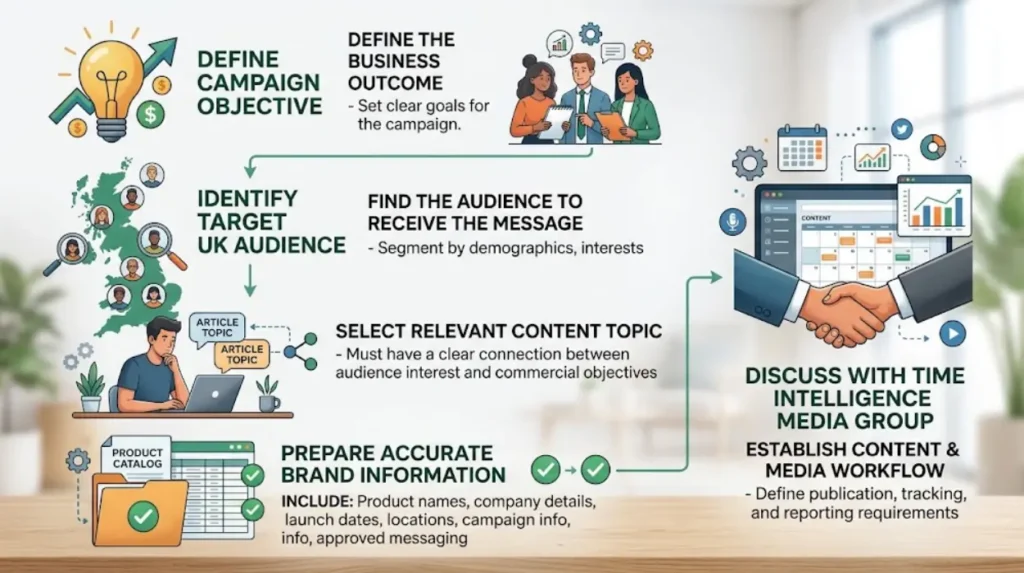
A food and drink brand can start by defining its campaign objective, identifying its target UK audience, selecting a relevant content topic, preparing accurate brand information and discussing publication and reporting requirements with Time Intelligence Media Group.
The first step is to define the business outcome. The second is to identify the audience that needs to receive the message.
The campaign then requires a suitable article subject. The topic needs a clear connection between audience interest and the commercial objective.
Brands also need accurate source information. This includes product names, company details, launch dates, locations, campaign information and approved messaging.
Once these elements are prepared, the provider can establish the content and media workflow.
For brands comparing distribution approaches before making a purchase decision, reviewing:
Sponsored content provides additional context on how a structured media campaign fits into a broader marketing strategy.
What is the next step for UK food and drink brands?
The next step is to define the campaign objective, audience, product or announcement, preferred timing and required media outcome, then discuss these requirements with Time Intelligence Media Group to establish an appropriate sponsored content campaign.
A decision-ready brief can include five core elements:
- Campaign objective — Define what the campaign needs to achieve.
- Target audience — Identify consumer, professional or industry audiences.
- Content subject — Select the product, announcement or campaign theme.
- UK market focus — Define geographic or audience priorities.
- Reporting requirements — Establish the campaign information required after publication.
Time Intelligence Media Group can then align these requirements with the sponsored content workflow.
Explore More Expert Insights:
Beauty Sponsored Content by Time Intelligence Media Group
Get a Free Sponsored Content Audit From Time Intelligence Media Group
For food manufacturers, beverage brands, hospitality companies, restaurants and food technology businesses, sponsored content provides a structured route for communicating detailed commercial information through media publishing environments.
The strongest campaigns begin with a specific objective and maintain consistency across the content, audience, publication and reporting stages.



