

Underfunded local non-profits build public credibility through community trust, transparent operations, measurable impact, consistent communication, and strong relationships with local stakeholders. Credibility develops when organisations demonstrate results, accountability, and relevance to the communities they serve.
Local non-profits operate with limited financial resources compared with established international NGOs. International NGOs often have larger teams, global recognition, extensive funding networks, and long-standing institutional partnerships. Local organisations compete differently by developing deeper community relationships and demonstrating direct understanding of local needs.
A local non-profit is an organisation created to address social, environmental, humanitarian, or community challenges within a specific geographic area. Its credibility depends on how effectively it communicates its purpose, manages resources, and delivers outcomes.
Public credibility refers to the level of trust and confidence that communities, donors, volunteers, journalists, and partners place in an organisation. For non-profits, credibility influences donations, partnerships, media attention, volunteer engagement, and long-term sustainability.
Local non-profits strengthen credibility by focusing on areas where they have unique advantages:
- Direct relationships with beneficiaries
- Local knowledge of community challenges
- Faster response to urgent issues
- Transparent reporting of activities and results
- Personal connections with supporters
These factors allow smaller organisations to establish strong reputations even when competing with internationally recognised NGOs.
Why does community trust create an advantage for local non-profits?
Community trust gives local non-profits credibility because they operate close to beneficiaries, understand local conditions, and create visible relationships between their work and real community outcomes. Trust develops through consistent involvement, accountability, and evidence of meaningful social impact.
Community trust is one of the strongest assets available to local non-profits. People often evaluate organisations based on their connection to the communities they serve.
International NGOs frequently manage programmes across multiple countries and regions. Their scale creates operational strength, but local organisations often have stronger personal relationships with residents, community leaders, and local institutions.
A local non-profit understands cultural practices, regional challenges, and community priorities. This knowledge improves programme design and increases public confidence.
How do local relationships improve credibility?
Local relationships create direct evidence of organisational impact. A community member can observe projects, meet volunteers, and understand how resources are used.
Examples include:
- A food support organisation showing how many local households receive weekly assistance
- An education charity reporting improvements in school attendance
- An environmental group documenting community-led conservation activities
These examples create visible proof of activity and strengthen public recognition.
Why does local knowledge influence public perception?
Local knowledge allows organisations to address specific problems instead of applying general solutions. Communities recognise organisations that understand their environment, challenges, and priorities.
This connection creates authenticity. Authenticity supports credibility because stakeholders see the organisation as part of the community rather than an external provider.
How does transparency help small charities compete with larger NGOs?
Transparency allows small charities to build confidence by showing how funds are managed, how programmes operate, and what outcomes are achieved. Clear reporting creates accountability and helps supporters evaluate organisational performance.
Transparency is a key factor in non-profit credibility. Donors, volunteers, and partners need reliable information before supporting an organisation.
Underfunded local non-profits strengthen trust by sharing operational details through accessible communication channels.
Local non-profits strengthen awareness by creating relevant announcements, building journalist relationships, and developing structured communication plans. Organisations that want to understand how strategic media planning improves event participation can explore:
Press strategy approaches for urgent charitable campaigns.
Important transparency practices include:
- Publishing annual reports
- Explaining funding sources
- Sharing project outcomes
- Reporting financial information
- Documenting community feedback
A smaller organisation with clear reporting can build stronger confidence than a larger organisation with limited public communication.
What information increases donor confidence?
Donors look for evidence that contributions create measurable results. Impact information provides clarity about how resources create social value.
Useful information includes:
- Number of beneficiaries supported
- Location of projects
- Programme duration
- Resources allocated
- Measured outcomes
For example, a community health charity can report the number of health sessions delivered, participants reached, and services provided.
Specific data improves credibility because it transforms organisational claims into measurable evidence.
How do local non-profits use storytelling to increase public recognition?
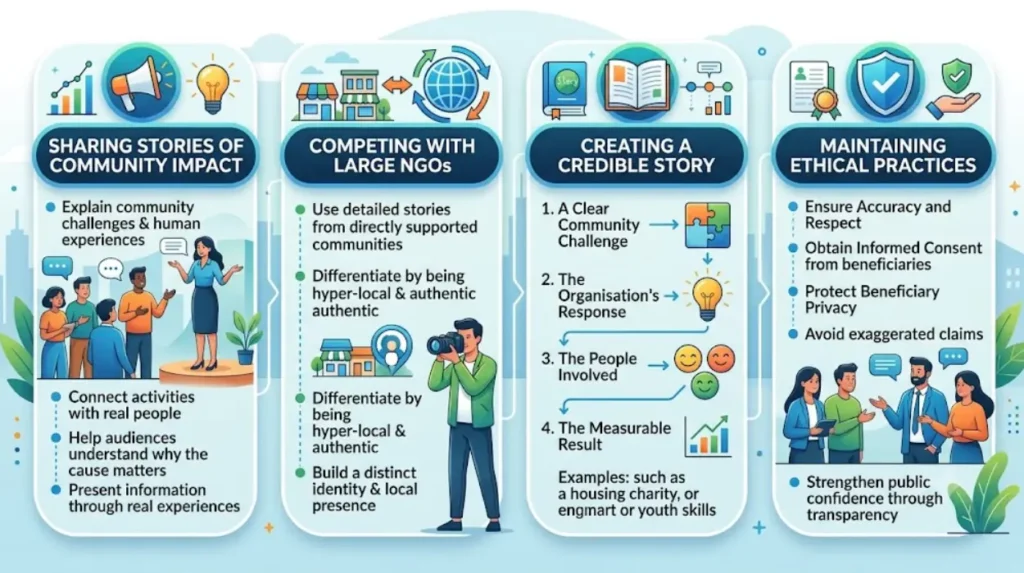
Local non-profits use storytelling to explain community challenges, human experiences, and measurable results. Effective stories connect organisational activities with real people while maintaining accuracy, consent, and respect for beneficiaries.
Storytelling is a communication method that presents information through real experiences and documented outcomes. For non-profits, storytelling helps audiences understand why a cause matters.
Large NGOs often have strong international visibility. Local organisations compete by presenting detailed stories from the communities they directly support.
A credible non-profit story includes:
- A clear community challenge
- The organisation’s response
- The people involved
- The measurable result
Why are local impact stories effective?
Local impact stories provide specific examples of change. They show how programmes affect individuals, families, or communities.
Examples include:
- A housing charity explaining how families access safe accommodation
- A youth organisation showing skills development outcomes
- A community project documenting improvements in public spaces
These stories create awareness while demonstrating practical impact.
How does ethical storytelling protect credibility?
Ethical storytelling requires accuracy and respect. Organisations maintain credibility by protecting beneficiary privacy, obtaining consent, and avoiding exaggerated claims.
Responsible communication strengthens public confidence because audiences recognise transparent and respectful practices.
How do local non-profits build media visibility with limited resources?
Local non-profits build media visibility by creating newsworthy announcements, developing journalist relationships, providing evidence-based information, and connecting their work to relevant community issues. Media visibility increases awareness and strengthens public credibility.
Media coverage helps organisations reach audiences beyond their immediate supporters. Local non-profits often achieve visibility by focusing on relevance rather than organisational size.
Journalists look for stories with public importance, clear evidence, and community impact. A smaller organisation can gain attention by presenting strong information about a meaningful issue.
What makes a non-profit story newsworthy?
A newsworthy non-profit story contains elements such as:
- A significant community issue
- New research or findings
- A measurable achievement
- A local event
- A response to an urgent situation
For example, a charity supporting vulnerable families can attract attention by publishing data about local poverty challenges alongside its community response.
How do partnerships improve media credibility?
Partnerships provide additional validation. When local non-profits collaborate with schools, universities, businesses, or community organisations, they demonstrate broader support.
Examples include:
- Charity partnerships with local councils
- Community programmes with educational institutions
- Volunteer initiatives with businesses
These relationships increase visibility because they show collective participation.
How do digital platforms help small charities compete with international NGOs?
Digital platforms help small charities increase visibility, communicate directly with supporters, and demonstrate impact without requiring large marketing budgets. Websites, social media channels, and online reports create accessible communication systems.
Digital communication reduces the traditional advantage of larger organisations. Local non-profits use online platforms to share updates, publish evidence, and engage supporters.
Important digital assets include:
- Professional websites
- Social media profiles
- Email newsletters
- Online donation systems
- Digital impact reports
These tools allow organisations to maintain regular communication with audiences.
Why is consistent online communication important?
Consistency improves recognition. Organisations that regularly share accurate updates remain visible to supporters and stakeholders.
A strong digital presence includes:
- Regular project updates
- Community announcements
- Volunteer stories
- Impact statistics
- Educational content
Consistent communication supports credibility because audiences understand the organisation’s activities over time.
How do measurable results strengthen non-profit reputation?
Measurable results strengthen non-profit reputation by proving effectiveness through evidence, performance indicators, and documented outcomes. Impact measurement allows organisations to demonstrate value and maintain accountability with donors, communities, and partners.
Impact measurement is the process of collecting and analysing information about programme results. It helps organisations understand whether activities achieve intended goals.
Local non-profits improve credibility by tracking relevant indicators.
Examples include:
- Number of people served
- Programme completion rates
- Community participation levels
- Environmental improvements
- Educational outcomes
Why do impact metrics matter?
Impact metrics provide objective information. They help stakeholders evaluate whether an organisation creates meaningful change.
A charity that reports specific achievements creates stronger confidence than one that only communicates general goals.
How does evaluation support long-term credibility?
Evaluation helps organisations improve programmes and demonstrate learning. It shows that the organisation reviews performance and adapts based on evidence.
Continuous improvement creates a reputation for responsibility and effectiveness.
How can local non-profits maintain credibility while expanding their influence?
Local non-profits maintain credibility by protecting their mission, improving governance, developing partnerships, and balancing growth with accountability. Sustainable expansion requires strong systems that preserve trust during organisational development.
Growth creates new opportunities but also introduces operational challenges. Organisations need effective governance structures to maintain public confidence.
Key areas include:
- Financial management
- Leadership development
- Volunteer coordination
- Programme evaluation
- Stakeholder communication
Strong governance ensures that increased visibility does not reduce accountability.
As organisations grow, they require structured communication methods that maintain credibility, reach relevant audiences, and support cause-driven campaigns through targeted distribution. For deeper insight explore:
Why does organisational consistency matter?
Consistency allows supporters to understand the organisation’s purpose and approach. A clear mission creates recognition and long-term trust.
Local non-profits that maintain transparent practices, communicate regularly, and demonstrate measurable outcomes develop strong public credibility.
How do credible local non-profits influence future charitable communication strategies?
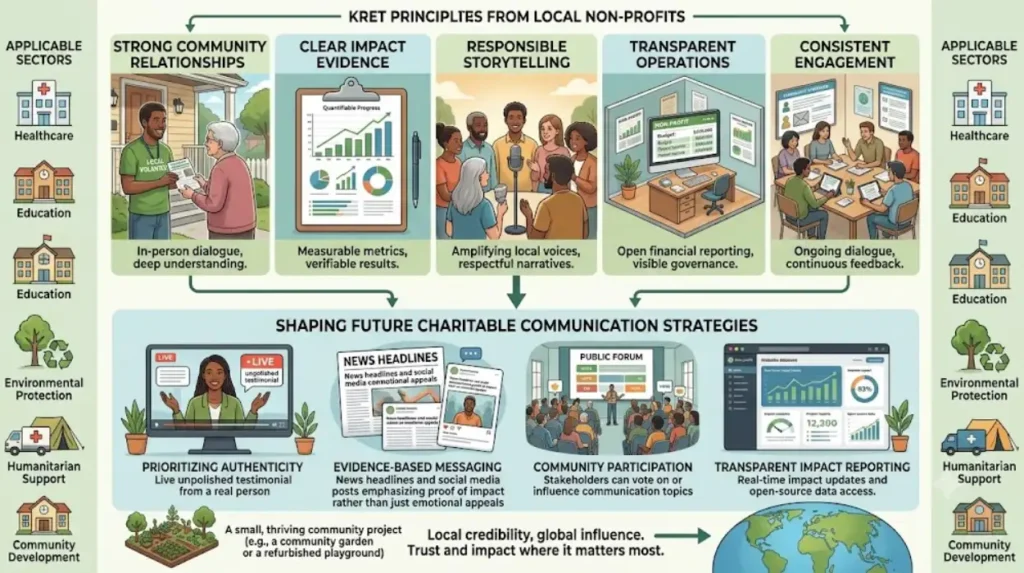
Credible local non-profits influence charitable communication by prioritising authenticity, evidence-based messaging, community participation, and transparent impact reporting. These practices shape how organisations build trust in competitive social impact environments.
The future of charitable communication focuses on proof, relevance, and public accountability. Organisations compete for attention by demonstrating meaningful outcomes rather than relying only on reputation or size.
Local non-profits show that credibility comes from:
- Strong community relationships
- Clear impact evidence
- Responsible storytelling
- Transparent operations
- Consistent engagement
Explore More Expert Insights:
Why newly launched charities fail to secure foundational grants without a structured media footprint
The direct impact of earned media coverage on building community trust during policy advocacy shifts
These principles apply across charitable sectors, including healthcare, education, environmental protection, humanitarian support, and community development.
Smaller organisations build public credibility by demonstrating value where it matters most: within the communities they serve. Their success depends on trust, evidence, and communication practices that show measurable social impact.



