A press strategy for urgent charitable galas and auctions is a structured communication plan that uses media coverage, targeted messaging, and timely announcements to increase awareness, attract attendees, and support fundraising objectives within a limited timeframe.
A charitable gala is a formal fundraising event that combines networking, entertainment, donor engagement, and financial contributions for a social cause. A charitable auction is a fundraising activity where donated items, experiences, or services are sold to generate income for an organisation or campaign.
Urgent charitable events require focused media planning because organisers often have a short period to secure attendance. The press strategy connects the charity’s mission with relevant audiences through news coverage, community publications, sector media, and digital channels.
A successful press strategy identifies the event purpose, target audience, news value, media channels, and communication timeline. It transforms an event announcement into a story that journalists, supporters, and potential attendees understand.
Why urgency changes charitable event communication
Urgent galas and auctions operate differently from long-term fundraising campaigns. Event organisers have fewer weeks to create awareness, secure media attention, and convert interest into attendance.
A time-sensitive press strategy prioritises:
- Clear event information, including date, location, purpose, and registration details
- Strong human-interest stories connected to the charitable mission
- Relevant media targeting based on audience interests
- Fast distribution of announcements across suitable channels
For example, a local homelessness charity organising an emergency fundraising gala after a winter housing crisis requires different messaging from a charity planning an annual celebration six months in advance.
How do charities build a press strategy to increase gala attendance?
Charities build a press strategy by defining campaign goals, identifying target audiences, creating relevant media messages, selecting distribution channels, and measuring results throughout the event promotion period.
The process begins with understanding the attendance objective. A charity must determine whether it needs more individual donors, corporate sponsors, community supporters, volunteers, or auction participants.
A clear objective improves media communication because every announcement has a specific purpose.
Defining the event audience
Audience identification determines where and how the press strategy operates. Charitable galas usually target multiple groups, including:
- Existing donors
- Local community members
- Corporate partners
- Philanthropic networks
- Industry supporters
Each audience requires different communication.
Corporate supporters respond to messages about community impact, partnership opportunities, and brand involvement. Local attendees respond to information about the cause, event experience, and community contribution.
Creating a media message framework
A media message framework organises the key information journalists need.
A strong charitable event announcement includes:
- The cause being supported
- The reason the event matters now
- The expected community impact
- The event details
- The available participation options
For example, a charity auction announcement becomes more newsworthy when it explains that auction proceeds fund a specific community programme rather than only promoting the event date.
Charities developing broader awareness campaigns can also explore the educational principles behind:
Public credibility building through related awareness strategies.
Which media channels support charitable gala attendance campaigns?
Charitable gala attendance campaigns use local news, trade publications, digital media, social platforms, email networks, and specialist outlets to reach audiences connected to the cause and event purpose.

Media selection determines whether an announcement reaches relevant people. A large audience does not always create high attendance. Effective distribution focuses on audience relevance.
Local media coverage
Local publications are important for community-focused galas. Local journalists cover events that affect residents, highlight community achievements, and showcase charitable initiatives.
Examples include:
- Regional newspapers
- Local online publications
- Community magazines
- Local radio stations
A charity hosting a fundraising auction in Manchester gains stronger relevance through regional media that already serves Manchester communities.
Sector and specialist media
Specialist media connects charities with audiences that have direct interest in specific causes.
Examples include:
- Healthcare publications for medical fundraising events
- Education publications for school-related charities
- Environmental media for sustainability campaigns
Sector publications provide access to readers who understand the issue and have stronger motivation to participate.
Digital media distribution
Digital channels extend press visibility beyond traditional journalism. They support event discovery and provide additional touchpoints before registration deadlines.
Key digital channels include:
- Charity websites
- Email newsletters
- Social media platforms
- Online event listings
A coordinated approach ensures that media coverage supports direct attendance actions.
How does timing influence press coverage for urgent charity events?
Timing influences press coverage by determining when journalists receive information, how long audiences have to respond, and whether the event gains visibility before attendance decisions are made.
Urgent charitable galas require a structured timeline because media attention decreases when announcements arrive too close to the event date.
Creating a short-term media timeline
A practical timeline divides promotion into stages.
A four-week campaign structure includes:
Week 1: Announcement phase
- Release the main event story
- Contact relevant journalists
- Publish event information
Week 2: Engagement phase
- Share supporter stories
- Highlight auction items
- Promote participating organisations
Week 3: Reminder phase
- Provide attendance updates
- Share media coverage
- Encourage final registrations
Week 4: Final attendance push
- Promote urgency
- Share event countdown information
- Confirm event highlights
This structure creates repeated visibility without repeating identical messages.
Using news value to improve timing
Journalists prioritise stories with relevance, impact, and clear public interest. A charitable gala receives stronger attention when connected to current issues, community needs, or measurable outcomes.
For example, a fundraising event supporting food insecurity gains relevance when the announcement explains how donations address rising demand for local food support programmes.
What components create an effective charitable gala press campaign?
An effective charitable gala press campaign combines research, storytelling, media targeting, event information, spokesperson coordination, and performance measurement to create consistent public awareness.
Each component supports a different stage of the attendance journey.
Media research and targeting
Media research identifies publications and journalists most relevant to the charity’s audience.
A targeted media list includes:
- Publication name
- Journalist contact details
- Coverage interests
- Previous related stories
Targeted outreach improves relevance because journalists receive announcements aligned with their reporting areas.
Story development
Charitable events require a clear narrative. The story explains why the event exists and why attendance matters.
Effective stories often include:
- Beneficiary experiences
- Founder perspectives
- Community impact statistics
- Partner involvement
A charity supporting youth education, for example, creates stronger coverage through real programme outcomes rather than only describing the gala schedule.
Spokesperson preparation
Spokespeople represent the organisation during interviews and media discussions.
A prepared spokesperson communicates:
- The charity mission
- The fundraising goal
- The expected impact
- The importance of public participation
Consistent messaging improves trust across different media platforms.
How can charities measure the success of a press strategy?
Charities measure press strategy success through media coverage, audience engagement, website activity, registrations, attendance numbers, and fundraising results connected to the campaign.
Measurement shows whether communication activities contributed to event performance.
Key performance indicators
Important metrics include:
- Number of media mentions
- Publication reach
- Website visits from media sources
- Ticket registrations
- Social engagement
- Sponsor enquiries
- Auction participation
For urgent campaigns, daily monitoring helps organisers identify which messages create the strongest response.
Connecting media results with attendance
Media coverage creates awareness, but attendance depends on audience action. Tracking systems connect press activity with event outcomes.
Examples include:
- Registration links in announcements
- Campaign-specific landing pages
- Media referral tracking
- Email sign-up monitoring
These methods show which channels produce measurable interest.
How can charities improve press strategies for future fundraising events?
Charities improve future press strategies by reviewing campaign data, maintaining media relationships, improving storytelling methods, and developing repeatable communication processes for future fundraising activities.
A post-event review identifies successful approaches and areas requiring improvement.
Building long-term media relationships
Strong media relationships develop through consistent communication. Charities that provide useful information, reliable contacts, and relevant stories create stronger connections with journalists.
Long-term relationships support future announcements, awareness campaigns, and fundraising initiatives.
Improving campaign planning
Future strategies improve when charities analyse:
- Which publications generated attention
- Which messages attracted registrations
- Which audiences responded most actively
- Which campaign stages produced results
This information creates more efficient planning for future events.
Charities evaluating professional distribution approaches can explore:
Custom distribution strategies to understand how targeted media outreach supports cause-driven organisations.
What role does professional press distribution play in charitable event promotion?
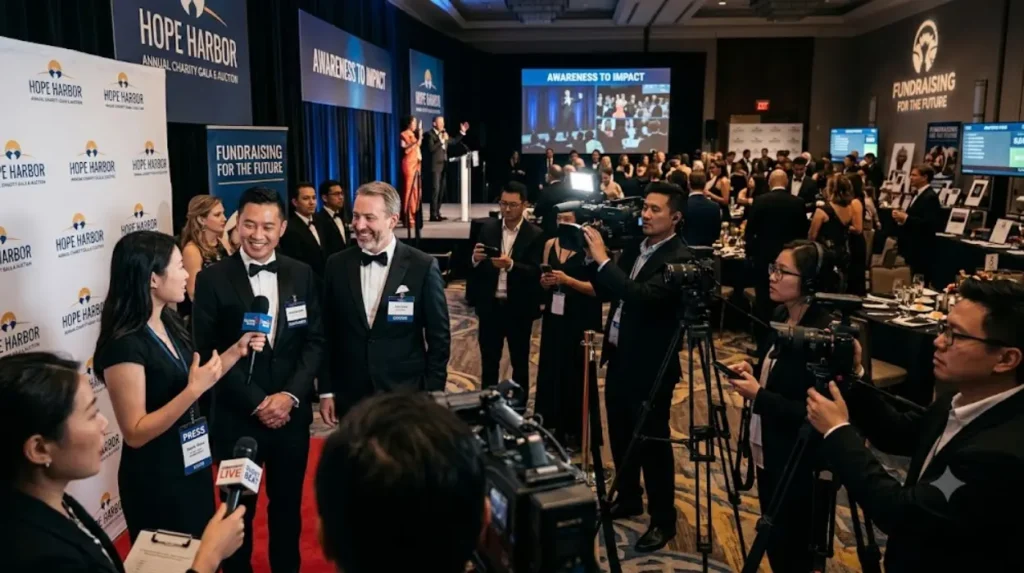
Professional press distribution supports charitable event promotion by connecting announcements with relevant media networks, improving message delivery, and helping organisations reach audiences beyond existing supporter groups.
Charities often manage limited resources while competing for public attention. Professional distribution approaches provide structured access to media channels and audience segments.
A suitable distribution approach focuses on:
- Audience relevance
- Geographic targeting
- Sector-specific media access
- Campaign timing
- Performance reporting
For urgent charitable galas and auctions, the objective is not only generating publicity. The objective is creating awareness that converts into attendance, participation, and fundraising impact.
Explore More Expert Insights:
Timing Your Announcement: Synchronizing Press Distribution with Global Awareness Days and Rallies
How to Build an NGO Digital Press Kit that Attracts the Attention of Purpose-Driven Journalists
A structured press strategy gives charities a practical framework for achieving visibility under time constraints. It combines clear messaging, targeted media engagement, strategic timing, and measurable outcomes to support successful fundraising events.