

Non-governmental organisations depend on media visibility to communicate impact, influence public discussion, and strengthen support for their missions. A digital press kit provides journalists with verified information, downloadable resources, and media-ready content in one accessible location. For UK organisations, a structured press kit improves reporting efficiency and increases the likelihood of accurate coverage across national, regional, and sector-specific publications.
Organisations that already understand:
Earned media coverage as part of their communications strategy also benefit from presenting consistent information to journalists. A digital press kit supports that objective by reducing information gaps and improving media accessibility.
What is an NGO digital press kit?
An NGO digital press kit is an online collection of verified organisational information, media assets, leadership profiles, statistics, and contact details that enables journalists to produce accurate stories quickly while reducing research time and improving reporting efficiency across multiple media channels.
A digital press kit serves as the official media resource for an organisation. It replaces scattered documents with one organised repository that journalists access whenever they need information.
Unlike promotional brochures, a press kit focuses on facts. Every document supports reporting rather than marketing.
Core purpose of a digital press kit
A digital press kit helps journalists:
- Verify organisational information.
- Access approved photographs.
- Download logos.
- Review leadership biographies.
- Reference accurate statistics.
- Contact authorised media representatives.
Purpose-driven journalists often work under strict deadlines. Easy access to reliable information supports faster publication.
Why do purpose-driven journalists use digital press kits?
Purpose-driven journalists rely on digital press kits because they provide verified facts, downloadable assets, transparent organisational information, and credible evidence that supports accurate reporting about charities, humanitarian organisations, advocacy groups, environmental initiatives, and community programmes.
Journalists covering social impact require evidence.
An effective press kit reduces unnecessary communication and provides immediate access to essential materials.
Information journalists expect
Most journalists search for:
- Organisation overview
- Mission statement
- Programme summaries
- Annual impact figures
- Financial transparency
- Leadership information
- Recent press releases
- High-resolution photography
- Video footage
- Media contacts
If these resources are unavailable, journalists spend additional time searching for information or move to another story.
What information belongs inside an NGO digital press kit?
A complete NGO digital press kit includes organisational background, leadership biographies, programme summaries, impact statistics, media-ready images, logos, recent press releases, fact sheets, annual reports, testimonials, and clearly identified press contacts organised within a logical navigation structure.
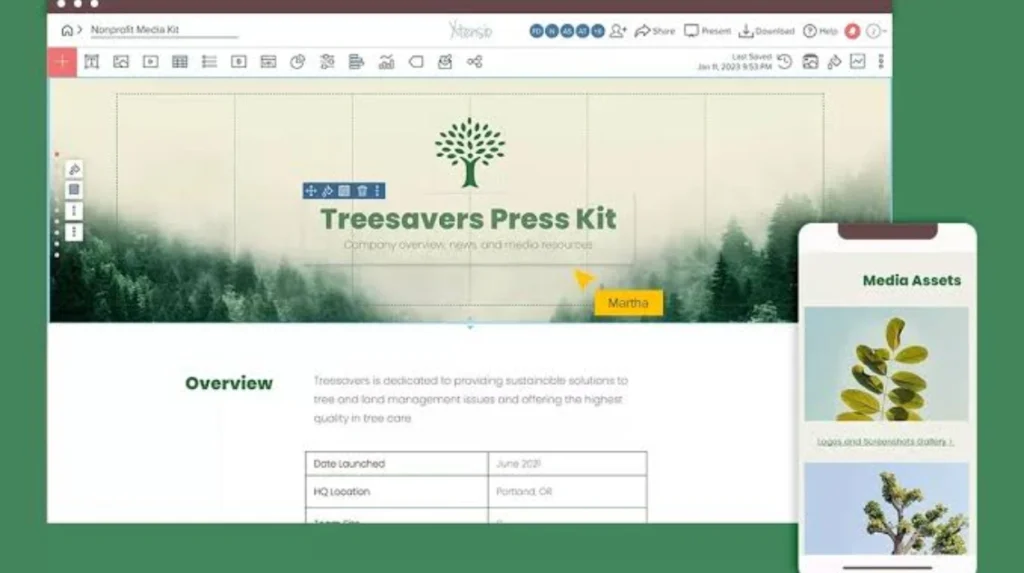
Every section has a defined purpose.
Organisation overview
Provide:
- Organisation history
- Mission
- Vision
- Geographic coverage
- Areas of work
Example:
A UK food security charity can explain its establishment date, operational regions, beneficiary numbers, and primary programmes.
Leadership biographies
Include profiles for:
- Chief Executive
- Trustees
- Campaign Directors
- Programme Leaders
Each biography includes:
- Position
- Professional experience
- Areas of expertise
- Approved headshot
Impact statistics
Include measurable data such as:
- 48 community projects completed
- 76 local partnerships
- 14,500 beneficiaries supported
- 320 volunteers engaged
- 91% programme completion rate
Statistics require clear dates and verified sources.
Media assets
Provide downloadable:
- PNG logos
- SVG logos
- Brand guidelines
- Event photographs
- Programme photography
- Infographics
- Short videos
Every file requires descriptive filenames.
Press releases
Maintain a dedicated section containing:
- Current announcements
- Campaign launches
- Research findings
- Funding updates
- Partnership announcements
A chronological archive improves accessibility.
Fact sheets
Fact sheets summarise:
- Key statistics
- Programme objectives
- Geographic operations
- Policy priorities
Journalists frequently reference these documents while writing.
How do you organise a digital press kit for fast media access?
A well-organised digital press kit uses simple navigation, logical content categories, downloadable resources, searchable pages, consistent file naming, and responsive design that enables journalists to locate essential information within a few minutes on any device.
Organisation directly affects usability.
Create a dedicated media page
Place all media resources under one clearly labelled page.
Examples include:
- Media Centre
- Press Room
- Newsroom
- Media Resources
Avoid distributing files across multiple sections.
Use consistent categories
Typical navigation includes:
- About Us
- Leadership
- Programmes
- News
- Images
- Videos
- Reports
- Contact
Consistency improves usability.
Keep downloads accessible
Avoid unnecessary registration forms.
Journalists value immediate access to approved materials.
Optimise file names
Instead of:
IMG001.jpg
Use:
community-health-programme-london-2026.jpg
Clear filenames improve organisation and search visibility.
How can NGOs make their press kits more useful for journalists?
NGOs improve press kit usefulness by maintaining current information, publishing evidence-based content, providing downloadable media resources, including expert spokespeople, and presenting transparent organisational data supported by measurable programme outcomes and regular updates.
Accuracy builds confidence.
Update statistics regularly
Old statistics reduce credibility.
Review:
- Beneficiary numbers
- Annual reports
- Programme results
- Leadership details
- Contact information
Scheduled quarterly reviews maintain accuracy.
Include spokesperson information
Each spokesperson profile contains:
- Expertise
- Interview topics
- Availability
- Contact method
Journalists identify interview opportunities more efficiently.
Add recent achievements
Include:
- Research publications
- Award recognitions
- National campaigns
- Partnership announcements
- Policy submissions
Each update strengthens context.
How does a digital press kit support NGO media coverage?
A digital press kit supports media coverage by improving information accuracy, reducing journalist research time, strengthening organisational credibility, encouraging consistent reporting, and making evidence-based stories easier to publish across national, regional, and specialist publications.
Media relationships depend on reliable information.
A structured press kit removes unnecessary communication barriers.
Faster newsroom workflows
Journalists receive:
- Verified information
- Downloadable images
- Official statements
- Contact details
Preparation time decreases.
Improved reporting consistency
Approved materials reduce:
- Incorrect statistics
- Outdated branding
- Name inconsistencies
- Misidentified programmes
Consistency improves public understanding.
Better transparency
Transparent organisations openly publish:
- Governance
- Annual reports
- Financial summaries
- Programme evidence
Transparency strengthens reporting confidence.
Readers who previously explored earned media coverage can recognise how consistent media resources support long-term trust throughout advocacy campaigns.
What mistakes reduce the effectiveness of an NGO digital press kit?
Common digital press kit mistakes include outdated information, poor navigation, missing media contacts, low-quality images, inconsistent branding, incomplete statistics, inaccessible downloads, and unsupported organisational claims that reduce journalist confidence and reporting efficiency.
Several recurring issues reduce usability.
Outdated information
Examples include:
- Former executives
- Old campaign figures
- Expired reports
- Broken links
Every outdated resource creates confusion.
Low-quality photography
Avoid:
- Small image sizes
- Watermarked files
- Blurry photographs
- Cropped logos
Professional assets improve publication quality.
Missing contact details
Every press kit requires:
- Media email
- Telephone number
- Office hours
- Emergency contact for major announcements
Journalists require immediate communication.
Excessive promotional language
Replace promotional statements with factual evidence.
Instead of subjective descriptions, provide measurable outcomes supported by published reports.
Which organisations benefit most from a digital press kit?
Digital press kits benefit charities, humanitarian organisations, advocacy groups, environmental charities, healthcare organisations, educational foundations, international development agencies, and community organisations seeking consistent media engagement and accurate public reporting.
Many sectors communicate complex public-interest work.
Humanitarian organisations
Examples include:
- Disaster response charities
- Refugee support organisations
- International relief agencies
These organisations frequently announce emergency updates.
Environmental organisations
Examples include:
- Wildlife conservation groups
- Climate advocacy organisations
- Biodiversity initiatives
Visual media assets improve environmental reporting.
Community organisations
Examples include:
- Youth programmes
- Housing charities
- Food banks
- Mental health organisations
Local journalists regularly reference community impact statistics.
Policy advocacy organisations
Campaign organisations publish:
- Research
- Policy recommendations
- Consultation responses
- Parliamentary briefings
Structured press kits support accurate policy reporting.
Organisations comparing specialist media distribution approaches can later explore:
Enterprise Non-Profit PR is evaluating long-term communications support.
How can NGOs maintain an effective digital press kit over time?
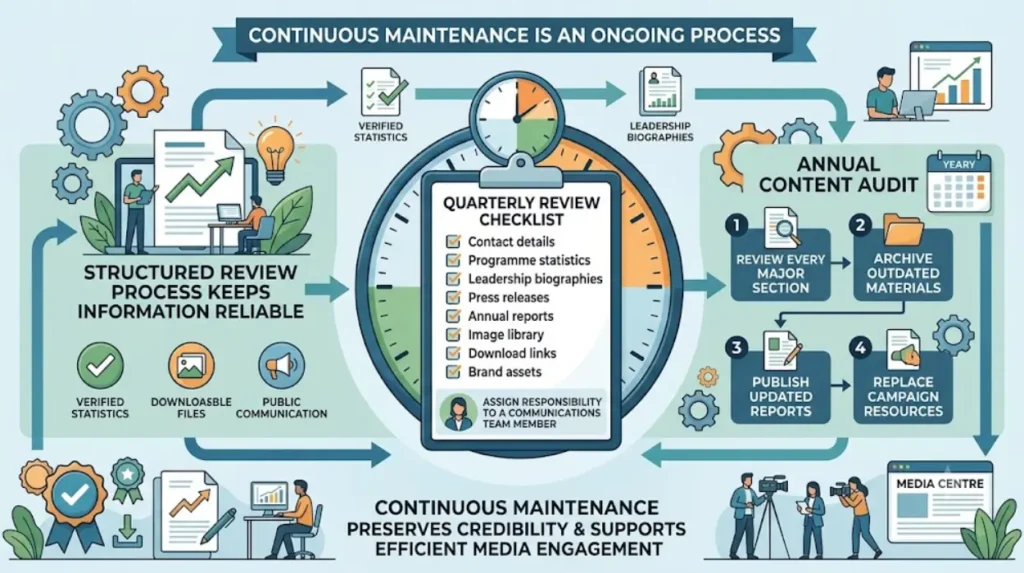
An effective NGO digital press kit remains current through scheduled content reviews, verified statistics, updated media assets, refreshed leadership information, accessible downloads, and continuous monitoring of organisational developments that affect public communication and media reporting.
Maintenance is an ongoing process.
A structured review process keeps information reliable.
Quarterly review checklist
Review:
- Contact details
- Programme statistics
- Leadership biographies
- Press releases
- Annual reports
- Image library
- Download links
- Brand assets
Assign responsibility to a communications team member.
Annual content audit
Review every major section.
Archive outdated materials.
Publish updated reports.
Replace expired campaign resources.
Continuous maintenance preserves credibility and supports efficient media engagement.
Explore More Expert Insights:
The Director’s Guide to Crafting Press Releases that Turn Local Awareness into National Advocacy
An NGO digital press kit functions as the central source of verified information for journalists covering public-interest stories. It combines organisational background, leadership information, programme evidence, downloadable media assets, impact statistics, and media contacts within one structured platform.
For UK organisations, a well-maintained digital press kit improves reporting accuracy, strengthens transparency, supports consistent media engagement, and enables purpose-driven journalists to produce evidence-based coverage more efficiently. Regular updates, organised content, and accessible resources ensure that every media interaction begins with accurate, trustworthy information.



