
Independent hospitality brands often compete with global hotel groups, established restaurant franchises, and recognised leisure operators. Large international chains benefit from widespread brand recognition, extensive marketing budgets, and long-standing customer trust. Smaller hospitality businesses achieve credibility through consistent quality, transparent communication, local relevance, verified customer experiences, and strong operational standards.
This article explains how lesser-known hospitality brands establish credibility in the United Kingdom and why credibility directly influences customer confidence, bookings, repeat visits, and media attention.
Why does credibility matter more than brand size in hospitality?
Credibility gives customers evidence that a hospitality business delivers reliable experiences, consistent service, transparent information, and genuine value. Trust influences booking decisions more directly than brand recognition because guests compare reviews, quality standards, pricing, location, and customer satisfaction before committing.
Hospitality credibility refers to the confidence customers place in a hotel, restaurant, venue, resort, or accommodation provider based on measurable evidence rather than advertising.
Customers evaluate businesses before making reservations. They examine public information, guest feedback, online ratings, photographs, pricing transparency, and service consistency.
Large international chains possess recognised names, but recognition alone does not guarantee customer preference. Independent hospitality businesses compete successfully by demonstrating dependable performance.
Examples include:
- Boutique hotels with verified guest ratings above 4.7 stars.
- Family-owned restaurants maintaining consistent food hygiene ratings.
- Local holiday cottages displaying detailed property information.
- Independent event venues publishing authentic customer testimonials.
These indicators reduce uncertainty during the booking process.
How do customers judge hospitality businesses before making a booking?
Customers compare objective information from several trusted sources before booking accommodation or hospitality services. Reviews, photography, pricing, response quality, cleanliness standards, facilities, location accuracy, and independent ratings collectively shape purchasing confidence and influence final booking decisions significantly.
Consumers rarely rely on one source of information.
They compare multiple signals before making decisions.
Verified customer reviews
Verified reviews demonstrate actual guest experiences.
Customers examine:
- Overall ratings
- Recent reviews
- Response quality
- Review consistency
- Service improvements
For example, travellers compare reviews across booking platforms before selecting a countryside hotel in Yorkshire.
Accurate visual content
Professional photography presents realistic expectations.
Useful photographs include:
- Guest rooms
- Dining spaces
- Reception areas
- Outdoor facilities
- Accessibility features
Images matching the actual guest experience strengthen trust.
Transparent pricing
Clear pricing reduces booking uncertainty.
Customers expect visibility of:
- Room rates
- Taxes
- Parking fees
- Breakfast options
- Cancellation policies
Hidden charges reduce confidence.
Operational information
Customers also evaluate practical information.
Examples include:
- Check-in times
- Accessibility details
- Family facilities
- Pet policies
- Wi-Fi availability
Complete information reduces customer questions before booking.
What characteristics distinguish credible independent hospitality brands?
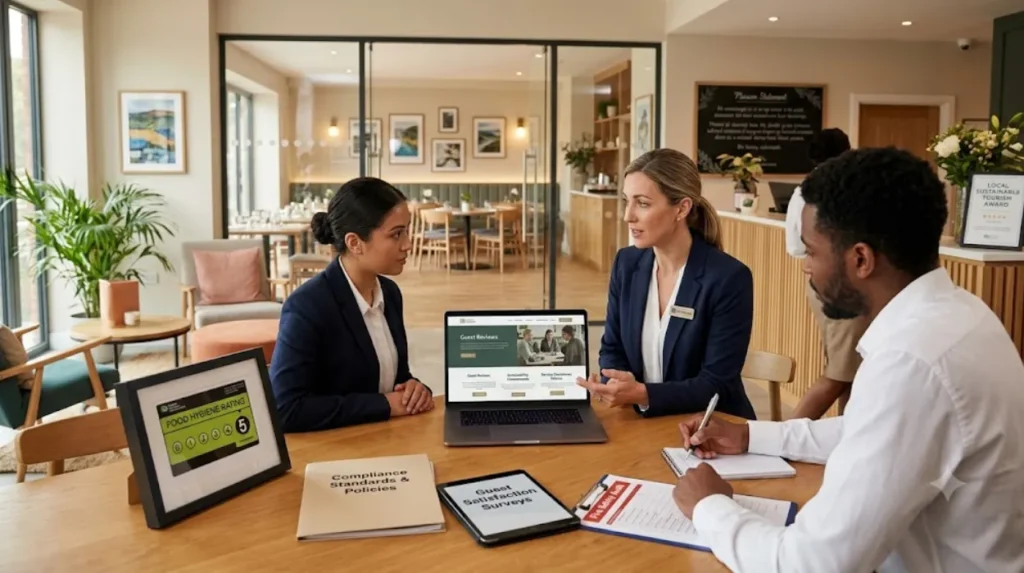
Credible hospitality businesses maintain consistent service quality, transparent communication, verified customer satisfaction, operational reliability, professional presentation, and recognised compliance standards. These measurable characteristics strengthen public confidence regardless of business size or international market recognition.
Credibility develops through operational consistency rather than isolated marketing activity.
Consistent customer experience
Guests expect similar standards every visit.
Consistency includes:
- Clean rooms
- Reliable food quality
- Friendly staff
- Accurate booking systems
- Prompt customer support
Repeated positive experiences increase repeat bookings.
Professional digital presence
Customers often visit a website before booking.
Professional hospitality websites contain:
- Updated contact information
- Current pricing
- Booking options
- High-quality images
- Frequently asked questions
Outdated information reduces trust.
Compliance and recognised standards
Independent hospitality businesses strengthen credibility by meeting recognised industry requirements.
Examples include:
- Food hygiene ratings.
- Fire safety compliance.
- Accessibility information.
- Environmental certifications.
- Licensing requirements.
These standards provide measurable reassurance.
How does local identity help smaller hospitality brands compete?
Local identity differentiates independent hospitality businesses through authentic regional experiences, community engagement, locally sourced products, cultural knowledge, and destination expertise. These factors create distinctive customer value that standardised international operations cannot replicate consistently across every location.
Local relevance represents a measurable competitive advantage.
Independent businesses often understand regional customer expectations in greater detail.
Local sourcing
Restaurants strengthen credibility by identifying local suppliers.
Examples include:
- Yorkshire cheeses.
- Scottish seafood.
- Welsh lamb.
- Kent fruit producers.
Customers increasingly value supply chain transparency.
Regional expertise
Hospitality teams often provide practical destination knowledge.
Examples include recommendations for:
- Walking routes.
- Historic attractions.
- Local festivals.
- Independent cafés.
- Public transport.
Useful local information improves guest satisfaction.
Community involvement
Hospitality businesses also strengthen trust through community participation.
Examples include:
- Charity partnerships.
- Local employment.
- Community events.
- Cultural celebrations.
Community visibility demonstrates long-term commitment.
How does reputation grow through customer experiences?
Positive customer experiences create measurable reputation growth because satisfied guests publish reviews, recommend businesses to others, return for future visits, and share authentic content across digital platforms. Consistency generates cumulative public trust over extended periods.
Every guest interaction contributes to public reputation.
A single positive experience reaches additional potential customers through reviews and recommendations.
Online reviews
Review platforms provide public evidence of service quality.
Businesses benefit from:
- Frequent reviews.
- Detailed feedback.
- High response rates.
- Consistent ratings.
Recent reviews often influence booking decisions more than older feedback.
Word-of-mouth recommendations
Personal recommendations remain influential.
Examples include:
- Family referrals.
- Workplace recommendations.
- Social media posts.
- Travel community discussions.
Personal experience carries significant credibility.
Repeat customers
Repeat guests demonstrate long-term satisfaction.
Higher return rates often indicate:
- Reliable quality.
- Competitive value.
- Positive service.
- Trustworthy operations.
Customer retention strengthens business stability.
What role does transparency play in hospitality credibility?
Transparency reduces uncertainty by presenting accurate information before customers make reservations. Honest communication regarding facilities, pricing, availability, policies, accessibility, and service expectations builds stronger trust than exaggerated promotional claims or incomplete information.
Customers value realistic expectations.
Clear communication reduces disappointment after arrival.
Honest property descriptions
Accommodation descriptions match actual facilities.
Examples include:
- Room dimensions.
- Bed configurations.
- Parking availability.
- Lift access.
- Air conditioning.
Accurate descriptions improve guest satisfaction.
Clear policies
Businesses explain important policies before booking.
These include:
- Cancellation terms.
- Refund conditions.
- Deposit requirements.
- Pet restrictions.
- Group bookings.
Visible policies reduce disputes.
Responsive communication
Prompt responses improve customer confidence.
Guests expect timely answers regarding:
- Reservations.
- Facilities.
- Accessibility.
- Dietary requirements.
- Arrival arrangements.
Efficient communication supports positive experiences.
Explore More Expert Insights:
Why New Entertainment Startups Fail to Build Buzz Without a Structured Media Visibility Strategy
The Direct Impact of Earned Media Authority on Slashing Customer Acquisition Costs for Venues
How do independent hospitality businesses earn media attention naturally?
Hospitality businesses receive media attention by creating genuinely newsworthy developments, participating in community initiatives, introducing measurable innovations, restoring historic properties, supporting tourism, or achieving recognised milestones that offer clear public interest and verified factual value.
Media coverage differs from advertising.
Journalists prioritise factual developments with public relevance.
Examples include:
- Historic building restorations.
- Tourism investment.
- Sustainability initiatives.
- Local employment growth.
- Cultural events.
These developments provide news value.
Businesses planning broader visibility often research structured communication approaches such as:
Press Distribution Strategy for Festivals through relevant educational resources before evaluating distribution options later in the decision process.
How can hospitality businesses strengthen long-term credibility?

Long-term credibility develops through continuous operational improvement, measurable service quality, consistent customer satisfaction, transparent communication, regular reputation management, staff development, and accurate public information maintained across every customer interaction and digital platform.
Credibility grows gradually through consistent performance.
Long-term trust depends on measurable operational quality.
Monitor customer feedback
Businesses regularly analyse:
- Review trends.
- Complaint categories.
- Satisfaction scores.
- Repeat bookings.
Data identifies improvement priorities.
Invest in staff training
Well-trained employees improve:
- Customer communication.
- Service consistency.
- Problem resolution.
- Operational efficiency.
Staff performance directly affects guest experiences.
Maintain accurate digital information
Businesses regularly update:
- Opening hours.
- Menus.
- Pricing.
- Contact details.
- Seasonal availability.
Accurate information prevents customer confusion.
Hospitality businesses exploring structured communication planning after building operational credibility often continue learning through resources covering:
Custom PR Distribution for Entertainment Disrupters during later evaluation stages.
Independent hospitality brands build credibility through measurable evidence rather than global recognition. Verified customer reviews, transparent communication, consistent service quality, accurate digital information, recognised operational standards, and strong local identity all contribute to customer confidence. Credibility grows over time through reliable performance, authentic customer experiences, and continuous operational improvement. As trust increases, smaller hospitality businesses strengthen their competitive position against larger international chains while establishing lasting relationships with guests across the United Kingdom.