
Software product launches create timely news that attracts attention from journalists, bloggers, industry publications, and technology websites. When launch information delivers genuine value, authoritative websites reference and link to it. Those editorial backlinks strengthen domain authority, improve search visibility, and increase organic traffic. A structured launch strategy transforms product announcements into sustainable link acquisition opportunities instead of relying on manual outreach alone.
Why do software product launches attract high-DA backlinks?
Software product launches create fresh, newsworthy information that technology publications, software review websites, industry blogs, and journalists actively seek. Original announcements, product innovations, customer data, and technical improvements provide valuable sources for editorial coverage and natural backlinks from authoritative domains.
A software product launch is the public introduction of a new software application, major feature, platform update, or product version. The announcement becomes a primary source of information during the launch period.
High-DA backlinks are hyperlinks from websites with strong domain authority and established trust. Examples include respected technology publications, developer communities, software review platforms, and industry news websites.
Technology editors prefer original announcements because they deliver exclusive information rather than recycled content.
Examples include:
- New SaaS platform launches
- Major artificial intelligence feature releases
- Enterprise security software updates
- Developer API announcements
These launches provide content that websites naturally reference when reporting industry developments.
Readers seeking foundational knowledge about link quality can explore:
Why Backlinks from High-Authority Tech Sites Matter for Software SEO.
What makes a launch newsworthy?
A launch attracts editorial attention when it includes measurable value.
Examples include:
- Solving a recognised industry problem
- Introducing verified technical innovation
- Publishing original benchmark results
- Releasing significant performance improvements
- Announcing strategic integrations
Each element increases the likelihood of editorial citations.
How can you prepare a software launch for natural backlink acquisition?
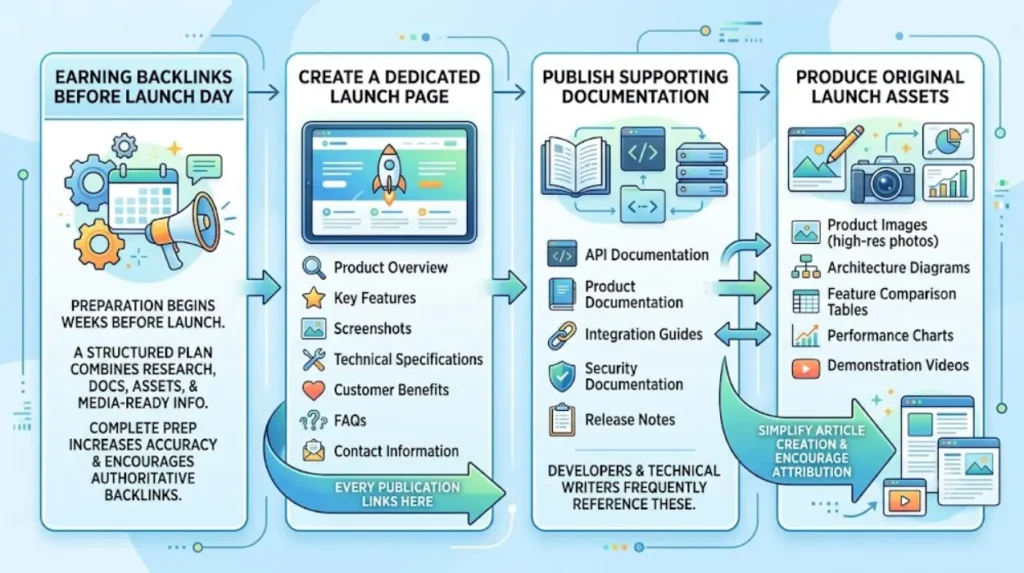
Preparation begins several weeks before launch. A structured plan combines audience research, technical documentation, supporting assets, and media-ready information. Complete preparation increases publication accuracy and encourages authoritative websites to reference original sources with backlinks.
Backlinks are earned before launch day through preparation rather than after publication.
Create a dedicated launch page
A launch page becomes the central destination for every mention.
The page includes:
- Product overview
- Key features
- Screenshots
- Technical specifications
- Customer benefits
- Frequently asked questions
- Contact information
Every publication links to the same authoritative resource.
Publish supporting documentation
Technical documentation improves credibility.
Useful assets include:
- API documentation
- Product documentation
- Integration guides
- Security documentation
- Release notes
Developers and technical writers frequently reference these resources.
Produce original launch assets
Editorial teams prefer reusable resources.
Examples include:
- Product images
- Architecture diagrams
- Feature comparison tables
- Performance charts
- Demonstration videos
These assets simplify article creation while encouraging attribution.
What types of launch content generate the strongest backlinks?
Original research, proprietary data, technical documentation, customer success evidence, and educational resources consistently generate stronger editorial backlinks than promotional announcements. Information that solves problems receives more citations across technology publications and industry websites.
Different content formats attract different publishers.
Product research reports
Original research provides unique information.
Examples include:
- Security testing reports
- AI model performance studies
- Software adoption surveys
- Developer productivity research
Research findings receive citations long after launch.
Technical benchmark reports
Benchmark reports compare measurable performance.
Examples include:
- Response time improvements
- Database optimisation
- API latency reductions
- Infrastructure efficiency gains
Technical publications frequently reference benchmark data.
Case studies
Case studies demonstrate practical implementation.
Examples include:
- Retail software deployment
- Healthcare workflow automation
- Financial reporting improvements
- Manufacturing process optimisation
Verified outcomes increase editorial trust.
Educational launch resources
Educational content expands launch visibility.
Examples include:
- Implementation guides
- Migration checklists
- Integration tutorials
- Security best practices
Educational resources continue earning backlinks after launch coverage declines.
Which websites naturally link to software launches?
Technology media, developer communities, software review platforms, industry publications, educational websites, and business news outlets frequently reference software launches that provide original information, verified data, and technical relevance for their audiences.
Understanding publisher categories improves outreach efficiency.
Technology news websites
Technology news platforms cover:
- Product launches
- Funding announcements
- Innovation updates
- Software releases
These publications often provide highly authoritative editorial backlinks.
Industry-specific publications
Vertical publications focus on specialised audiences.
Examples include:
- FinTech media
- Health technology publications
- Cybersecurity news websites
- Manufacturing technology journals
Industry relevance increases referral traffic quality.
Developer communities
Developer audiences value technical resources.
Examples include:
- API documentation
- SDK releases
- Open-source contributions
- Integration examples
Developer references often produce long-term backlinks.
Software review websites
Review platforms evaluate new software products.
They reference:
- Product features
- Technical capabilities
- Pricing structures
- Customer use cases
Comprehensive launch information supports accurate reviews.
How does digital PR strengthen software launch backlinks?
Digital PR distributes launch information through journalists, editors, publishers, and industry publications. Professional outreach expands visibility, increases editorial opportunities, and improves the probability of earning authoritative backlinks through independent news coverage.
Digital PR focuses on editorial relevance rather than mass distribution.
Build targeted media lists
Segment publications by:
- Industry
- Audience
- Geography
- Technical focus
- Company size
Targeted outreach improves publication relevance.
Personalise media pitches
Editors prefer concise, factual information.
Each pitch includes:
- Launch summary
- Key innovation
- Supporting statistics
- Media assets
- Interview availability
Personalisation increases response rates.
Supply verified data
Credible evidence strengthens editorial confidence.
Examples include:
- Independent testing
- Customer statistics
- Product benchmarks
- Security certifications
Verified information reduces fact-checking effort.
How can original data increase editorial backlinks?
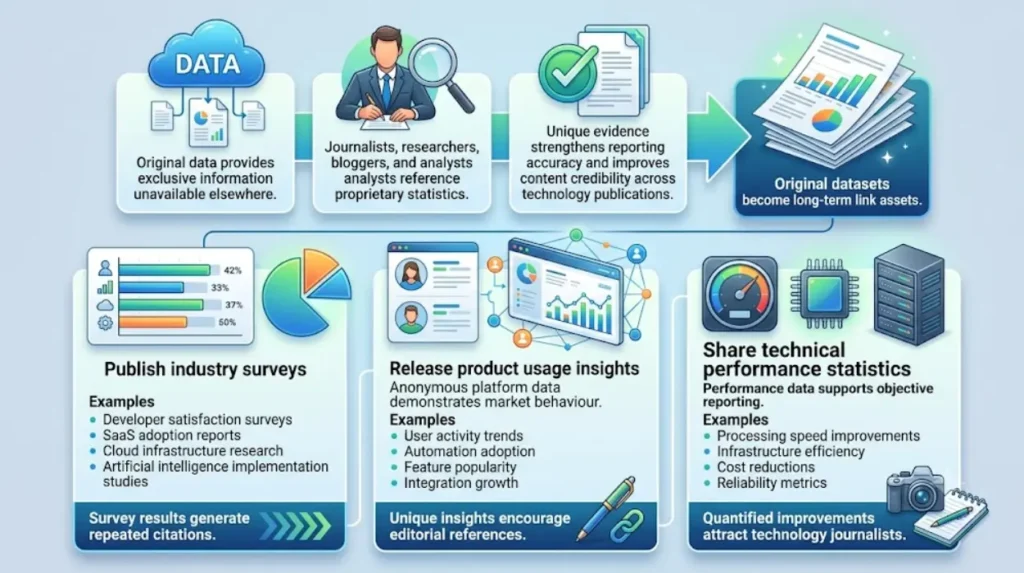
Original data provides exclusive information unavailable elsewhere. Journalists, researchers, bloggers, and analysts reference proprietary statistics because unique evidence strengthens reporting accuracy and improves content credibility across technology publications.
Original datasets become long-term link assets.
Publish industry surveys
Examples include:
- Developer satisfaction surveys
- SaaS adoption reports
- Cloud infrastructure research
- Artificial intelligence implementation studies
Survey results generate repeated citations.
Release product usage insights
Anonymous platform data demonstrates market behaviour.
Examples include:
- User activity trends
- Automation adoption
- Feature popularity
- Integration growth
Unique insights encourage editorial references.
Share technical performance statistics
Performance data supports objective reporting.
Examples include:
- Processing speed improvements
- Infrastructure efficiency
- Cost reductions
- Reliability metrics
Quantified improvements attract technology journalists.
Which launch mistakes reduce backlink opportunities?
Promotional messaging, weak documentation, missing data, poor timing, generic announcements, and limited supporting resources reduce editorial interest. Publishers prefer evidence-based stories supported by accessible technical information and verifiable facts.
Several avoidable mistakes reduce coverage.
Overly promotional language
Editors reject marketing-heavy announcements.
Focus on:
- Facts
- Statistics
- Product capabilities
- Industry relevance
Objective information improves publication acceptance.
Missing technical details
Incomplete documentation creates uncertainty.
Essential information includes:
- Specifications
- Compatibility
- Integrations
- Security standards
- System requirements
Complete resources improve journalist confidence.
No supporting evidence
Claims require verification.
Examples include:
- Independent testing
- Customer results
- Research findings
- Benchmark reports
Evidence increases editorial credibility.
Poor launch timing
Competing with major industry announcements reduces visibility.
A planned publishing schedule improves media attention.
How can software companies measure backlink success after a launch?
Performance measurement combines backlink quality, referring domains, referral traffic, keyword growth, domain authority improvements, and organic visibility. Consistent reporting identifies successful launch strategies and improves future campaigns through measurable performance indicators.
Tracking performance converts launch activity into measurable business value.
Monitor backlink quality
Measure:
- Domain Authority
- Referring domains
- Editorial links
- Industry relevance
- Link placement
Quality remains more valuable than quantity.
Measure SEO improvements
Track:
- Organic traffic
- Keyword rankings
- Indexed pages
- Search impressions
- Click-through rate
Search performance reflects backlink impact over time.
Analyse referral traffic
Referral traffic reveals publication value.
Useful metrics include:
- Sessions
- User engagement
- Conversion rate
- Average session duration
- Returning visitors
These indicators demonstrate audience quality.
Compare launch performance
Create reports comparing:
- Product launches
- Feature releases
- Geographic campaigns
- Media outreach effectiveness
Historical comparison improves future planning.
Readers evaluating measurable outcomes can continue with:
ROI Case Study: How a Bootstrap SaaS Grew Domain Rating from 10 to 50 via Newswire PR.
How does a repeatable launch process build long-term backlink growth?
A repeatable launch framework produces consistent editorial visibility across multiple releases. Standardised planning, documentation, digital PR, original research, and performance reporting create sustainable backlink acquisition that strengthens software SEO over time.
Successful software companies treat every launch as an SEO opportunity rather than a single marketing event.
A repeatable framework includes:
- Research audience interests.
- Prepare technical documentation.
- Publish a dedicated launch page.
- Create original supporting assets.
- Produce proprietary research where relevant.
- Execute targeted digital PR outreach.
- Track backlinks and organic performance.
- Document lessons for future launches.
Each product release expands the website’s authority through additional editorial references.
Explore More Expert Insights:
The Founder’s Guide to Building a Tech Media Pitch Deck That Converts
Natural backlinks accumulate when every launch provides genuine information that publishers consider valuable. Strong documentation, verified data, educational resources, and targeted media outreach create lasting SEO benefits. Over multiple launches, this process increases referring domains, strengthens domain authority, improves keyword rankings, and establishes the software company as a trusted source within its industry.