
Fintech companies in the United Kingdom operate in one of the world’s most competitive financial technology markets. Established banks, digital-first challengers, payment providers, lending platforms, wealth management firms, and RegTech businesses compete for attention from journalists every day.
Press coverage helps fintech businesses build credibility, educate customers, attract investors, recruit talent, and support commercial growth. A large public relations budget is not a requirement for earning media attention. Strong stories, accurate data, industry expertise, and consistent outreach create newsworthy opportunities.
This guide explains how UK fintech companies secure press coverage through practical, low-cost strategies.
Why does press coverage matter for UK fintech companies?
Press coverage builds trust, increases brand visibility, strengthens industry authority, and supports commercial growth. Independent media mentions carry greater credibility than paid advertising because journalists evaluate stories based on relevance, evidence, accuracy, and public interest before publication.
The UK fintech sector serves consumers, businesses, banks, and financial institutions. Financial products involve trust. Customers often research providers before opening accounts, using payment platforms, or investing money.
Editorial coverage contributes to that trust by demonstrating that a company has participated in industry conversations.
Press coverage also supports:
- Brand awareness
- Search visibility
- Investor confidence
- Recruitment
- Partnership opportunities
- Customer education
Coverage in respected financial publications often generates additional exposure when other journalists reference the original story.
What types of stories receive coverage?
Journalists regularly cover:
- Product launches
- Funding announcements
- Regulatory developments
- Consumer research
- Industry data
- Executive commentary
- Cybersecurity issues
- Artificial intelligence in finance
- Open Banking developments
- Fraud prevention initiatives
Each story addresses a clear news angle rather than promotional messaging.
What makes a fintech story newsworthy?
A newsworthy fintech story contains timely information, measurable evidence, public relevance, and a clear impact on businesses, consumers, investors, or financial markets. Journalists prioritise stories that explain change instead of advertising products or services.
Newsrooms evaluate stories against recognised news values.
Timeliness
Recent developments receive priority.
Examples include:
- New Financial Conduct Authority guidance
- Payment regulation changes
- Economic announcements
- Major cybersecurity incidents
Original data
Exclusive research attracts media attention.
Examples include:
- Survey results from 2,000 UK consumers
- Payment trend analysis
- SME lending statistics
- Digital banking behaviour reports
Original datasets create stories unavailable elsewhere.
Industry expertise
Journalists frequently seek expert commentary.
Executives who explain regulatory developments, fraud trends, embedded finance, or digital payments provide useful editorial material.
Public impact
Stories affecting millions of consumers receive broader interest.
Examples include:
- Rising payment fraud
- Buy Now, Pay Later regulation
- Identity verification
- Digital wallets
- Financial inclusion
How can fintech startups generate media stories without spending heavily?
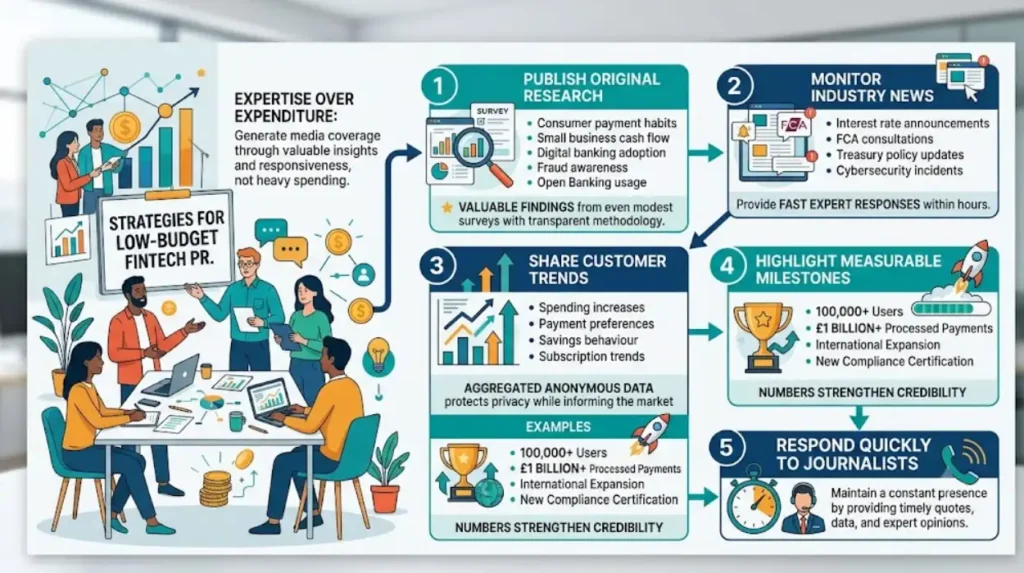
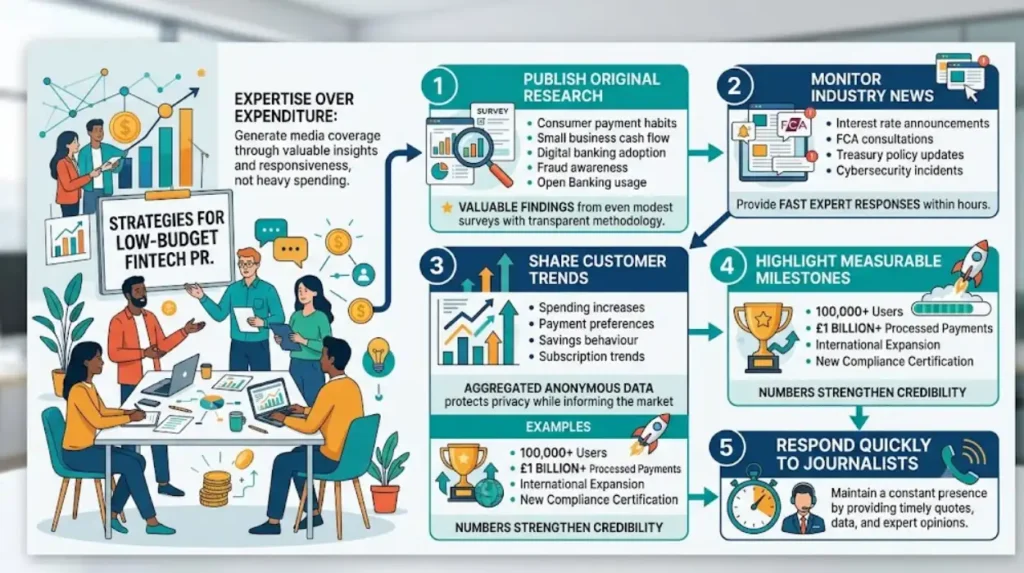
Low-budget fintech companies generate media coverage by creating original research, commenting on industry news, publishing customer insights, explaining regulation, sharing measurable milestones, and responding quickly to journalist requests throughout the year.
Many successful stories require expertise rather than significant expenditure.
Publish original research
Research remains one of the strongest media assets.
Examples include:
- Consumer payment habits
- Small business cash flow
- Digital banking adoption
- Fraud awareness
- Open Banking usage
Even modest surveys produce valuable findings when methodology remains transparent.
Monitor industry news
Breaking developments create opportunities for expert responses.
Examples include:
- Interest rate announcements
- FCA consultations
- Treasury policy updates
- Cybersecurity incidents
Journalists often publish follow-up analysis within hours.
Share customer trends
Anonymous customer behaviour provides useful editorial insights.
Examples include:
- Spending increases
- Payment preferences
- Savings behaviour
- Subscription trends
Aggregated statistics protect customer privacy while informing the market.
Highlight measurable milestones
Companies frequently overlook internal achievements.
Examples include:
- 100,000 users
- £1 billion processed payments
- International expansion
- New compliance certification
Numbers strengthen credibility.
How can founders build relationships with journalists?
Journalist relationships develop through consistent, relevant communication rather than frequent promotional emails. Founders earn trust by providing accurate information, responding quickly, respecting deadlines, and offering subject-matter expertise when relevant industry stories emerge.
Relationships grow over time.
Editors remember reliable sources.
Understand journalist interests
Every journalist covers specific topics.
Examples include:
- Fintech funding
- Banking regulation
- Payments
- Consumer finance
- Artificial intelligence
- Cybersecurity
Targeted outreach produces stronger results than mass distribution.
Respond quickly
News deadlines remain short.
Fast responses improve publication opportunities.
Executives who provide quotes within hours often appear in breaking news stories.
Provide useful information
Journalists value:
- Verified statistics
- Clear explanations
- Industry context
- Expert interpretation
Concise answers improve editorial efficiency.
Which content formats attract fintech media attention?
Several editorial content formats consistently attract media interest because they provide factual information, original evidence, or expert analysis. Different story formats suit different publication types across financial, technology, business, and national media.
Research reports
Research reports generate multiple story opportunities.
Examples include:
- Annual fraud reports
- Consumer finance surveys
- Digital payment adoption studies
Expert commentary
Subject experts explain:
- Regulatory changes
- Market trends
- Technology developments
- Consumer behaviour
This content supports reactive media opportunities.
Case studies
Case studies demonstrate measurable outcomes.
Examples include:
- SME digital transformation
- Payment efficiency improvements
- Fraud reduction initiatives
Customer permission remains essential.
Educational explainers
Journalists frequently reference clear educational content covering:
- Open Banking
- Embedded finance
- Digital identity
- Payment infrastructure
- Financial regulation
How does data improve fintech press coverage?
Reliable data strengthens credibility, supports factual reporting, and helps journalists verify claims. Quantitative evidence transforms general statements into specific news stories that readers, editors, and search engines understand more clearly.
Numbers improve reporting quality.
Compare these examples:
- “Fraud increased.”
- “Fraud reports increased by 18% during the first quarter.”
Specific figures create stronger journalism.
Useful data sources
Fintech businesses often publish:
- Transaction volumes
- Consumer surveys
- Market research
- Internal trend analysis
- Public financial datasets
Methodology should remain transparent.
Present data clearly
Simple tables, charts, and percentages improve readability.
Clear presentation helps journalists interpret findings accurately.
Readers interested in practical distribution options can continue with:
Cheap vs Premium PR Distribution.
What mistakes reduce the chances of media coverage?
Several common mistakes reduce editorial interest because they make stories appear promotional, unclear, unsupported, or irrelevant. Avoiding these errors improves media credibility and increases the likelihood of journalist engagement.
Common mistakes include:
- Promotional language
- Missing statistics
- Weak headlines
- No clear news angle
- Generic company announcements
- Poor timing
- Sending irrelevant pitches
- Ignoring journalist deadlines
Writing like an advertisement
Editorial content differs from marketing.
Journalists publish information that informs readers rather than promotional messaging.
Lacking evidence
Claims require supporting facts.
Examples include:
- Market data
- Survey findings
- Financial statistics
- Customer trends
Evidence improves credibility.
Contacting every journalist
Relevant targeting increases efficiency.
Specialist fintech reporters cover different topics from consumer finance journalists.
Explore More Expert Insights:
How Regional UK Publications Choose Which Stories to Run
What Happens to a Press Release After It Hits the Wire in the UK
How can fintech companies build long-term media visibility?
Long-term visibility comes from publishing valuable information consistently rather than pursuing isolated media appearances. Continuous research, expert commentary, educational content, and reliable communication establish sustained editorial credibility over time.
Media visibility develops through repetition.
Consistent contributors become recognised industry sources.
Maintain a publishing schedule
Useful content includes:
- Quarterly research
- Industry reports
- Regulatory explainers
- Market forecasts
- Consumer trend analysis
Regular publication creates ongoing media opportunities.
Develop recognised expertise
Companies become known for specific subjects.
Examples include:
- Digital payments
- Fraud prevention
- Lending technology
- Wealth technology
- Compliance technology
Focused expertise improves recognition.
Track successful stories
Measure:
- Publication types
- Journalist engagement
- Coverage themes
- Referral traffic
- Search visibility
Performance analysis informs future media planning.
Readers exploring implementation strategies can continue with:
UK fintech companies earn press coverage through strong evidence, relevant expertise, timely commentary, and consistent communication rather than large public relations budgets. Newsworthy stories focus on public value, measurable data, and industry relevance instead of promotional messaging.
Successful media strategies begin with understanding what journalists need: accurate information, original insights, expert analysis, and clear evidence. Research reports, customer trend analysis, regulatory commentary, and measurable business milestones all create valuable editorial opportunities.
Over time, consistent publication of credible information builds trust with journalists, increases industry visibility, and establishes fintech companies as reliable sources within the UK’s financial technology ecosystem.