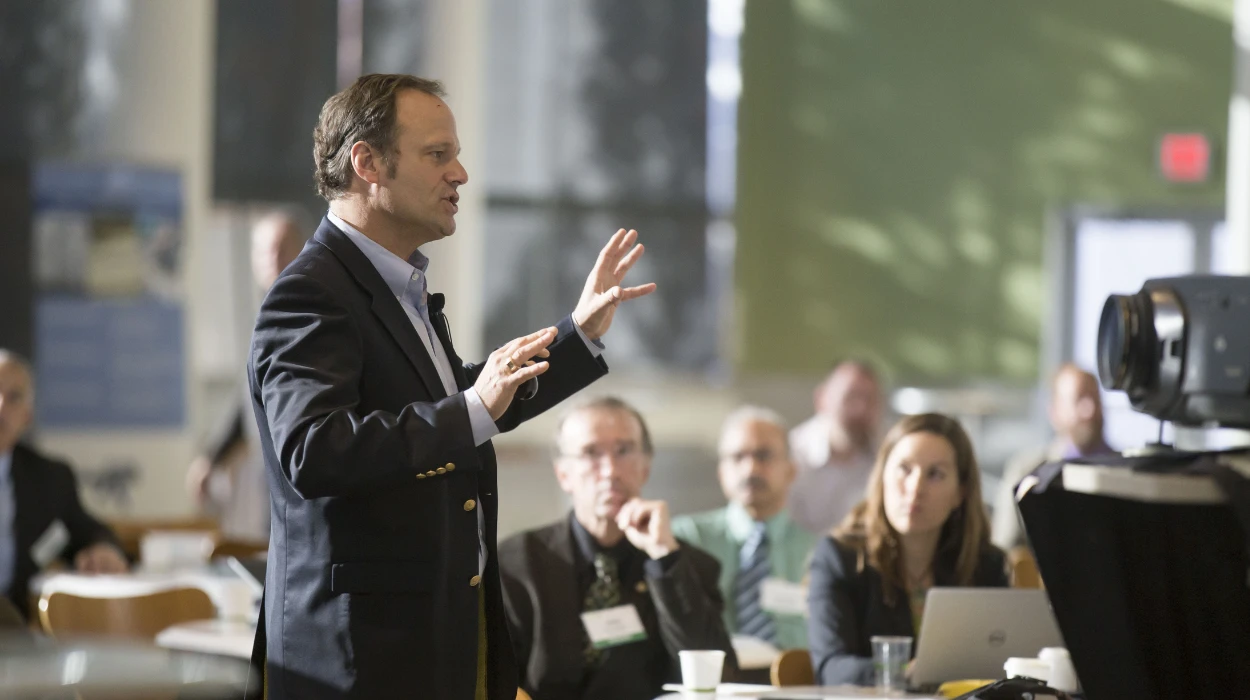
Industry events, conferences, and business summits often invest significant budgets in keynote speakers. A recognised speaker attracts attendees, sponsors, and industry attention. However, media coverage does not happen automatically. Even a well-known keynote speaker receives little or no press attention without structured media coordination.
Journalists evaluate stories based on news value, timing, relevance, evidence, and accessibility. A keynote speech alone rarely satisfies every editorial requirement. A dedicated coverage partner is the individual or team responsible for planning, coordinating, and supporting media activity before, during, and after an event. This role connects speakers, organisers, journalists, and supporting content into one organised communication process.
Understanding why media coverage succeeds or fails helps event organisers build realistic expectations and stronger communication strategies.
Why does a keynote speaker receive little or no press coverage?
A keynote speaker attracts attention inside an event, but journalists publish stories based on verified news, supporting information, timely access, and audience relevance. Without organised media coordination, even respected speakers receive limited editorial coverage across national, regional, and trade publications.
Many organisers assume a famous speaker automatically creates media interest. This assumption ignores how newsrooms operate.
Editors receive hundreds of story pitches every day. They compare each submission against editorial priorities, publication deadlines, and audience interests. A keynote announcement competes with government announcements, corporate earnings, industry research, product launches, and breaking news.
Journalists report stories, not appearances
A speaker appearing on stage is an event activity.
A story explains why the speech matters.
Examples include:
- New research released during the keynote
- Industry data presented publicly for the first time
- Major policy announcements
- Market forecasts supported by evidence
- Business partnerships announced during the event
These developments create stronger editorial value than a speaking engagement alone.
Limited access reduces reporting opportunities
Journalists often need:
- Interview opportunities
- Speaker biographies
- High-quality photographs
- Presentation summaries
- Supporting statistics
- Verified quotations
Without these materials, reporting becomes difficult within newsroom deadlines.
What is a dedicated coverage partner?

A dedicated coverage partner manages communication between event organisers, keynote speakers, journalists, photographers, and editorial teams. This role ensures accurate information reaches media contacts before, during, and after an event through organised planning and timely distribution processes.
A dedicated coverage partner is not the keynote speaker.
A dedicated coverage partner is not the event host.
The role focuses entirely on media coordination.
Core responsibilities include:
- Preparing media announcements
- Coordinating interview schedules
- Providing background information
- Managing press accreditation
- Sharing approved photographs
- Distributing supporting documents
- Monitoring publication deadlines
- Responding to journalist requests
Each responsibility removes delays that prevent journalists from completing stories.
Communication remains organised
Instead of journalists contacting multiple organisers, one central contact handles requests.
This improves response times and reduces conflicting information.
How does media coverage planning begin before an event?
Media planning begins several weeks before an event through editorial research, announcement preparation, interview scheduling, asset collection, and newsroom communication. Early preparation gives journalists enough time to evaluate stories before publication deadlines arrive and editorial calendars close.
Preparation begins long before the keynote speaker reaches the stage.
Editorial calendars matter
Many business publications plan content several weeks ahead.
Industry magazines often finalise editions one to three months before publication.
Conference announcements sent one day before an event often arrive too late.
Essential media assets include
- Speaker biography
- Professional headshots
- Session summaries
- Research findings
- Event agenda
- Organisation background
- Approved quotations
- Fact sheets
Each asset answers common newsroom questions quickly.
Media lists require relevance
Different publications cover different industries.
Examples include:
- Financial publications covering banking events
- Technology publications covering artificial intelligence conferences
- Healthcare publications covering medical innovation summits
Relevant targeting improves editorial efficiency.
Why do journalists need more than a keynote speech?
Journalists publish complete news stories supported by evidence, context, expert insight, and verified facts. A speech provides information, but supporting material transforms individual remarks into publishable reporting suitable for professional editorial standards across multiple publication types.
A speech contains opinions, explanations, predictions, and announcements.
News reporting requires verification.
Supporting information strengthens coverage
Useful supporting materials include:
- Industry reports
- Survey findings
- Economic statistics
- Government data
- Academic research
- Independent expert commentary
These sources increase factual depth.
Exclusive access increases news value
Examples include:
- One-to-one interviews
- Early report access
- Behind-the-scenes briefings
- Question-and-answer sessions
Exclusive opportunities differentiate one publication from another.
Which elements increase media interest in keynote speakers?
Media attention increases when keynote presentations contain original information, measurable evidence, recognised expertise, relevant public interest, timely announcements, and accessible supporting resources. These characteristics satisfy common editorial standards used across professional newsrooms throughout the United Kingdom.
Editors prioritise stories with clear public or industry significance.
High-value content includes
- Original research
- Market analysis
- Industry benchmarks
- Regulatory developments
- Technology demonstrations
- Economic forecasts
Each element creates additional reporting opportunities.
Timing influences visibility
Announcements linked to major industry events receive stronger attention when distributed before editorial deadlines.
News released after an event often loses relevance.
How does real-time media coordination improve event coverage?
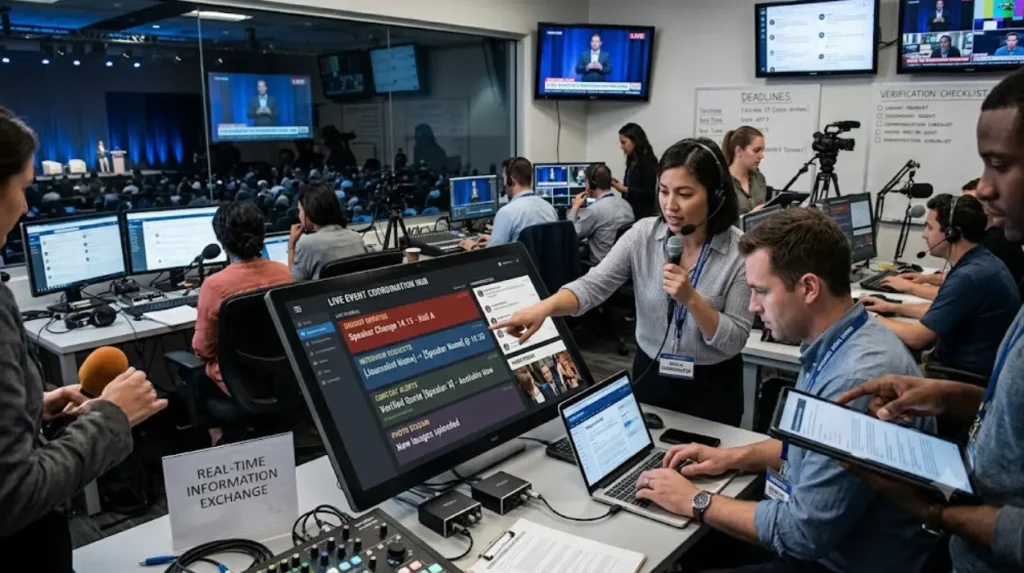
Real-time coordination supports journalists through immediate communication, interview management, content updates, image distribution, and factual verification. Fast responses help reporters meet strict publication deadlines while maintaining reporting accuracy throughout live event coverage and post-event reporting activities.
Events change quickly.
Schedules move.
Speakers finish early.
Questions arise unexpectedly.
Immediate communication prevents confusion.
Live coordination includes
- Confirming interview times
- Sharing presentation slides
- Delivering approved quotations
- Providing updated schedules
- Sending event photography
- Verifying statistics
Fast access supports accurate reporting.
Accurate information reduces corrections
Editors prefer verified information before publication.
Reliable communication lowers factual errors.
What happens after the keynote presentation ends?
Media activity continues after presentations conclude through follow-up interviews, additional data sharing, publication monitoring, and clarification requests. Post-event communication often determines whether coverage expands beyond initial event reporting into broader industry analysis and feature articles.
Coverage rarely ends when applause finishes.
Journalists continue writing after the event.
Post-event resources include
- Full speech transcripts
- Recorded presentations
- Additional statistics
- Follow-up interviews
- Presentation graphics
- Research documents
These resources support detailed reporting.
Extended coverage reaches wider audiences
Examples include:
- Industry analysis articles
- Executive interviews
- Podcast discussions
- Business newsletters
- Professional journals
Each format extends visibility beyond the conference audience.
What mistakes prevent keynote speakers from earning press coverage?
Several common planning failures reduce media interest, limit journalist access, delay communication, and weaken editorial value. Identifying these issues helps organisers improve future event planning through structured communication and stronger media preparation before every conference or business event.
Media opportunities disappear because of operational mistakes rather than speaker quality.
Common examples include:
- Late media invitations
- Missing press materials
- No interview availability
- Poor quality photographs
- Unverified statistics
- Generic announcements
- Slow responses to journalists
- Limited access to supporting experts
Each issue creates additional work for reporters.
Newsrooms often move to alternative stories instead.
Explore More Expert Insights:
From Room to Feed: How UK Event Content Travels Across 10 Platforms in 24 Hours
UK Events Industry Rebound: Why Media Coverage Is the Most Overlooked Growth Lever
How can event organisers build a stronger media strategy?
A structured media strategy combines planning, documentation, newsroom communication, expert availability, measurable information, and post-event follow-up. Organised processes create consistent opportunities for accurate reporting across national, regional, and specialist publications throughout the event lifecycle.
An effective strategy begins before event promotion starts.
Build a complete communication plan
The plan includes:
- Event announcements
- Speaker profiles
- Research summaries
- Interview schedules
- Press briefing times
- Media asset libraries
- Contact information
- Follow-up schedules
Every component supports newsroom efficiency.
Measure communication outcomes
Useful performance measures include:
- Number of journalist registrations
- Interview requests
- Published articles
- Industry publication mentions
- Broadcast appearances
- Online news coverage
Measurement identifies strengths and future improvements.
For readers exploring risk management during event communications, see:
Crisis-Proofing Your UK Event.
For readers interested in connecting media exposure with commercial reporting, see:
Tie Event Media Coverage Directly to Pipeline.
A keynote speaker contributes expertise, insight, and authority to an event. These qualities alone do not guarantee media coverage. Journalists require organised access to accurate information, supporting evidence, timely communication, and relevant news angles before publishing stories.
A dedicated coverage partner coordinates every stage of this process. Preparation begins before the event through media planning, continues during live presentations with journalist support, and extends after the event through interviews, transcripts, and additional resources. Each stage improves reporting efficiency and increases opportunities for accurate editorial coverage.
Understanding these processes helps event organisers recognise that successful media visibility depends on structured communication rather than speaker reputation alone. Consistent planning, verified information, and organised media coordination create stronger opportunities for keynote presentations to become newsworthy stories across national, regional, and trade publications.