
Influencer marketing and sponsored content connect through shared strategies that leverage audience trust and digital platforms. Influencers create sponsored content to promote brands directly to followers. This integration drives engagement rates 11 times higher than traditional display ads, according to 2024 industry reports.
Influencer marketing involves brands partnering with individuals who have large online followings to promote products or services. These partnerships use the influencer’s credibility to reach targeted audiences on social media platforms.
Influencer marketing targets specific demographics through platforms like Instagram, TikTok, and YouTube. Brands select influencers based on follower count, engagement rates, and niche alignment. Follower counts range from micro-influencers with 10,000 to 100,000 followers to macro-influencers exceeding 1 million. Engagement rates average 1.5% to 3% across platforms in the UK market.
This model relies on authentic endorsements. Influencers integrate brand messages into their regular content streams. UK regulations from the Advertising Standards Authority require clear disclosure labels like #ad or #sponsored. These labels ensure transparency and maintain consumer trust.
Key Platforms for Influencer Marketing in the UK
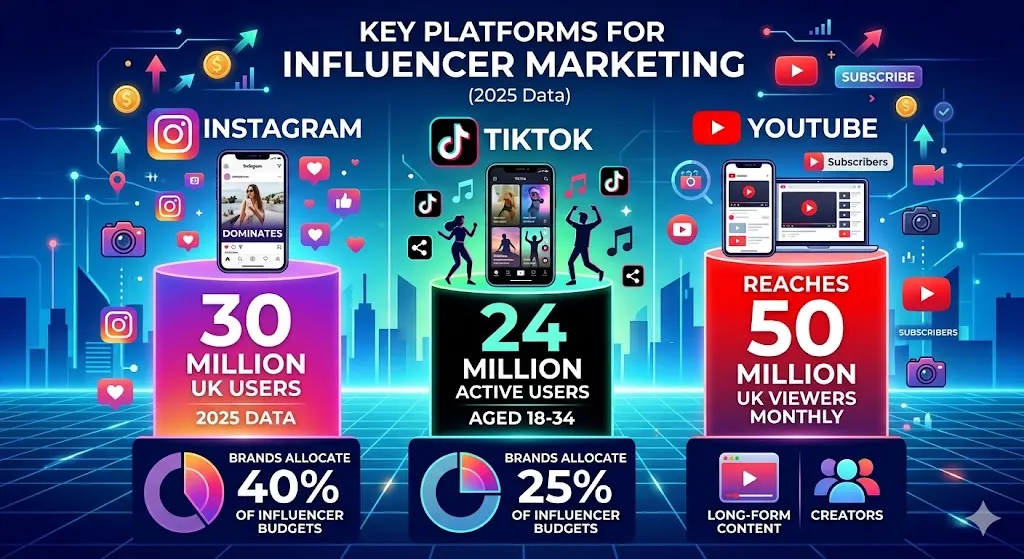
Instagram dominates with 30 million UK users in 2025. TikTok follows with 24 million active users aged 18-34. YouTube reaches 50 million UK viewers monthly. Brands allocate 40% of influencer budgets to Instagram and 25% to TikTok.
What Is Sponsored Content?
Sponsored content consists of paid articles, videos, or posts created by brands or third parties to promote products. Publishers or influencers produce this content and label it as sponsored to comply with advertising rules.
Sponsored content appears on websites, social media, and newsletters. Brands pay for native formats that blend with editorial content. In the UK, 62% of consumers prefer sponsored posts over banner ads, per 2025 Statista data. Formats include blog posts, Instagram Reels, and YouTube videos.
Disclosure remains mandatory under Competition and Markets Authority guidelines. Labels appear at the top of posts or in video descriptions. This practice prevents deception and builds long-term audience loyalty.
Common Formats of Sponsored Content
Blog articles average 800-1,200 words with embedded product links. Video content lasts 15-60 seconds on short-form platforms. Carousel posts on Instagram feature 5-10 slides with product details. Email newsletters integrate sponsored sections in 20% of sends.
How Do Influencer Marketing and Sponsored Content Overlap?
Influencer marketing overlaps with sponsored content when influencers produce paid promotional material for brands. This overlap creates hybrid campaigns where influencers act as content creators under sponsorship agreements.
Influencers generate 70% of sponsored content in social media campaigns. Brands provide product samples, scripts, or full briefs. The resulting posts count as sponsored content due to payment involvement. UK campaigns disclose these partnerships in 95% of cases to meet ASA standards.
This overlap streamlines production. Influencers handle creation, distribution, and audience interaction. Brands track performance via unique discount codes and affiliate links, achieving conversion rates of 2.5% on average.
Why Do Brands Use Influencer Marketing for Sponsored Content?
Brands use influencer marketing for sponsored content to access trusted voices and achieve higher engagement. Influencers deliver authentic promotions that convert at rates 5-10 times above traditional ads.
Trust forms the core connection. UK consumers trust influencer recommendations 4.5 times more than celebrity endorsements. Sponsored content from influencers garners 3.2% click-through rates versus 0.3% for display ads. Brands invest £1.4 billion annually in UK influencer campaigns.
Scalability drives adoption. Micro-influencers cost £500-£2,000 per post, while macros charge £10,000+. Campaigns reach 1-5 million impressions per influencer. Metrics like reach, views, and shares guide ROI calculations.
Metrics That Link the Two Strategies
Engagement rate measures likes, comments, and shares per post. Reach tracks unique viewers. Conversion rate calculates sales from tracked links. Brands set benchmarks at 2% engagement and 1.5% conversion for UK audiences.
What Defines the Process of Creating Sponsored Content with Influencers?
The process starts with brand selection of influencers, followed by briefing, content creation, review, posting, and performance tracking. This sequence ensures compliant and effective sponsored content.
Brands use tools like Aspire or Upfluence to identify influencers. Selection criteria include 2-5% engagement and audience demographics matching 80% of target market. Briefs outline key messages, hashtags, and disclosure requirements.
Content creation takes 3-7 days. Influencers draft posts, shoot videos, or write captions. Brands review for brand alignment and legal compliance. Posting occurs during peak audience times, such as 7-9 PM weekdays in the UK.
Steps in Influencer Sponsored Content Campaigns
- Research and select 5-10 influencers per niche.
- Send contracts with payment terms, typically 50% upfront.
- Provide assets like product images and talking points.
- Approve final content within 48 hours.
- Monitor live performance for 30 days post-publish.
What Are the Core Components of Influencer-Sponsored Campaigns?
Core components include influencer contracts, content briefs, disclosure labels, tracking links, and performance reports. These elements ensure transparency and measurable results.
Contracts specify deliverables, payment of £1,000-£20,000 per campaign, and usage rights. Briefs detail 3-5 key product benefits and call-to-action phrases. Disclosure labels use #ad in the first three words of captions.
Tracking links employ UTM parameters for analytics. Reports compile data on 10,000-500,000 impressions and 500-5,000 engagements.
Breakdown of Campaign Budget Allocation
40% goes to influencer fees. 20% covers content production. 15% funds promotion boosts. 25% supports tracking tools and reporting.
For deeper insights into influencer responsibilities in these campaigns, How Responsible Are Influencers When Promoting Paid Sponsored Content Campaigns Online?.
What Benefits Do These Connections Provide to Brands?
Connections provide authentic reach, higher engagement, precise targeting, and cost efficiency. UK brands report 12% sales uplift from integrated campaigns.
Authentic reach extends to 18-34-year-olds, who comprise 60% of influencer audiences. Engagement averages 50-200 interactions per 10,000 followers. Targeting matches 90% audience overlap with brand buyers.
Costs average £0.05-£0.20 per impression, below £0.50 for TV ads. ROI reaches 5:1 in successful UK campaigns.
What Real-World Use Cases Show This Connection?
Use cases include fashion brands partnering with style influencers for Instagram Reels, beauty lines using YouTube tutorials, and tech firms leveraging review videos on TikTok.
Fashion campaigns feature 10 influencers posting coordinated sponsored outfits. Each Reel garners 50,000 views and 2,000 likes. Beauty tutorials demonstrate products in 60-second videos, driving 15% traffic to e-commerce sites.
Tech reviews cover gadget unboxings with affiliate links. Campaigns span 20 influencers, generating 1 million impressions and £50,000 in tracked sales.
Fashion Industry Example Details
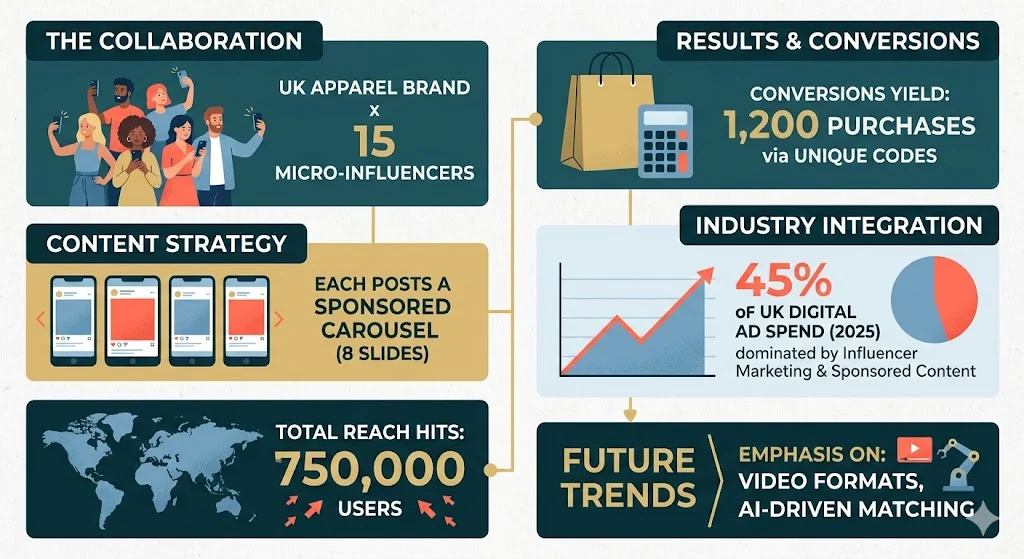
A UK apparel brand collaborates with 15 micro-influencers. Each posts a sponsored carousel of 8 slides. Total reach hits 750,000 users. Conversions yield 1,200 purchases via unique codes.
If you’re considering alternatives to influencer risks, explore Partner With Trusted Publishers Instead of Risky Influencer Sponsored Campaigns Today.
Influencer marketing and sponsored content integrate through structured processes and shared metrics. This connection dominates 45% of UK digital ad spend in 2025. Future trends emphasize video formats and AI-driven matching.