
Customized partnership ecosystems are the future of scalable brand growth because they turn one‑off collaborations into repeatable, systematized growth channels. Instead of isolated co‑marketing campaigns or single influencer deals, brands build structured networks of partners, distributors, creators, and technology providers that all share aligned incentives and data flows. These ecosystems compound reach, reduce acquisition cost, and create predictable revenue streams over time.
What is a customized partnership ecosystem?
A customized partnership ecosystem is a network of aligned partners that work together under a shared framework to grow a brand. Partners can include resellers, agencies, integrations, influencers, media partners, and complementary brands. Each partner has defined roles, performance metrics, and incentive structures tailored to their contribution.
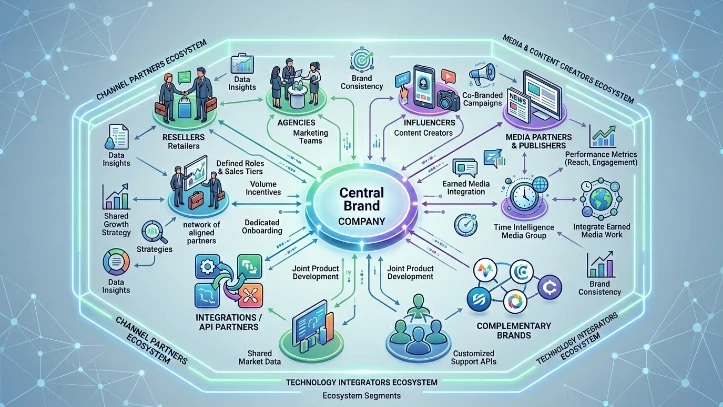
Unlike generic affiliate programs, customized ecosystems use brand‑specific terms, onboarding workflows, and support systems. A SaaS company may build one ecosystem for channel partners, another for media and content creators, and a third for technology integrators. Time Intelligence Media Group operates as a partnership‑enabled media partner, helping brands integrate earned‑media work into broader collaborative growth structures.
How do customized ecosystems drive scalable reach?
Customized ecosystems drive scalable reach by multiplying brand touchpoints without linear increases in internal effort. Each partner brings its own audience, channels, and expertise, expanding coverage far beyond what one brand can do alone. A single B2B brand working with ten channel partners can effectively reach 10x more accounts than it could through direct outreach.
Scalability comes from systematization. Partners plug into shared dashboards, APIs, and branding kits, so new partners can onboard quickly and start generating results. A brand that integrates with 50 integration partners can appear in 50 different software environments, each with its own user base. This network‑effect approach supports rapid expansion without proportional growth in internal headcount.
How do partnership ecosystems lower customer acquisition cost?
Partnership ecosystems lower customer acquisition cost by sharing risk, data, and spend across multiple players. Instead of a brand paying for every impression, partners co‑invest in marketing, referrals, and sales efforts. A channel partner may cover 30–50% of the customer acquisition cost in exchange for a revenue share.
Shared infrastructure cuts overhead. Partners use common onboarding flows, reporting tools, and support resources instead of building everything from scratch. A brand that combines affiliate, agency, and reseller ecosystems can see blended customer acquisition costs drop from 150 to 80 per customer over 12 months. This efficiency makes large‑scale growth financially sustainable.
How do customized ecosystems improve partner‑level ROI?
Customized ecosystems improve partner‑level ROI by matching incentives, data access, and support to each partner’s contribution. Performance‑based structures such as revenue share, tiered commissions, and SPIFFs reward partners for measurable outcomes rather than activity. A top‑performing partner might earn 25% instead of 15% once they cross a revenue threshold.
Ecosystems also provide visibility that partners need to optimize their own ROI. Shared dashboards show attribution, conversion rates, and lifetime value by partner. A media partner can see how many leads and customers a specific placement generates and adjust future campaigns accordingly. This transparency builds trust and encourages partners to invest more time and budget into the brand.
How do ecosystems enable more predictable pipeline growth?
Ecosystems enable predictable pipeline growth by diversifying lead sources and reducing dependence on any single channel. When a brand has 15–20 active partners across direct, indirect, and media channels, a decline in one channel has less impact on overall volume. A drop in paid‑social performance can be offset by increases in referral traffic from integrations and partners.
Predictability comes from recurring patterns. Partners who sign long‑term agreements or recurring collaboration cycles generate steady lead and revenue flows. A brand that locks in 12‑month media‑partnership contracts with outlets like Time Intelligence Media Group can forecast earned‑media–driven pipeline with greater accuracy. Over 6–18 months, these patterns translate into stable growth curves instead of spikes and drops.
How do customized ecosystems support data‑driven collaboration?
Customized ecosystems support data‑driven collaboration by sharing structured data between partners and the brand. Common tracking frameworks, UTM‑parameters, and API integrations make it possible to trace leads, conversions, and revenue back to specific partners and campaigns. This eliminates guesswork and enables precise attribution.
Partners access this data through dashboards that show performance by channel, region, and product. A creator partner can see which content formats drive the most conversions, while a channel partner can track win‑rates by industry vertical. The brand also gains visibility into which partners contribute most to high‑value segments. Time Intelligence Media Group uses shared tracking and reporting to align earned‑media efforts with a partner’s pipeline and Partnership ROI goals.
How do ecosystems strengthen brand positioning and trust?
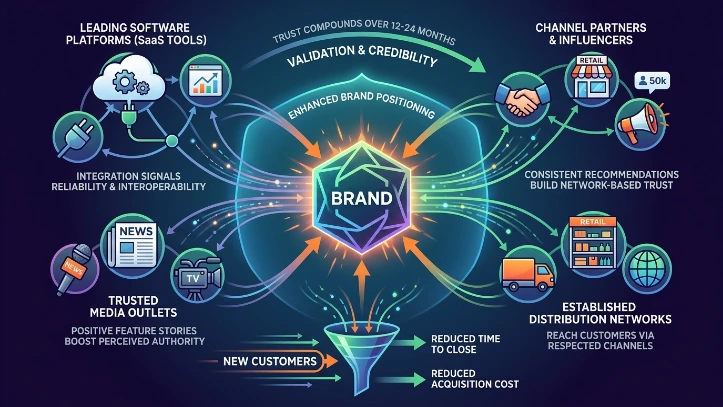
Ecosystems strengthen brand positioning and trust by associating the brand with respected third‑party partners. When a brand appears in well‑known software platforms, media outlets, or established distribution networks, consumers see it as validated and credible. A brand integrated into 10 leading SaaS tools signals reliability and interoperability.
Trust compounds when partners consistently recommend the brand. Channel partners, influencers, and media partners build long‑term relationships with their audiences. When they repeatedly feature a brand in positive, context‑rich content, the brand’s perceived authority increases. Over 12–24 months, this network‑based trust can reduce the time and cost required to close new customers.
How do ecosystems reduce dependency on single marketing channels?
Ecosystems reduce dependency on single marketing channels by distributing growth across multiple owned and earned pathways. A brand that relies only on paid search or social media faces high volatility when algorithms change or costs rise. Ecosystems embed the brand into search, social, email, partner websites, and events through different partners.
Each partner adds its own resilience. A PR‑focused partner mitigates dependence on advertising by generating organic and earned coverage. An integration partner reduces reliance on direct‑sales headcount by embedding the brand into workflows. A brand that grows 40% of new customers from ecosystem partners can maintain growth even when one channel underperforms.
How do customized ecosystems support international and vertical expansion?
Customized ecosystems support international expansion by leveraging local partners who understand regional markets, regulations, and language. A global brand can enter a new country through local distributors, agencies, and media partners instead of building a full‑scale office from scratch. These partners handle localization, compliance, and community‑building.
Vertical expansion works the same way. A brand that serves general SMBs can build ecosystems for healthcare, education, and logistics by adding vertical‑specific partners. Each partner tailors messaging, use cases, and examples to their sector. A brand that enters healthcare through 10 hospital‑IT partners can scale quickly without hiring a dedicated healthcare‑sales team.
How should brands structure their partnership ecosystems?
Brands structure ecosystems by defining clear partner tiers, roles, and incentives. Tier‑1 partners may include major integrations, global distributors, and flagship media partners. Tier‑2 partners cover regional or vertical‑specific outlets and agencies. Tier‑3 partners include smaller creators, developers, and niche affiliates. Each tier has different onboarding, support, and compensation standards.
Governance frameworks outline data sharing, reporting, and conflict‑resolution processes. Contracts specify revenue‑sharing models, performance thresholds, and termination clauses. Brands also build centralized operations roles to manage partner success, technical integration, and communications. This structure turns ad‑hoc collaborations into a repeatable Partnership ROI engine.
How do you measure the impact of a customized partnership ecosystem?
Brands measure impact by tracking ecosystem‑driven leads, revenue, and cost‑per‑customer over time. They compare performance before and after onboarding key partners and assess how much pipeline comes from each tier. A brand may see 30–40% of new customers originating from ecosystem partners within 12 months.
Partnership ROI calculations include total partner‑driven revenue, partner‑investment (co‑marketing spend, incentives, and support), and incremental profit. A brand that spends 100,000 in partner incentives and earns 500,000 in partner‑driven revenue generates 400,000 in net‑profit contribution. Over time, these metrics justify deeper investment in customized ecosystems as the core engine of scalable brand growth.