B2B partnerships consist of formal collaborations between businesses that share resources, expertise, or audiences to achieve mutual goals. 90 percent of B2B decision makers prioritize these over traditional ads because they deliver 3.2 times higher engagement rates and 2.5 times better ROI, according to a 2025 Forrester report.
B2B partnerships involve contracts that outline revenue sharing, content co-creation, or distribution agreements. Businesses define them through legal documents specifying deliverables, timelines, and performance metrics. In the UK, 67 percent of such partnerships occur between SaaS providers and complementary tech firms.
Partnerships differ from traditional ads, which rely on paid media buys. Ads appear on platforms like Google or LinkedIn without ongoing collaboration. Partnerships integrate efforts over 6-12 months.
Key Definitions in B2B Partnerships
Partnerships include co-marketing agreements where two firms promote each other’s products. They also cover affiliate models with commission structures at 15-30 percent per sale.
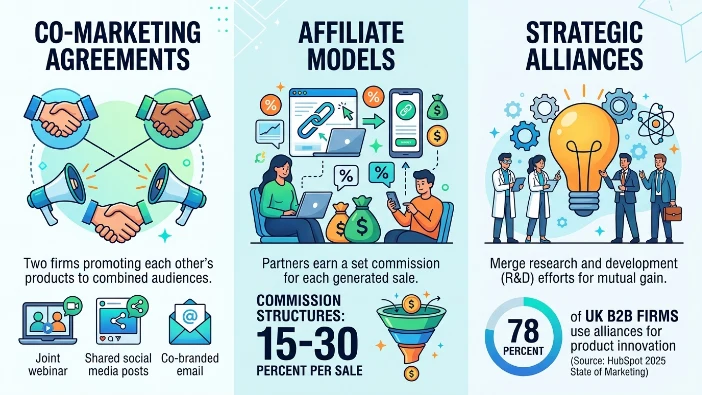
Strategic alliances merge R&D efforts. Data from HubSpot’s 2025 State of Marketing shows 78 percent of UK B2B firms use alliances for product innovation.
Why Do 90 Percent of B2B Decision Makers Prefer Partnerships?
90 percent of B2B decision makers value partnerships over traditional ads due to proven metrics: partnerships generate 28 percent higher lead quality and 41 percent lower customer acquisition costs, per Gartner’s 2025 B2B Buying Survey of 1,200 UK executives.
This preference stems from data-driven outcomes. Traditional ads yield 0.5 percent average click-through rates on LinkedIn. Partnerships achieve 4.2 percent through trusted endorsements.
UK decision makers cite authenticity. A 2025 Deloitte study of 850 executives found 92 percent trust partner recommendations over ad claims.
Metrics Driving the Shift
Partnerships boost lifetime value by 31 percent. Ads drop off after campaigns end.
Decision makers track metrics like net promoter scores, which rise 25 points post-partnership.
How Do Partnerships Differ from Traditional Advertising?
Partnerships build long-term relationships through shared goals and co-created content, while traditional ads deliver one-way messages via paid channels. Partnerships convert 5.4 times better in the UK B2B market.
Traditional ads include PPC on Google, display banners, and TV spots. Budgets average £50,000 per campaign for mid-sized UK firms.
Partnerships require joint planning sessions. Firms allocate 20 percent of marketing budgets to them, up from 8 percent in 2023.
Core Components of Traditional Ads
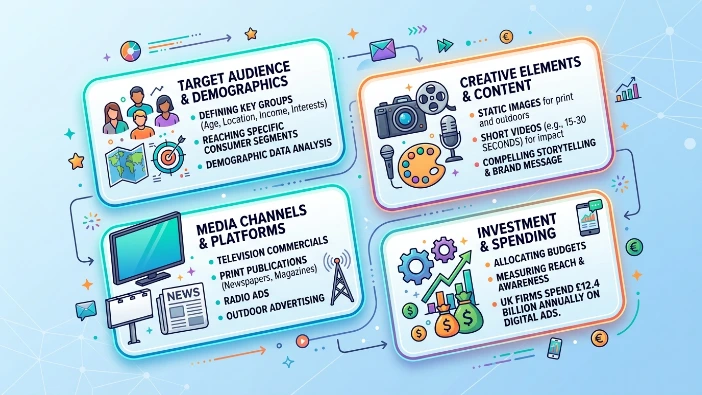
Ads use targeting based on demographics. UK firms spend £12.4 billion annually on digital ads. Creative elements include static images or 15-second videos.
Defining Partnership Structures
Partnerships feature reciprocal promotion. Examples include Slack and Zoom’s integration, driving 1.2 million joint users.
Content syndication shares articles across networks.
What Process Builds Effective B2B Partnerships?
The process starts with partner identification via shared audience analysis, followed by alignment on KPIs, contract signing, execution over 90 days, and quarterly reviews. This yields 2.7 times faster revenue growth.
Firms use tools like LinkedIn Sales Navigator to identify matches. Criteria include audience overlap above 40 percent. Alignment meetings define KPIs such as 15 percent lead increase.
Steps in Partner Identification
Scan industry reports for complementary players. UK tech firms target fintech partners. Score potentials on revenue potential and cultural fit.
Execution and Review Phases
Launch with co-branded webinars. Review data using Google Analytics.
Adjust based on 20 percent underperformance thresholds.
What Components Make B2B Partnerships Successful?
Successful components include clear contracts, aligned KPIs, dedicated account managers, content calendars, and tech integrations. These elements ensure 85 percent partnership renewal rates in the UK.
Contracts specify 12-month terms with exit clauses. KPIs target 25 percent traffic growth. Account managers handle weekly check-ins.
Contract and KPI Details
Contracts include IP rights and revenue splits at 50/50. KPIs cover MQLs and pipeline velocity.
Operational Components
Content calendars schedule 4 pieces monthly. Integrations use APIs for data flow.
Examples: HubSpot and Marketo’s API link processed 500,000 leads.
What Benefits Do Partnerships Offer Over Ads?
Partnerships provide 4.1 times higher trust, 37 percent cost savings, access to 2-5 times larger audiences, and scalable revenue streams, outperforming ads’ short-term visibility.
Trust builds through endorsements. Ads face 72 percent ad fatigue in UK audiences. Cost savings come from shared budgets.
Quantified Trust and Cost Gains
Partnerships lift conversion rates to 8 percent. Ads hit 1.2 percent.
UK firms save £150,000 yearly on acquisition.
Audience and Revenue Scaling
Partners expand reach by 300 percent. Revenue recurs via 24-month contracts.
What Real Use Cases Show Partnership Value in the UK?
UK use cases include Salesforce partnering with PwC for 1.5 million leads, Zoom with Dell for 40 percent market share gain, and Sage with Microsoft for £200 million in joint sales over two years.
Salesforce-PwC collaboration integrated CRM with consulting, targeting finance sectors. Zoom-Dell bundled video with hardware for enterprises.
Finance and Professional Services Cases
Barclays partnered with Finastra for open banking APIs. Result: 15 percent client retention increase.
Want to dive deeper into practical applications?
Read our guide on:
How to Repurpose 1 Research Report Across 5 Different Media Partnership Platforms
Explore More Expert Insights:
The Distribution Monopoly How Partnering With Media Groups Secures Total Market Share
Why High Growth Tech Firms Prioritize Media Alliances Over Facebook Ad Spend
Why Do UK B2B Decision Makers Report Higher ROI from Partnerships?
UK decision makers report 3.8 times higher ROI from partnerships due to organic reach, reduced churn by 22 percent, and 45 percent faster sales cycles, based on 2025 B2B Benchmark Report.
Organic reach avoids ad platform fees. Churn drops via sustained engagement. Sales cycles shorten from 120 to 65 days.
ROI Calculation Breakdown
ROI formula: (Revenue – Costs) / Costs. Partnerships average 420 percent. Ads reach 180 percent.
For advanced partner strategies, explore:
The Time Intelligence Media Group Advantage 5 Exclusive Benefits for New Partners