
Sponsored content delivers paid promotional messages through trusted publishers. Organic marketing strategies build visibility via unpaid search results, social shares, and content distribution. Brands select sponsored content when they need immediate reach and credibility. Organic strategies suit long-term audience building. This article compares both for UK brands targeting middle-funnel growth.
What Is Sponsored Content?
Sponsored content consists of paid articles, videos, or posts published on third-party platforms that promote a brand while blending with editorial content. Publishers label it clearly as sponsored. Brands use it to reach targeted audiences quickly through established media outlets.
Sponsored content appears on news sites, blogs, and social platforms. Publishers integrate it seamlessly into their content feeds. For example, a fashion brand partners with a UK lifestyle magazine to feature a product review. The article includes native ads that match the site’s style. Readers engage 52% more with sponsored posts than display ads, according to a 2023 Nielsen study.
This format leverages publisher trust. UK brands access audiences on platforms like The Guardian or BBC partners. Sponsored pieces rank higher in search results due to domain authority. They drive 20-30% higher click-through rates compared to banners.
Key Elements of Sponsored Content
Sponsored content requires clear disclosure under UK Advertising Standards Authority rules. Elements include branded messaging, calls-to-action, and tracking pixels. Contracts specify placement, audience demographics, and performance metrics.
Publishers handle production or brands supply assets. Distribution occurs via email newsletters, homepages, and social amplification. UK examples include sponsored sections on Mail Online reaching 15 million monthly users.
What Are Organic Marketing Strategies?
Organic marketing strategies generate traffic through unpaid channels like SEO, content marketing, social media posts, and email newsletters. They rely on quality content to attract and retain audiences over time without direct payment for placement.
Organic strategies build on search engine optimization. Brands create blog posts targeting keywords like “best running shoes UK.” Google indexes these, driving steady traffic. Social platforms amplify shares from followers.
UK brands invest 6-12 months to see results. A study by HubSpot in 2024 shows organic traffic converts 14.6% better than paid. Strategies include guest posting on industry sites and community engagement on LinkedIn.
Core Components of Organic Marketing
Components cover keyword research, on-page SEO, and backlink building. Tools like Google Analytics track performance. Content calendars ensure consistent publishing, with 2-4 posts weekly.
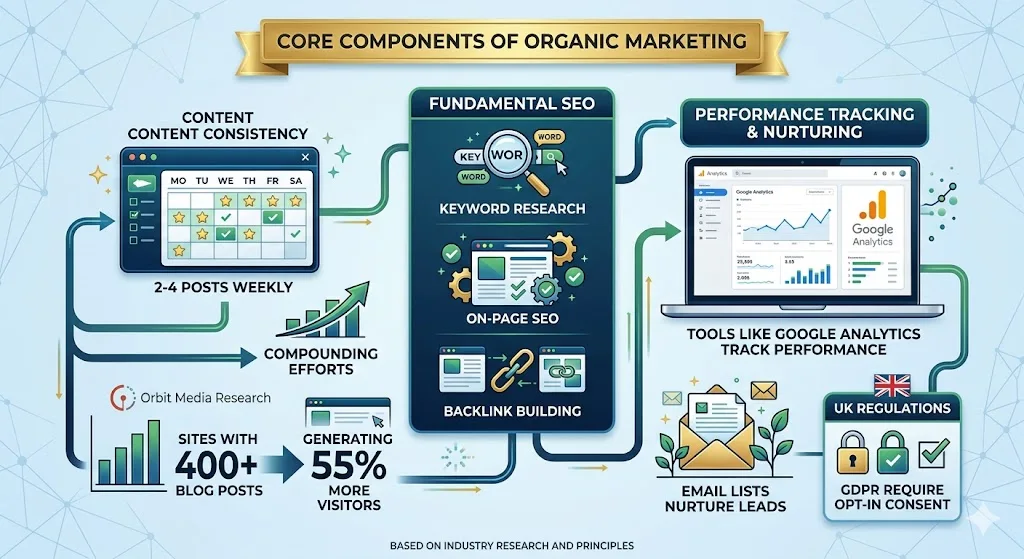
Email lists nurture leads. UK regulations under GDPR require opt-in consent. Organic efforts compound; sites with 400+ blog posts generate 55% more visitors, per Orbit Media research.
How Does Sponsored Content Differ from Organic Strategies?
Sponsored content provides instant visibility on high-authority sites, while organic strategies develop gradually through algorithm rankings and shares. Sponsored delivers 3-5x faster reach but requires budget; organic scales with time and effort.
Sponsored content guarantees placement. Publishers promote it to their full audience. Organic depends on search algorithms and user behavior. Google updates like Helpful Content favor in-depth resources.
In the UK, sponsored campaigns on platforms like Evening Standard yield 1 million impressions in days. Organic posts on brand blogs take weeks to rank. Sponsored costs £5,000-£50,000 per campaign; organic relies on internal resources.
For deeper insights on engagement differences, read our TOFU article: Is Sponsored Content More Valuable Than Organic Content for Audience Engagement Today?.
Placement and Speed Comparison
Sponsored secures prime spots like homepage features. Organic fights for positions 1-10 in SERPs. Sponsored launches in 24-48 hours post-approval. Organic builds over 90 days.
Metrics differ: sponsored tracks views and clicks directly. Organic measures dwell time and bounce rates for ranking signals.
When Do Sponsored Campaigns Outperform Organic Efforts?
Brands choose sponsored content over organic when launching new products, entering competitive markets, or needing rapid awareness. Organic excels for sustained loyalty in niche sectors. Switch to sponsored for 2-4x reach acceleration.
New UK brands use sponsored to bypass slow organic ramps. A tech startup places content on TechRadar for 500,000 views in week one. Organic would take months.
Competitive markets like e-commerce favor sponsored. With 2.5 billion Google searches daily, paid boosts cut through noise. Organic suits evergreen topics like “UK tax guides.”
Metrics Signaling the Switch
Switch when organic growth plateaus below 10% monthly. Sponsored boosts qualified leads by 25%, per 2024 Marketing Week data. Use when ROI targets exceed 3:1 within 30 days.
For brands seeking fast growth, explore Why Sponsored Content Services Outperform Organic Reach for Fast Brand Growth.
What Are the Costs Involved in Each Approach?
Sponsored content costs £10,000-£100,000 per campaign based on publisher reach; organic strategies average £5,000-£20,000 yearly for content and tools. Sponsored yields quicker ROI; organic lowers long-term expenses.
UK publishers charge by CPM, starting at £20 per 1,000 impressions. Production adds £2,000-£10,000. Organic includes writer fees at £0.10-£0.20 per word and SEO tools at £100 monthly.
Sponsored campaigns run 7-30 days. Organic demands ongoing investment; 70% of marketers allocate 40% budgets here, says SEMrush 2025 report.
Budget Breakdowns
Sponsored: 60% media buy, 30% creative, 10% optimization. Organic: 50% content creation, 30% promotion, 20% analytics. Scale sponsored for events; organic for year-round.
What Benefits Does Sponsored Content Offer UK Brands?
Sponsored content builds instant credibility on trusted sites, drives 40% higher trust scores, and targets precise demographics. Organic fosters loyalty but lacks speed. Sponsored suits middle-funnel conversion pushes.
UK audiences trust native ads 4x more than banners, per Sharethrough. Sponsored reaches 18-35 urban professionals via GQ UK. It amplifies SEO; backlinks from sponsored posts boost domain ratings by 15 points.
Trust and Reach Advantages
Publisher endorsement signals quality. Reach expands to non-followers. UK data shows 28% purchase intent lift post-exposure.
What Benefits Do Organic Strategies Provide?
Organic strategies create evergreen assets generating passive traffic for years, with 53% lower costs per lead long-term. They build authentic communities. Use for brand authority over time.
Organic content ranks indefinitely. A 2022 Backlinko study found top results get 27.6% clicks. UK brands like ASOS drive millions via blogs. Community forms through comments and shares, increasing retention by 30%.
Long-Term Value
Organic compounds; year-two traffic doubles. Low churn as audiences self-select.
What Use Cases Favor Sponsored Content?
Choose sponsored for product launches, crisis recovery, or seasonal peaks. Examples include holiday campaigns hitting 10 million UK impressions. Organic fits ongoing education.
Launches need buzz; sponsored on Metro UK covers national audiences. Crises use it for positive narratives.
Seasonal: Black Friday sponsored drives 15% sales uplift.
What Use Cases Suit Organic Marketing?
Organic excels for thought leadership, customer retention, and local SEO. UK brands use blogs for 20% repeat traffic growth. Thought leadership via whitepapers. Retention through newsletters. Local via Google My Business.
How Do You Measure Success for Both?
Track sponsored with impressions, CTR (2-5%), and conversions; organic with rankings, traffic (20% YoY growth), and engagement. Tools like Google Analytics unify data.
Sponsored ROAS averages 4:1. Organic lifetime value hits £500 per lead.
Key Performance Indicators
Sponsored: attribution to sales. Organic: organic share of voice at 40%.
When Should UK Brands Prioritize Sponsored Over Organic?
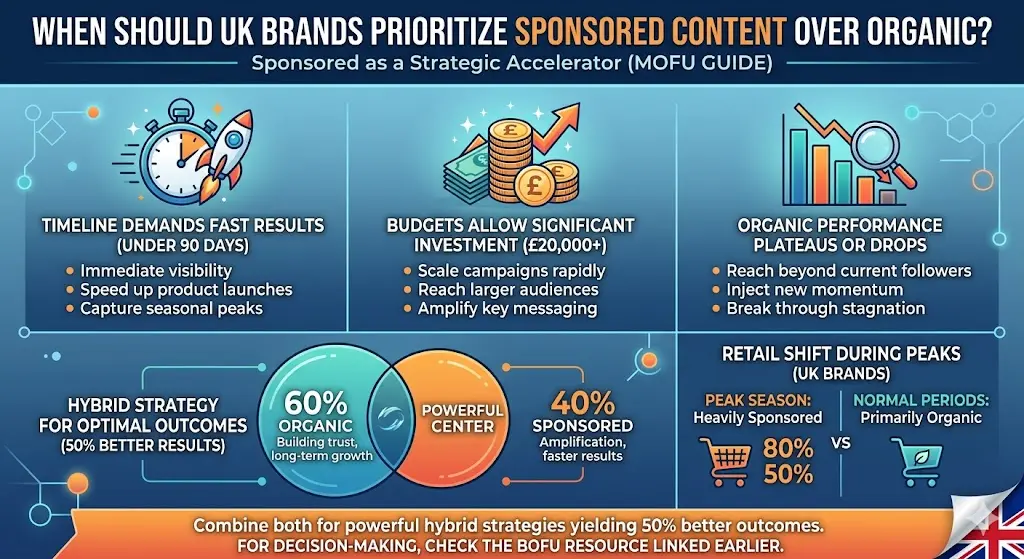
Prioritize sponsored content when timelines demand results under 90 days, budgets allow £20,000+, or organic plateaus. Combine both for hybrid strategies yielding 50% better outcomes.
UK brands in retail shift during peaks. Hybrid allocates 60% organic, 40% sponsored. This MOFU guide positions sponsored as a strategic accelerator. For decision-making, check the BOFU resource linked earlier.