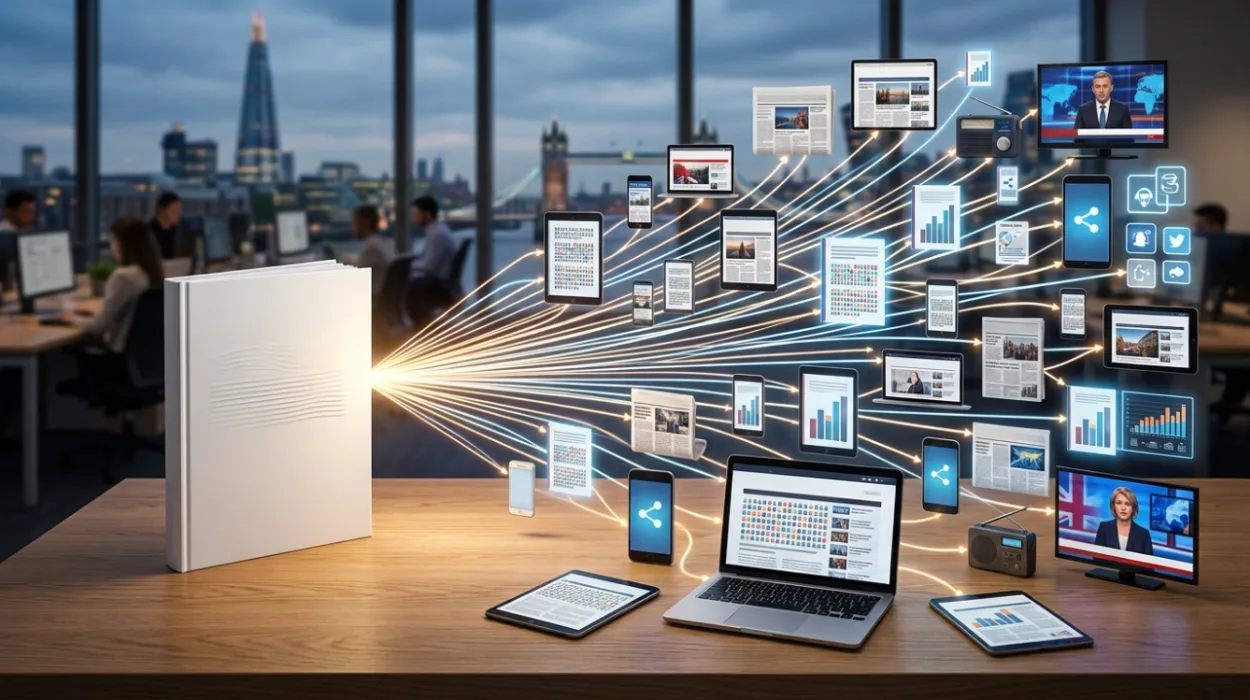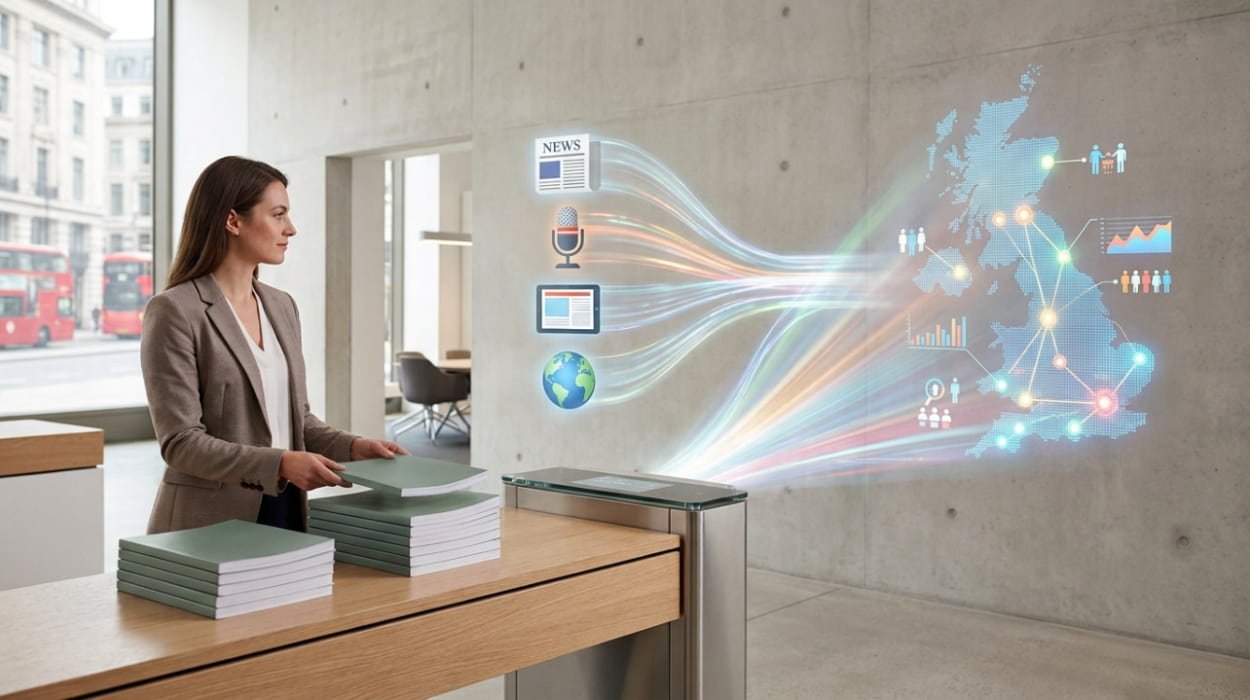
Banner advertising started in 1994 with the first web banner on HotWired.com. It evolved from static images to dynamic, data-driven formats using HTML5, programmatic buying, and AI targeting by 2026.
Banner advertising traces its roots to the early days of the World Wide Web. Developers created the first clickable banner on October 27, 1994, when HotWired published a 468×60 pixel ad for AT&T. This ad featured the text “Have you ever clicked your mouse right HERE? YOU WILL.” It achieved a 44% click-through rate, setting the standard for digital display ads. The format used GIF images embedded in HTML pages, marking the birth of online visual advertising.
Early banners relied on simple image files loaded via web browsers. Publishers placed them at the top or bottom of pages to mimic print ads. By 1995, major sites like Yahoo and Pathfinder adopted banners, generating millions in revenue. The Internet Advertising Bureau formed in 1996 to standardize sizes such as 468×60 (leaderboard) and 120×240 (skyscraper). These developments established banner ads as a core revenue stream for websites.
What Defined the Early Years of Banner Advertising?
Early banner advertising from 1994 to 2000 featured static GIF images with basic hyperlinks. Advertisers measured success through click-through rates, peaking at 44% for the first ad, before “banner blindness” reduced engagement to under 1%.
The period from 1994 to 2000 focused on basic technology. Banners loaded as raster images in formats like GIF and JPEG. They linked to advertiser landing pages upon clicks. HotWired’s AT&T banner set the 468×60 pixel standard, used across portals. By 1996, 36% of web users interacted with banners, according to Nielsen data.
Publishers integrated banners into page layouts using HTML tables. Ad servers like DoubleClick, launched in 1996, tracked impressions and clicks in real-time. Revenue grew from $100 million in 1995 to $1.2 billion in 1999, per IAB reports. However, repetitive exposure led to banner blindness, where users ignored ads, dropping CTRs to 0.5% by 2000.
How Did Static Banners Function Technically?
Static banners embedded directly into HTML code with the <img> tag and an onclick event. They displayed fixed content without user interaction beyond clicking. File sizes stayed under 15KB to ensure fast loading on 28.8K dial-up modems. Advertisers alternated creative versions to combat fatigue.
Tracking occurred server-side. When users clicked, the ad server logged data including IP address, timestamp, and referrer URL. This data informed rotation algorithms, showing different banners to repeat visitors. Early tools like FocaMail handled these tasks for small networks.
What Challenges Did Early Banners Face?
Bandwidth limitations restricted creativity. Pages with multiple banners loaded slowly, frustrating users on slow connections. Fraud emerged with fake clicks from automated scripts. Standardization efforts by the IAB defined 12 core sizes by 1998, but non-compliance persisted.
User experience suffered from intrusive placements. Pop-up banners appeared in 1997, increasing annoyance. Publishers responded with interstitials, full-page ads between transitions, but backlash grew. These issues prompted evolution toward less disruptive formats.
How Did Banner Advertising Transition to the Interactive Era?
Banner advertising shifted to interactive formats in 2001 with Flash animations enabling motion and user engagement. Rich media banners incorporated videos and forms, boosting engagement rates to 5-10% by 2005.
The early 2000s introduced Macromedia Flash, replacing static GIFs. Flash banners supported vector graphics, animations, and sound. A 2002 DaimlerChrysler ad on Wired.com used Flash for an interactive car configurator, achieving higher dwell times. Adoption reached 70% of display ads by 2004.
Ad networks like 24/7 Real Media integrated Flash support. Creatives expanded to 100KB sizes, allowing lead-generation forms within banners. Engagement metrics evolved to include expansions and video completions. This era saw programmatic precursors with real-time bidding tests in 2007.
What Technologies Powered Interactive Banners?
Flash used ActionScript for interactivity. Developers scripted hover effects, drag-and-drop elements, and quizzes. HTML5 later replaced Flash in 2010 after Adobe discontinued support, using Canvas and JavaScript for similar effects. Video banners streamed via progressive download.
Dynamic serving pulled personalized content from databases. For instance, weather-based banners showed location-specific offers. Ad servers like Google’s DoubleClick for Publishers managed these variants, rotating based on user data.
Why Did Engagement Rates Improve?
Interactive elements increased time spent. A 2003 PointRoll study found expandable banners lifted CTRs by 40%. Users engaged with games or polls, providing first-party data. Publishers favored them for higher CPMs, averaging $5-10 versus $1 for static ads.
Metrics diversified beyond CTR. Viewability standards emerged, requiring 50% of pixels visible for 1 second. This shift rewarded quality creatives over volume.
What Marked the Rise of Programmatic Banner Advertising?
Programmatic banner advertising began in 2009 with real-time bidding (RTB) on ad exchanges. It automated buying, reducing costs by 30% and enabling precise targeting using 1st-party data by 2015.
RTB launched on platforms like Right Media Exchange. Buyers bid on impressions in milliseconds via APIs. A single auction involved 10-20 bidders, with winners serving banners instantly. Volume grew to 50% of display spend by 2016.
Demand-side platforms (DSPs) like The Trade Desk aggregated inventory. Supply-side platforms (SSPs) like OpenX optimized publisher yield. Header bidding in 2014 allowed multiple SSPs to compete pre-server, increasing revenue by 20-50%.
How Does Programmatic Buying Work Step-by-Step?
The process starts when a user loads a page. The publisher’s SSP sends a bid request with user data to an ad exchange. DSPs evaluate and bid within 100ms. The highest bidder wins, serving the banner via VAST or HTML5.
Post-auction, verification checks viewability using tools like Integral Ad Science. Data management platforms (DMPs) segment audiences by demographics, behavior, and location. Retargeting follows users across sites.
What Benefits Did Programmatic Bring to Evolution?
Efficiency scaled campaigns to billions of impressions daily. Targeting precision reached 90% match rates using cookies and device IDs. Costs dropped to $2-5 CPM from manual $10+. Fraud detection integrated via pre-bid blocking.
[For maximum brand visibility through optimal placements, check our guide: Where Can You Place Banner Advertising for Maximum Brand Visibility and Traffic Growth?.
How Has Data and AI Transformed Modern Banner Advertising?
Data and AI drive modern banners with machine learning models predicting user intent. Personalization lifts CTRs to 0.5-2%, with 80% of 2025 ad spend programmatic, per IAB.
Third-party cookies phased out in 2022, shifting to contextual and first-party data. AI analyzes browsing history for lookalike modeling. Google’s Performance Max uses neural networks to optimize across channels.
Contextual targeting scans page content for keyword matches. Privacy sandbox APIs like Topics API group users anonymously. Native banners blend into feeds, reducing blindness.
What Role Does AI Play in Creative Optimization?
AI generates variants via tools like Persado, testing 1,000 headlines in hours. Dynamic creative optimization (DCO) swaps elements based on signals. A 2024 Unilever campaign adjusted images in real-time, boosting conversions 25%.
Predictive analytics forecast performance. Models train on historical data, scoring creatives pre-launch. Frequency capping prevents overexposure at 5-7 impressions per user.
How Do Privacy Regulations Shape Digital Evolution?
GDPR in 2018 and CCPA in 2020 mandated consent. UK’s PECR requires opt-in for non-essential cookies. Cookieless tech like Unified ID 2.0 hashes emails for matching.
Publishers adopt server-side tagging. Floors set minimum bids, ensuring quality. This evolution sustains trust while maintaining 15-20% ROI for optimized campaigns.
What Are Key Milestones in Banner Advertising Evolution?
Key milestones include 1994’s first banner, 2007 RTB launch, 2010 HTML5 shift, 2014 header bidding, and 2023 AI-native creatives, growing market to $200 billion by 2025.
1994: HotWired AT&T banner. 1996: DoubleClick ad server. 2000: IAB viewability standards. 2009: AppNexus pioneers RTB. 2015: Mobile banners exceed desktop at 60% share.
2020: COVID accelerates programmatic to 80%. 2022: Chrome drops cookies. 2025: Generative AI creates 70% of variants.
How Did Mobile Change Banner Strategies?
Smartphones demanded responsive designs. Vertical banners like 320×100 suited feeds. AMP pages loaded ads in under 1 second. Location data enabled geo-fencing, lifting relevance.
App installs via universal links grew 30%. Interstitials adapted to swipe gestures.
Why Is Banner Advertising Effective for Bottom-Funnel Conversions Today?
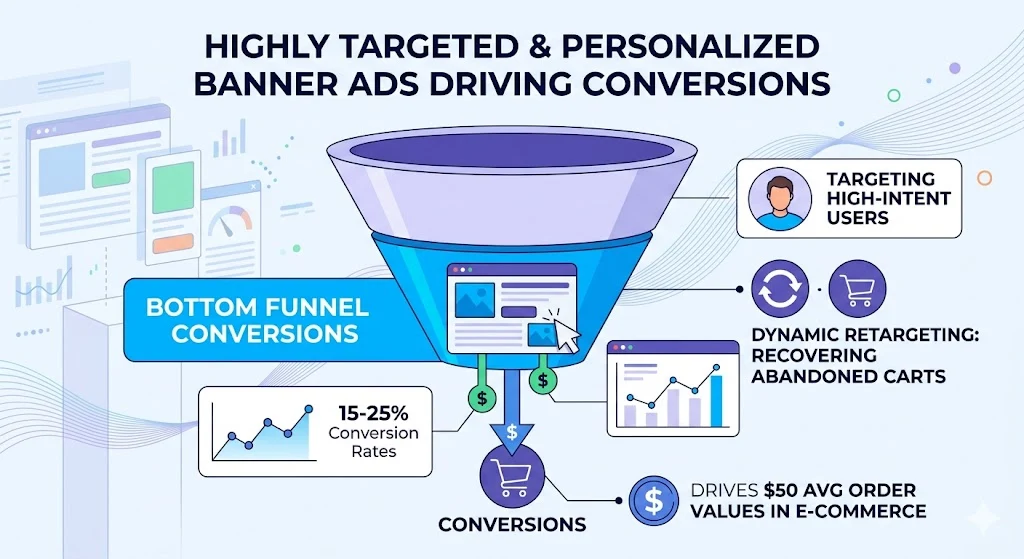
Banner advertising delivers 15-25% conversion rates in retargeting funnels. Programmatic precision targets high-intent users, driving $50 average order values in e-commerce. Retargeting serves dynamic ads showing abandoned carts. Frequency optimization caps at 3 exposures. Lookalikes expand reach 5x. Attribution models credit multi-touch journeys.
[Ready to boost traffic on local news sites? Explore effectiveness here: How Effective Is Banner Advertising on Local News Websites for Targeted Reach?
UK brands achieve 2.1% CTR via GB-targeted campaigns. Video banners complete at 70% rates. Contact our team for custom programmatic setups yielding 300% ROI.
Ready to launch your banner campaign? Schedule a free audit today for tailored strategies.