

A £500 PR distribution package typically includes a single local or niche-market press release distribution, basic editorial formatting, and a standard media list for targeted email outreach.
A £500 package delivers a single press release sent to a regional or niche list. The service formats the release to wire standards and provides an emailed distribution to a curated list of local journalists and trade contacts. Reporting includes open rates, basic pickup counts, and a simple placement log. Multimedia attachments such as one image are often allowed. Delivery options include immediate release or a timed release within 48 hours. Typical use cases include local announcements, small event promotion, and single-product highlights. Expect limited follow-up, no guaranteed placements, and minimal bespoke targeting.
What does a £2,000 PR distribution package include?
A £2,000 package includes multi-channel distribution across regional and national lists, targeted journalist pitching, multimedia inclusion, and detailed performance reporting.
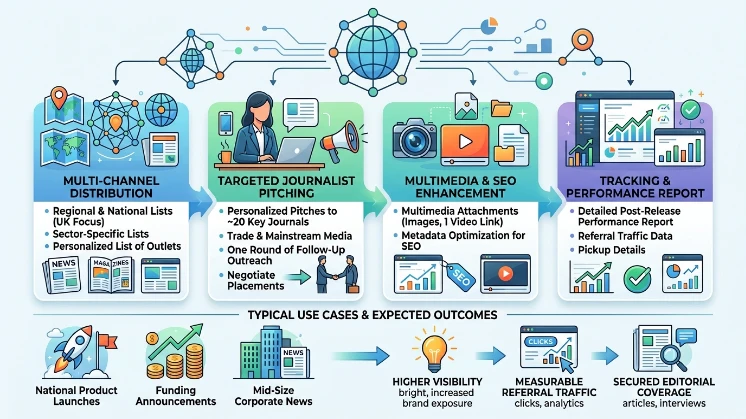
A £2,000 package sends the release to national and sector-specific lists in the UK. The offering includes personalisation of pitches for up to 20 key journals on a personalised list of trade and mainstream outlets. Services include multimedia attachments (images and one video link), metadata optimisation for SEO, and a post-release performance report with referral traffic and pickup details. The provider conducts one round of follow-up outreach and negotiates placements when possible. Typical use cases include national product launches, funding announcements, and mid-size corporate news. Expect higher visibility, measurable referral traffic, and some secured editorial coverage.
What does a £10,000 PR distribution package include?
A £10,000 package delivers integrated distribution, bespoke media strategy, intensive journalist outreach, premium multimedia, and campaign-level performance and conversion tracking.
A £10,000 package combines wire distribution across national and international feeds with managed outreach to top-tier UK media. The package includes a bespoke media strategy, message refinement, and tailored pitches for up to 50 journalists and editors. Services include professional multimedia production support, SEO landing page setup, campaign UTM tracking, and conversion attribution linked to earned placements. Reporting includes placement quality scoring, domain authority metrics, downstream conversions, and a 90- to 180-day impact analysis. Typical use cases include national brand launches, large funding rounds, executive appointments, and crisis communications. Expect prioritized outreach, high editorial interest, and measurable business outcomes.
How do deliverables differ between these price tiers?
Deliverables scale from basic distribution and reporting at £500 to strategic planning and conversion tracking at £10,000, with intermediate personalisation and multimedia at £2,000.
At £500, deliverables focus on distribution and basic analytics. At £2,000, deliverables include targeted pitching, multimedia, and SEO optimisation. At £10,000, deliverables include strategic planning, comprehensive outreach, production support, and cross-channel tracking. The higher tiers include human-led activities such as list curation, journalist relationship management, and negotiation for placements. Lower tiers rely on automated distribution or limited manual sends. Choose a tier based on campaign complexity, desired editorial quality, and conversion objectives.
How does targeting change across price points?
Targeting improves from general regional lists at £500 to sector-specific and national journalist targeting at £2,000, and to bespoke influencer and national editor targeting at £10,000.
At £500, targeting uses pre-built regional or sector lists with limited customisation. At £2,000, targeting includes refined lists for specific beats, trade outlets, and sector blogs, with manual pitch personalisation. At £10,000, targeting includes bespoke lists built from audience research, influencer outreach, and direct editor engagement for top-tier outlets. The £10,000 tier often includes outreach to analysts, commentators, and broadcast producers. The quality of targeting correlates with the likelihood of securing high-value placements.
What reporting and analytics come with each package?
Reporting ranges from basic open and pickup counts at £500 to detailed placement scoring, referral conversions, and long-term impact analysis at £10,000.
A £500 report includes distribution confirmation, open rates, and a basic pickup list. A £2,000 report adds referral traffic, pickup breakdown by outlet type, and a summary of journalist replies. A £10,000 report provides placement quality scoring, domain authority of linking sites, UTM-based conversion tracking, and a 90- to 180-day attribution analysis that links earned media to leads or sales. Advanced reports include recommendations for follow-up campaigns and content repurposing based on performance metrics.
How do SEO and backlink value differ between tiers?
SEO outcomes scale from short-term indexation at £500 to contextual editorial backlinks at £2,000 and authoritative backlinks plus domain authority gains at £10,000.
A £500 release creates indexable content on aggregator sites and may generate machine-readable backlinks. These backlinks provide quick visibility but low editorial value. A £2,000 package secures some contextual mentions and backlinks from sector-specific sites with moderate domain authority. A £10,000 package targets authoritative outlets, securing contextual backlinks from high-domain sites and improving long-term organic authority. The £10,000 tier includes link quality analysis and follow-up to retain links.
What are typical timelines for results at each level?
Timelines move from immediate indexing and short referral spikes at £500 to steady pickup within days at £2,000 and sustained editorial outcomes over 90 to 180 days at £10,000.
At £500, expect indexing within 24 to 72 hours and short referral traffic spikes that often decay within two weeks. At £2,000, expect pickups and referral traffic within 3 to 14 days and possible interview requests within 30 days. At £10,000, expect a steady cadence of placements, broadcast opportunities, and long-term backlink benefits over 90 to 180 days. Complex editorial processes for major outlets can extend timelines beyond initial outreach windows.
What outcomes should UK organisations expect at each budget?
Expect visibility and basic backlinks at £500, targeted editorial coverage and measurable traffic at £2,000, and high-quality placements, conversions, and authority growth at £10,000.
At £500, outcomes include regional visibility, basic indexing, and potential small-scale pickups. At £2,000, outcomes include placements in trade and national outlets, increased referral traffic, and quantifiable leads. At £10,000, outcomes include top-tier editorial features, broadcast mentions, measurable conversions tied to earned media, and improvement in domain authority. The certainty of outcomes increases with budget due to higher levels of human effort and strategic planning.
How to allocate budget based on campaign goals?
Allocate budget by matching goals: use £500 for simple local awareness, £2,000 for national exposure and lead generation, and £10,000 for brand transformation and measurable business impact.
If the goal is local announcement or single-event publicity, allocate £500. If the goal is national visibility, lead generation, or sector influence, allocate £2,000. If the goal is market leadership, investor relations, crisis management, or measurable conversions, allocate £10,000. Align distribution spend with complementary costs such as creative assets, landing pages, and paid amplification for best results.
Explore More Expert Insights:
How Multi-Site PR Distribution Across 10 News Properties Scales Earned Media
What a Managed PR Distribution Service Does That Your In-House Team Cannot
When is paid amplification necessary in addition to distribution spend?
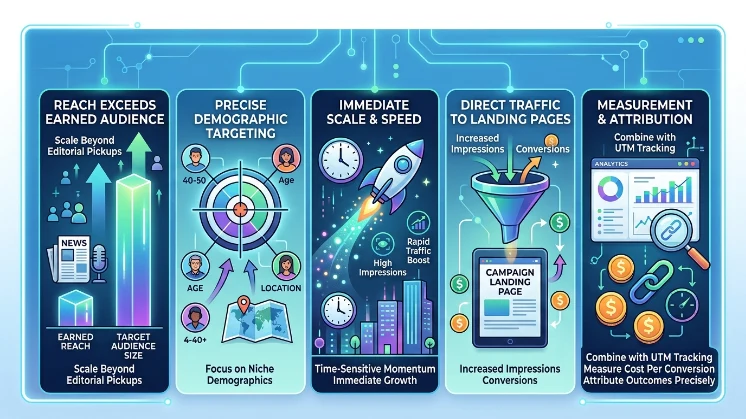
Paid amplification becomes necessary when the target audience size exceeds earned reach, when targeting specific demographics, or when immediate scale is required.
Use paid amplification to extend reach on social platforms or native advertising networks. Paid amplification increases impressions and drives traffic directly to campaign landing pages. Combine paid amplification with UTM tracking to measure cost per conversion and to attribute outcomes precisely. Paid amplification works well when content requires scale beyond editorial pickups or when time-sensitive momentum is essential.
How to evaluate providers and contract terms in the UK market?
Evaluate providers by comparing targeted lists, journalist relationships, reporting depth, success case studies, and contract clauses on placement guarantees and exclusivity.
Review sample media lists, past placement reports, and client case studies that show measurable outcomes. Confirm reporting cadence and data access. Verify whether the provider offers follow-up outreach, media training, or landing page support. Check contract terms for cancellation policies, additional fees for multimedia, and guarantees on distribution speed. Seek providers that offer transparent metrics and clear escalation paths.
Dive Deeper Into This Topic
GEO vs SEO: Why 58% of High-Intent Traffic Now Arrives Without a Click
This article defines what £500, £2,000, and £10,000 PR distribution packages buy in the UK market. It compares deliverables, targeting, reporting, SEO impact, timelines, expected outcomes, budget allocation guidance, the role of paid amplification, and provider evaluation criteria. Choose a budget aligned with your campaign objective: local awareness, national exposure, or measurable business impact. Use combined channels and clear KPIs to measure return on investment effectively.
Learn Everything About It Here:
Client Results: How Managed UK PR Distribution Delivered 47 Placements in 30 Days



