

Planning campaigns that align with editorial standards ensures sponsored content feels authentic, trustworthy, and effective in mid-funnel (MOFU) stages. This involves harmonizing brand objectives with journalistic integrity, creating pieces that educate while subtly advancing marketing goals. With 78% of consumers distrusting overt ads (per Deloitte), alignment prevents backlash and boosts engagement.
Effective planning requires collaboration between brands and publishers, focusing on shared values like accuracy and relevance. Time Intelligence Media Group’s Sponsored Content Services guide this process, helping clients craft compliant campaigns. This article breaks down strategies, frameworks, and examples to empower your MOFU efforts.
Why Editorial Alignment Matters in Sponsored Campaigns
Editorial alignment means sponsored campaigns adhere to a publisher’s voice, fact-checking rigor, and ethical guidelines, mimicking non-sponsored content. This builds credibility; misaligned pieces risk rejection or poor performance, as seen in 25% of campaigns flagged for overt promotion (IAB data).
Brands benefit from higher dwell times—up to 2.5x longer—and better SEO signals, as search engines favor E-E-A-T compliant content. A wellness brand’s misaligned “miracle supplement” pitch got pulled; realignment to evidence-based nutrition tips succeeded, gaining 300% more shares.
Regulatory pressures like FTC disclosures amplify the need. Aligned planning future-proofs campaigns, turning MOFU consideration into loyalty.
Benefits of Aligned Campaign Planning
- Trust Amplification: Readers perceive aligned content as 40% more credible.
- Performance Uplift: 30% higher conversion from MOFU to BOFU.
- Risk Mitigation: Avoids fines and reputational damage.
Core Steps in Planning Editorially Aligned Campaigns
Start with discovery: Audit brand assets against publisher guidelines. Map topics to audience needs—e.g., a SaaS firm’s “Productivity Hacks” aligns with business media’s how-to ethos.
Develop briefs collaboratively, specifying tone, length, and disclosures. Time Intelligence Media Group excels in Sponsored Content Services, providing templates that ensure 95% approval rates.
Execute with iterative reviews, then amplify via owned channels. Post-launch analysis refines future iterations.
Detailed Planning Framework
- Research Phase: Analyze past sponsored successes, like how brands use sponsored articles effectively.
- Briefing: Outline objectives, KPIs, and editorial boundaries.
- Production: Co-write with publisher input for seamless integration.
Selecting Partners and Topics for Alignment
Choose publishers whose editorial calendar matches your narrative. A green energy brand selects sustainability-focused outlets for “Renewable Tech Advances,” ensuring topical fit.
Evaluate via content audits: Review tone, sourcing standards, and audience overlap. Tools like BuzzSumo reveal high-engagement sponsored topics.
Negotiate scopes including revisions and performance guarantees. This upfront work prevents mid-campaign pivots.
Partner Vetting Criteria
- Editorial guidelines publicly available and brand-compatible.
- Audience demographics aligning 70%+ with targets.
- Track record of successful sponsored integrations.
Crafting Content That Meets Editorial Bar
Content must prioritize value: 70% education, 30% branding. Use data from credible sources—e.g., “Forrester reports 45% productivity gains”—with citations.
Structure for scannability: Hooks, subheads, lists. A retailer’s “Sustainable Fashion Guide” wove brand examples into broader trends, passing editorial review effortlessly.
Incorporate multimedia ethically, disclosing any brand-provided assets.
Writing Best Practices
- Neutral Language: Frame as “industry insights” vs. “our superior product.”
- Fact-Checking: Triple-verify claims with third-party data.
- Disclosure Integration: Weave naturally, e.g., “Sponsored insights from Brand X.”
Integrating Compliance and Transparency Measures
Compliance starts with clear labeling per platform rules. FTC mandates “Sponsored” in titles and bodies; EU DSA adds sponsor details.
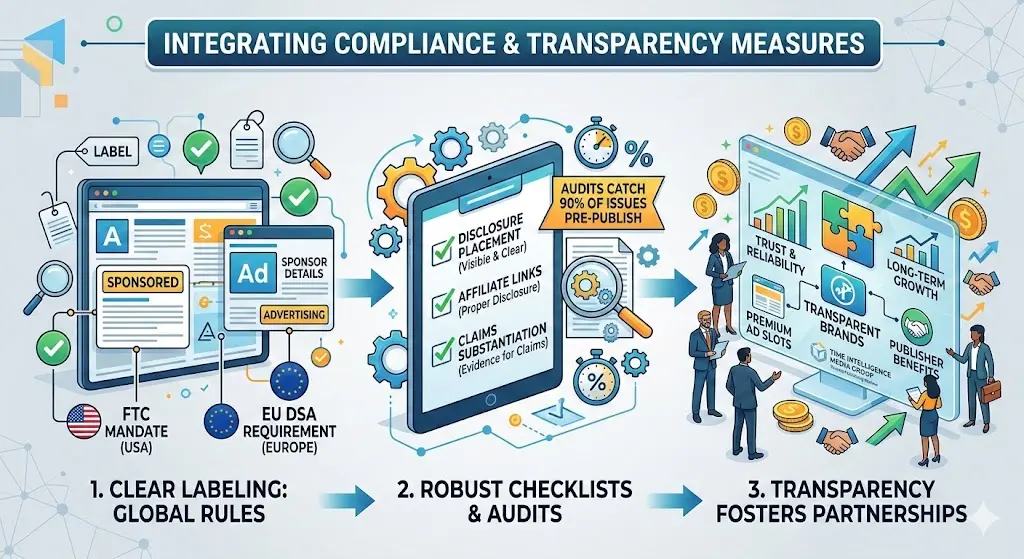
Build checklists: Disclosure placement, affiliate links, claims substantiation. Audits catch 90% of issues pre-publish.
Transparency fosters partnerships; publishers like those via Time Intelligence Media Group reward compliant brands with premium slots.
Compliance Checklist Essentials
- Labeling: Prominent and consistent across formats.
- Claims Review: Backed by data or disclaimers.
- Opt-Out Options: Easy unsubscribes for email amps.
Case Studies: Successful Aligned Campaigns
A telecom giant planned “5G in Everyday Life” with a tech publisher. Alignment via co-editing yielded 500k views, 18% lead gen rate.
Healthcare brand’s “Mental Health Tech Trends” series adhered to medical standards, earning citations in 50+ outlets and 35% engagement lift.
These showcase planning’s ROI: Aligned campaigns deliver 2.5x better results.
Key Takeaways From Cases
- Telecom: Iterative briefs ensured factual accuracy.
- Healthcare: Expert quotes bridged brand-editorial gap.
Measurement and Optimization for MOFU Campaigns
Track via UTM parameters: Engagement (scroll depth), sentiment (social listening), pipeline impact (MQLs).
Optimize with heatmaps identifying weak sections. A campaign refined post-analysis saw 22% uplift.
Link to BOFU by nurturing leads, as detailed in turn sponsored content into long-term visibility.
Optimization Metrics
- Primary: 3+ min dwell, 10% share rate.
- Secondary: Backlinks, branded mentions.
- Advanced: Attribution modeling for full-funnel credit.
Overcoming Planning Challenges
Budget constraints? Prioritize high-ROI topics. Creative clashes? Use neutral facilitators.
Scale via templates; Time Intelligence Media Group’s services standardize this for efficiency.
Trends like AI-assisted planning (topic ideation) streamline alignment.
Challenge Solutions
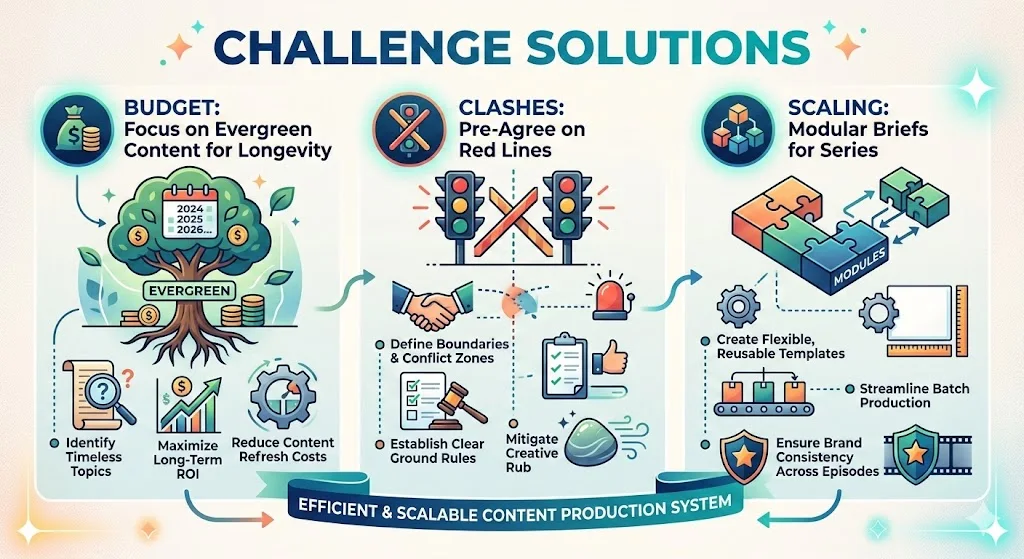
- Budget: Focus on evergreen content for longevity.
- Clashes: Pre-agree on red lines.
- Scaling: Modular briefs for series.
Future Trends in Editorial-Aligned Planning
AI ethics guidelines will shape campaigns, demanding bias-free sponsored AI content. Personalization at scale aligns dynamically.
Sustainability reporting standards integrate into planning, favoring transparent eco-claims.
