

Feature-focused banner ads are digital advertisements that highlight specific software functions, workflows, or technical capabilities to increase product interest. Technology firms use these ads to educate potential buyers, explain software value, and guide audiences toward deeper product evaluation during the consideration stage.
Feature-focused banner ads differ from general awareness advertisements. Awareness campaigns explain the existence of a software category or solution. Feature-focused campaigns explain how a product performs a task or improves operational efficiency.
A feature is a functional capability inside a software product. Examples include automated reporting, workflow automation, real-time analytics, cloud synchronization, API integration, and user permission management.
Technology firms use feature-focused banners to attract users already familiar with a software problem. These users actively compare solutions and evaluate operational fit.
A cybersecurity platform can promote “Real-Time Threat Detection.” A project management tool can highlight “Automated Task Assignment.” A financial analytics platform can display “Custom Dashboard Reporting.”
Feature-focused banners also help technology companies separate products from competitors through direct capability messaging. Instead of broad promotional language, these ads explain measurable functions and operational benefits.
Why do tech firms use feature-focused banner ads?
Technology firms use feature-focused banner ads to educate potential customers, improve product understanding, and increase engagement from solution-aware audiences. These campaigns help software buyers compare functions, evaluate usability, and identify products that align with operational requirements and workflow objectives.
MOFU marketing targets users already researching software solutions. These audiences understand the problem category and seek deeper product details before requesting demonstrations or speaking with sales teams.
Feature-focused banner campaigns provide technical clarity. They explain what the software does, how it works, and which workflows it improves.
Technology products often contain dozens of functions. Banner advertising allows firms to isolate one capability and communicate it clearly to a specific audience segment.
An accounting platform can promote invoice automation to finance teams while highlighting tax reporting to compliance departments. A communication platform can show video conferencing features to remote workforce managers.
These campaigns also support audience segmentation. Different industries prioritize different software functions. Retail companies focus on inventory tracking. Healthcare organizations focus on compliance and secure data management.
Feature-focused banner advertising also improves landing page relevance. When users click on an advertisement highlighting “AI Data Insights,” they expect the destination page to explain analytics capabilities directly.
How do feature-focused banner ads increase product interest?
Feature-focused banner ads increase product interest by connecting user problems with specific software capabilities. These advertisements simplify technical explanations, improve product understanding, and encourage deeper exploration through focused messaging, interface visuals, and workflow-based positioning across digital channels.
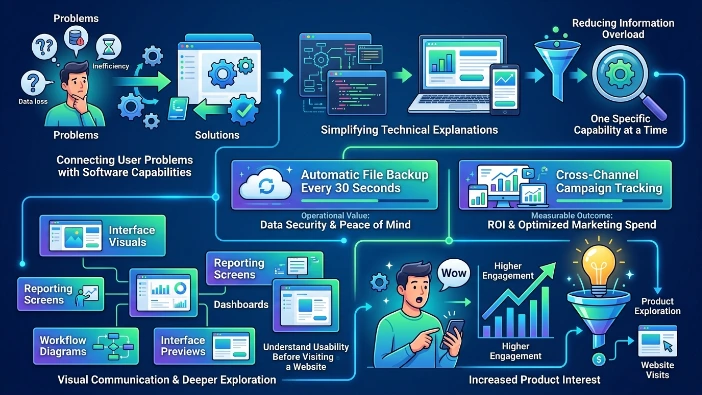
Product interest grows when users understand functionality quickly. Banner ads reduce information overload by presenting one focused capability at a time.
A cloud storage platform showing “Automatic File Backup Every 30 Seconds” communicates operational value clearly. A marketing analytics tool displaying “Cross-Channel Campaign Tracking” explains a measurable workflow outcome.
Visual communication strengthens engagement. Many technology firms include dashboards, reporting screens, workflow diagrams, or interface previews inside banner creatives. These visuals help users understand usability before visiting a website.
Feature-specific messaging also improves relevance. Users researching automation software respond more strongly to workflow efficiency messaging than general product descriptions.
Retargeting campaigns support continued engagement. After users visit a feature page, firms can display additional banners related to integrations, reporting functions, or team collaboration tools. This sequence builds familiarity with the software ecosystem.
Product interest also increases through contextual placement. Banner ads appearing on technology publications, SaaS comparison websites, and business productivity platforms reach users already evaluating digital solutions.
What types of software features perform well in banner advertising?
Software features that perform well in banner advertising include automation, analytics, collaboration, security, integration, and reporting functions. These features communicate operational value clearly and align with measurable business activities that software buyers actively evaluate during product comparison stages.
Automation features perform strongly because they connect directly with productivity improvements. Examples include invoice automation, automated scheduling, lead scoring, and workflow triggers.
Analytics features also generate high engagement. Banner ads promoting “Real-Time Performance Tracking” or “Live Reporting Dashboards” attract decision-makers seeking measurable insights.
Collaboration features appeal to remote and hybrid work environments. Shared task management, cloud document editing, and centralized communication systems remain important software evaluation factors.
Security-focused features perform effectively in sectors managing sensitive data. Multi-factor authentication, encrypted file storage, and compliance monitoring attract attention from finance, healthcare, and enterprise technology teams.
Integration capabilities also influence product consideration. Many businesses use multiple software systems simultaneously. Banner ads promoting CRM integration, accounting synchronization, or API connectivity explain operational compatibility clearly.
Customer support features also contribute to engagement. Live chat systems, onboarding dashboards, and self-service knowledge management platforms address operational efficiency concerns.
How does audience segmentation improve feature-focused banner campaigns?
Audience segmentation improves feature-focused banner campaigns by matching software capabilities with specific industries, job roles, and operational priorities. Segmented advertising increases engagement relevance, improves click-through performance, and strengthens product evaluation among users already researching technology solutions.
Different industries prioritize different software outcomes. Manufacturing firms focus on workflow automation. Financial institutions prioritize compliance and reporting accuracy. Marketing agencies value campaign analytics and collaboration tools.
Audience segmentation allows technology firms to adjust messaging according to operational context. A human resources platform can show onboarding automation to HR managers while promoting payroll reporting to finance teams.
Job-role targeting also improves message relevance. Technical users evaluate infrastructure compatibility and integrations. Operational managers focus on efficiency improvements and reporting visibility.
Behavioural targeting strengthens segmentation further. Users researching analytics platforms receive performance dashboard advertisements. Visitors comparing cybersecurity tools see threat monitoring banners.
Geographic segmentation supports local operational requirements. Technology firms targeting the United Kingdom often reference regional compliance standards, tax workflows, or localized customer support availability.
Segmentation also improves advertising efficiency. More relevant campaigns generate higher engagement rates and reduce unnecessary impressions among unrelated audiences.
What design elements improve feature-focused banner engagement?
Feature-focused banner engagement improves when advertisements use clear headlines, interface visuals, concise messaging, and focused layouts. Effective design helps users identify software capabilities quickly and increases interaction rates across desktop, mobile, and responsive advertising placements.
Headline clarity directly affects engagement. Banner ads performing strongly often explain one function in fewer than 12 words. Examples include “Automate Team Scheduling” or “Track Revenue in Real Time.”
Interface previews improve comprehension. Users evaluating software products want visual confirmation of usability and workflow structure. Dashboard screenshots help communicate this information rapidly.
Readable typography supports mobile performance. Smaller devices require larger font visibility and simplified layouts to maintain clarity.
Color contrast improves attention. Bright action buttons placed against neutral backgrounds increase visibility and interaction rates.
Animation also supports engagement when used strategically. Short transitions showing reporting workflows or task automation processes explain software operations efficiently.
Consistency between banner ads and landing pages improves product exploration. If a banner promotes “AI Workflow Insights,” the destination page must continue that exact feature explanation.
Trust indicators also influence engagement quality. Data security messaging, uptime percentages, and integration compatibility statements increase product confidence among business audiences.
Explore More Expert Insights:
How SaaS Companies Nurture Leads Using Educational Banner Advertising
How Online Shops Increase Cart Intent Using Strategic Banner Retargeting
How do tech firms measure interest generated by banner ads?
Technology firms measure product interest through engagement metrics, feature-page visits, session duration, click-through rates, and conversion pathways. These measurements help marketers evaluate which software capabilities generate stronger audience attention and deeper product exploration during the consideration stage.
Click-through rate measures advertisement engagement. Higher click rates indicate stronger alignment between messaging and audience intent.
Feature-page visits provide deeper behavioural insights. Technology firms analyze which product functions attract the highest visitor activity after advertisement clicks.
Session duration also reflects engagement quality. Users spending several minutes reviewing analytics pages or integration documentation demonstrate stronger product interest than short-duration visitors.
Scroll depth tracking measures how far visitors move through product pages. This data helps marketers identify which software sections retain attention most effectively.
Retargeting engagement provides additional insights. Users interacting repeatedly with feature-focused campaigns show higher solution awareness and stronger evaluation intent.
Technology firms also analyze assisted conversions. Some users first engage through feature advertisements and later return through direct website visits or organic search activity.
CRM systems and analytics platforms help firms connect advertising engagement with demo requests, onboarding activities, and sales pipeline progression.
Why do feature-focused ads support the middle stage of the funnel?
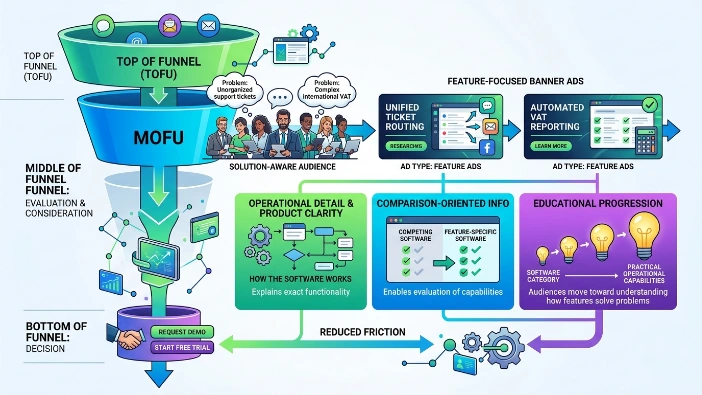
Feature-focused ads support the middle stage of the funnel because they provide operational detail, product clarity, and comparison-oriented information. These campaigns help solution-aware audiences evaluate software capabilities before progressing toward direct sales conversations or product demonstration requests.
The middle funnel stage focuses on evaluation. Users at this stage understand the problem category and actively compare software options.
Feature-focused banner ads help organize product understanding. Instead of presenting broad marketing claims, these campaigns explain measurable functionality.
A customer support platform promoting “Unified Ticket Routing” helps operations teams understand workflow efficiency benefits. A financial platform advertising “Automated VAT Reporting” explains compliance-related value directly.
MOFU campaigns also reduce friction between awareness and evaluation. Users gain enough information to continue researching product fit without immediately entering sales processes.
Feature-specific advertising supports educational progression. Audiences move from understanding software categories toward understanding practical operational capabilities.
These campaigns also improve remarketing efficiency. Technology firms can sequence feature messaging according to user behaviour. Someone reviewing analytics pages can later receive dashboard-focused banner advertisements.
For readers who want to explore high-intent conversion strategies after feature evaluation, read:
How Tech Firms Turn Feature Interest Into Demo Bookings Using High-Intent Display Ads
Readers looking for foundational acquisition insights can revisit:
How SaaS Companies Increase Free Trial Signups Using Banner Ads



