Sponsored stories are paid editorial-style articles that promote a retail brand, product, or campaign through a publisher’s content environment. They combine informative storytelling with commercial messaging to reach relevant audiences and support awareness, consideration, website visits, and sales.
Sponsored stories sit between traditional advertising and editorial content. They use a structured article format rather than a conventional display advertisement. The content identifies a product, explains its relevance, and provides useful information around a consumer need.
In retail, sponsored stories can cover product launches, seasonal collections, shopping guides, buying trends, sustainability initiatives, store openings, or new services. A fashion retailer, for example, can publish a sponsored story explaining how its autumn collection addresses current wardrobe requirements.
The commercial purpose remains clear. The article is paid content, and publishers normally label it as sponsored, promoted, branded, or paid content.
How do sponsored stories differ from traditional advertisements?
Traditional advertisements rely on concise promotional messages, visual placements, banners, videos, or paid search formats. Sponsored stories use longer-form content to provide context around a product or retail proposition.
A display advertisement can present a product image, price, and call to action. A sponsored story can explain product features, purchasing considerations, use cases, and seasonal relevance before directing readers towards the retailer.
How do retail sponsored stories drive consumer attention?
Retail sponsored stories drive attention by placing product information inside relevant content environments where consumers already read about shopping, fashion, technology, home improvement, food, or lifestyle topics and actively seek information before purchasing.
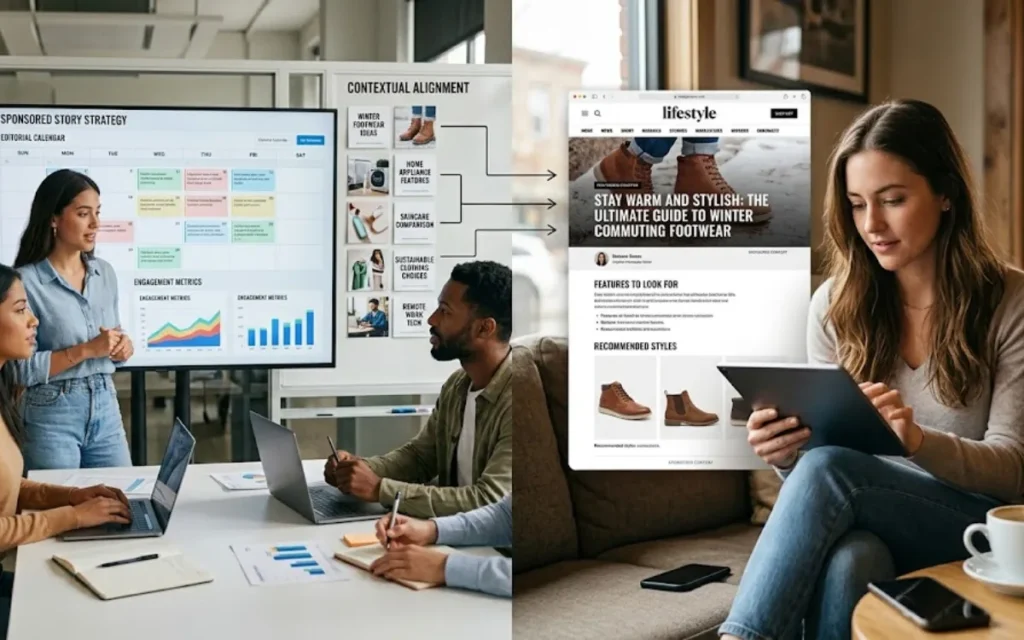
Attention depends on relevance. A sponsored story about winter footwear has stronger contextual alignment on a fashion or lifestyle publication than on an unrelated website.
The content topic also influences engagement. Retailers can build stories around questions consumers already ask. Examples include:
- Which products suit winter commuting?
- What features matter when choosing home appliances?
- How can shoppers compare different skincare products?
- What should consumers look for in sustainable clothing?
- Which technology features support remote working?
These questions create an informational structure around the commercial subject.
Why does context matter?
Context connects the product with a specific consumer requirement. A home retailer promoting storage furniture can publish an article about organising small living spaces. The product becomes part of the subject rather than an isolated promotional message.
This approach gives the audience information before presenting the commercial proposition. The article therefore supports the awareness stage of the retail customer journey.
How does a sponsored story move consumers towards a purchase?
A sponsored story moves consumers towards purchase by connecting a recognised need with product information, evidence, benefits, and a clear next step. The content supports awareness first, product consideration second, and purchase intent through relevant information.
The customer journey commonly includes several stages.
Awareness
The consumer first encounters a topic connected with a problem, interest, trend, or shopping occasion. For example, a reader searches for information about preparing a home for winter.
Consideration
The story introduces relevant product categories and explains selection factors. Product specifications, materials, features, price ranges, and practical applications provide decision-making information.
Purchase intent
The article presents a specific retail proposition. This can include a product range, collection, service, store experience, or online shopping destination.
Conversion
The final action can involve visiting a product page, browsing a collection, signing up for an offer, locating a store, or completing a purchase.
The sponsored story does not need to perform every stage alone. Its role is to create a relevant path from content discovery to commercial consideration.
What elements make a retail sponsored story effective?
Effective retail sponsored stories contain a specific audience, relevant topic, clear commercial subject, useful information, supporting evidence, structured headings, accurate product details, and an identifiable next step that matches the reader’s position in the buying journey.
The first component is audience definition. Retail content needs a clear consumer group. Examples include first-time homeowners, parents buying school clothing, technology buyers, fitness consumers, and professional shoppers.
The second component is topic selection. The subject needs direct relevance to the product or retail category.
The third component is product integration. Product information needs to appear naturally within the article’s central subject.
What role does product information play?
Product information gives consumers practical reasons to evaluate an item. Relevant details include dimensions, materials, functionality, compatibility, availability, pricing, delivery information, and product applications.
For example, a sponsored story about kitchen appliances can explain energy ratings, capacity, cooking functions, installation requirements, and household use cases.
Why are facts important?
Specific facts improve clarity. A statement such as “large capacity” provides limited information. A stated capacity of 10 kilograms gives the reader a measurable specification.
The same principle applies to prices, dimensions, delivery periods, product quantities, materials, and performance specifications.
How do retailers use sponsored stories for seasonal sales?
Retailers use sponsored stories around seasonal shopping periods to connect products with specific purchasing occasions. Common examples include Christmas, Black Friday, summer holidays, back-to-school shopping, winter clothing, Valentine’s Day, and January sales.
Seasonal content gives retailers a defined publishing opportunity. The story can address consumer planning before demand reaches its peak.
A back-to-school retailer, for example, can publish a buying guide covering uniforms, footwear, stationery, backpacks, and technology. A fashion retailer can create content around autumn layering or summer holiday clothing.
How does timing affect retail content?
Timing determines whether content reaches consumers before or during the purchasing period. A Christmas gift story published before December gives readers time to research products, compare options, and complete purchases.
Retail content also benefits from recurring seasonal search behaviour. Annual shopping occasions create predictable topics and established consumer interests.
How can sponsored stories support retail SEO?
Sponsored stories support retail SEO by creating relevant content around product categories, consumer questions, entities, and search topics. Their value comes from topical relevance, structured information, publisher visibility, and connections between informational content and commercial pages.
Search engines evaluate content through concepts, entities, relationships, and relevance. A retail story about running shoes can cover footwear types, cushioning, fit, terrain, materials, sizing, and use cases.
This creates semantic coverage around the main retail subject.
Which keywords belong in retail sponsored stories?
Keyword selection needs to reflect the subject rather than force repeated phrases. Relevant variations can include:
- retail sponsored content
- sponsored retail stories
- retail branded content
- sponsored shopping articles
- retail content marketing
- product-focused sponsored stories
- paid editorial content
- retail media content
The article can also include long-tail queries connected with consumer needs. Examples include “best running shoes for beginners”, “how to choose a winter coat”, and “what to look for in an energy-efficient washing machine”.
How do sponsored stories build trust during the buying process?
Sponsored stories build consumer confidence by providing transparent commercial disclosure alongside useful, specific information. Clear labelling, factual product details, relevant evidence, and balanced explanations help readers understand the commercial purpose without confusing paid content with independent editorial reporting.
Transparency is an important part of sponsored content. Readers need to recognise when an article has been commercially funded.
Trust also depends on accuracy. Product descriptions need to match actual specifications. Pricing needs to reflect the stated offer. Claims need supporting evidence where required.
What information helps consumers evaluate retail products?
Consumers use different information depending on the category. Electronics buyers focus on specifications and compatibility. Clothing shoppers focus on materials, sizing, fit, and care. Furniture buyers focus on dimensions, construction, delivery, and assembly.
A strong sponsored story matches the information with the purchase decision.
How can retailers measure the sales impact of sponsored stories?
Retailers measure sponsored story performance through defined metrics covering exposure, engagement, traffic, product interest, conversions, and revenue. Tracking requires measurable links, campaign identifiers, analytics platforms, and clear attribution rules established before publication.
Common metrics include:
- Impressions
- Article views
- Average engagement time
- Scroll depth
- Click-through rate
- Referral traffic
- Product-page visits
- Add-to-cart actions
- Online purchases
- Revenue
- Assisted conversions
Traffic measures audience response to the content. Conversion metrics connect content exposure with commercial outcomes.
Why does attribution matter?
Attribution identifies whether sponsored content contributed to a consumer action. Tracking parameters can distinguish traffic generated by a specific publication or campaign.
Retailers can compare sponsored story performance across publishers, topics, product categories, and campaign periods.
How do retailers choose topics for sponsored stories?
Retailers choose sponsored story topics by matching consumer questions with commercial products, seasonal demand, category trends, and measurable business objectives. Strong topics answer a defined question while creating a clear connection to the retailer’s relevant product or service.
Topic selection starts with the consumer. The retailer identifies what the target audience wants to understand, compare, or solve.
A furniture retailer can focus on space planning. A technology retailer can focus on device selection. A beauty retailer can focus on product routines. A sports retailer can focus on equipment selection.
The topic then determines the content structure.
What makes a topic commercially relevant?
Commercial relevance exists when the topic has a direct relationship with the retailer’s products. A story about choosing running shoes has direct relevance to a sports footwear retailer.
A completely unrelated subject creates weak product integration and reduces the usefulness of the sponsored format.
How do sponsored stories fit into the wider retail customer journey?
Sponsored stories operate mainly within awareness and consideration, but they also support later purchase stages when content connects consumers with specific products, useful information, measurable actions, and relevant retail destinations across the wider customer journey.
The customer journey begins with awareness of a need. Informational content addresses that initial stage.
The consumer then researches available solutions. Product-focused sponsored content can provide structured information during this phase.
A retailer can connect the article with product pages, category pages, store information, or other relevant resources. Each connection gives the consumer a defined next step.
For readers exploring the publication process, Retail Sponsored Stories Get Published can be placed naturally on the relevant keyword when discussing how sponsored retail stories reach UK news publications.
For readers researching the commercial service stage, Retail Sponsored Content can be placed on the relevant keyword when the discussion moves towards retail sponsored content solutions.
What are the main use cases for retail sponsored stories?
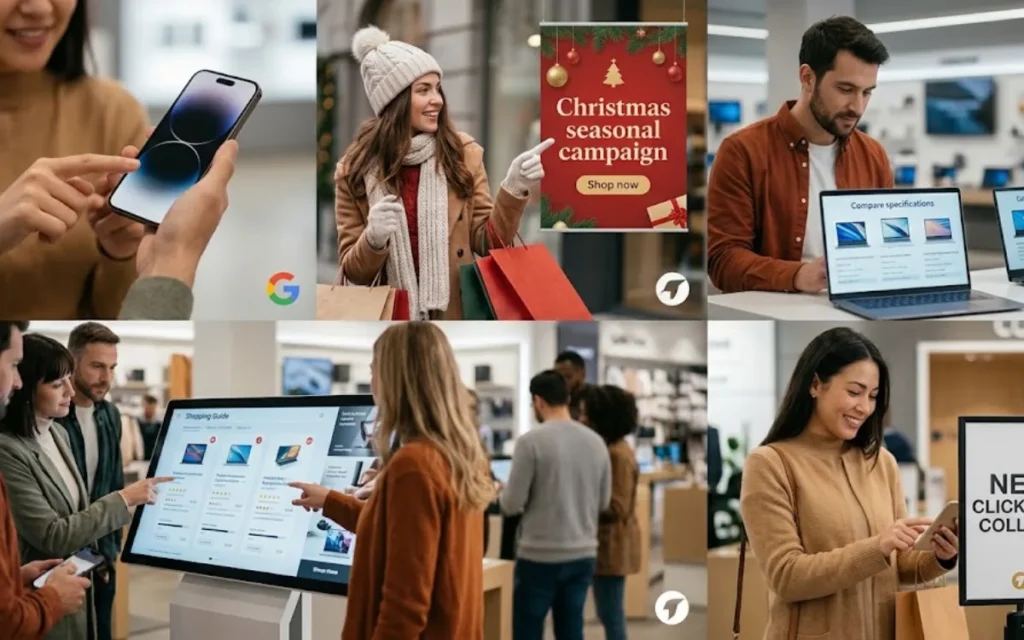
Retail sponsored stories support product launches, seasonal campaigns, category education, shopping guides, new store announcements, sustainability initiatives, promotional campaigns, and consumer education. Each use case connects a defined retail objective with a relevant content topic.
Product launches
A retailer can explain a new product’s features, specifications, applications, and target audience.
Seasonal campaigns
Content can address Christmas shopping, summer travel, back-to-school preparation, winter clothing, or other defined purchasing periods.
Shopping guides
Shopping guides help consumers compare features and understand selection criteria within a product category.
Category education
Retailers can explain unfamiliar products or technologies. This approach is relevant to electronics, home technology, beauty, health and fitness products, and specialist retail categories.
Explore More Expert Insights:
Why Real Estate Brands Publish Sponsored Content in 2026
What Sponsored Content Means for UK SaaS Companies
Store and service announcements
Sponsored stories can explain new stores, delivery services, loyalty programmes, click-and-collect options, or changes to the retail experience.
Retail sponsored stories therefore function as structured paid content designed to inform consumers while supporting commercial objectives. Their effectiveness depends on relevance, factual accuracy, clear product integration, suitable publishing environments, measurable actions, and alignment with the consumer buying journey.