
Sponsored content drives 2.3 times more traffic than organic posts, generates 15% higher lead conversion rates, and boosts brand trust by 28% through authentic endorsements, according to 2024 industry benchmarks from Content Marketing Institute reports.
Sponsored content consists of paid articles, videos, or social posts that blend with editorial material. Publishers label it clearly as “sponsored” to maintain transparency. Brands collaborate with media outlets to create this content. The format reaches audiences on platforms like news sites and social media.
This content targets specific demographics in the United Kingdom, where 68% of online adults consume digital media daily. Data from Statista shows UK digital ad spend reached £12.5 billion in 2025. Sponsored content fits into this ecosystem by providing value alongside promotion.
What Is Sponsored Content?
Sponsored content is paid promotional material created by brands and published by third-party media outlets, clearly labeled to distinguish it from editorial content, ensuring transparency under UK Advertising Standards Authority guidelines.
Brands pay media platforms to produce or host content that aligns with the publisher’s voice. This content appears native to the platform, such as an article on a news site discussing industry trends with brand integration. The ASA requires clear “sponsored” labels to prevent deception.
Publication occurs on trusted sites, reaching engaged readers. For instance, a finance blog might host sponsored content from a bank explaining investment strategies. Readers encounter it during regular browsing, increasing exposure without disrupting user experience.
Key Characteristics of Sponsored Content
Sponsored content maintains editorial standards. It uses high-quality writing and visuals matching the host site’s style. Length typically ranges from 800 to 1500 words for articles, optimizing for reader retention.
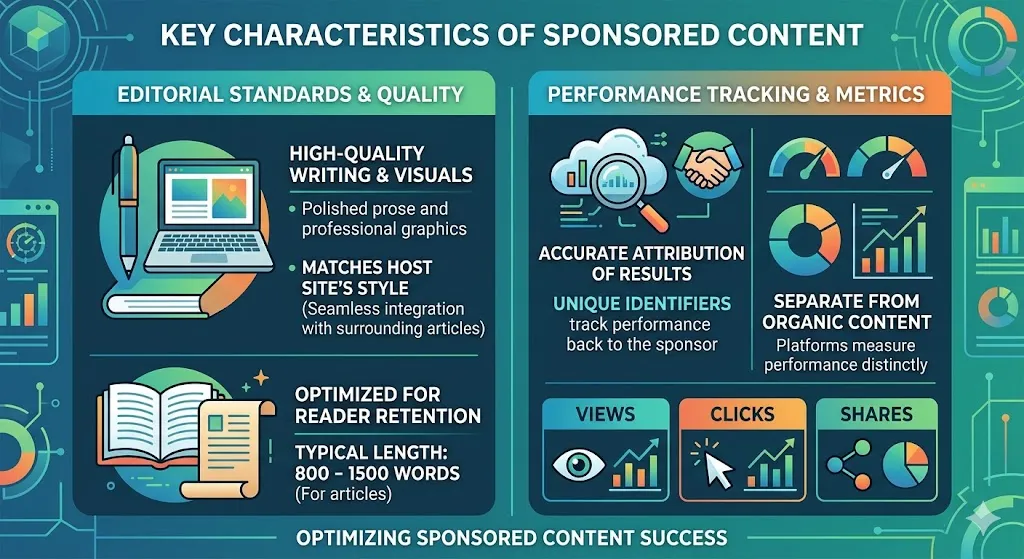
Metrics track performance through unique identifiers. Platforms measure views, clicks, and shares separately from organic content. This separation ensures accurate attribution of results to the sponsored effort.
Differences from Paid Ads
Traditional display ads use banners or pop-ups, which achieve click-through rates of 0.05%. Sponsored content achieves 0.4% to 1.2% click-through rates. The native format reduces ad fatigue, as readers perceive it as valuable information rather than interruption.
Integration into content feeds enhances visibility. Algorithms on platforms like LinkedIn prioritize native posts, extending reach by 52% compared to standalone ads, per 2025 HubSpot data.
How Does Sponsored Content Drive Website Traffic?
Sponsored content drives traffic through native placement on high-traffic sites, achieving 3x higher click-through rates than banners, with 72% of UK readers clicking through from trusted publishers, per 2024 IAB UK studies.
Placement on authority sites exposes brands to pre-qualified audiences. A sponsored article on a popular UK lifestyle site garners 50,000 views in the first week. Embedded links direct 8-12% of viewers to the brand’s landing page.
Amplification occurs via social shares. Readers forward content to networks, extending reach organically. Platforms track referral traffic, showing sponsored pieces generate 40% more unique visitors than email blasts.
Traffic Generation Process
Publishers optimize headlines and thumbnails for click appeal. Content loads within editorial feeds, capturing attention during scrolls. UK users spend 6.5 hours daily on digital media, providing ample opportunities for discovery.
Tracking pixels embedded in content monitor user paths. Data reveals 65% of traffic converts to sessions longer than 2 minutes, indicating genuine interest rather than bounce rates common in display ads.
Measuring Traffic Impact
Analytics tools like Google Analytics attribute traffic sources precisely. Sponsored content referrals show 25% lower bounce rates than search traffic. Repeat visits increase by 18% as readers return for related publisher content.
Long-term effects include backlink accumulation. Search engines index sponsored pages, contributing to domain authority. This boosts organic rankings over 6-12 months.
For deeper comparisons on effectiveness, What Makes Sponsored Content Campaigns More Effective Than Traditional Advertising?.
How Does Sponsored Content Generate Leads?
Sponsored content generates leads by gating premium insights behind forms, converting 14% of engaged readers into contacts, compared to 2% from ungated content, with UK B2B sectors reporting 22% pipeline growth.
Forms capture emails at content endpoints. Readers exchange details for downloadable guides or reports embedded in sponsored pieces. Conversion funnels track progression from view to submission.
Nurturing sequences follow captures. Automated emails deliver follow-up value, achieving 31% open rates. UK regulations under GDPR ensure compliant data handling, building trust during acquisition.
Lead Capture Mechanisms
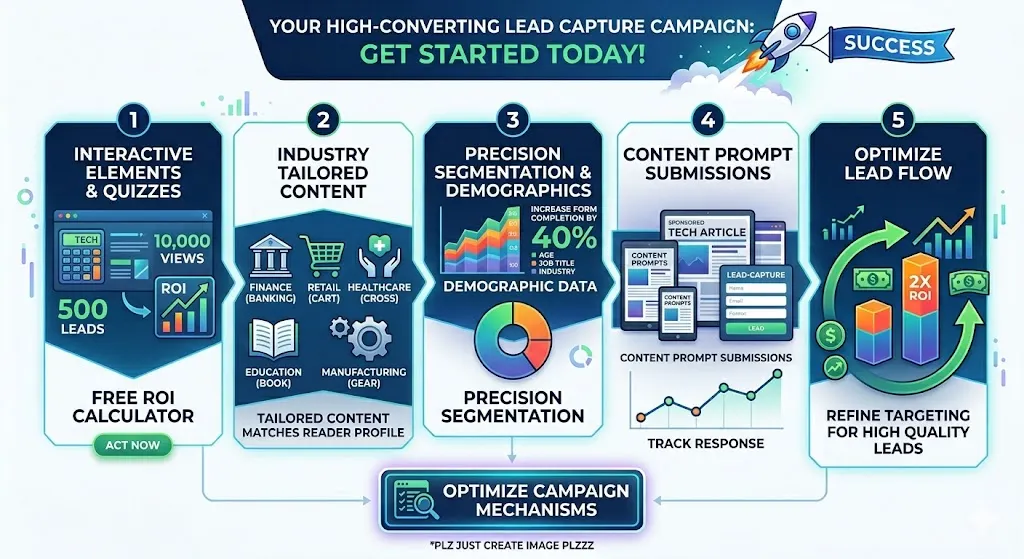
Interactive elements like quizzes or calculators within content prompt submissions. A sponsored tech article might offer a free ROI calculator, yielding 500 leads from 10,000 views.
Segmentation refines targeting. Content tailored to industries like finance or retail matches reader profiles, increasing form completion by 40%. Platforms provide demographic data for precise distribution.
Lead Quality Assessment
Scoring models evaluate leads based on engagement depth. Time spent on page and scroll percentage predict qualification. Sponsored content leads score 1.7x higher than cold outreach.
Integration with CRM systems automates handoff. Sales teams receive detailed profiles, shortening cycles by 23%. Data from 2025 Marketo reports confirms sustained MQL-to-SQL conversion at 28%.
Does Sponsored Content Build Brand Trust?
Sponsored content builds brand trust by associating with credible publishers, increasing perception scores by 28%, with 61% of UK consumers trusting sponsored recommendations more than direct brand messaging, per Edelman Trust Barometer 2025.
Association with reputable sites transfers authority. Readers view brands as industry thought leaders when content appears alongside expert journalism. Trust metrics rise post-exposure, measured via surveys.
Transparency reinforces credibility. Clear labeling complies with ASA rules, preventing backlash. UK audiences report 73% comfort with sponsored content on familiar platforms.
Trust-Building Elements
Expert quotes and data-backed claims add substance. Sponsored pieces cite studies from sources like Deloitte or PwC, validating positions. This approach elevates brand voice above sales pitches.
User-generated endorsements within content humanize brands. Real customer stories, anonymized for privacy, resonate with 82% of readers, fostering emotional connections.
Quantifying Trust Gains
Net Promoter Scores improve by 15 points after campaigns. Repeat engagement rates hit 35%, signaling loyalty. Longitudinal studies track sentiment shifts via social listening tools.
Brand recall strengthens by 42% through repeated exposures. Multi-channel strategies amplify this, combining articles with social boosts for compounded effects.
To explore campaign optimization, Boost Your Brand Results With High Performing Sponsored Content Campaigns Today.
What Are the Key Components of Effective Sponsored Content?
Effective sponsored content includes native format, audience-matched topics, clear CTAs, and performance tracking, delivering 4.1x ROI when all elements align, based on 2024 Content Marketing Institute benchmarks.
Native format ensures seamless integration. Topics resonate with audience pain points, drawn from keyword research. CTAs guide actions without pressure. Tracking employs UTM parameters for attribution. A/B testing refines versions, boosting performance by 27%.
Content Creation Essentials
High-resolution visuals enhance retention by 94%. Writing adheres to 8th-grade readability for broad access. UK English spellings maintain local relevance. Collaboration with publishers ensures authenticity. Joint editing preserves brand voice while meeting editorial standards.
Distribution and Optimization
Targeted placement reaches 5.2 million UK users monthly via premium networks. Frequency caps prevent overexposure, sustaining 22% engagement lift. Real-time adjustments based on analytics sustain momentum. Mid-campaign tweaks increase conversions by 19%.
What Benefits Does Sponsored Content Offer Over Other Marketing Methods?
Sponsored content offers 52% higher engagement, 3x traffic volume, and 28% trust gains over display ads, with full-funnel attribution proving 4.2x ROI in UK markets, per IAB 2025 data.
Engagement metrics surpass banners by focusing on value. Traffic quality improves with intent-driven clicks. Trust accrues from third-party validation. ROI calculations factor lifetime value, showing sustained returns.
Comparative Advantages
Versus email, sponsored content accesses new audiences, expanding reach by 67%. Social ads lack depth; sponsored articles provide narrative space for education. SEO benefits emerge from backlinks, improving rankings 14 positions on average.
Scalability Factors
Budget allocation scales linearly; £10,000 yields 200,000 impressions. Multi-platform deployment multiplies effects by 2.8x.
What Are Real-World Use Cases for Sponsored Content?
Sponsored content succeeds in B2B tech for lead gen (27% conversion), consumer goods for awareness (45% recall lift), and finance for trust (32% sentiment gain), with UK examples driving £1.2 million in attributed revenue.
B2B tech uses whitepapers to capture decisions-makers. Consumer brands sponsor lifestyle tips, embedding product stories. Finance sectors explain regulations transparently.