
Technology publications influence how investors, customers, partners, and the wider startup ecosystem discover emerging software companies. For SaaS startups, editorial coverage depends on news value, evidence, timing, and relevance rather than company size alone. Understanding how technology journalists evaluate stories helps founders prepare announcements that match editorial expectations and improve the quality of media outreach.
Why do TechCrunch and VentureBeat cover SaaS startups?
TechCrunch and VentureBeat publish stories that introduce meaningful technology developments, funding activity, product innovation, market trends, and business growth. Their editorial teams prioritise news with verified facts, measurable impact, and relevance to technology professionals, investors, founders, and enterprise buyers.
Technology publications exist to inform readers about important developments within the technology sector. Their journalists receive hundreds of pitches every week. Editorial teams select stories that contribute new information instead of repeating existing announcements.
A SaaS startup is a company that delivers software through the internet using a subscription model. Common SaaS categories include customer relationship management, cybersecurity, accounting software, human resources platforms, and artificial intelligence applications.
Tech publications typically evaluate stories based on several editorial factors.
- News significance
- Industry relevance
- Verified evidence
- Customer impact
- Market timing
- Originality
For example, a cybersecurity SaaS platform announcing a £15 million funding round presents stronger editorial value than announcing a redesigned company website.
What makes a SaaS startup newsworthy?
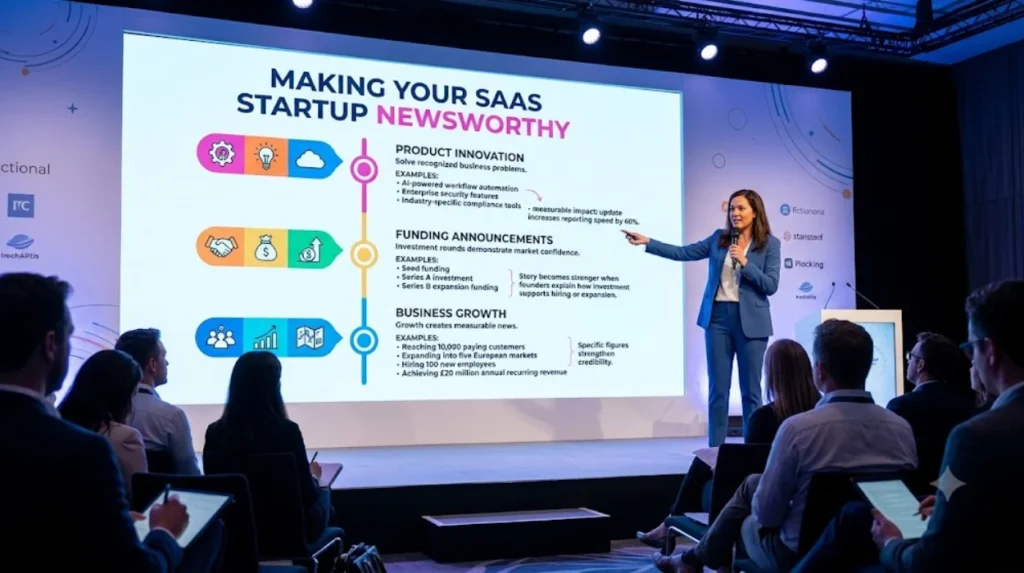
A newsworthy SaaS startup announcement presents new, verified, and measurable developments that affect customers, investors, industries, or technology markets. Strong news includes funding, product innovation, research findings, major partnerships, acquisitions, leadership appointments, and significant business milestones supported by evidence.
Newsworthiness refers to the editorial value of an event.
Journalists assess whether readers learn something genuinely new after reading the article.
Product innovation
New software capabilities attract attention when they solve recognised business problems.
Examples include:
- AI-powered workflow automation
- Enterprise security features
- Industry-specific compliance tools
A feature update that increases reporting speed by 60% provides stronger evidence than describing software as “better” or “more advanced.”
Funding announcements
Investment rounds demonstrate market confidence.
Examples include:
- Seed funding
- Series A investment
- Series B expansion funding
Funding stories become stronger when founders explain how investment supports hiring, product development, or international expansion.
Business growth
Growth creates measurable news.
Examples include:
- Reaching 10,000 paying customers
- Expanding into five European markets
- Hiring 100 new employees
- Achieving £20 million annual recurring revenue
Specific figures strengthen credibility.
How do technology journalists evaluate startup pitches?
Technology journalists evaluate startup pitches by checking relevance, originality, factual accuracy, supporting evidence, timing, credibility, and reader interest. Every pitch competes against numerous daily announcements, making concise communication and verified information essential for editorial consideration and efficient newsroom workflows.
Editors work under strict publication deadlines.
A clear pitch allows journalists to understand the story quickly.
Relevance
Every publication serves a defined audience.
Technology media focus on software, innovation, startups, investment, artificial intelligence, enterprise technology, cybersecurity, cloud computing, and digital transformation.
Stories unrelated to these subjects rarely receive attention.
Evidence
Editors verify claims before publication.
Evidence includes:
- Funding confirmation
- Customer numbers
- Revenue milestones
- Independent research
- Product demonstrations
- Public filings
Unsupported statements reduce editorial confidence.
Timing
News loses value when published too late.
Announcements connected to product launches, funding rounds, acquisitions, or research reports perform best when shared close to the official announcement date.
How can SaaS founders prepare a strong media story?
SaaS founders prepare stronger media stories by organising factual information into a clear narrative supported by measurable results, customer relevance, executive insight, and verified data. Every statement provides evidence explaining why the announcement matters to technology audiences today.
A media story differs from marketing content.
Marketing promotes products.
Editorial stories explain events.
Define the central announcement
Every story requires one primary message.
Examples include:
- Funding secured
- Product launched
- Research published
- Market expansion completed
- Enterprise partnership announced
Avoid combining several unrelated announcements.
Support every claim
Facts strengthen credibility.
Useful supporting information includes:
- Investment amount
- Customer growth
- Employee numbers
- Geographic expansion
- Industry statistics
Journalists prefer numbers over general descriptions.
Include executive context
Founders often explain why the announcement matters.
Executive commentary provides background without replacing factual reporting.
What information belongs in a technology media pitch?
A technology media pitch includes a clear headline, concise summary, supporting facts, company background, executive contact information, and relevant assets. Every section enables journalists to evaluate the announcement efficiently without searching for missing information or clarification.
Editors spend limited time reviewing emails.
Structured information improves readability.
Headline
The headline summarises the announcement in one sentence.
Example:
“AI cybersecurity platform secures £12 million Series A funding.”
Summary
The opening paragraph answers essential questions.
- What happened?
- Who announced it?
- Why is it important?
- When does it take effect?
Supporting details
Include:
- Funding figures
- Customer metrics
- Product information
- Industry context
- Executive quote
- Company description
Attach supporting assets only when relevant.
Examples include:
- Product screenshots
- Founder photographs
- Company logos
- Research reports
Readers interested in:
Why do data and evidence improve technology media coverage?
Verified data improves technology media coverage because journalists rely on measurable evidence to validate claims, compare developments, and explain market significance. Specific statistics increase credibility, strengthen reporting accuracy, and provide readers with useful business context beyond promotional messaging.
Technology journalism depends on evidence.
Numbers explain scale.
Growth metrics
Useful growth metrics include:
- Annual recurring revenue
- Monthly recurring revenue
- Customer acquisition
- User retention
- Platform usage
- Revenue growth percentage
These measurements help readers understand business progress.
Market research
Research adds context.
Examples include:
- Industry adoption studies
- Security reports
- Customer surveys
- Productivity research
Original research often generates additional editorial interest because it contributes new information.
Product performance
Technical improvements become more meaningful when measured.
Examples include:
- Processing speed improvements
- Cost reductions
- Deployment time savings
- Security improvements
- Automation rates
Objective performance data supports editorial reporting.
What common mistakes prevent SaaS startups from earning media attention?
Many SaaS startups lose media opportunities because announcements lack genuine news, measurable evidence, editorial relevance, or factual clarity. Broad marketing language, unsupported claims, poor timing, and incomplete information reduce newsroom efficiency and weaken publication potential significantly.
Several recurring mistakes appear in startup communications.
Promotional language
Editorial reporting differs from advertising.
Statements such as:
- Industry-leading
- Revolutionary
- Best platform
- Game-changing
do not provide evidence.
Editors replace promotional claims with factual information.
Weak announcements
Routine business activity rarely qualifies as news.
Examples include:
- Website redesigns
- Office renovations
- Minor feature updates
- Internal restructuring
Editorial teams prioritise developments with wider industry relevance.
Missing evidence
Claims require verification.
Examples include:
- Funding documentation
- Customer statistics
- Public launch dates
- Product demonstrations
Unsupported claims create additional verification work.
Poor targeting
Technology publications specialise in defined subjects.
Founders improve relevance by understanding editorial coverage areas before preparing announcements.
How does consistent visibility benefit SaaS startups over time?
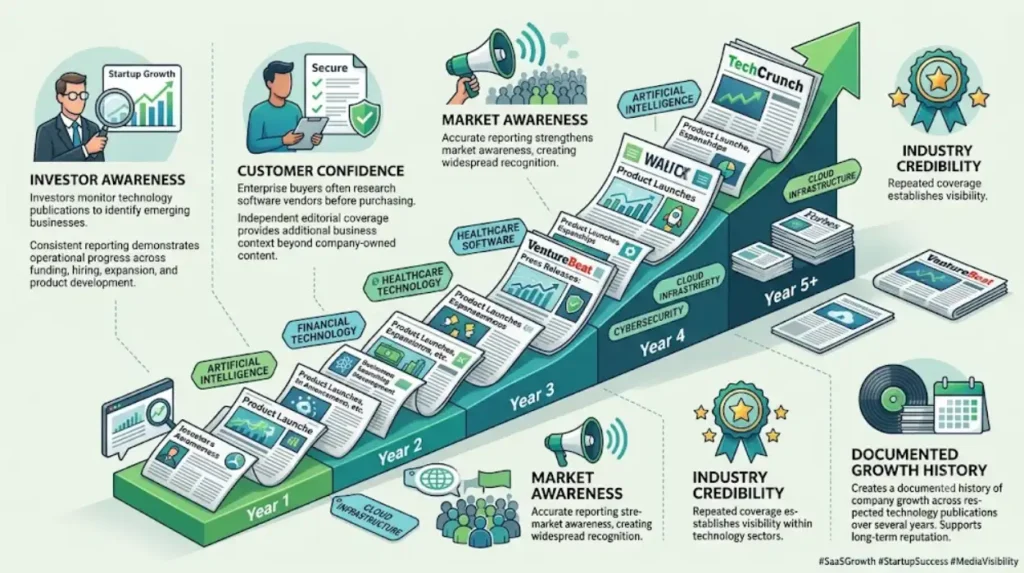
Consistent media visibility builds recognition through repeated coverage of meaningful business developments. Accurate reporting strengthens market awareness, supports investor research, improves customer confidence, and creates a documented history of company growth across respected technology publications over several years.
Media visibility develops through multiple credible announcements rather than a single article.
Each verified development contributes to the public record.
Explore More Expert Insights:
Why UK Brands Rely on Time Intelligence Media Group to Pick the Right News Window
How to Choose the Right Send Window for a UK Press Release
Investor awareness
Investors monitor technology publications to identify emerging businesses.
Consistent reporting demonstrates operational progress across funding, hiring, expansion, and product development.
Customer confidence
Enterprise buyers often research software vendors before purchasing.
Independent editorial coverage provides additional business context beyond company-owned content.
Industry credibility
Repeated coverage establishes visibility within technology sectors.
Examples include:
- Artificial intelligence
- Financial technology
- Healthcare software
- Cybersecurity
- Cloud infrastructure
Documented progress supports long-term reputation.
Readers exploring:
PR distribution services for SaaS funding announcements.
SaaS startups gain attention from technology publications by presenting genuine news supported by verified facts, measurable outcomes, and clear business relevance. Editorial success depends on newsworthiness, structured information, accurate evidence, and consistent communication rather than promotional messaging or company size alone.
Technology journalists evaluate announcements using established editorial standards. Funding rounds, product innovation, customer growth, market expansion, original research, and significant business milestones provide stronger news value than routine company updates. Founders who understand these standards create announcements that communicate facts clearly, support every claim with evidence, and explain why the development matters to technology audiences. Consistent, factual communication helps SaaS startups build lasting visibility across the technology media landscape.